
Why I Embrace Vulnerability
Every Night at 5 I Cry For 2 Minutes
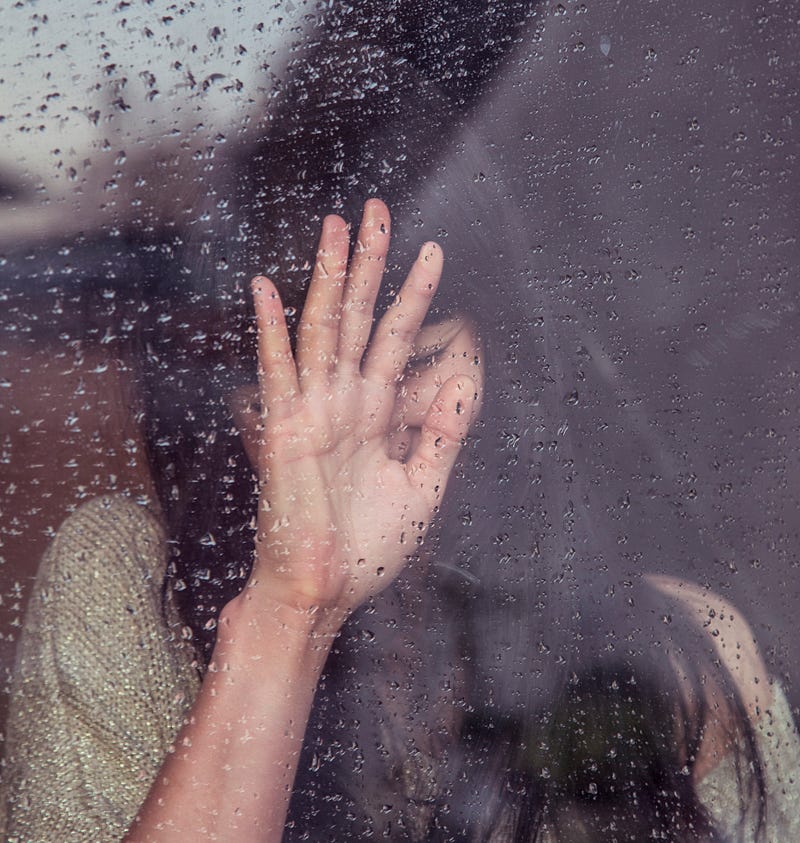
Every evening around 5 o’clock, I go into our office in the back of the house and meditate for somewhere between 10–20 minutes, depending on what time allows and what I need that day. Most often I spend the first 2 minutes in tears, letting the stresses of the day come fully to the forefront, allowing how much I miss Nat to be really felt and acknowledged, and otherwise just channeling whatever grief or upset is present for me right then.
About a minute in I usually connect in energetically with Nat, my other life partner, who lives on the other side of the country from where my husband, James and I now live. It intensifies the longing at first, but then I start to hear his calming voice in my head, reassuring me of his love and telling me that he’s always right here and I begin to settle down. Usually after the first two minutes, which has a cathartic feel, I’ve released enough to actually go on into a more traditional meditative state and when the timer gong sounds, I’m ready to face the world again.
I used to drink a glass of wine at 5 o’clock but one wasn’t often enough to push down those feelings that always seemed to catch up to me at that time of day, and so after a while I started embracing them and dealing with them instead. I still love a nice glass of wine, but I just try not to drink for the purposes of suppressing my emotions any longer. I’m a person who feels a lot and frankly there isn’t enough wine in the world to deal with how overwhelming it can be at times, so I’ve had to work at other strategies. I use it as an asset in my work as a life coach and healer, but it is very much a double edged sword.
When I was growing up I was often treated as if my emotional responses were somehow aberrant or that I was just too high strung. I didn’t know at that time that I could actually make a living and help a lot of people by using my EQ and my sensitivity as a tool. Back in those days, it was really just seen as a liability, even though I knew intuitively that there was nothing wrong with me. I didn’t find my calling and my niche until 12 or 13 years ago, but once I started exploring a world that allowed for all of my HSP (highly sensitive person) qualities, I really began to blossom and to learn all kinds of amazing things.
One of the most impactful things that I learned on my journey has been about the true power of vulnerability. As Brene’ Brown, the leading researcher in the world on the topics of shame and vulnerability, has discovered through her 16 years of study is that vulnerability is a valuable asset and not the liability that most of us have been socialized to believe. It’s actually strength and not weakness.
I spent a lot of years trying to outrun or outsmart vulnerability by making things certain and definite, black and white, good and bad. My inability to lean into the discomfort of vulnerability limited the fullness of those important experiences that are wrought with uncertainty: Love, belonging, trust, joy, and creativity to name a few. ~Brene Brown
Brown has done several very popular and widely viewed TedTalks around the topics of vulnerability and shame. She’s also written several insightful and interesting books and as someone who is a bit of a social scientist and an information junkie, I have read a couple of them. The one I read most recently was Braving the Wilderness: The Quest for True Belonging and the Courage To Stand Alone. It’s a large part of why I’m here writing so openly about very intimate parts of my personal life, my passions and interests, my beliefs, and my thoughts.
Our rejection of vulnerability often stems from our associating it with dark emotions like fear, shame, grief, sadness, and disappointment — emotions that we don’t want to discuss, even when they profoundly affect the way we live, love, work, and even lead. What most of us fail to understand and what took me a decade of research to learn is that vulnerability is also the cradle of the emotions and experiences that we crave. We want deeper and more meaningful spiritual lives. Vulnerability is the birthplace of love, belonging, joy, courage, and creativity. It is the source of hope, empathy, accountability and authenticity. If we want greater clarity in our purpose or deeper or more meaningful spiritual lives, vulnerability is the path.
I know this is hard to believe, especially when we’ve spent our lives thinking that vulnerability and weakness are synonymous, but it’s true. I define vulnerability as uncertainty, risk, and emotional exposure. With that definition in mind, let’s think about love. […] Love is uncertain. It’s incredibly risky. And loving someone leaves us emotionally exposed. Yes, it’s scary, and yes, we’re open to being hurt, but can you imagine your life without loving or being loved.
To put our art, our writing, our photography, our ideas out into the world with no assurance of acceptance or appreciation — that’s also vulnerability. To let ourselves sink into the joyful moments of our lives even though we know that they are fleeting, even though the world tells us not to be too happy lest we invite disaster — that’s an intense form of vulnerability. (emphasis mine)
It’s incredibly vulnerable to stick your neck out in some way, but it’s perhaps the only way to truly live out loud. Vulnerability is also critical to being able to feel empathy for others and to experience connection and love in deep ways. It opens me up to missing someone whom I love intensely, but also to being able to maintain that intimate relationship over long distance over a long period of time. It allows James and I to have room for Nat as a part of our extended family and it allows for all of the other relationships of various kinds that we have to be what and where they are.
It’s really not my idea of fun to go deal with my most vulnerable, intensely feeling self every day at 5 o’clock. I’d prefer not to have to do that, but it is a survival tool and one that works pretty reliably, and it’s far better than the alternatives.
© Copyright Elle Beau 2020 Elle Beau writes on Medium about sex, life, relationships, society, anthropology, spirituality, and love. If this story is appearing anywhere other than Medium.com, it appears without my consent and has been stolen.


