
Why sometimes I feel drained in conversations and How I cope with the feeling
There are 3 simple rules you should learn and apply.

I love reading, and it has been a non-negotiable habit of mine for years.
I enjoy the poise — when I am immersing myself in the meaning of sentences, flicking over pages made with uncoated paper, savoring a cup of Americano and basking in the sunlight with my vintage-style RB aviator sunglasses on.
In recent years, I have spent a considerable amount of time to books in the field of communication, hoping to refine my skills in being a proficient conversationalist. Every people communicates, but not everybody knows how to communicate effectively.
However, as I delved deeper from time... intermittently I would feel the burning torment viscerally (well, not physically) whenever I had to interact with people in my daily life.
The questions that plagued me was —
Why?
3 golden rules after reading 30 books about communication
Well. I found it.
Sad to tell. In general, people are too focus in elucidating themselves, incessantly. Too eager to express themselves and devoid of a genuine interest to learn more about the life of those people who around them.
Are we really engaging in communication? Or we are merely just an audience in a one-sided lecture?
Let me manifest what I have gleaned from countless pages of knowledge. The following three principles serve as the holy grails of being a skilled conversationalist:
- Listen. Maintain eye contact demonstrates respect.
- Add on. Build upon the ideas that others share during the conversation.
- Ask. Endeavor to ask sincere questions. Be interested in others’ life.
That’s it. That simple. But I would earnestly say…a plethora of people not even think about these.
What is communication?
This is a question that constantly plagues my mind when I find myself drained after a conversation.
Some people do not really understand the ideas of communication. It could be thought as a badminton game: one shot from me, and one shot from you. That’s how we keep the shuttlecock floating in mid-air.
But no. Some people just want to be listened. They just need some audience so that they could convey their thoughts — At times, I feel like a warrior, grappling with their pauses in an attempt to express my own ideas and foster genuine communication.
Unfortunately, people always redirect the conversation back to themselves. They do not really pour effort to address what you have mentioned and things you have talked about. Their responses often give the impression that my contributions are considered as frivolous.
“Oh really? Yes I have similar experience before…I….”
“That right. But you know what, I…”
“That’s interesting. Last week, I…”
Well. Always link with the word “I”. But never “You”.

In communication, more good rules you learnt from books, you would find more people fail to accomplish.
That leaves me feeling disheartened.
Unbeknownst to me, the standard I hold in my mind has unintentionally risen after years and books. Perhaps I am no longer the kid I was in secondary school all those years ago. I must admit, during that time, life was delightful, filled with jokes and laughter shared among friends.
But when I have grown up, I would wish someone would really tap into my soul and develop meaningful conversation, so as to soothe my rampaging mind from this intricate world, which riddle with constant unexpected upheavals.
I love those people who share similar thoughts as I do.
Wait, who doesn’t love that?
But more importantly, I would only love to unveil my inner thoughts to those who know how to listen, communicate, and be willing to do so. Willingness to communicate is the key. While opportunities for communication abound, but I have to say that willingness is not always present.
Without that willingness, the quality of conversation is doomed to fall short of my expectations, becoming nothing more than a waste of time and energy. I would be utterly drained.
In such moments, why not choose to spend time alone and focus on accomplishing personal projects instead?
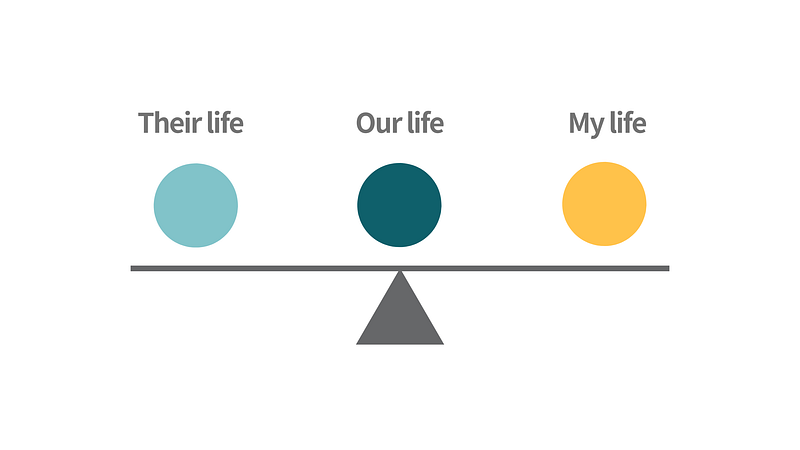
Themselves, In between, Myself.
The topics we discuss in communication can generally be divided into three categories: themselves, the space between you and them, and you
Most individuals tend to emphasize and focus on unveiling details about themselves. They prioritize sharing their own experiences and thoughts. Some people place their attention on discussing the topics that exist in the middle ground between themselves and others. However, it is rare to find individuals who genuinely show interest in what is happening in the lives of others.
If the focus tends to lean heavily towards self-centered conversations, where personal experiences take center stage. Sometimes it could be selfish because he/she dominate the whole situation.
I do not want these kind of conversation.
This is not conversation.
Empathy and sympathy are equally important
Empathy and sympathy are two different concept, despite their similar wording.
The idea of empathy is you understand the feelings of another person; while sympathy is the ability to feel the feelings of another.
Deep down, most individuals yearn to be truly listened and understood, even more than they desired to be loved.
Even some people may say “I don’t need others to understand me”, but deep down is because they do not think others will understand him.
He or she might do not need, but it does not mean that they do not want. It indicates a distinction between need and want.
If you are trying to be a conversationalist, empathy is important. Understanding and acknowledging the emotions that others are experiencing can hold significant meaning for the person you are communicating with.
It doesn’t necessarily mean you have to agree with their feelings, but by comprehending the challenges they are facing, you can begin to establish a genuine connection.
Even you might not able to understand and process, show them your intention, show them you are making your attempt to get through it, show them you are willing to understand. I assure you, it can transform the course of your conversation in profound ways and it creates a whole new dynamic.
I promise.
Final thought
Indeed, not everyone is naturally inclined to be a skilled conversationalist. However, I hold the hope that everyone can take a proactive step towards learning how to communicate effectively and continuously refine this remarkable art.
Here are the key takeaways to consider:
- Listen with undivided attention: Give your complete focus to the person you are conversing with. Truly listen to what they have to say without distractions or preoccupations.
- Follow up on shared ideas: Build upon the ideas and thoughts that others have shared. Show genuine interest and engage in meaningful discussions that expand on the topics at hand.
- Ask genuine questions: Demonstrate your curiosity and willingness to learn more about the other person’s perspective and experiences. By asking thoughtful and sincere questions, you can foster a deeper connection and understanding.
Simple ideas. Yet priceless.
Thank you for reading. Feel free to leave me some comments and clap as much as you can so that I could know you love my work x
You might want to read my previous pieces of life lessons too! Links are below, enjoy!