
EDUCATION
Why I Became a Waldorf Teacher
And why I cannot teach in a mainstream classroom
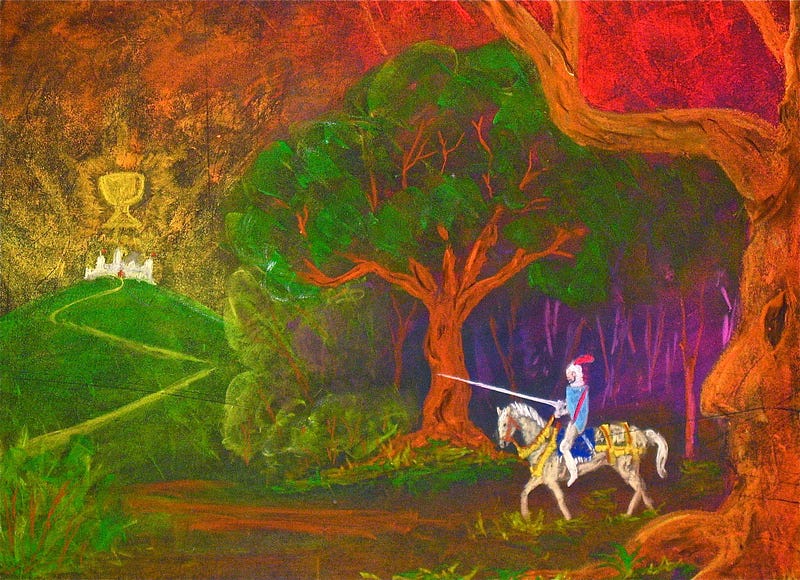
Twenty-eight years ago, I became a father, and my world and future aspirations changed — At least on the outside. On the inside, I was committed to living a life of self-exploration and made myself a promise that I would only work in a profession that embraced integrity and the sacred.
With that commitment, a friend told me about Waldorf education. On a trip to the Northwest, my partner and I, with our one-year-old son, took a tour in the kindergarten at the Ashland Waldorf School. The walls were painted in a cloud-like style called Lazure, creating an illusion that allowed the walls to disappear from solidity. A rainbow of silks was placed around the room, and wooden toys neatly awaited the children’s play. You can see examples here.
Here was Beauty. Here was Mystery. It was like walking through a sacred grove. And I wept. I cried because I felt deprived of growing in such a blessing.
I was hooked. I wanted this for my son, and I wanted it for me. Immediately, I enrolled in the teacher training at the Eugene Waldorf School in Oregon. We moved from Los Angeles, and I started my schooling.
After years of going through public school and college, I found myself in training where I was not just studying to pass the class and to achieve some diploma. I studied because I craved what they taught me.
I learned art, music, drama, storytelling all of which I had little or no experience. Delving into Steiner’s philosophy behind the education was both familiar and challenging, inviting me to look at the world in different ways. My soul soaked it all in. I worked late in the nights bringing forth these abilities because I wanted to. I became healed of old definitions — definitions such as I was not an artist, and only artists do art.
In contrast, years later after nine years of teaching at Waldorf schools, I enrolled in the teaching program at Dominican University to achieve a Californian teaching certificate to teach in a Waldorf charter school. Flashbacks of the apathy of going through mainstream education hit me.
While the purpose of the program is essential — to teach us how to teach — it is all about goals, taught to us in hospital-style, aesthetically bereft rooms. How can we get the children to read more effectively? How do we pass the State test? How do we state and track our goals for learning? And on and on.
At the end of the year-and-a-half training to get my certificate, my stamp of approval, I had to do my Teacher Performance Assessment or TPA (which I referred to a Total Pain in the Ass). This work consisted of writing down in detail everything to be taught in a lesson and why, according to state standards. After I passed and received my certification, my counselor said that I must be proud.
“No, I am not,” I replied. “Nothing was fulfilling about it.” I felt cheated of the valuable time I have left on this planet.
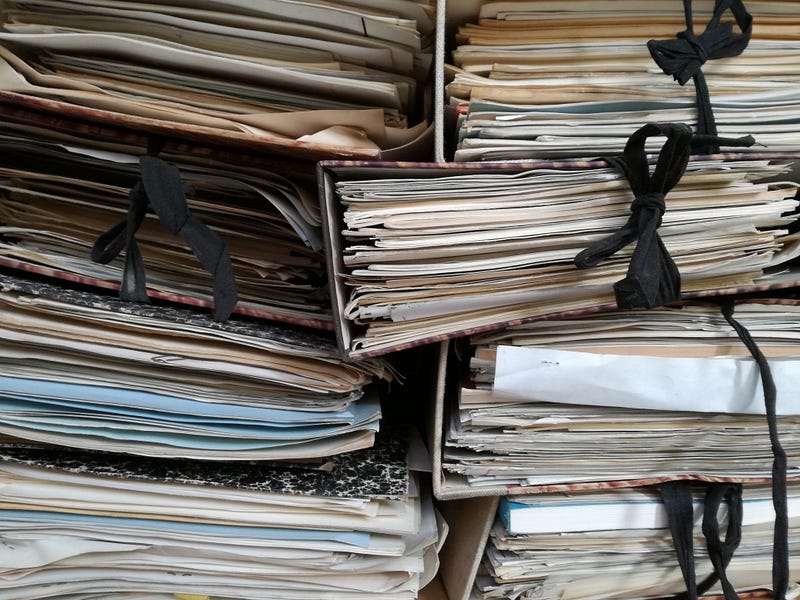
The same met me when I began the Beginning Teacher Support and Assessment (BTSA) Program that I had to enroll in because I was a “new” teacher. It was a giant binder full of worksheets. Worksheets to me are like forms that bureaucrats use to keep their world tidy and neat.
When the trainers told us that we would turn in our binder on our final class and that they would check them and return them at the end of it, I knew immediately that these forms meant nothing.
Just like all the worksheets and the tests I grew up taking — Meaningless, and bereft of spirit.
So what did I do? I practiced my creative writing in my most Kurt Vonnegut way with all the questions, never coming close to what my trainers (trainers is a rather apt word) wanted me to do. Blah, blah, blah, I wrote. And I passed. They read nothing.
My son went through K-8 in Waldorf education. When he was going through mainstream high school, he told me: “Dad, I am getting good grades, but I am not learning anything. I have figured out how to play the game.”
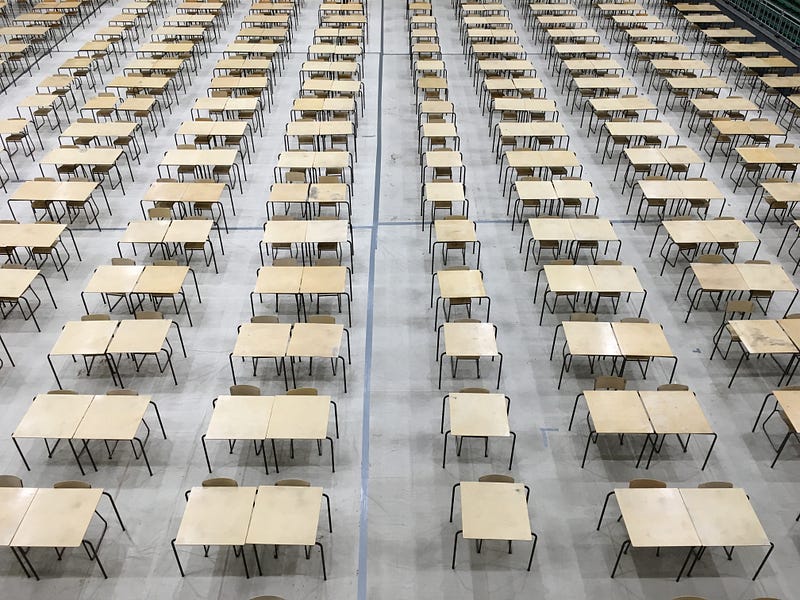
If you want to go to the roots of American mainstream education, read The Underground History of American Education, by John Taylor Gotto. He paints a picture of a system based on the Hindu-Prussian educational system of creating a caste society, where everyone knows their place. Carnegie, Ford, Morgan, Wilson, some of the leading proponents of establishing public education, wanted a utopia of a caste system, created by a factory-style pedagogy. They did not want equality for all. They had no desire to teach all American children what the private schools taught the elite.
The pedagogy of mainstream education is that every child is a blank slate to be filled up with facts and truths. It is dead materialism. There is little spirit to be found in the pedagogy, which, in turn, saps the soul out of the students and teachers. It is nothing more than a machine spitting out little cogs. It is a system where they train children to become little bureaucrats in institutions ruled by fear.
Growing up in such institutions, the idea of becoming a teacher never crossed my mind. My theme song was Pink Floyd’s, We Don’t Need No Education. I see that there is a fundamental difference in the education that I am committed to grow in and to share with my students and what I find in the mainstream approach.
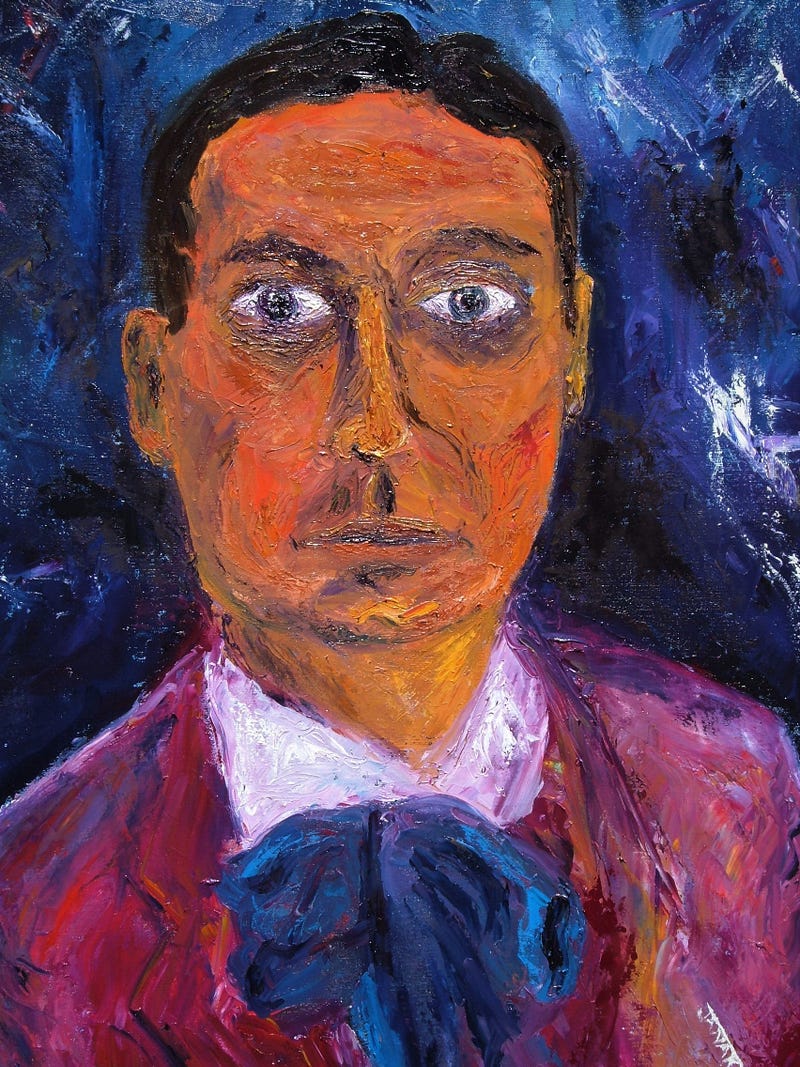
The first Waldorf school started in Stuttgart, Germany, one hundred years ago. Rudolf Steiner was approached by a cigarette factory owner who wanted to provide a holistic education for the workers’ children. Steiner, in his genius way, began to form a curriculum based on his picture of what makes up a human being. That there are three parts: The head (thinking), the heart (feeling), and limbs (the will/doing). He wanted to bring this three-fold picture of the human into education by creating three pillars: Truth, Beauty, and Goodness.
There are one thousand independent Waldorf schools in the world, and there is a host of charter schools and a few public schools that incorporate Waldorf education as their curriculum. I have taught in all three types. While this educational system that has been meeting the multiple intelligences that Howard Gardner spoke of, few public school teachers I have met have heard of Rudolf Steiner and Waldorf. You can read more here.
In Waldorf education, the means is the goal, while in public education, it is about achieving functionality, to be a functioning citizen who will keep up and perhaps get ahead of others. That is why, at one point in my education, I no longer did art.
The fundamental question of mainstream education instilled in the students is: How can I survive or perhaps succeed in the world out there?
In Waldorf education, the questions are: Who am I? Why am I here? What is it to be a human being? What is my connection with the world?
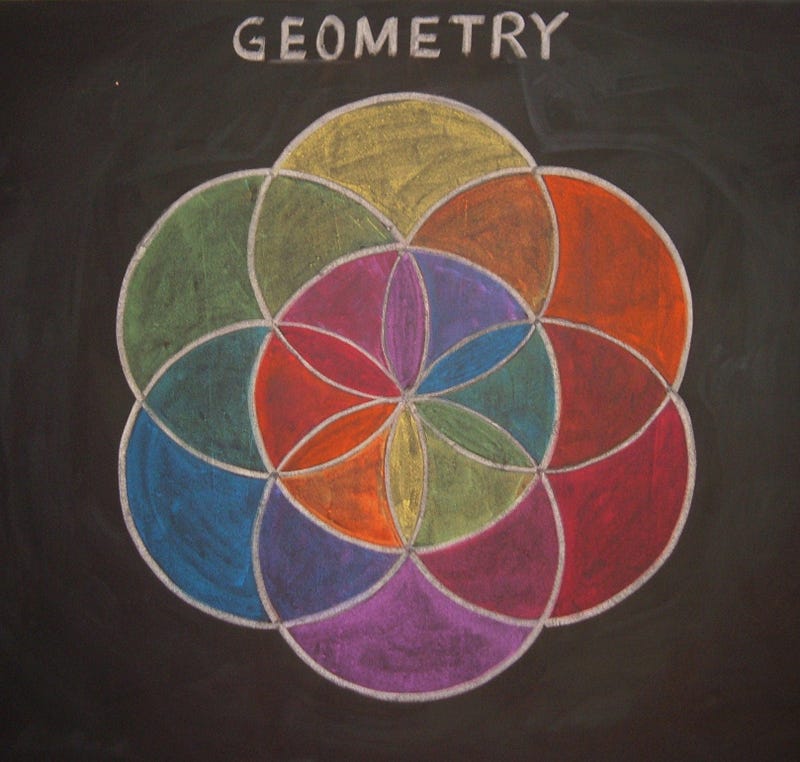
Waldorf education is a mystery school that keeps alive the sense of wonder. Until my Waldorf studies, I never dreamt of math being wonderful — I had only found it to be painful. But go into a 6th-grade class, for example, and the geometric shapes, artfully drawn, will take your breath away.
“Education must have something of the process of healing,” Steiner said.
I have not met anyone yet who was not wounded mentally or emotionally in some way. That goes for every child. Yes, children can be taught methods that will provide academic success with many of the methods out there. But do the educators have that healing process in mind?
Surely the child will feel good that he or she is right up there with the others, or even ahead, but what wounds may they have suffered along the way to achieve that success if they were forced to use that part of the brain before they were ready to? What other parts of the brain needed to be shut off to ensure success?
In my first school, I had a first-grader who cried at the sight of letters because her teacher forced her to read in kindergarten at some academic school. Such methods remind me of having a newborn stretched on some scale in full light after being curled up in the existence of the warm darkness of the womb. Yes, we get measurements that some experts find essential — to ensure he or she survives or competes with the weights of other babies, but what wound was inflicted in that act? What was the painful lesson the baby was given about the world that he or she just entered?
The means versus the end holds especially true with discipline, always a thorny topic.
Surely, you can go into some classrooms in a public school and see every child obediently sitting at their desks with folded hands. They know that the wrath of punishment will fall upon them if they move from that mold of behavior, and will be rewarded if they stay in their place (perhaps they will earn some school money to buy some toy).
This discipline is behaviorism. This is how we train animals.

We want to educate humans. Steiner talked about how different a Waldorf classroom might look. It might be a little shocking to those who like things in control. In creation, there is nothing in control. Control implies being at rest, and nothing is ever at rest in the stream of time. Earthquakes are a good reminder of that.
Waldorf education is an art form that happens every day in class. And since art is about discovery, every day needs to have discovery for both students and teachers. Is there discovery in the known, the controlled? Therefore, discipline in a Waldorf classroom needs to be creative, which certainly keeps the teacher on his or her feet; it is so much easier to go to the carrot/stick method (which I find myself doing at wit’s end).
Steiner taught that the teacher needs to be able to throw away all the previous night’s preparation when he or she meets the students the following day. The teacher needs to listen to the student’s needs and energy. It is a violent act in a way to force children to behave in a certain way that does not meet their energy. There is a need to go with the flow and not impose.
He felt that every day a teacher should feel like he or she stands on a precipice when they go the threshold of a new day in class.
As a Waldorf teacher, we are taught that it is not the knowledge that is important for the children — that’s not what the children want — it is seeing a human being standing in front of them, complete with wounds and inadequacies, striving to know those fundamental questions, without the hope of ever finding the answer.
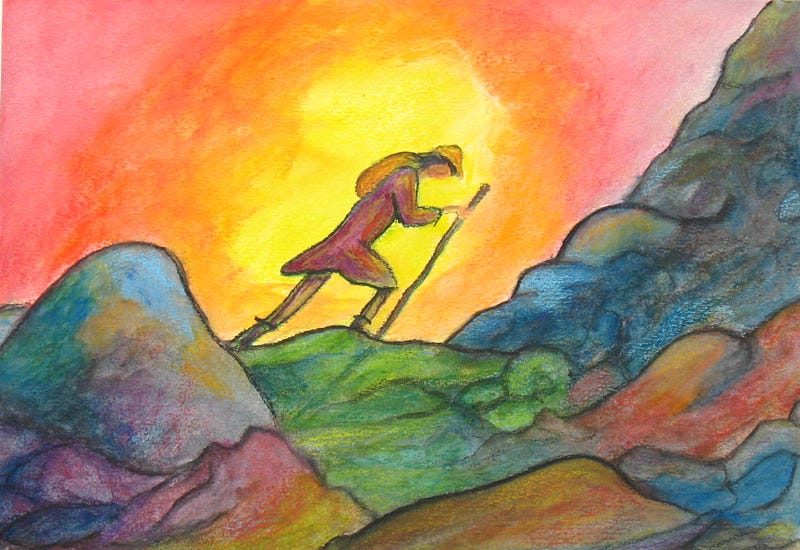
And so I teach, and learn, and grow in ways I never thought possible. While the students look on.
Thank you for reading. Check out my website, mindfulness-meditation-techniques.com for learning about various meditation practices and reading more articles and other writings. I have authored nine books, including The Teachings of Yama: A Conversation with Death. Visit my Author Page to know more. And if you liked this artwork of mine in this article you can see more on Pinterest.
Here is an article for parents, as well as teachers you might enjoy.
Finding it a challenge staying sane in this pandemic?


