
PARENTING
5 Things You as a Parent Can Do to Help Your Child:
And in turn, help your child’s teacher

For over twenty-five years, I have been both a parent and a teacher. I have been a class teacher in the Waldorf system, in the private, charter, and public school settings. In a Waldorf school teachers have the joy and responsibility of advancing with the class. This way, after years with the same children and the same parents, of course, we get to know each other really well. In the small schools I have taught in, we became more like a family. And, as in all families, all kinds of dysfunctional tendencies will rear their heads.
Every family I have had the privilege to work with have their strengths and challenges. I, and most of my colleagues (if not all), will say what I am saying right now: I love working with my students. They help me maintain a young spirit. Sure, many can be very challenging, but there is a love that blossoms between teacher and student.
Working with the parents, on the other hand, (and remember, I am one of you) is the tricky part. It is part of the job that can be the opposite of rejuvenating. I have seen many a teacher either come close to quitting or doing so because of a parent. I have been one of those teachers.
Parents can be excellent allies. Or they can add to the challenge of teaching.
I trust you are a parent who wants nothing but to help their child succeed and enjoy the school experience; it is in your interest that you want to be an ally to your child’s teacher. A stressed, unhappy teacher is not going to provide the best program for your child.
So how can you be an ally?
Well, the founder of Waldorf education, Rudolf Steiner, said, “You will not be good teachers if you focus only on what you do and not upon who you are.” To be a good teacher, a teacher has to do the inner work. A teacher needs to be vigilant to change, to evolve, to protect the children from harmful tendencies, to bring out hidden talents in themselves.
The same is true for the parent. To be an ally is to work on your self. It is the greatest gift to your child and to your self you can do. And in turn, you will be an ally for your child’s education.
Now the following is a list. It is not a complete list. There is so much a parent can and needs to do. However, this is a start. I am generally leary of listings. I do not think it is a coincidence that if a ship is off balance and has too much weight on one side, it will start to list. The same is what happens when we are overwhelmed with lists in our lives. I know it is for me.
So in order not to have you list and capsize, here is my recommendation. Go through the list first. And you can mentally say to each: (A) Got that one somewhat mastered; (B)working on it; ©not so good at this one; (D)have not even tried this; (E)no thanks, not important.
If a listing is A or B for you, just continue as you are. Well done. You are doing a great job. If it is an E, just ignore it.
Now, if it is a C or D, there is work to do. Excellent. Self-awareness and development is a life-long process.
It is a Process. Remember that. Process.
Choose one at a time. Work on it until it becomes a B. And then work on another until that becomes a B.
Now when you run out of Bs, then you can work on mastering one of those Bs, turning them into As. And keep doing that until you are a Master Parent. Good luck. I have never met one.
Practice makes better is what I tell my students every day. It does not make perfect. That is a debilitating myth. Remember, it is a process, a never-ending one. And you will probably realize this, if you have not already, that working on one will affect the others on the list. All of these qualities are interrelated.
So please remember that. If you do, you are already setting an example for your child.
So here we go.

1. Relaxation.
You need to find tools to let go of your stress. Stress is a killer. It is terrible for your health. Everyone in the family can feel it when you are stressed. It goes out like a ripple on a pond, touching everyone. I would say that the most challenging parents are the stressed-out ones.
A stressed-out parent is like a little dust devil, kind of like the Tasmanian Devil in the Bugs Bunny cartoons. If a teacher is having a stressful day and a stressful parent comes to the teacher with a complaint, most likely, it will not be pretty. Children do not thrive in the energy field of a stressed parent or teacher.
So how to remove stress and relax?
To come to a place of relaxation requires time. Time for you. You may be one of those parents (and most likely a mother) who is doing it all — a thousand things on your plate. Not to mention, you are living and parenting through a pandemic.
Right now, as I am writing, I am listening to soothing music. I will be painting later. And I will go for a walk with my wife in our quiet neighborhood. Those help me relax. Playing my guitar does as well.
What helps bring relaxation to you? Yoga, Tai Chi, exercise, breathing techniques, listening to guided visualizations, being in nature, gardening, cooking, shopping for yourself, reading, watching something that is relaxing or humorous or uplifting (news not recommended for this!)?
I am sure you have a go-to. Make sure you take the time, so you do it. Take care of yourself. Recharge.
If you are always busy doing, it is like exhaling all the time with little shallow breaths. Inhaling is coming to your self. Then you can breathe deeply.
You are not just doing it for you; you are doing it for everyone in your life.
2. Trust
Trust your children and trust your teachers.
To have trust is to show you are free from fear. You do not want fear parenting your child. All you will raise is a fearful child. As an educator, it is so sad to watch a parent hold their child so tightly that they are smothering in this “caring” embrace. It is not caring. It is out of fear of losing your child or seeing your child get hurt.
Your child will get hurt. I guarantee it. No matter how much you hold on. As a parent, there is a protectiveness for one’s young. It is natural. It is good. But, it needs to be in balance.
As the child ages, it is time to let go more and more. Khalil Gibran in The Prophet said: “Your children are not your children. They are the sons and daughters of life’s longing for itself.”
For example: at one of the schools, there was a parent who made drop-off an emotional ordeal for the young child, as though the child was sailing off on an ocean liner. While the rest of the children skipped off to movement class, this child would sulk for quite a while.
If trust is an issue, most likely, there is a lack of trust in many areas in your life. You might not be able to trust that your child will need will come to her/him. This opening and allowing does not mean you do not discriminate what comes into your child’s life as a protector and guide; it just means that whatever lessons your child needs will occur.
If you can trust Life’s Longing, then included in that is your child’s teacher. Is that teacher perfect? Nope. Not at all. Is the teacher working on her/himself? Hopefully. Does the teacher have a desire to take care of your child and to educate him/her in the best way possible? Probably, or they would not be a teacher.
Of course, there are bad teachers. And it becomes easier to discriminate the good from the bad when you are in a balanced, trusting place usually. And if you have learned to trust, you can then trust your gut that says something is not right. And you will act accordingly.

3. Be an authority, a protector, a guide to your child
Just as the teacher needs to take on those roles of authority, protector, and guide, to offer what is best for your child’s growth and well-being, so you must as well. I do not consider myself a friend of my students. I leave that role to the child’s peers.
So I recommend parents do as well.
A friend is equal. Friends come and go. As a parent, you will always be one. Yes, your interactions with your child will vary as he/she grows up. If you are a parent, especially a parent who has learned to take care of your self and trust Life’s Process, then you will be unattached to your child and can allow her/him to grow in freedom.
To be unattached does not mean not loving your child. You are allowing them to grow up to be who they are supposed to be. Not what you want them to be.
Children need to look up to adults as they grow. Looking up is symbolic of aspiring toward a goal. When I greet the children each day, I do not bend down to their level, I stand more erect, so they look up into my eyes. They are like sunflowers searching the light. If I stoop, their gaze does not rise to a higher level.
I am called Mr. Stagnaro and not Janaka. Mr. Stagnaro is the name of my role. Just like Pops or Dad is what my children call me. My 28-year-old does not call me by my first name. That would be weird to all of us.
As a teacher, an authority figure, I am not going to negotiate every request I make. Sure there will be some choices, but I am the captain of the ship. If children do not have healthy boundaries, they will feel insecure. As they grow older, those boundaries grow wider.
My friends do not give me boundaries. That, too, would be strange unless it is directly related to them. They do not tell me what I can or cannot do.
If your child grows up in a house where there is loving authority, then they will be at school respecting authority. I have seen a lot of children who live in a lenient household, and they will expect everything done for them, and believe they can just say no if they “do not feel like it.”
The home and the classroom need to operate as a team, with those with experience in charge. And being older, we adults have more experience.
4. Communicate effectively and respectfully and directly
I see two extremes in communication with children, with both teachers and parents. And they both do a disservice and even harm to children.
The first style is that of the tyrant, who is not the loving authority figure in number three. This authority figure is the yelling, demanding, you-better-or-else dictator. This type of person does this because they do not have trust in life, and who probably has enormous stress. And most likely experienced this type of authority growing up.
The other one communicates as a friend. It is all about negotiation. “Is it okay if we go now?” “Put our books away, okay?” One of my mentor teachers caught me doing that to a student and asked, “Was that really a question? Was there an option?” No, I replied. “Then be direct.”
I was afraid of accepting my loving authority; in fact, I had a difficult time even using the word authority. I was scared to be like my father.
Communicate what is going to happen and if there are any alternatives to the plan. If something bothers you, communicate it. Do not let a child walk all over you. If your child does something you do not like, tell them. “What you just said was painful to me. Do not talk to me that way. Thank you.”
When you practice direct communication with your child, you will most likely practice it with your child’s teacher. As teachers, we do appreciate it. There is nothing worse than “parking lot conversations” with other parents, sharing the teacher’s shortcomings. It feels like a betrayal and only promotes negativity. And if the parent is talking about the teacher in front of the child, then the child will probably develop a toxic attitude to the teacher, or at least a conflicting one. Not much learning will happen anymore, which, in turn, fuels the perspective of having a lousy teacher.
Direct communication is not unloading. In Buddhism, there is a practice called Right Speech. And Right Speech is speaking if it is helpful, true, and kind.
So if you have a concern, set up a time to speak with the teacher(please, not before class is about ready to begin). Then ask yourself if this conversation will be helpful for your child. Is what you are going to say true? It may be accurate that your child said, “Harry threw the ball on purpose into my face.” But you do not know if that is the truth. Or if Shelly does not like your child anymore.
Finally, are you able to express your concerns for your child in a kind, respectful manner? Saying something like, “I don’t think you know what you are doing,” is not the kindest of words to throw into a conversation. The teacher will likely throw up defensive walls and will have a hard time listening.
Communication is not easy. I have taken several courses in it as part of my professional development, which in turn has helped me in my family arena. However, there is constant growth needed in this area.
5. Dive into your self
Who are you? I mean, really? Yes, you could be a dad or mom. You work at some job, whether at home or out. You have what you have built up around you: your things, your friends and associates, your family. You have your social strata and your neighborhood. You have your finances. You have your accomplishments.
However, all these are in the outer world. People can be so focused on creating the world around them or warding it off, that they neglect to go inside and explore.
You are so much vaster than who you think you are — all those definitions you have wrapped yourself in. However, the only way you are going to know that is by going inward.
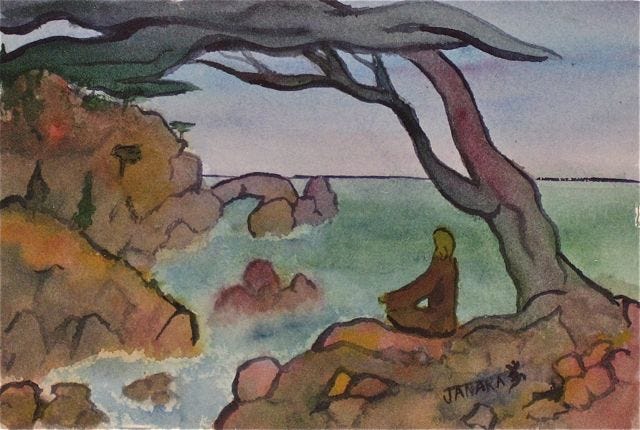
You are like the ocean. Your life may be like nearly every “normal” person, just surfing and paddling, some snorkeling trips thrown in. Few have put the scuba gear on and gone deeper. And fewer still have gotten into a submersible and gone into the dark depths.
I do not know about you, but there have been times in my parenting, especially when my child has done something that pushed a button, and my authoritarian father would rage on in. Before exploring the depths, I would act out, causing suffering, and move on. None the wiser.
Now, after 30 years of meditating and other self-reflection work, when good old Dad bellows forth, I can check it quickly, and apologize.
When one is working with children — parents more than anyone else — we owe it to our children to deal with our sea monsters.
Those little beasties that lurk in our depths people do not like to see, hence the surface activities. However, there is a significant loss to not taking the courage to meet and to go past them, for the ocean bottom is a gold mine. There is a richness there that nothing in the world can compare.
We all owe it to our children to take the plunge.
How?
Meditation is key. Meditation opens up your mind to all your thoughts and mental tendencies. By looking at them, by allowing them to be, and not by suppressing them, you free yourself from their power.
The key is not to have any judgment over any thought that arises. A thought might be beautiful. It might be monstrous. Just watch it.
Who is this you who is watching the thoughts? This you, who is free of thoughts? This you that is just Awareness?
Ponder that.
There are many meditations out there. On my meditation website, you will find a host of them. Choose one and stick with it a while. You do not need a big block of time. Twenty minutes is sufficient to make a change. After all, you are a parent. You have responsibilities.
I knew one parent who went from a surfer on the waters to someone who meditated hours on hours. He no longer made time for his family, and they divorced. That is capsizing. Twenty minutes is good.
Then there is counseling, which could be spiritual or psychological. It is nice to have another’s feedback, especially by one who has been working on themselves or who is a professional. Such guides can offer a different perspective. They can be a great support.
Self-reflection through tools like journaling; art; intuitive practices, such as the Tarot, I-ching, Runes, and Astrology; retreating into the silence of nature; reading self-discovery books; are all good and useful.
Trust me, while the surface is exciting (also tumultuous), the depths have a Peace that will relax you like nothing before, will give you a better sense of trust, will provide you with a balance of loving strength. You will communicate fearlessly and thus lovingly.
And then you will become a perfect parent!
I am just kidding.
You can never reach that perfect finish line. But you can be a better one. Your child will thrive under your wise care. And you will surely be an ally for your child’s teacher.
Have fun. Happy adventures. Enjoy the journey.