
Why I Am So Worried About a Coming Vaccine for COVID
These are some things I’d like you to think about.
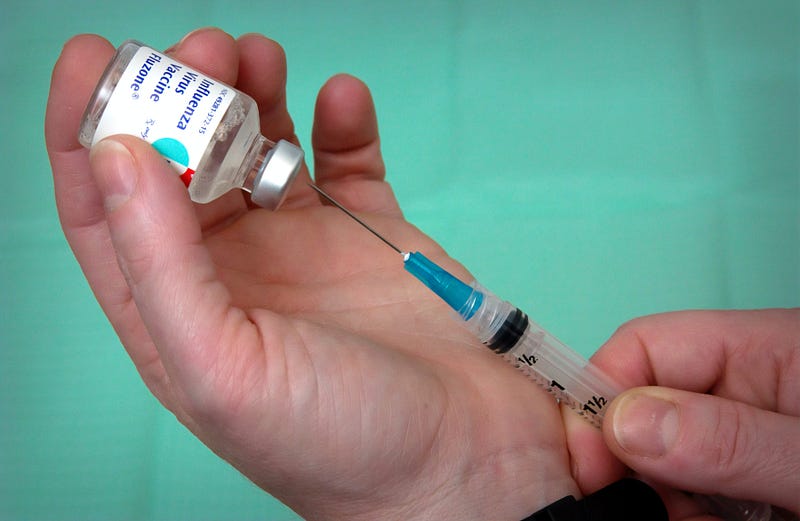
Just this week, one of the universities in Middle Tennessee aired an advertisement on television. The commercial urges people to sign up to be a COVID vaccine test subject — voluntarily.
According to WKRN.com, researchers have gathered enough information about COVID-19 to begin evaluating a vaccine in up to 30,000 subjects. (Vanderbilt needs 1,000 volunteers for COVID-19 vaccine trial.)
With the first COVID death recorded in China on January 11, 2020, and the first reported case of COVID in the USA on January 21, 2020, society learned that this virus was easily transmitted and virtually unknown. (World Health Organization)
We have been required to close the doors to all but essential businesses, shut ourselves off from our loved ones — especially those in nursing homes, assisted care facilities, and hospitals who need our interaction the most, socially distance, and wear masks. Or none of this because too many aspects of the disease are unknown. The story seemed to change weekly.
Now, some six months after the virus crept into our nation, scientists and researchers are looking for volunteers to test the vaccine.

I for one am skeptical and concerned. I understand the desire for urgency because of the ease of transmission. I understand the desire for urgency because of all the unknowns. I understand that researching a virtually new disease is difficult. I’m not one for conspiracy theories, but I do question the medical and scientific community’s ability to produce a vaccine that is safe and effective in just six months.
Let me explain.
REASON #1
A few years ago, my husband caved in and got the pneumonia shot because he was in an “at risk” group. A couple of months later, he thought his asthma was “acting up” again. In the doctor’s office, he was given the test for pneumonia, and guess what, he had pneumonia.
BUT he had the vaccine.
We were told that day that the vaccine was not always effective. (And this is a vaccine that has been around for years.)
Will the vaccine be effective for ALL people?
REASON #2
Standing in line at our local pharmacy for a couple of my husband’s prescriptions, I overheard one gentleman talking to another. The conversation went something like this:
“So, how’s your wife.”
“Not doing so good. Just had her to the doctor, and I’m picking up a prescription for her. She has the flu.”
“The flu? I thought she got the vaccine.”
“She did. Doc said that it was less than 50% effective this year.”
If they can’t get the yearly flu vaccine to be effective after all these years, how can they get something safe and effective after only six months?
REASON #3
Many people are allergic or intolerant to certain chemicals, medicines, and foods. I’m no different.
When my kids were young, we took my mother to McDonald’s for her birthday so my kids could play in the indoor play yard while we visited. I had gone to bed early the night before, gotten a good eight hours of sleep, and woke exhausted. So exhausted that I had my two kids climb into bed with me and watch cartoons. I fell back to sleep. Coffee didn’t help. That afternoon, I fell asleep at McDonald’s. In a visit to the doctor, the blood test showed that my bloodstream was better than 10% allergens. The only thing I had been doing differently was to consume “sugar-free” foods in an effort to lose weight. I hadn’t lost any weight, and my energy level was depleted. In our discussion, without a scratch test, the doctor said he could only guess that I might be allergic to artificial sweeteners.
At home, I threw out all the “sugar-free” foods and began to feel more energetic.
I have, because of this experience, become an avid label reader. I have also become an avid label reader because hubby is a diabetic and artificial sweeteners spike his blood sugars. I have also become an avid label reader because hubby is a dialysis patient. Included in the ingredients I look for are phosphorous, phosphates, and the artificial sweeteners: aspartame, Nutrasweet, and Sucralose.
BUT, have you looked at the ingredient list for any of the vaccines that are already out there.
The CDC lists 9 influenza vaccines. Included in their ingredients are monobasic sodium phosphate, dibasic sodium phosphate, monobasic potassium phosphate, formaldehyde, and monosodium glutamate.
And for those of you who are lactose intolerant, lactose is also an ingredient in some vaccines.
Will the COVID vaccine contain ingredients that are unsafe for our health? If so, what is the purpose to include that ingredient?
REASON #4
Several years ago, I decided to purchase a generic version of the allergy tablet we were taking. It did nothing to alleviate our allergy symptoms, so we talked to our doctor at the time.
She told us that many times although the active ingredient is the same, the carrier agent in the generic tablets differs from the carrier in the name brand tablets. Sometimes, a person tolerates one carrier but not the other.
When we went back to the name brand tablets, our allergy symptoms were drastically reduced.
Is the carrier they plan to use in the COVID vaccine going to be one that my system will not tolerate?
Say what you will about COVID-19 and a possible vaccine. Say what you will about scientists and researchers.
But I for one am skeptical about a vaccine for COVID-19 and I am rooting for the researchers at the University of Houston who are developing a filter that will trap the COVID-19 virus (and, I hope, other viruses) and kill it. That is the research I can get behind.
Read about their research here.
For more of my articles, visit
Rebecca Writes The articles and comments in Rebecca Writes relate to living in this crazy world. Articles about being a parent and grandparent to traveling to relationships to education to health and wellness to being a decent human being — and beyond.
Rebecca (Becky) spent 34 years in a teaching career, but when she retired in 2014, she picked up her pen and pursued her passion to write. As a high school English teacher, Becky held the philosophy that she wouldn’t give any writing assignment that she personally wouldn’t or couldn’t do. That philosophy strengthened and broadened her own writing.
In addition to publishing her writing on various platforms, Becky also blogs at Life is for Living, a blog to encourage, motivate, and help others live the best life possible. As an extension of Life is for Living, she also publishes a weekly newsletter, Let’s Chat. (Check it out HERE.) Life is for Living also has a social media presence with the group Coffee on my Porch. (Check it out HERE.)
After teaching writing for 34 years, Becky began Ink & Keyboard, a blog for writers at all levels. She supplements what she writes on the blog with a subscription newsletter, The Writer’s Notebook (Check it out HERE.), the social media group Ink & Keyboard (Check it out HERE.), and a Medium publication Ink & Keyboard (Check it out HERE.).
Here are some other articles you might be interested in


