
Why Email Will Save Your Creative Business from Extinction
Social media’s not enough. We’ve got to own our customer lists
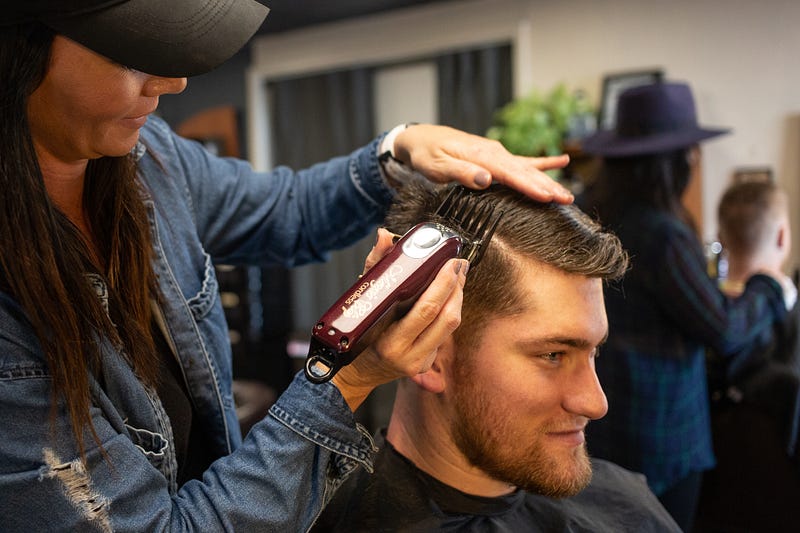
My cousin’s wife owned a beauty shop for a couple years. They knew nothing about cutting hair (nor owning a beauty shop), but the business looked promising, so they relied on rented chairs and a percentage of sales to keep the business afloat.
Like many hairdressers, the stylists are independent business owners with their own clients. The shop gets chair rent and (in some cases) a percentage of sales). All fine and good for my cousin. The business was had a steady income stream the day the signed the papers. At the surface everything looked promising.
What they didn’t count on were the personality clashes between the new owners and the stylists.
Soon after buying the business, all the stylists left the shop. Boom. No more income. No more customers. My cousin’s wife knew Jack-all about cutting hair, so overnight they went from a good income to zero income. Nothing. They couldn’t even serve a walk-in customer had they wanted to. The next morning they locked the doors.
The stylists owned the customers, not the business.
When the stylists left, they didn’t lose money. All the stylists had to do was find an empty chair at a welcoming salon. Maybe take a day or two in their busy city. But my cousin and his wife had rent and bills to pay, immediately. Without customers — without cash flow — they had nothing.
My cousin and his wife tried to cobble the business together, but lost everything soon after. They had declared bankruptcy and lost their entire nest-egg.
Although, there were many factors that went it to the loss of their business. I’m sure there we’re some bad decisions made on all sides, but the one key principle that could’ve saved them from extinction was one of the most-basic lessons of business:
We must have control of our customer list.
Social doesn’t have your back
When was the last time Facebook or Snapchat had your back on anything? When was the last time you got an email or phone call from YouTube, asking you how things were going, and if there was anything they could do to help your creative business grow? When was the last time you got a free boost on Instagram, just a tiny leg up, when you really needed some help with your social following?
Never.
Help isn’t in the model. Because social media isn’t there for you. Social is built to earn its money through free content, generated by billions of reinforced, addicted users. And they use that free content to generate targeted advertising revenue for the parent company. If you run ads they don’t care if your ads make money or not — only that they get paid for the ads you run.
Nothing in the steps of the social media business model involve growing your business.
Social owns the customer list.
You can’t take your followers with you. When one social platform becomes obsolete (and they will), you’ve got to built a new following from zero at the new platform.
Sure, it’s nice they let us park our business there free, but it’s not for altruism. We do all the work for the parent company. We help them build their customer list, not ours.
If our creative business is built around social followers, we become my cousin’s salon. Overnight we can lose everything. Every single customer. You’ve got no recourse. You’re small. They’re not. Even if you’ve got a million followers, you’re small.
This isn’t a dig against social media.
Creative business owners have more opportunities through social media than they’d ever have without it. More money is made faster through social advertising than through most other traditional channels.
Social media is a gift to creators. But it’s not the whole story. If we don’t control our customer list we’re gambling the life of our business.
So, what’s the answer?
Email is the old, crusty, friend of the creative business owner. Email is proven, targeted, and direct. Every email you send gets delivered. Try that with a social post.
Email is the great equalizer.
A large business can’t buy their way up your in-box. Everything is delivered chronologically (or sent when you want it sent). Your small email carries the same weight as that coupon email from Bed Bath and Beyond.
No matter what happens to your social media followers you still own your customer list. When Facebook is finally gone someday and Bookface is the latest social platform, you’ll still have your customers.
Today, there are many creators who rely 100% on social media to keep their business humming. The model works. Today. So why mess with it? I feel for these people. They mean well. Someday they’ll lose everything and wonder what happened. They’ll probably get mad a Zuck.
We sell through email. We connect with social.
This way the most important part of our creative work — the selling part — isn’t dependent upon an algorithm change, or how much money we’re willing to spend per click. Our income is controlled through the list we own. We connect through our social channels.
If we lose a social account, sure it stings, but we’ll be back tomorrow with selfies and breakfast pics on some others platform.
The golden combination
So, here’s the model. You use your social accounts to connect with your audience on a personal level. There isn’t a better way to build community and gather a tribe of like-minded people around your work.
Social spreads better than anything.
Your work can be an overnight success with a few key influencers picking up your content. But we don’t use our social accounts as our main source of income.
We sell with email instead. It’s a measured sequence, where every customer gets the same experience every time. With social, everyone’s experience is different. Most of your followers walk-on in the middle of the conversation. They’re not just following you. They’ve got a thousand other conversations going on in their feed, all trying for a piece of attention. Meanwhile, your follower is scrolling and ignoring almost all of the content.
We entice all our social followers to join our customer list — the list we own. Not Zuck’s list. When we own our list we own our business.
So, we connect with social (email’s not as conducive for connection. There’s too much of a delay), but we sell through email. Sure, you’ll sell through social too, but you should try to do everything you can to grab all your followers of social and onto your list.
Every (or almost every) social post you make should be tied to a call-to-action to join your email list:
- “Here’s my breakfast.” If you like breakfast, you’ll love my free course on X
- “Here’s my dog.” If you like dogs, you’ll love my free book about X
- “Here’s my before and after picture.” If you want the same results, here’s my free program for X
It’s not hard to tie the connect each post to your lead-generation, we just have to be a little creative. Instead of trying to sell them a one-off, bring them to your email list and sell to them repeatedly, for as long as you can keep them a loyal customer.
No one wants to join you email list
Huh? Yep. So, never make it about your email list. The list is for you. Your email list isn’t about your customer. When we invite people to join our email list, we’ve got to give them an enticing reason to do so. We give them a transformative experience.
Not an invitation to “keep in touch,” “join our newsletter,” or “subscribe today.”
Look at the language in my bio at the bottom. That is a call-to-action for creators to join my email list. Nowhere in that call-to-action do I say “join my list.”
Instead, I ask these indies to enroll in my free email masterclass. Every word of copy is deliberate. I test these often and I change them often to see if I can improve my conversion. I offer something valuable to the reader, because I know she won’t part with her email address to just anyone.
We don’t change email addresses often.
You know how big of a pain it is to tell everyone you’ve got a new address. Usually, we end up adding new email, but can’t fully-eliminate the old one, for fear there’s someone out there who might need to contact us. People change social profiles all the time.
Once a customer is on our email list we don’t have to worry if they move. We can contact most people five-ten years from now and they’ll have the same email address, even if they’ve lived in six different places.
When we own our list we own our business.
Email is the best insurance policy you can have for your creative business. Sure, it’s a lot of work. No one said it wasn’t. Not every email will work. Not every sale will close. Most won’t. But email is predictable once you find combinations that work for you. All you have to do is grow your list.
If you’re a writer or creator and you’d like to grow your first 1,000 email subscribers I’ve got a free masterclass for you. Enroll here.
We’re waiting for you.
(Enroll in My Free Email Masterclass: Get Your First 1,000 Subscribers)
August Birch (AKA the Book Mechanic) is both a fiction and non-fiction author from Michigan, USA. A self-proclaimed guardian of writers and creators, August teaches indie authors how to write books that sell and how to sell more of those books once they’re written. When he’s not writing or thinking about writing August carries a pocket knife and shaves his head with a safety razor.

This story is published in The Startup, Medium’s largest entrepreneurship publication followed by +444,678 people.
Subscribe to receive our top stories here.


