
Why “Domain Knowledge” is IMPORTANT for Data Science Jobs?
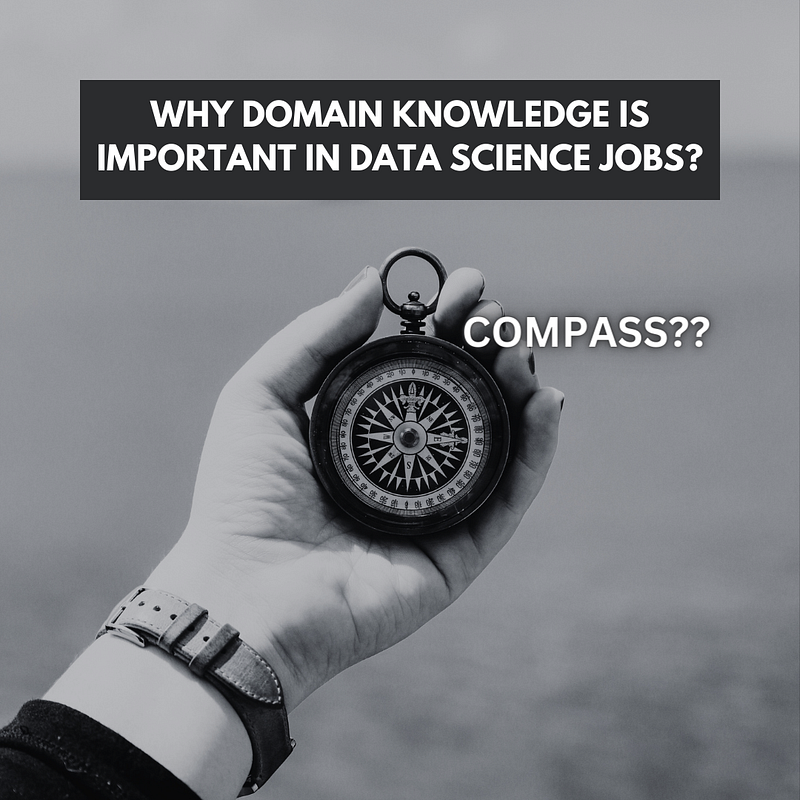
There is a treasure mine of information waiting to be unearthed in the ever-changing realm of data science. But here’s the catch: More than technical prowess is required to unlock the full potential of data science. Domain knowledge is the secret sauce that turns data into useful insights. In this story, I’ll be your guide, explaining why domain expertise is important for data science employment and how it may help you stand out in this exciting industry.
The Data Science Landscape
Consider yourself in the cockpit of an aeroplane. There are several buttons, switches, and displays. But what good is all of that if you can’t fly? Data science, similarly, is more than just crunching statistics and constructing models. It is about comprehending the reality represented by the data and properly navigating through it.
Defining Domain Knowledge
Simply said, domain knowledge is your ticket to knowing the sector or business in which you operate. It includes industry-specific experience, insider knowledge, and a thorough awareness of the field’s particular issues and complexities. Domain knowledge is your compass in any domain, whether it’s healthcare, finance, marketing, or any other.
The Importance of Domain Knowledge in Data Science Jobs
So, why is domain knowledge such a big deal in the realm of data science jobs? Let’s dive into the treasure chest of reasons:
1. Context is King
Consider being given a big dataset full of numbers, dates, and labels. It’s like attempting to solve a jigsaw with missing pieces, without domain expertise. However, with a thorough grasp of the area, those figures come to life. You understand what they represent, the importance of trends, and the relevance of anomalies. The tale may be found inside the data.
In healthcare, for example, understanding that a specific lab value indicates a vital health indicator might mean the difference between life and death. You may miss a critical diagnosis if you lack subject expertise.
2. Framing the Right Questions
Data scientists are problem solvers as well as number crunchers. Domain knowledge aids in the formulation of appropriate queries. It is the compass that will navigate you through a big sea of facts. You can find yourself adrift, tackling irrelevant problems if you don’t have it.
Example: Domain expertise may assist you understand consumer behaviour in e-commerce. Do they ditch their carts due to exorbitant costs, perplexing checkout procedures, or something else entirely? Understanding the domain allows you to ask the appropriate questions and provide successful answers.
3. Data Selection and Relevance
Not all information is created equal. Some data is valuable, while others are simply noise. Domain knowledge allows you to select the most relevant data sources and variables. It’s like understanding which elements to include in a winning dish.
For example, if you’re developing a model to forecast stock prices, you should be aware of which economic variables are important to your domain — interest rates, inflation rates, or geopolitical events. Choosing the best ones is a game changer.
4. Cleaning Up the Mess
Missing numbers, outliers, and discrepancies exist in data. Your janitorial toolbox is comprised of domain knowledge. It explains how to clear up the mess quickly and effectively.
In manufacturing, for example, a rapid increase in sensor data might signal a defective equipment. Without domain understanding, you may mistake it for a data error and lose an important maintenance opportunity.
5. Crafting Features with Finesse
Creating features(Feature Engineering) is an art form. It is all about developing relevant variables that will feed your models. The palette for this art is provided by domain knowledge. It assists you in understanding what makes a feature significant in your particular domain.
For example, knowing legal vocabulary and document structures can help you build features that correctly capture the essence of the content in natural language processing for legal documents.
6. Predictive Power
Domain knowledge models are like guided missiles: they hit the target. They are not only accurate, but also actionable. Stakeholders can rely on them since they correspond to their domain-specific intuition.
For example, a fraud detection algorithm that is familiar with banking laws and client behaviour patterns is more likely to detect questionable transactions.
7. Effective Communication
Data scientists do not work alone. They work as part of a team, and their job has an impact on real people. Domain knowledge is a global language that connects data scientists and stakeholders. It guarantees that communication and collaboration are effective.
For example, when presenting healthcare analytics to doctors, it is critical to speak their medical language. It improves the relevance and actionability of the findings.
8. Risk Mitigation
Every domain has its own set of hazards, including legal, ethical, and operational concerns. Domain expertise enables you to successfully identify and reduce these risks. It serves as your safety net.
In the insurance business, for example, knowing actuarial science and regulatory compliance is critical to ensuring that pricing models are not just lucrative but also legal.
9. Ethical Considerations
Data science is about people, not just statistics. Domain knowledge assists you in negotiating your domain’s ethical environment. It assures that not only are your data practises technically competent, but also ethically sound.
For example, when designing AI for human resource recruiting, domain expertise can assist you in avoiding biases that discriminate against specific populations.
10. Staying Ahead of the Curve
Domains change. There are new trends, policies, and technology emerging. You risk becoming outdated if you lack domain expertise. It’s your compass in an ever-changing terrain.
In the field of digital marketing, for example, maintaining up to speed on the newest algorithms and advertising platforms is critical for creating effective campaigns.
How to Acquire Domain Knowledge
Now that you're convinced of the importance of domain knowledge, the next question is, how do you acquire it? Here are some practical steps:
1. Courses and Online Learning Platforms
The internet is a wealth of information. Websites such as Coursera, edX, and Udemy provide a wealth of courses in a variety of areas. There is a course for everyone, whether you want to learn about healthcare, finance, or even the culinary arts.
Tip: Consider courses offered by respected schools and industry specialists.
2. Industry-Specific MOOCs
Some of the world’s leading institutions provide free online courses. Access to a wide range of disciplines is available through MIT OpenCourseWare, Stanford Online, and Harvard Online. Right from your screen, you may dig into the depths of domain-specific information.
Tip: To obtain a better grasp of these courses, go at the lecture notes, assignments, and resources.
3. Domain-Specific Websites and Journals
Investigate domain-specific websites and magazines for in-depth information. Websites such as PubMed for healthcare and IEEE Xplore for technology provide an abundance of research articles, papers, and tools.
Tip: Subscribe to emails and alerts to stay up to speed on the most recent research.
4. Books and Textbooks
Books are everlasting sources of information. There is a wide collection of domain-specific literature waiting for you, whether you like traditional books or e-books.
Tip: Check university reading lists for suggested texts in your chosen field.
5. YouTube and Podcasts
Do not undervalue the power of multimedia. Industry experts’ YouTube channels and podcasts might give accessible insights into your subject.
Tip: Follow channels and podcasts with a high reputation for accuracy and depth.
6. Professional Associations and Conferences
Joining professional organisations in your field is a wise decision. These organisations frequently offer information, conferences, and networking opportunities.
Tip: Attend conferences and webinars to network with professionals and peers in your industry.
7. Data Repositories
Many organisations, governments, and research institutes make domain-specific datasets available. These datasets serve as portals into your domain.
Tip: Look for datasets for hands-on learning on Kaggle, Data.gov, or domain-specific repositories.
Conclusion
Domain knowledge is your North Star in the world of data science. It’s the distinction between crunching numbers and turning data into useful insights. It’s your ticket to understanding a domain’s complexities, posing the correct questions, and designing important features. It guarantees that your models are not just correct, but also understandable and actionable. Domain knowledge is the common language that bridges the communication and cooperation gap between data scientists and stakeholders.
Remember that developing domain expertise is a constant activity as you commence on your data science journey. It’s not only about knowing what you know now; it’s also about remaining current on domain-specific trends, legislation, and changes. It’s about embracing your domain’s changing terrain and constantly extending your expertise.
Postnote:
In my quest for domain expertise, I’ll be sharing what I’ve learned about each topic in forthcoming tales. I’ll be your guide in the realm of data science and beyond, whether it’s decoding the complexities of healthcare, interpreting the complexities of finance, or delving into the secrets of marketing.
Follow me on Medium if you want to join me on this knowledge-filled voyage. Let us jointly explore the intriguing areas of data science and discover the limitless possibilities it provides. keep interested, keep informed, and let’s dig deep into the world of data!
- ⭐️ Click here, You can also buy me a coffee if you like this story. It will be a great help to me. Thank You!


