
How Osteoporosis Ain’t Just About A Calcium Deficiency.
Is it only about a calcium deficiency, or what other forces are at play here?
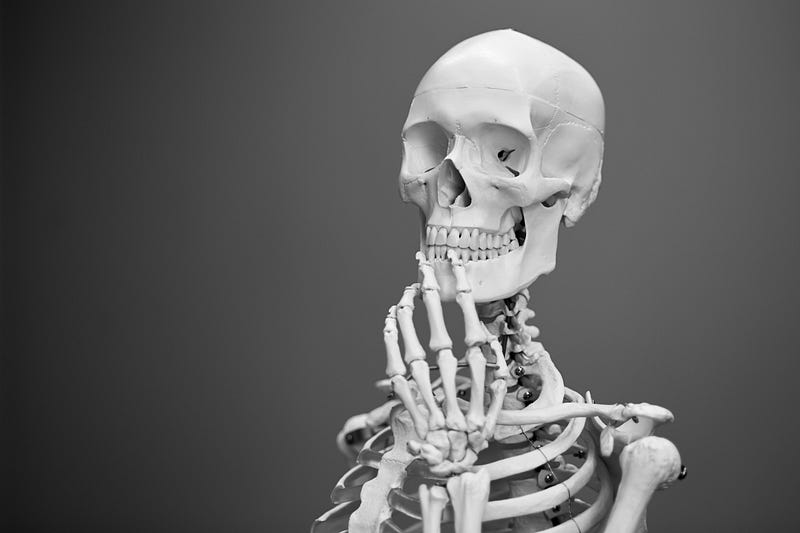
The adult human body’s skeleton comprises 206 bones. They support our frame and our structure. We need them to stand up and walk. We need them to move about. Sometimes, after a long, tiring day, we may collapse like a sack of potatoes on our couch and feel like we don’t have any bones left… But they’re always there.
These bones are essential for our daily activities, but yet we don’t give that much thought to them because they’re hidden from plain sight — underneath multiple layers of skin cells and muscles.
But yet, things can happen to them as we age. We can be involved in accidents where we fracture our bones. We can’t see it, but we can sure feel it. The pain, the cast, the inability to do certain things… It sure feels annoying!
The more insidious killer is osteoporosis. The bone structure remains intact externally, but internally, the support structure is being eroded. The density of the bone cells inside the bone is gradually being reduced, and that results in a weaker, more porous (hence “porosis”) bone structure.
The weakening of this bone structure does not bode well for older people, especially if they fall and fracture major bones in their hip or pelvic region. Because much of the arterial blood flow through to our legs goes through the hip and pelvic regions, hence a fracture in that area can disrupt blood circulation and spell trouble for blood transport down to our lower limbs.
But how does the bone structure become porous, you may ask?
First up, let’s look at how new bone structures are formed (and how old bone structures are eliminated).
There are 3 major types of bone cells: the osteoblasts, osteocytes and osteoclasts, which can be described as such:
OSTEOCLASTS are large cells that dissolve the bone. They come from the bone marrow and are related to white blood cells. They are formed from two or more cells that fuse together, so the osteoclasts usually have more than one nucleus. They are found on the surface of the bone mineral next to the dissolving bone.
OSTEOBLASTS are the cells that form new bone. They also come from the bone marrow and are related to structural cells. They have only one nucleus. Osteoblasts work in teams to build bone. They produce new bone called “osteoid” which is made of bone collagen and other protein. Then they control calcium and mineral deposition. They are found on the surface of the new bone.
When the team of osteoblasts has finished filling in a cavity, the cells become flat and look like pancakes. They line the surface of the bone. These old osteoblasts are also called LINING CELLS. They regulate passage of calcium into and out of the bone, and they respond to hormones by making special proteins that activate the osteoclasts.
OSTEOCYTES are cells inside the bone. They also come from osteoblasts. Some of the osteoblasts turn into osteocytes while the new bone is being formed, and the osteocytes then get surrounded by new bone. They are not isolated, however, because they send out long branches that connect to the other osteocytes. These cells can sense pressures or cracks in the bone and help to direct where osteoclasts will dissolve the bone.
Our bones are made up of living cells. We have osteoblasts that control calcium deposition in the bone, osteocytes that signal bone damage, and osteoclasts that eliminate damaged bone for osteoblasts to direct more calcium to the damaged areas to repair the damage.
The activity of these 3 cells are maintained at a healthy equilibrium for ensuring a healthy bone structure.
However, there are situations where this equilibrium can be disrupted, and one of the major contributing situations is this idea of mild chronic inflammation. In mild chronic inflammation, the pro-inflammatory nuclear factor kappa B (NF-κB) transcription pathway is upregulated to signal the production of more inflammatory cytokines, such as tumour necrosis factor alpha (TNF-α) and interleukin 1β (IL-1β).
The problem, then, is…
- NF-κB regulates osteoclast formation. An increased NF-κB activity will result in the formation of more osteoclast cells.
- TNF-α increases the activity of NF-κB. In mild chronic inflammation, when more TNF-α is present, NF-κB activity is further intensified.
- IL-1β promotes osteoclast activity.
So we see the presence of a vicious amplification loop — NF-κB stimulates the production of TNF-α, and TNF-α increases the activity of NF-κB to produce even more TNF-α. This loop doesn’t end!
When osteoclast activity is increased to a point where it outweighs osteoblast activity, the equilibrium between bone formation and bone dissolving shifts to favour bone dissolving. As a result, more calcium goes back into the blood, the bone structure gets weakened, and the bone becomes more porous.
That’s the mechanism for osteoporosis right there.
Why do post-menopausal women get more significantly affected by osteoporosis?
During childbearing years, women are producing higher levels of estrogen hormones. As they age and enter menopause, their production of estrogen is reduced, and the concentration of estrogen in their blood decreases over time.
Unfortunately, estrogen is a major regulator of NF-κB.
When there is less estrogen to regulate NF-κB, the propensity for NF-κB to become dysregulated is increased (of course, there are other ways to regulate NF-κB, such as the nuclear respiratory factor 2, or nrf2, pathway).
NF-κB is also the pathway for the immune system to send out inflammatory signals for defensive stances against problems such as viral infections. There are at least Four Ways That Our Lifestyle Affects Our Immune System, and in that article, I do discuss how our sleep quality, exercise intensity, diet and stress management all can play a role in affecting our immune system signalling (as well as NF-κB activity).
But if a woman’s lifestyle choices weren’t satisfactory, especially when it comes to sleepless nights, poor diet management and higher stress levels during the raising of her children, she would have a higher probability of developing osteoporosis as her estrogen levels go down.
To the mothers out there, have a happy Mother’s Day in advance. Thank you for your sacrifices and please also do remember to take good care of your health!
Changing estrogen levels don’t affect men as significantly as they affect women (well, except when they do have to deal with the mood swings during “that time of the month” from women close to them, perhaps?). However, aberrant NF-κB signalling can also affect men, and osteoporosis can be a symptom of that aberrant signalling. Hence, men can be prone to developing osteoporosis as they age too.
Therefore, it isn’t just a problem of insufficient calcium consumption.
Calcium consumption does help to provide the necessary nutrients for bone formation. However, it doesn’t really matter how much calcium one pumps into their diet with regards to osteoporosis. If the osteoclast activity far outweighs osteoblast activity, there would still be more calcium dissolving out from the bone than calcium being deposited into the bone.
In fact, as our bones also do contain collagen proteins, MMP degradation of the collagen in our bones may also hasten the arrival of osteopenia or osteoporosis, and hasten the development of osteoarthritis symptoms too.
Because they’re all linked.
That also means that people with other chronic inflammatory issues are susceptible to osteoporosis.
Our fat cells signal our immune system’s macrophage cells to produce more IL-1β. In fact, obesity can contribute further to insulin resistance as fat cells are known to aid in the production of IL-1β. This increased IL-1β production attracts the attention of the immune system’s macrophage cells, according to this article:
This initial event may then lead to IL-1β-induced chemokines, resulting in the recruitment of macrophages. Subsequently, macrophage influx and activation within fat tissue may act as a prominent source of IL-1β secretion, triggering insulin resistance.
Hence people with obesity (and much more fat cells in their body) are at a higher risk of developing osteoporosis and insulin resistance, the latter condition leading on to Type 2 diabetes.
Therefore, does obesity contribute to osteoporosis? It does seem so, which isn’t surprising.
And of course, if the macrophages are distracted from their main role of “detecting, engulfing and destroying pathogens and apoptotic cells” to focus on the secondary role of IL-1β production…
It also means that one’s response to an infectious virus will become less than satisfactory.
Viruses and virus-infected cells then have to be decomposed and digested down into their nucleic acids via this process known as autophagy or phagocytosis. Immune cells such as macrophages are called upon to digest the dead cells and the viruses, so that their RNA/DNA material can be reused for the synthesis of new cells. If the macrophages are distracted into focusing on IL-1β production, they won’t bethat focused on virus elimination via autophagy.
As a result, their virus response is slower, and given the COVID-19 pandemic that is running around these days…
IL-1β, which, as we have discussed earlier, is a pro-inflammatory cytokine that can hasten the onset of osteoporosis. It can also lead to acute lung injury, pulmonary fibrosis and lung damage.
Any wonder, then, that it’s the diabetics, the obese, the heart disease patients and the neurodegenerative disease patients who are at a higher risk of experiencing the full brunt of the effects from a COVID-19 infection? Add to that osteoporosis patients too, now.
It’s not rocket science now, is it?
All it needs is the overexpression of a few pesky pro-inflammatory cytokines…
For my take on other symptoms related to chronic inflammation, do have a read of these other articles that I’ve written:
- Now Seriously, What’s So Tricky About Cholesterol?
- Brain Degeneration Ain’t All That It’s Cracked Up To Be.
What are you doing to support healthy bone development in your body? Here are 9 Nutrients That Support Healthy Bone Development that you can look at.
Joel Yong, PhD, is a biochemical engineer/scientist, an educator and a writer. He has authored 5 ebooks (available on Amazon.com in Kindle format) and co-authored 6 journal articles in internationally peer-reviewed scientific journals. His main focus is on finding out the fundamentals of biochemical mechanisms in the body that the doctors don’t educate the lay people about, and will then proceed to deconstruct them for your understanding — as an educator should.
Do feel free to subscribe to my mailing list for more exclusive content!
You may also want to visit Digging Deeper Into Doctoral Diagnoses to check out relevant questions or answers to questions that have eluded you for quite a fair bit.


