
Now Seriously, What’s So Tricky About Cholesterol?
We do have to know what on earth it does in our body, don’t we?
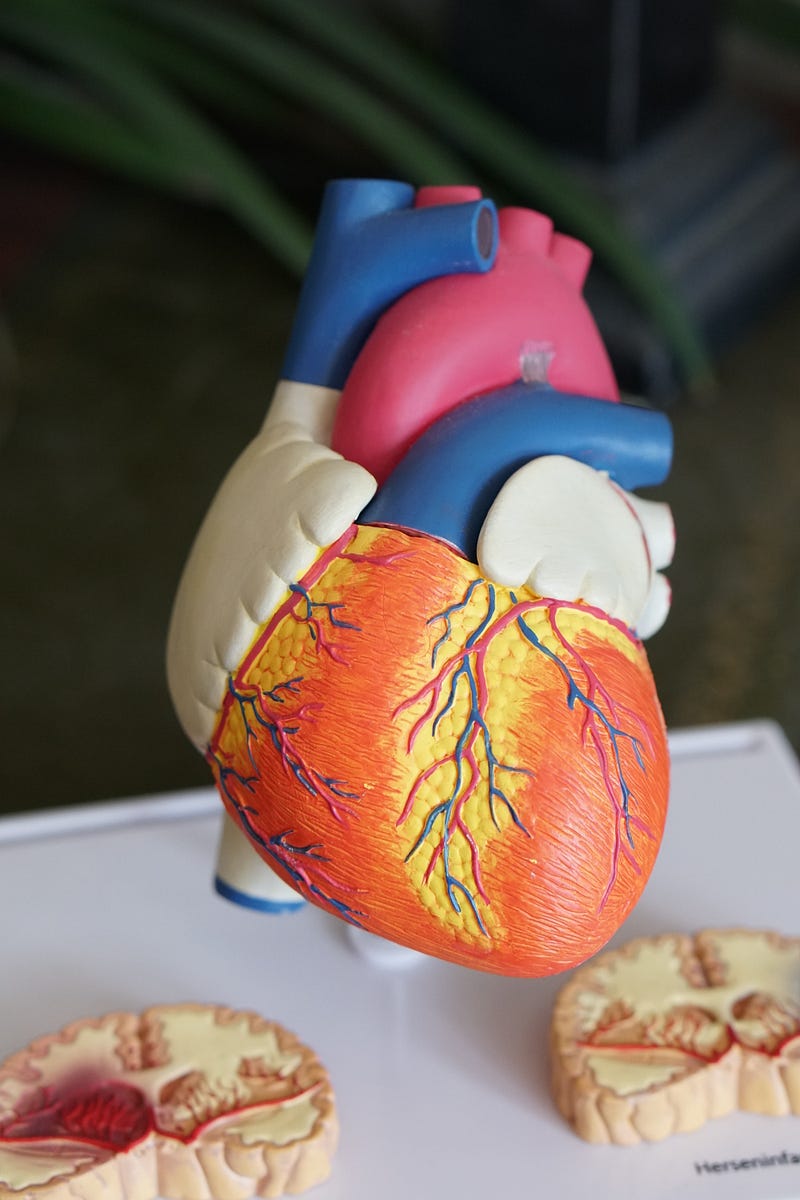
Medical science has been talking about cholesterol and its links to heart disease for years. People who are at risk of heart failure are invariably prescribed medicines such as statins by medical doctors to lower the cholesterol levels in their blood, in the hope that they would be able to protect one’s body against heart attacks and/or strokes as well.
At the heart of cholesterol (pun intended) is a big fatty molecule. This fatty molecule is a necessary building block for cell membranes in our body. As each cell in our body contains a membrane, we can say that cells do require cholesterol for synthesis.
If cells do require cholesterol, then why is it that people can suffer from problems associated with high cholesterol, then?
We first have to look at the mechanism behind the synthesis and the elimination of cholesterol from the body.
The liver cells are the main synthesisers of cholesterol. However, as cholesterol is fat, it isn’t going to be transported by the blood really well. As an analogy, we can look at what happens when we mix oil and water. The oil tends to separate out from the water upon standing, and we see it floating on top of the water. They become two distinct liquids that are, in chemical engineering parlance, immiscible.
Immiscibility poses a problem. It ain’t easy for an essential ingredient be transported through the blood to the cell if it’s going to separate out from the blood into its own distinct liquid entity.
That’s when the lipoprotein comes in. A lipoprotein contains a hydrophobic (oil-loving) core and a hydrophilic (water-loving) exterior. In that way, the cholesterol particles can be packed into the core of the lipoprotein and zipped up, much like a backpack does for a student in carrying their textbooks to and from school. The lipoprotein can then enter the blood, go to a cell, release some cholesterol and voila. The cholesterol transportation to the cell is completed.
Now, as oil floats on water, cholesterol will also float on water. We can say, again, in chemical engineering parlance, that the oil is of a lower density than water. As a result, what happens to the density of the lipoprotein when it takes on its entire load of cholesterol at the liver? It decreases, relative to the density of the blood.
Any surprise now why they call it low density lipoprotein (LDL)?
As the LDL distributes its cholesterol cargo to all the cells, its density increases — hence we can call it high density lipoprotein (HDL). It can take some waste cholesterol from the cells back to the liver for disposal, but the amount of waste cholesterol that HDL carries is much less than the amount of fresh cholesterol that LDL carries. Hence HDL’s density will be higher than LDL’s by a long shot.
The liver then processes the cholesterol into bile salts, which are then dumped into the stool for excretion. Part of these bile salts can be reabsorbed back by the intestines into the blood.
Unfortunately, the longer the stools stay in the intestines, the more cholesterol will be re-absorbed and sent back out into the blood via the LDL. Poor liver function may also reduce the rate of bile salt processing and cause cholesterol accumulation too.
What happens, then, when more cholesterol gets re-absorbed?
Every other HDL protein will eventually accumulate enough cholesterol to become LDL.
Doesn’t this mean, then, that the blood cholesterol levels will increase?
Let’s relook the idea of statins in cholesterol management. It’s obviously a huge thing, if not, it wouldn’t be a billion dollar revenue generator for Pfizer even after its patent has expired.
What do statins do? They block the synthesis of mevalonate by the HmG-CoA reductase (HmG-CR) enzyme by inhibiting the activity of HmG-CR. Mevalonate is a significant intermediary in the synthesis of cholesterol.
Hence, we’re looking at a reduction in the synthesis of fresh cholesterol.
On the surface, it looks fantastic. People with high blood cholesterol ought to block the synthesis of new cholesterol. However…
- Statins do not address the issue of poor bowel movements causing the retention and accumulation of cholesterol in the blood, hence in the long-term scheme of things, statins aid in maintaining a certain level of cholesterol in the blood. However, as long as one’s bowel movement is inadequate, one’s blood cholesterol won’t see a long-term decrease when statins alone are used. It’s one reason why the United States Food and Drug Administration (USFDA) allows for certain soluble fibre products to provide health claims that they can help to lower blood cholesterol and reduce the risk of heart disease development.
- The blocking of mevalonate synthesis also causes a reduction in the cellular synthesis of Coenzyme Q10 (CoQ10). CoQ10 is a necessary ingredient in the electron transport chain that facilitates energy generation in our cell mitochondria. With less CoQ10 available for energy generation, one would invariably feel weaker and less energetic than they were in their younger days; also, less CoQ10 can contribute more to mitochondrial dysfunction and the generation of more reactive oxygen species (ROS) within the cell. It Only Takes That Tiny Electron To Cause Those Health Problems.
- The problem, then, is that when the ROS outnumber the endogenous glutathione antioxidants in the cell, the cell is considered to be in a state of oxidative stress. Any non-neutralised ROS can leak out of the cell and cause damage to other biochemical components of the body, including our lipoproteins that are minding their own business while floating around in the blood.
- Which is a problem, because LDL that has been oxidised by ROS (oxLDL) will be eaten up by the macrophages from our immune system. Unfortunately, these macrophages don’t know how to stop eating oxLDL (based on the activity of their CD36 receptor), and they will eventually end up eating too much oxLDL. As oxLDL is essentially fat, these macrophages will become fat too, and are considerably too fat to move about in the blood properly (that’s what obesity does!). These fat macrophages are deemed to have become foam cells.
- These foam cells, being too fat to move, settle onto the arterial walls, and the body seals them over with a cap of collagen. That is precisely what forms the basis of an atherosclerotic plaque.
- Unfortunately, life in there isn’t fun. Life in prison as an inmate would never have been classified by any inmate as “fun”. One is trapped and has most of their freedom taken away from them while in prison. Some may even die in prison. Similarly, some of the foam cells will die and turn necrotic, which then trigger an inflammation signal (I have previously discussed the inflammation signalling in Brain Degeneration Ain’t All That It’s Cracked Up To Be. Do feel free to refer to it as necessary). Part of this inflammatory signalling comes from the auto-induction of interleukin-1 beta (IL-1β).
- This inflammation signal is problematic. In the case of an injury in the body, such as an ankle sprain, there is a strong intense inflammation signal that the immune system generates to recruit immune cells to the damaged site. Macrophages use the intensity of the signal to express matrix metalloproteinase (MMP) enzymes, which digest away the injured non-cellular areas of our body, such as the joint cartilage (which is collagen), so that remodelling and repair can be done properly. Given that foam cells trapped in the atherosclerotic plaques are inherently macrophages, they too can express higher levels of MMPs, which can digest away the collagen cap on those plaques.
- And when the plaque ruptures, one knows they’re in for a world of trouble…
So as one can see, it is very easy to classify cardiovascular disease as a symptom of an immune system behaving suboptimally. Perhaps that is why people with cardiovascular disease are at a higher risk of death by COVID-19? It’s all to do with the inflammation and the immune system in the body.
At the end of the day, that’s the whole mechanism behind what cholesterol does in our body, and what happens when the body responds to it differently instead of how it should be responding.
What’s so tricky about cholesterol?
The tricky bit is really to understand the physical, chemical and biological principles that govern its function and elimination from the body.
Otherwise, how can one develop proper strategies to protect themselves from developing heart disease in future, especially given that most people don’t even know that the immune system has a significant role in heart disease development? Or that a poor bowel movement can also contribute to cholesterol accumulation in the blood? Or that poor liver function may also reduce the rate of bile salt processing?
Our lifestyle plays a huge role in shaping our immune system responses, and more can be read about it here: Four Ways That Our Lifestyle Affects Our Immune System. Or, if you would like to understand the human body’s immune system better, do head over to Making Sense Of Our Immune System.
If you did think cholesterol was a tricky issue but see it as less tricky now because of my analysis, do check out my deconstruction of Alzheimer’s and its development: Brain Degeneration Ain’t All That It’s Cracked Up To Be.
For a recommendation of the nutrient support that is required for a healthy heart, do refer to my other article: 10 Nutrients That Support A Healthy Heart.
Joel Yong, PhD, is a biochemical engineer/scientist, an educator and a writer. He has authored 4 ebooks (available on Amazon.com in Kindle format) and co-authored 6 journal articles in internationally peer-reviewed scientific journals. His main focus is on finding out the fundamentals of biochemical mechanisms in the body that the doctors don’t educate the lay people about, and will then proceed to deconstruct them for your understanding — as an educator should.
Do feel free to subscribe to my mailing list for more exclusive content!
You may also want to visit Digging Deeper Into Doctoral Diagnoses to check out relevant questions or answers to questions that have eluded you for quite a fair bit.