
Why do we hold people and corporations to different standards of behaviour?
Part 2 in a 3-part series on capitalism and corporate behaviour
The what
Isn’t it crazy how we can tolerate the most intolerable behaviour from companies, but hold ordinary human beings to all but the highest standards of conduct?
For example: If the leader of a cult incites his followers to murder 9 people, he is (justly) incarcerated for life and held up as an example of crimes so heinous that they live on in the collective consciousness beyond his death. But when GM fails to report a fault in its cars, causing 13 deaths, it is fined $35 million and its directors go free. You probably don’t even remember it.
Another example--the almighty Amazon needn’t even ask for your credit card CVV number before taking payment from you, even though that means there’s a fair chance it’s taking your money (no mistake there) with the help of someone else masquerading as you (oops). Meanwhile, if there’s even the slightest chance that you, Jo Soap, received stolen goods and should have known—guess what? Jail time, baby. Fourteen years under the UK Theft Act. (I could have picked any other country—but let’s just say neither the US nor Iraq are likely to be any more lenient with petty criminals needing to be made an example of.)
And another: Halliburton was found to have covered up evidence concerning its role in the BP oil spill in the Gulf of Mexico in 2013. Eleven people died and hundreds of miles of pristine beach and marine life were blighted as a result of the explosion that caused the spill, but Halliburton was fined just $200,000.
And we never wonder why?
The why
Oh, most of us probably have a vague idea about personhood and rules of behaviour not applying to companies. But in law, a company is very much a person, and has all sort of rights and obligations. We’re coming up with new ones all the time.
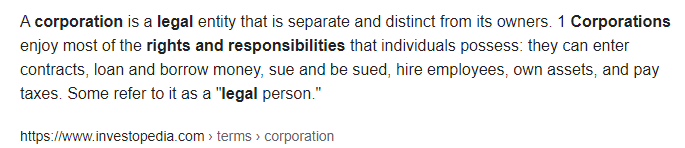
Why, then, not also criminal culpability (jail time, not fines)? The obligation not to help shadowy characters move money illicitly? A fundamental duty to protect the earth and human well-being?
Are companies not, by virtue of their outsize power, wealth and leverage, capable of far more harm? If, by legal fiction, they can be persons, by what reversal of fiction are they exempt from its consequences?
It doesn’t seem fair.
But we know why, of course. Money is power. When people do wrong, they are jailed. When companies do wrong, they get fined. One rule for us and another for them.

The who
So far so what. We all know what’s happening, and yet it keeps happening. We think we know why it’s happening, and yet we can’t seem to do anything about it. Not unless we get at whoever’s doing it.
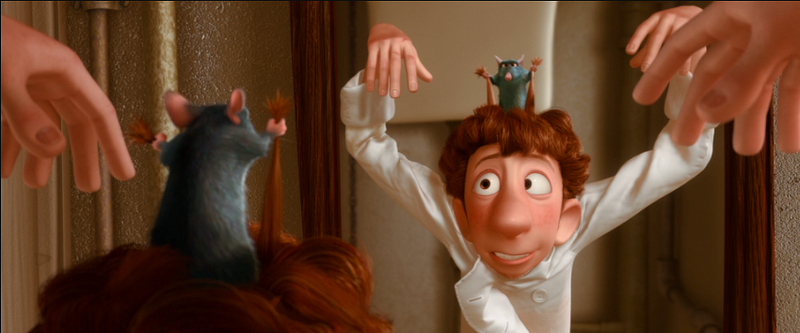
So who is doing it? They do, of course. Other people. The laws, the courts, the case law, accumulating over aeons so that it attains the sheen of divine decree. Written by learned persons in wigs and private school bullies bawling pink-faced across parliamentary aisles. Orchestrated by corporate puppeteers with their hands all the way up the bill writers’ butts, squeezing their innards like some deranged Ratatouille (aka lobbying).

The question is, why do we let them? That’s right — we’re doing it. Every time we vote another establishment politician into power to institute yet another corporate tax cut, that was us. We believe their BS, and we let the media tell us, year after year, that bread crumbs fall from tables (they don’t), wealth trickles down (it really doesn’t), and corporations create jobs (they do until they don’t).
The how
But what else are we supposed to do? Don’t we write op-eds and blogs and host podcasts? Are whole sectors of the media not devoted to dismantling corporate hegemony? Don’t people lose their lives, livelihood or freedom in defence of nature and our rights?
And in the face of all that failure, what choice do we have? I said it myself: corporations are big, powerful non-person-persons.
It seems that corporations are “people” when it comes to politics and elections, but the “people” who run them seem to be virtually immune from criminal liability. Huffington Post
So what can we do?
Well, that’s the funny thing — even when it seems we can’t do anything, we dare not stop resisting. The enemy doesn’t sleep, and neither can we. The outrage doesn’t end with us acquiescing in it; it only gets worse. By not acknowledging defeat we can at least stave off disaster another year, while we think of something more effective.
We can pay attention, maybe read around a bit, and stop pretending it doesn’t exist. Acknowledge it. It’s right there — I’m looking at it right now, in a hundred different ways. Lie less to ourselves about us doing very much about it. Stop acquiescing in its ubiquity. And stop thinking it’s something it’s not, like funny, useful, a gift horse we can’t look in the mouth, divinely decreed and unalterable, or just the way things are for them and the likes of you and me.
The where and when
This is where it gets interesting and resistance becomes feasible. If we discount all the pollution, fraud, money laundering, unrest, theft, destabilisation and so forth that companies get up to, there are many completely ordinary, everyday ways in which businesses get away with outrageous feats of legal, marketing and bullying sophistry as well as other trickery to do things you and I in our personal capacity never could or would.
But that’s a story for another day, and I promise I’ll tell it soon.
This is the second article in my series on capitalism and corporate behaviour. You can read the first, Some say stop beating up on late-stage capitalism, here, and the third, 10 lies corporates sell us to break normal rules of behaviour and evade punishment, here.