
Some say stop beating up on late-stage capitalism.
Part 1 in a 3-part series on capitalism and corporate behaviour
Money—it’s the granddaddy of all the important battles fought and won throughout the ages. Against racism, fascism, patriarchy, class, you name it.
And to the extent that any of those haven’t been won entirely, is it not money that’s behind it, each and every time?
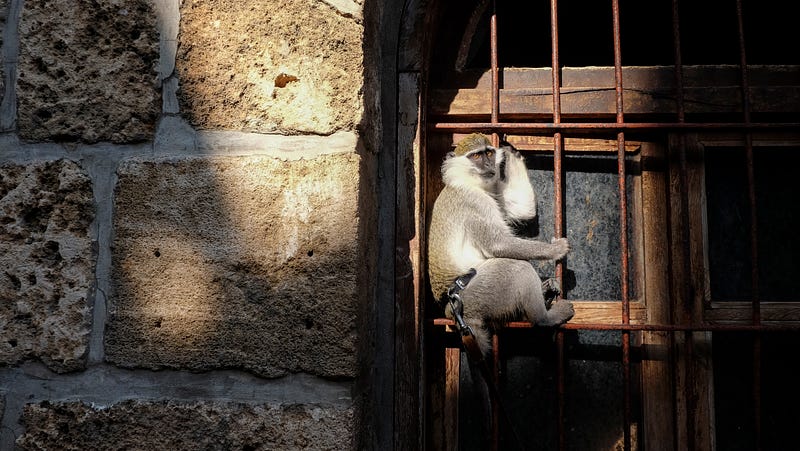
And when it doesn’t have a cause to bank-roll, isn’t money that exists and labours purely for its own sake a bigger and more enduring cause than all of these put together?
Yes, is the answer. Bigger than all that came before it, and all that dares to come before it now.
Money’s not your friend
That’s really the bottom line here. You and I aren’t winning. The house wins; it always does. The rich get richer, and you and I literally get poorer by many means, all of them by design—for example, through the obvious mismatch between inflation and wage increases.
We work longer hours, have fractionally more jobs, get ever less protections in a burgeoning gig economy, and face ever more competition through globalisation and automation. All the time.
Does it not seem obvious then that money is not the force for good that it brands itself as? The completely neutral, totally amoral, neither-good-nor-bad, nothing-personal, benevolent agent of progress and innovation?
Let me explain what I mean by money
Who’s got money? I mean real, stinking rich, stupid money?
There’s old money, of course. And it’s a powerful cohort of the ilk, milking long-established relationships with power and law, a fabulous asset base, generational privilege echoing through the ages, and so on.
But no, I mean business—specifically, big business. The money engines building up and working serious intellectual, human and resource capital to stay rich and get ever richer, with income statement line items for things like lobbying, bribery, even the destabilization of nations — and, more day-to-day — crisis communication, etc. There are fabulously rich individuals, but business is their weapon of choice to stay that way and never relinquish their advantage.
What has money ever done to me?
But money makes the world go round, you say. It cures disease and poverty. It solves scarcity. It eradicates ignorance. It fosters equality.
Well, not exactly. Half the problems in the world today are caused by science and technology, aka solutions without a problem (many times with unintended consequences). That’s how you know money is behind it. Energy? Pollution. Cars? Pollution, accidents. Mobile phones? Mental illness. Longevity? Scarcity.
I’ll let you think of some examples of your own, so you can see it’s clear as day and I ’m not crazy. But really, who needs squeezy ‘cheese’ out of a plastic tube that will literally never be absorbed back into nature?
Also, who benefits most from these advances? Let’s see: Longevity? Any market-facing business, especially healthcare. Cars? Any industry needing or providing transportation. Mobile phones? The entire body of information and communications technology industries, probably one of the biggest single contributors to the global economy.
Real problems too—money’s behind their continuation
Even more tangible problems—war, poverty, inequality, disease, hunger — don’t tell me money has not had a hand in fostering them, or at least has a significant stake in not solving them. After all, what is a solution without a problem? A negative asset, I guess (without knowing the financial terminology). One that costs you money to maintain and yields no income. A millstone around your shareholders’ necks.
- Is there not money to be made in continuing war, and was Iraq not the mother of all bullshit wars? Did many destruction and rebuilding industries not benefit exceedingly handsomely from it? Were any of those local businesses (the shame!), and whose side were they on?
- Does inequality not shield the rich from the completely reasonable demand for health, jobs and sustenance for the poor? Power corrupts, so why would any cabal in charge seriously pursue equality? The answer: never of its own accord. Only when its own demise is on the cards will any historically privileged group start shouting equality like it means it.
- Is disease not a fantastic opportunity for pharma companies? Why, then, cure anything if it can be managed for a recurring fee?
Innovation is OK as it goes
I’m not saying technology hasn’t done a great job of making things easier, faster and more convenient, and that we can’t do a great deal more than ever before with things like:
- virtual viewings, keeping up real estate activity during COVID
- peer-to-peer rides at a more-or-less living wage (minus the platform’s kick-back), providing a more responsive taxi service
- intelligent recognition and reconciliation of bank deposits, getting the charity its money sooner
- more people having babies through fertility advances and living longer through medical advances
- bots writing many more headlines of a much more consistent standard, doing more translations faster, and writing complicated support scripts on the fly
- dating becoming much more of an empowered and informed buffet experience, through algorithmic matching
But think of the cost.
- You are pretty much guaranteed not to have even your freelance income as a writer in five years. Money is right now bank-rolling the automated redundancy of your skillset.
- You are competing against more and more people for fewer and fewer jobs and less and less money. Money does that too, and the gap between rich and poor in income, education and skills — even longevity and physical capabilities through technological augmentation—will only get worse.
- Human relationships are now so depersonalised that your coddled ass, shy to begin with, can no longer charm a fellow human being into liking you in real life. When you meet somebody through no fault or doing of your own, nobody is under the misapprehension that this is about anything other than getting their bits out. Hell, you don’t even need to get on—you’re probably checking your phone while he’s getting the drinks, considering whether to fit in another gig this evening if it doesn’t work out. And if it does, well, it’s becoming imperative to feed a growing sex addiction. I’m possibly exaggerating, but not without examples being forced into the public consciousness through popular culture.
I’d say we’ve been fucked by money.
And you’re probably supporting it.
In A Short History of Progress, Ronald Wright quotes John Steinbeck as saying “socialism never took root in America because the poor see themselves not as an exploited proletariat but as temporarily embarrassed millionaires”.
A quick Google search will tell you he didn’t say it. And let me just dwell on that for a second: This is probably far more nefarious than a mistake. Given how easy it is to fact-check these days, in all probability it is a bald-faced lie, in print, appearing on someone’s work by his own choice, sullying the name of one of the greatest writers in history (Steinbeck, to be clear). Completely unforgivable.
But the point of the lie is to advance the bigger lie, that you can overcome inequality. And that even if you cannot, most people believe they can, and aspire to it. So here’s a middle finger to your precious truth—nobody cares.
I base my conclusion of this tragic state of affairs on the stupid choices the world electorates are making, and how poorly the governments they appointed are serving their interests. If you don’t see, or worse, don’t acknowledge it, you’re very much part of the problem.
Just witness the rejection of strong pro-citizenry election manifestos all over the world, with a sold-out media doing government’s dirty work of brainwashing the voting population to accept a brutal and mendacious nationalist and conservative agenda. One that clearly only has continued growth in business fortunes and kick-backs for the political classes in mind.
Are we insane?
You cannot overcome inequality
Not by waging a personal battle against poverty—because let’s face it, if you’re working two jobs and spending your entire life working off a student loan and having to take out loans to pay your medical bill, you’re dead in the water. Consider, before you fire off your riposte, that health is an inalienable human right.
Unless you’re rich, you’re poor.
The rich, as we know, protect themselves. Nobody’s going to make themselves poorer by giving their advantage away if there isn’t an angle somewhere to make it back double. Either it’s great PR or it’s tax deductible, or it allows you to get out of a dying industry. And we all know what a growth industry death and misery is. You work it out.
And the rich are ultimately way better equipped than you and me to protect themselves, and stay and get richer, just by sitting on their asses. When they’re lobbying and whining about tax breaks and changing the course of elections to get their way, they have stupendous amounts of power to achieve it. More and more of a bigger and bigger stockpile of wealth is being siphoned upwards all the time, and accessed unequally through generationally privileged access to family fortunes, old boys’ clubs (and hence employment opportunities), clever financial mechanisms to make their money work for them— you get the idea.
Maybe it’s becoming more obvious to people. Or maybe not at all. But it really ought not to be that hard to see. Again, just consider it yourself for a moment; you don’t need a radical theorist to explain exactly why you have to seize the means of production and guarantee its equal distribution. That capitalism is essentially a criminal activity, and that you and I do not actually need it if, like the Scandinavian countries, we had an intelligent electorate that designed and therefore trusts its governments to behave ethically and democratically, but equally holds them accountable through proper but pragmatic procedures, checks and balances.
Who’s with me?
This is the first in a series of articles about capitalism and corporate behaviour. You can read the second, Why do we hold corporates and people to different standards, here, and the third, 10 lies corporates sell us to break normal rules of behaviour and evade punishment, here.