
Why Do They Say Beans Are Magic?
They may not be veggies, but beans are pretty amazing
Beans are legumes, which are usually not classified as vegetables. Why are legumes treated differently? Because they are the seeds of the plant, while vegetables can come from any part of the plant. Call me a rebel, but I think it is unfair to exclude legumes from the happy vegetable family.
Why are beans considered magical?
Have you ever wondered why people call beans “magic”? I used to think it was because of the famous fairytale, Jack and the Bean Stock. Jack planted a few beans in his backyard, and a towering bean stock grew magically overnight. The next morning he climbed up the stock and had a life- changing adventure with a giant.
Beans also might be called magical because they turn your body into a musical instrument. Like many children, I laughed with friends when one of us had flatulence; we had great fun chanting “beans, beans, the magical flute, the more you eat the more you toot...” Later I learned that the rhyme was supposed to be about the magical “fruit” rather than “flute,” but I think our version made more sense.
A third explanation for why beans are considered magical might be because they are so incredibly good for you. They’re especially known for their fiber, which promotes the health of the gastrointestinal (GI) tract. So even though beans cause some people to have embarrassing intestinal gas, regularly eating beans actually improves your gut health and comfort, kind of like magic.
What’s the real reason they say beans are magic?
Those three explanations all seemed feasible to me until two weeks ago, when I cooked with raw beans for the first time. I’ve been cooking chili beans at home since high school, and I even have a recipe with a secret ingredient* that won me first place in a chili cook-off. But I always used canned beans.
Cooking chili with raw beans made me realize the real reason beans are considered magic. It’s because they are hard as rocks, and then they magically turn into something edible. (If you doubt this truth, please keep in mind that I’m an award winning chili cooker.)
It’s possible that my beans were harder than average. When we got married 27 years ago, my husband and I received a gift of a dozen bags of raw beans purchased from the Women’s Bean Project. I appreciated the uniqueness of the gift, but wasn’t inspired to use it. Canned beans had always served me well, and it didn’t seem worth the effort to use raw ones. So the bags of beans sat in our pantry for 27 years. That’s right, for more than a quarter century!
The instructions on the bag said to soak the beans in water overnight so — for good measure — I soaked them for 24 hours, changing the water multiple times as they soaked. I then boiled the beans in more water for a few minutes, simmered them on the stove for a few hours, and drained them again. This was all much easier than I expected. It took a lot of passive time, but very little effort.
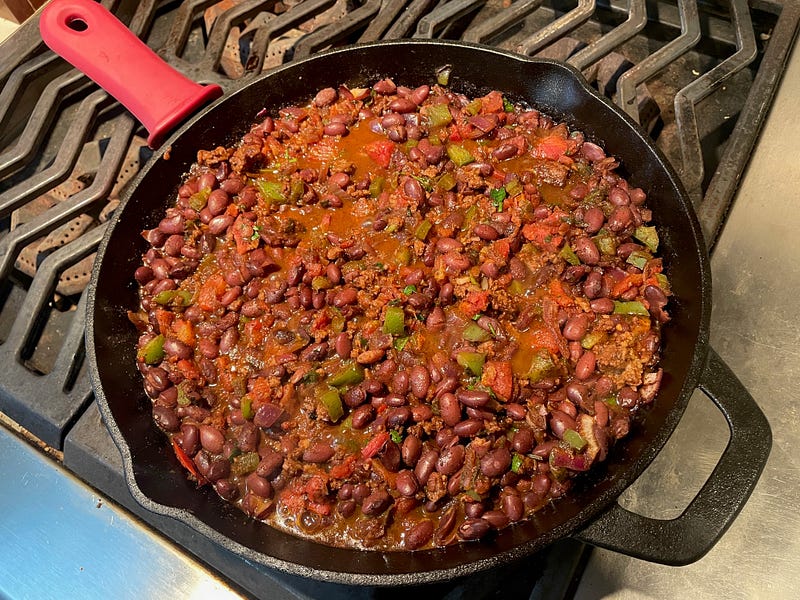
Finally, I chopped up fresh vegetables for vegetarian chili — red onions, green peppers, garlic, tomatoes, parsley, and spices — and let them simmer with the beans for an hour. I added a half pound of veggie burger meat (cooked and crumbled) for a change of pace. And I baked a loaf of whole grain bread to round out the meal. (Now I’m bragging, in case you didn’t notice.)
The result was an amazing feast that brought joy to our lives — tender, spicy, and delicious. And because I changed the water multiple times while the beans soaked before cooking, I got rid of some of the bean fibers that cause flatulence. Perhaps needless to say, this increased our joy even more.
To my greatest surprise, the 27 year old beans tasted better. They seemed fresher, more flavorful, and had nicer texture than canned beans. Now I’m a raw bean convert and may never go back!
*You may be wondering about the secret ingredient in my prize-winning chili. I simply added several squares of chocolate toward the end of cooking.
Thank you to Dr. Preeti Singh at Reciprocal publication for inspiring my story with the Nature Prompt for the 4th week of January.
I also want to call attention to two fairly new writers in Medium who recently wrote interesting stories about vegetables. I enjoy their articles and hope you will too.


