
Why Do I Have to Tip Someone For Just Doing Their Job?
Hilton CEO started a controversy by stating he doesn’t tip housekeeping when he stays in hotels, leading to renewed arguments over the practice of tipping.
One thing I can remember learning from observing my father as I grew up, was the necessity of tipping. He always tipped people who provided him with a service no matter how small it may have been. As a child I watched with fascination as he practiced the palmed bill handshake to thank the maitre d’ at restaurants for giving us a good table. He tipped not only waiters who served us, but often those whose table we routinely sat at, even if they weren’t serving us that night.
The sommelier was tipped, another palmed bill handshake, after pouring our wine. If a busboy served, cleared, and attentively kept our water glasses filled, they were tipped as well. People handing out towels in the restrooms received a crisp dollar bill, which I loved because I was allowed to do this on my own, making me feel very grown up. Valets got a small tip when they took the car, something I always thought of as an incentive to be careful with it, and a larger one at the end of the evening when the car was returned it to us.
Anyone coming to the house to service or repair something such as the air conditioner, gas station attendants filling our tank or checking our oil, grocery store clerks bagging or carrying bags out to the car, the barber and the hair stylist my mom and I went to, the pool boy, and person who took care of the lawn and shrubs were all tipped. The Fedex and UPS folks were tipped as well, and monetary gifts were given to the mail carrier and milk man (yes, they still had those when I was small) in sealed envelopes at Christmas time.
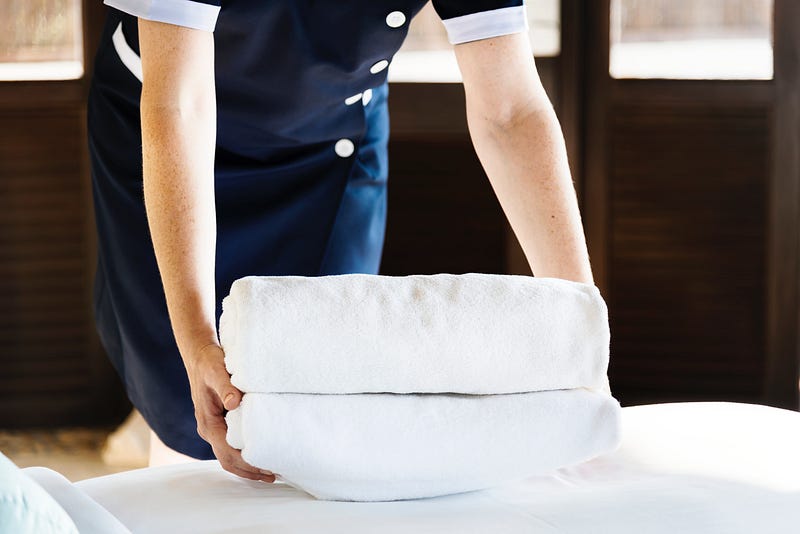
In hotels, there were any number of people who were tipped. The same rules applied to the folks working at the restaurant. The bellboy and concierge, pool staff and those manning the changing rooms, health club personnel, elevator operators, doormen and maintenance staff fixing a problem in the room, the staff who provided information about the best place to eat and sites to see and those who brought the extra towels we always seemed to need, were all tipped. At the end of the trip, a generous tip was left in an envelope for housekeeping.
So it was only natural when I grew up, that I would continue this tradition. With the exception of the palmed bill handshake (women didn’t shake hands in my family) and the double valet tip (something I abandoned sometime in my late twenties), for the most part, I tipped everyone who did anything for me whether it was expected or not. I never thought twice about it until some colleagues at a conference looked at me oddly when I tipped the hostess who sat us for dinner one night. After observing me tip others during the extended weekend, my mentor finally asked if I’d won the lottery given how freely I was handing out money.
Now to be fair, as a brand new Ph.D. at my first faculty position, I certainly didn’t have money to burn, so my tips were far smaller than the ones I knew my father gave. I figured my mentor just didn’t know that I was only giving out small amounts and not handing everyone a twenty, so I explained. He gave me a disbelieving look, asking why I felt the need to tip everyone that worked at the hotel and warned me that some of the others attending the conference thought I was showing off the fact that I was independently wealthy.
Now I was the one with the disbelieving look on my face. I had noticed a few times that others weren’t giving out tips but I wasn’t at the conference to research people’s personal tipping habits so I just hadn’t given it much thought. My mentor was called away before I came out of my stupor, but from then on I started watching what people did. I found that practically no one tipped for anything other than their personal server at the restaurant or the bartender at night when we went out dancing.
I became very self conscious and tried to hide the fact I was tipping and when I couldn’t, I just didn’t do it. This made me very uncomfortable because it felt like I was going against something that was an established norm despite those around me who seemed to be indicating otherwise.
In the years since then, I haven’t managed to resolve the discrepancy between my family’s values regarding tipping and the way many others seem to believe. And then the CEO of Hilton stepped into the spotlight by answering a question with a statement he likely never believed would be worthy of a soundbite, much less the firestorm of controversy it ignited. This gave me pause, and led to me considering these differences more carefully.
Hilton CEO Makes Controversial Statement About Tipping
Recently, a reporter asked Hilton CEO Christopher Nassetta, how much he tips housekeeping when staying at a hotel at an industry conference He gave an unexpected reply, stating:
“I typically do not leave a tip.”
There was an immediate and strong reaction to Nasssetta’s admission, focusing on over two points:
- The irony regarding the fact that a CEO of one of the world’s largest hotel chains who makes close to $20 million a year publicly stating he doesn’t tip employees when the median housekeeping hourly wage is $11.37.
- The viewpoint based on economic fairness, which emphasizes that tipping is a terrible method of compensation because it relies on customers non-standardized and unequal voluntary contributions. Despite it this it is often used by employers as an excuse which absolves them of paying a fair living wage.
In an attempt at damage control, a spokesperson for the hotel chain said that Nassetta feels that all the employees work hard and that singling out some to receive tips seemed unfair. Instead, the spokesman went on to say, the CEO is looking to create meaningful economic opportunities for all 400,000 employees.
When the backlash continued, Nassetta announced that he had different practices for work and personal travel and hadn’t intended to discourage travelers from tipping when they stay in hotels. He added that from then on, he would make it a practice to tip housekeeping staff whether he was on a business trip staying at one of the Hilton properties or traveling for pleasure.
The Truth About Tipping
Despite it being an American institution, tipping is not a method that would be ideally relied upon to construct a fair and equitable means of compensating workers. But as many point out, as individuals we don’t have the chance to design the system, so the least we can do is participate by providing the tips that many workers rely on.
There are a lot of people who feel that businesses like hotels, coffee shops and salons among others, already apply a huge markup to maximize their profit so they are earning enough compared to what is spent already. This argument may feel logical but it actually only applies to the owner of the establishment, not the employees you are interacting with.
While a latte that costs $1 to make, may cost you $7 to drink, the profit goes into the owners pocket not the barista's. So if you have a problem with the prices at an establishment you frequent, you can register a complaint with the owner or decide to go elsewhere where the prices are lower. But don’t short the employees who are likely making far less than you think.
Recommended Tips for Hotel Staff From the American Hotel and Lodging Association (AHLA)
Regardless of the problems that tipping causes in the overall compensation of employees, the AHLA has created a Gratuity Guide that they regularly update. In it, they recommend certain amounts to tip employees when you stay at a hotel. Specifically, they suggest:
- $1 to $5 a night for housekeeping staff, left daily in an envelope that clearly indicates it is for the housekeeping staff.
- $1 to $5 for a valet
- $2 for anything extra delivered to your room such as blankets and pillows
- 15 to 20 percent for room service, bartenders and wait staff
In response to the controversy over the Nassetta’s statements, and the problems raised with low compensation in industries that incorporate expected tips into employees’ wages, the AHLA has said they do not intend to revise their gratuity recommendations anytime soon.
Take Away
For me, one of the main problems with Nassetta’s statement was the impression it gave. As a CEO who prides himself on valuing the people who make up the Hilton family, his nonchalant answer that he doesn’t tip his own staff, just rubbed me the wrong way. It also provided an excuse for people who already don’t believe they should have to tip hotel staff or those who aren’t certain as to what’s considered appropriate in such settings to not tip.
I have always held the position that employers should pay all their staff a living wage. It’s not fair to expect workers to have to cope with such unpredictability in their earnings which makes it hard to budget or absorb financial shocks. The fact that it is also known to be discriminatory is another problem for me.
Yet, while there are good arguments against tipping, primarily that it provides an excuse for employers to pay low wages and places the expectation for making up the difference on the shoulders of the customers, not leaving a tip does not change this. Protesting the system by not tipping only hurts the employees and doesn’t send any kind of message to the employers. So as long as the system remains in place, I will continue to do my small part in helping these employees earn a living.
I feel that it never hurts to show your appreciation to those providing you with a service by tipping, especially when they go above and beyond what they are expected to do and do it with a smile.
References
Brewster, Z. W., & Nowak III, G. R. (2018). Racial Prejudices, Racialized Workplaces, and Restaurant Servers’ Hyperbolic Perceptions of Black–White Tipping Differences. Cornell Hospitality Quarterly, 1938965518777221.
If you enjoyed reading this article, you might also like these:
You can find links to my other work on Medium and follow me here. Thanks for reading!


