Why didn’t the British Empire intervene in the American Civil War?
Any thoughtful examination of the American Civil raises the question: why didn’t the era’s only superpower, the British Empire, intervene in the conflict?
Any thoughtful examination of the American Civil War raises the question: why didn’t the era’s only superpower, the British Empire, intervene in the conflict?
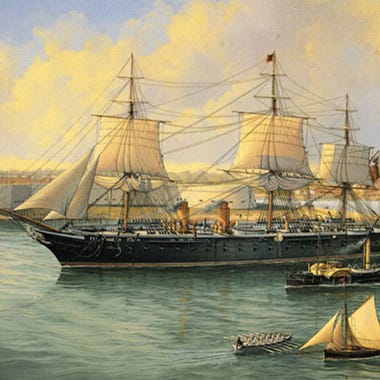
Those vessels included the world’s most powerful ship, The HMS Warrior. The Warrior launched in 1861 was the world’s first armored and steam-powered frigate carrying 40 guns. Hence, the Royal Navy had the firepower to smash the Union Navy’s blockade of Southern ports. Plus, Her Majesty’s government could mobilize massive land forces including around 250,000 men in the British Indian Army.
British Interventions
During the 19th century, British forces intervened all over the world. These interventions often took Her Majesty’s forces far beyond the Empire’s borders.
Often for questionable motives. For example, British troops landed in Mexico in 1862 to collect debts owed to British bankers. During the two Opium Wars, the Royal Navy and British and Indian troops invaded China to force the imperial government to allow opium trading.
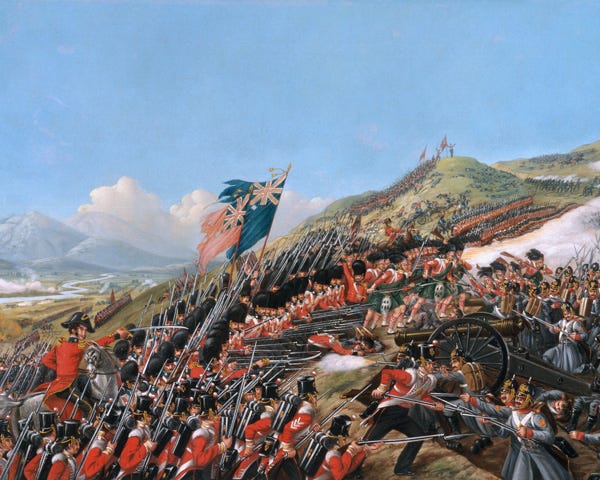
British forces were everywhere during the Victorian Era. Between 1838 and 1865, the Royal Navy conducted campaigns in China, Syria, Uruguay, Burma, the Black Sea, the Baltic Sea, the Pacific, India, Mexico, New Zealand, and Japan.* On land, British and Indian forces were in constant combat. During the 1850s, British troops saw action in the Ukraine (the Crimean War), India (the Indian War of Independence or Great Mutiny), China (the Second Opium War), and elsewhere.
Thus, neither Her Majesty’s Government nor the British People had any qualms about intervening in other nations’ affairs. Such intervention was the Empire’s official policy.
Why didn’t the British Intervene in the Civil War?
Moreover, economics motivated many British interventions. For example, Her Majesty’s Government fought the Opium Wars because Chinese opium sales financed the British East India Company and the Indian Army.
British troops landed in Mexico because of unpaid loans. Notably, British forces left as soon as the Mexican government agreed to pay the loans.

There were powerful economic motives for British intervention in the Civil War. Textile manufacturing was Britain’s most important industry in the 19th century directly and indirectly employing over 4.6 million people in England.*
The United States supplied around 80% of the British textile industry’s raw material: cotton. Without America’s cotton, British textile mills could close throwing millions of people out of work. The British economy could shut down without cotton. Cotton goods comprised 38% of British exports and generated 12% of the United Kingdom’s national income.*
How Britain caused the American Civil War
They grew almost all of British cotton in Confederate states such as Alabama and Texas. Ironically, Britain's hunger for cotton led to the Civil War. To explain, slaves picked almost all the American cotton.
Without cotton, slavery could have been uneconomical in the United States. Notably, most of the US states where could they not grow cotton had banned slavery by the 1820s. However, cotton was so profitable it drove the creation of new Slave States such as Alabama, Mississippi, Arkansas, and Texas.
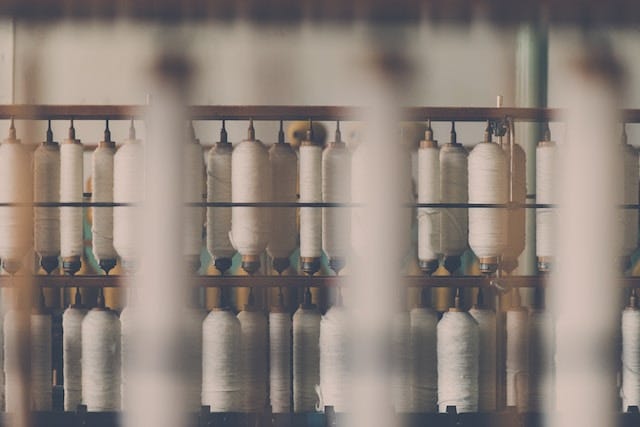
Hence, by preserving slavery, the British textile industry triggered the American Civil War. One cause of the Civil War was Northern fears of a “slave power” of wealthy Southerners that controlled Congress and the presidency.
Reality supported these fears, In 1860, 59% of the richest 1% of Americans were from the South, historian Lee Soltow estimates.* Most of those 59% made their money by selling cotton to British mills. Many of those wealthy Southerners, including future Confederate President Jefferson Davis (D-Mississippi), were serving in the US Senate and the cabinet. Hence, income inequality helped trigger the Civil War.
Thus, the British textile industry was responsible for slavery’s preservation and the American Civil War. This is ironic because the British people and government hated slavery.
Jefferson Davis’s Plan to wreck the British Economy
Consequently, most people, including Confederate President Jefferson Davis (D-Mississippi), thought the British would intervene to help the Confederacy.
Davis thought Her Majesty’s Government would come to the Confederacy’s aid to keep the cotton coming and Britain’s economy running. Consequently, the Confederate government organized a cotton embargo. Southerners refused to sell Cotton to British importers until Her Majesty’s Government recognized the Confederacy. By 1861, British imports of US cotton fell to zero.*

Mills closed throwing thousands of people out of work, and poverty rose in the textile regions of Lancashire and Cheshire. Such misery was Davis’s deliberate strategy.
Confederate leaders hoped to trigger civil unrest in the United Kingdom by starving British families. Davis wanted angry mobs of hungry British workers marching on the Houses of Parliament. Thus, the Confederates were trying to use 19th century Britain’s income inequality as a weapon of war.
How Slavery prevented British Intervention in the Civil War
Yet, no British troops or warships appeared to support the Confederate cause. Ironically, it was slavery, the Civil War’s cause, that prevented British intervention. British opposition to slavery in the 19th century was powerful and passionate.
On 22 July 1833, the House of Commons unanimously passed the Slavery Abolition Act of 1833. This act banned slavery in most British colonies and freed all slaves under six years old. Slaves over six became free in 1838 after an “apprenticeship period.” In 1843 parliament expanded the slavery ban to India, Saint Helena, and Sri Lanka which the original Slavery Abolition Act did not cover.

Additionally, Parliament budgeted £20 million equivalent to 40% of the Treasury’s annual income, or approximately 5% of British Gross Domestic Product (GDP), to compensate slave owners for the loss of their “property.” To finance compensation the government borrowed £5 million from the Rothschilds. Her Majesty’s Government was still repaying some of the paper issued to finance this transaction as late as 2015.*
Any government that paid so much money to get rid of slavery was not going to wage war for slavery. No British politician was going to send Her Majesty’s soldiers and sailors to fight and die for slavery. Britain’s upper classes, which controlled parliament, were committed to abolition.
Although, the Confederacy had widespread support from textile workers and sympathy from some upper class Britons. There was no widespread support or agitation for intervention.
Hence, Davis and his advisors were ignorant of British political realities. Abolition was an important British government project that had widespread popular support.
On 1 January 1863, Lincoln ended all hope of British intervention with the Emancipation Proclamation. The Proclamation freed all slaves in Confederate slaves. Hence, Lincoln made emancipation the Union’s official policy.* After the Proclamation, any British intervention on the Confederate side would have been a fight for slavery.
Idealism trumps Economics
Her Majesty’s Government’s refusal to intervene in the American Civil War shows economics does not always drive government policy. Keeping the cotton flowing was in the government’s interest. However, British leaders felt opposition to slavery was more important.
Cynics will note that wealthy British abolitionists could afford not to intervene. Nobody asked the opinion of the unemployed textile workers, most of whom did not have the vote in 1861. Parliament did not extend the vote to all British men over 21 and women over 30 until the Representation of the People Act in 1918.*

Hence, Victorian Britain’s lack of democracy kept it out of the American Civil War. Cynics can speculate that Her Majesty’s Government would have intervened if British workers had the vote in 1861.
Another reason the British didn’t intervene is that cotton is a plant they can grow in many places. The Confederate Embargo and Union blockade forced British cotton buyers to look elsewhere, including Egypt and India. By 1865, around 50% of British cotton exports were coming from places outside the United States.
Moreover, after 1862, Union forces captured enormous areas of the South, including the cotton port of New Orleans. Thus, the Union began exporting cotton. Cotton was financing the Union war effort.
However, cotton shortages and textile industry unemployment continued as late as 1867 historian Jim Powell notes.* Shortages continued because of the destruction of transportation infrastructure and the collapse of the Southern economy during the war.
Jefferson Davis’s British Delusion Dooms the Confederacy
Hence, British intervention in the American Civil War was politically impossible. Yet Jefferson Davis was operating under the delusion Her Majesty’s Government was coming to his aid.
Strangely, this delusion doomed the South’s cause because it prevented the Confederacy from selling cotton in Europe in 1861 and using the proceeds to buy arms and ammunition. Consequently, the Confederate Army didn’t have the weapons it needed to win the war. Bizarrely, Davis underestimated both his army’s capabilities and British hostility to slavery.
To elaborate, it was the Confederate embargo that caused the Cotton Famine and all the misery in England in 1861 and 1862. In 1861, the Union Navy did not have enough ships to blockade the Southern ports and prevent cotton exports. Moreover, Union forces did not start seizing major Southern ports until 1862.
Thus, the cause for which the Confederacy was fighting, slavery, made British intervention in the American Civil War impossible. Yet, Confederate leaders were incapable of believing that British politicians were sincere in their opposition to slavery. Hence, Jefferson Davis’s failure to understand that beliefs can be more powerful than economic motives led to the Confederacy’s defeat and the destruction of slavery in America.
*https://www.royalnavy.mod.uk/history/
*https://liverpooluniversitypress.blog/2021/02/05/british-cotton-and-the-american-civil-war/
*https://www.abbevilleinstitute.org/was-the-south-poor-before-the-war/
*https://en.wikipedia.org/wiki/Slavery_Abolition_Act_1833#cite_note-27