
Why Children Need Playdates and How to Stimulate Them
When you have children, they play around a lot. Outside with other children. Or inside with their friends. Sometimes they don’t choose to play alone and sometimes they don’t choose to play with that particular child. For some reason.
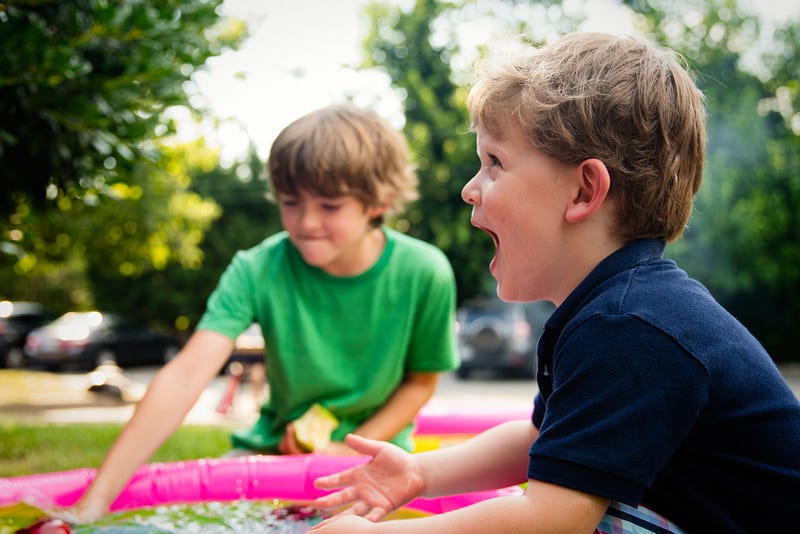
One thing I know is that children need to have playdates once in a while. They love to play with other children. They come up with lots of fantasies together. When they play, they play a different kind of situations. Situations they have been through, situations they have seen and situations they come up with — in their fantasy.
They need to learn to do things as a team or being in situations to solve. Together with their friends and alone. It’s good for their well-being. They get good self-boost. They get confidence when they have played with other children. They know they liked by others. That's good for them.
Some children just play with that ‘fat’ child because the mother says so. Or with the freckled girl who is always alone. The mother or father sees that particular child alone or speaks with the parents. So, the mother or father asks her child to play with the freckled girl who always stands alone or the ‘fat’ boy who doesn’t speak at all. Actually, the child prefers to play with her friends and not with the child who is alone or has freckles and fat. She says that she will be out of the group otherwise and nobody likes her or him when that daughter plays with the freckled girl of ‘fat’ boy. Most parents say these things to their child because that child is alone and it is a pity for them when nobody wants to play with them. So that their child needs to play with the alone child.
These situations happen a lot. But what is the need to say that the bullied child is alone? I don’t see the need to mention the ‘fat’ boy or ‘freckled girl’. Thet all are unique. And they deserve their attention too!
Why kids need playdates
I prefer to say that children and adults need friends and everyone has their qualities in their character. That everyone has a unique way to look at the world. And they are nice people. Some adults could say to their parents that that child has freckles or is fat. Don’t mention that to your child. You learn them to bully. Maybe you teach your child unintentionally, but be aware of what you say. They copy it.
I have heard it about me when a parent told their child.
Actually, it is good to learn your child that there are children who are alone and are not wanted by other children. These ‘other children’ don’t like that alone-child. The thing is that these children — who don’t pay attention to the child that stands alone — want to belong to the group who is popular. These children are afraid to get bullied as well. The reason doesn’t matter. It could be anything. But as a parent, you have to stimulate them to play with everyone in their class.
Look, these children have playdates and playing a lot. But these children haven’t learned how to behave well. At least, that is my experience with the children from my class. They didn’t pay attention to me or they bullied me.
I was alone. I had two friends — one is still my best friend. But I felt alone all the time.
Did I want to have friends? Yes and no.
Yes, because I could talk about things and do nice things with friends. No, because I could do things on my own. I wanted to do things on my own as I knew I liked to play what I wanted to play. I didn’t need to play with friends. Sometimes I wanted to, but most of the time — as I can remember myself doing — was playing all by myself or playing with my sister.
When I realized that I hadn’t that many friends, I saw that parents were not stimulating their children to play with everyone from their class. The children were forming a group very quickly. Me not included.
To me, it felt like I was an outsider or something like that. But I didn’t mind that. Most of the time, I was busy playing the violin.
As I know how it feels to be bullied — and as I know how it is to be alone all the time, or most of the time, I want to stimulate my children not to bully anyone else or do sad things to others. It hurts. I also stimulate them to play with as many children as possible. I teach them to look into their hearts. Not the outside.
It hurts when you teach your children that you have to look at the outside instead of looking into someone’s heart. I love to see how children and adults are developing.
Anyways, we want to learn our children to be more nice to other children and also towards adults. Yes, you can ask your children if someone is nice, but also ask why. If they give you a silly answer, teach them to look into the hearts.
A child can be hurt and sad when someone tells you that you are not allowed to join them playing. I was told I had louse, which was not, but even their parents believed their child. And they didn’t want me on their child’s party celebrating their birthday. It hurt me a lot. Still, it hurt me. It also taught me that I can be alone and that I don’t mind being alone. I actually want to be alone.
Agnes Laurens is a writer. She writes for the local newspaper. Agnes lives in Bunnik, The Netherlands, with her husband and three daughters. Writing is — aside from playing the violin — one of her passions since childhood. She is on Twitter and Instagram.
As soon as my Patreon page is ready to be launched, you’ll be the first one who will get notifications when you subscribe to my mailing list and subscribe to my Thoughts.
Click here join the community for my publication The Life Essence.


