
Why Can’t We Be More Like Birds
Lessons I’ve Learned While Watching Birds
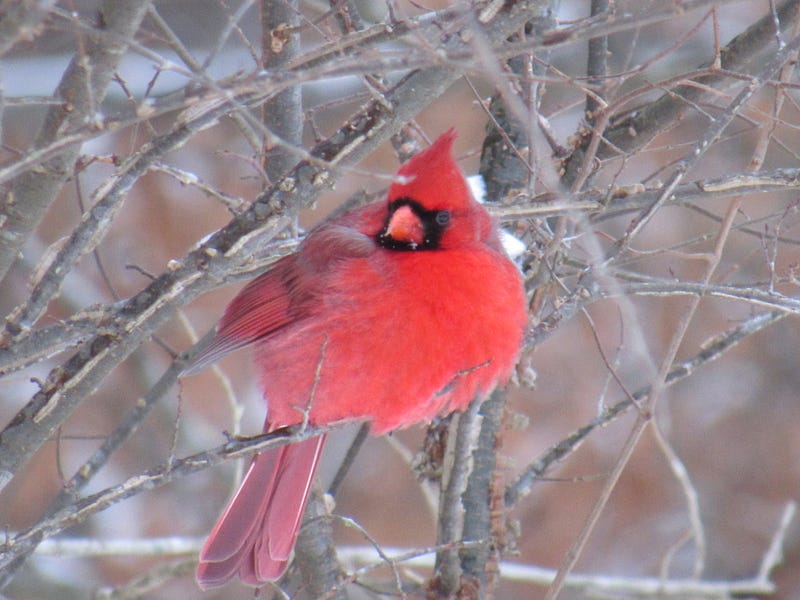
My fascination and watching of birds began at an early age.
Outside my grandmother’s kitchen window cardinals feasted on the seeds she set out during the winter. The food drew other birds and critters (specifically squirrels with their special kind of entertaining antics). I watched them all from the window, fascinated.
In 1970, Richard Bach Jonathan Livingston Seagull, an inspirational fable/parable about a seagull who flew because he loved to fly. The book sold more than a million copies in 1972, one of which was a Christmas present for me under the tree and spawned a number of wearable items and knick-knacks.
Then, in 1973, Hall Bartlett released the work on film with a musical score written by Neil Diamond. I purchased the book of piano pieces and learned each piece.
There was something in the message that book conveyed: don’t do something just because you have to — do it also for the joy of doing it.
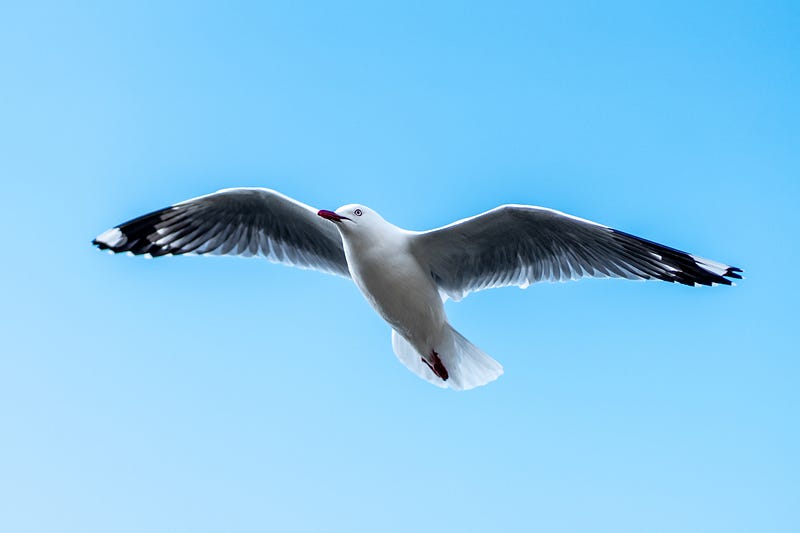
I love watching the gulls over the water, the return of the robins in the spring, and the feasting of the hummingbirds at the feeders during the summer.
At times, I’ve thought that I would love to soar as freely as the birds, but I’ve learned a few lessons about life as I have watched the birds over the year.
#1 Make Room for Others
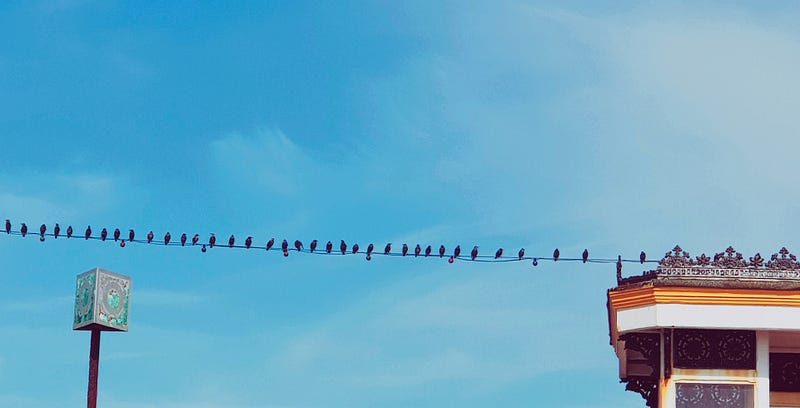
As I sat at a stoplight the other afternoon, I noticed a large number of birds sitting on the power lines that crossed over the road. A couple of new birds flew toward the line and as they neared, the line of birds adjusted itself and made way for the newcomers to land.
It made me wonder why we as humans don’t generally move a bit to make room for others in a conversation group or at a table.
#2 Take Time to Soar
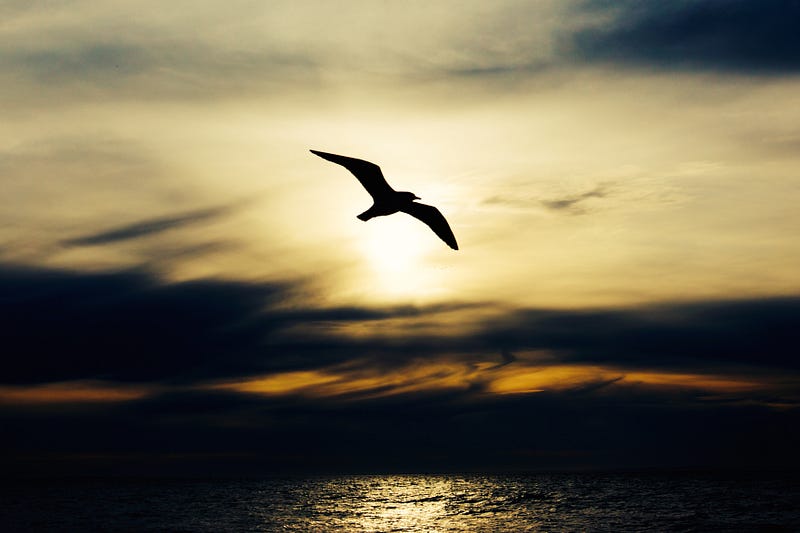
When birds soar, they seem to be enjoying the air currents and observing the world. When the winds are strong, they use it to their advantage. When the winds are easy, they fly in slow lazy circles.
We need to learn to take a moment and enjoy the day and observe the world instead of hurrying from one task to another or one place to another.
#3 Sing Your Own Song
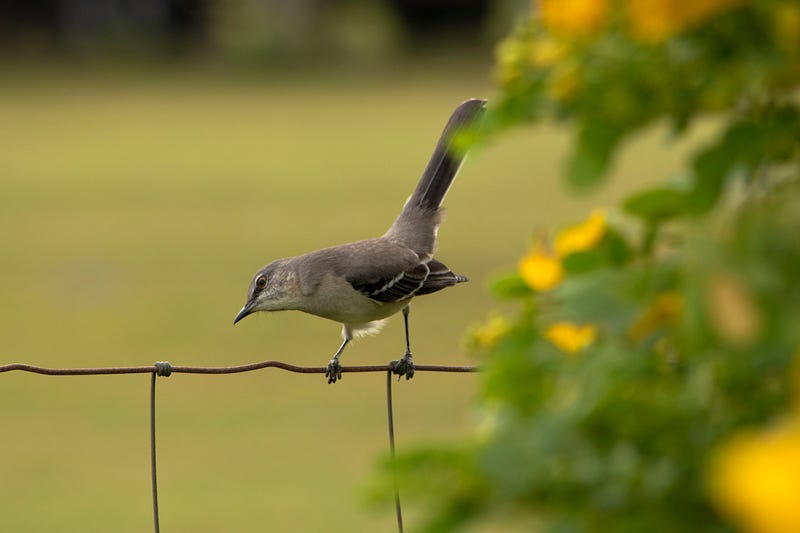
Except for the mocking-jay, every bird has its own song that it can be identified by, even the hummingbird. The mocking-jay, instead of singing a unique song, mimics other birds in an ever-changing melody.
Singing your own song is an important lesson. You are a unique individual with your own special talents, abilities, and interests. Instead of being a follower, walk your own path and find friends, colleagues, and mentors that sing your song, entertain the same passions you do.
Be identified by your voice rather than a carbon copy of someone else.
#4 Fly Against the Wind When It Is Important
When something is important to you, fly against the wind just like a parent bird fighting the wind because it has food for its young.
BUT
don’t fight what you can’t win until you can win.
That might mean that you might have to zig when you want to zag or back up and take the detour when you have completed your research.
It’s important to stand up for what is right, but make sure you are prepared for the long haul.
#5 Gather Together at Mealtime
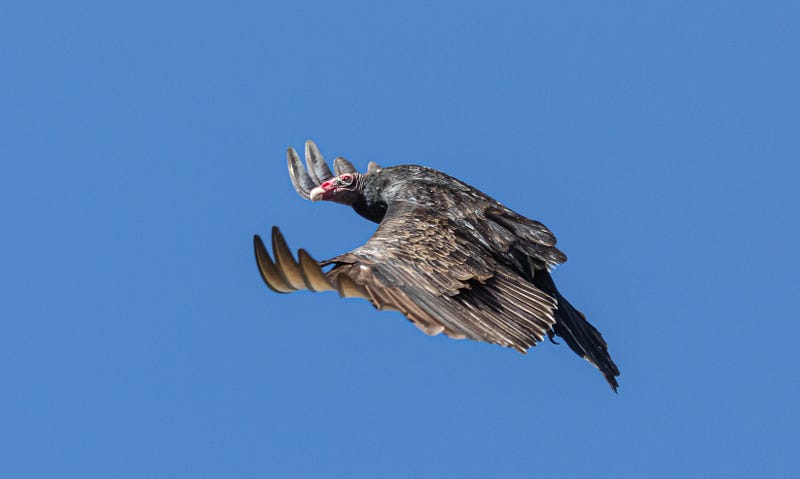
In Tennessee, it is rare for a dead animal alongside the road to be removed. Instead, it becomes a meal for the scavengers like vultures and turkey buzzards. They don’t, however, eat in solitary; an animal carcass becomes a banquet table where numerous birds gather.
The hummingbirds at our feeders all seem to come to feast at the same time. It starts with one bird coming out of the trees in my front yard. He drinks from one of the feeders and then flies away. Then come two, three, and four. They crowd around all four of the food ports on our four feeders.
Take time to gather with family and friends at mealtime, or at least for coffee.
#6 Feed Your Children
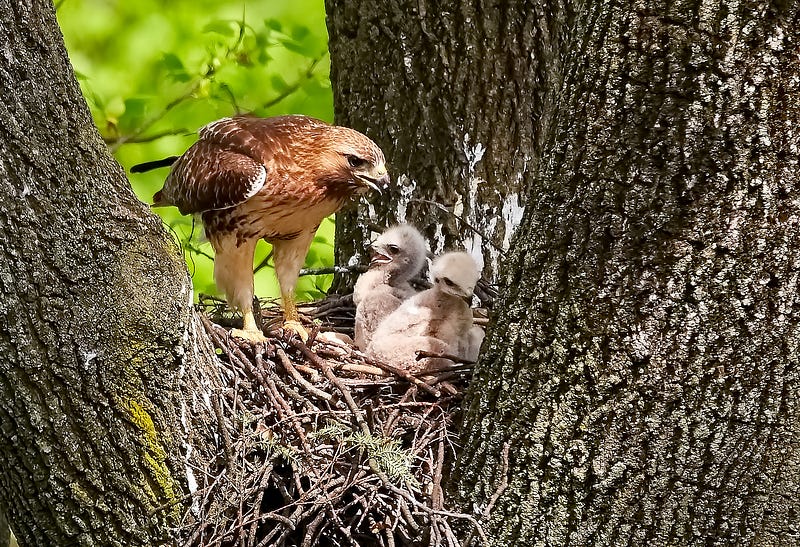
Children are our most valuable resource, but only if we nourish them both nutritionally, emotionally, and psychologically. We need to assist them to become the young ladies and gentlemen that they can become. Then, when it’s time, let go and encourage them to be the best person they can be.
The children of today are the hope for the future. Nurture them, encourage them, and let them learn to fly with their own wings.
Rebecca (Becky) spent 34 years in a teaching career, but when she retired in 2014, she picked up her pen and pursued her passion to write. As a high school English teacher, Becky held the philosophy that she wouldn’t give any writing assignment that she personally wouldn’t or couldn’t do. That philosophy strengthened and broadened her own writing.
In addition to publishing her writing on various platforms, Becky also blogs at Life is for Living, a blog to encourage, motivate, and help others live the best life possible. As an extension of Life is for Living, she also publishes a weekly newsletter, Let’s Chat. (Check it out HERE.) Life is for Living also has a social media presence with the group Coffee on my Porch. (Check it out HERE.)
After teaching writing for 34 years, Becky began Ink & Keyboard, a blog for writers at all levels. She supplements what she writes on the blog with a subscription newsletter, The Writer’s Notebook (Check it out HERE.) and the social media group Ink & Keyboard (Check it out HERE.)
Thanks for reading.
If you enjoyed what you just read, feel free to share.
If you found this article helpful or inspirational, you might enjoy these:
Before you go . . .
If you like my writing or got something out of it, why not join Medium as a paying member. As a member, you have unlimited access to my articles as well as the work of other talented writers.