
Why Bargain Hunting Is Not a Money Saver.
It Will Come Back to Haunt You.
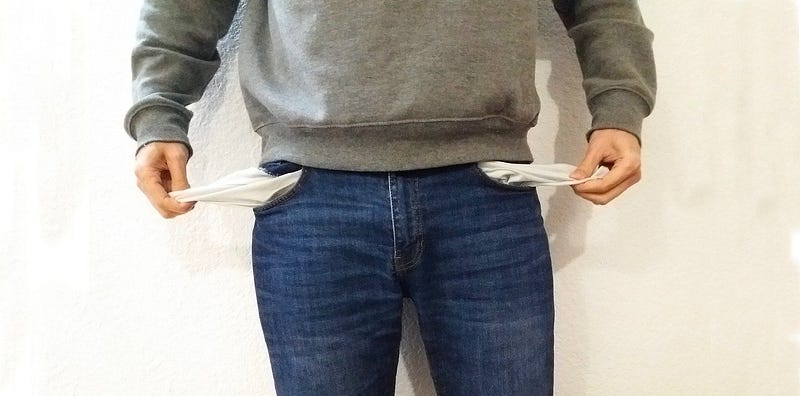
You are at a grocery store with your list of items to buy. Suddenly, in the middle of the aisle, you spot something that’s not on your list that is on sale. So you decide to put it into your cart to buy it because you think it is cheap and will save you money.
But hold on there a minute. Just because you saw something on sale for cheap doesn’t mean that you are saving money. It’s quite the opposite. You’re spending more money than you realize.
Everyone loves a good bargain. And, on some level, there’s nothing wrong with that. After all, it doesn’t hurt anyone to save money. But deals don’t always save you money, and they can even end up costing you more in the long run. So here are some reasons why bargain hunting might not be as great as it seems.
“How can it be possible?” you might ask. But, unfortunately, it’s all the tricks that retail grocery stores are doing to have you buy more.
I used to be a Creative Writer for radio, and I know that the words Save or Saving are nothing more than a word that advertisers use for you to spend more money.
Other tricks retail and grocery stores use. I can tell you one of them.
When you go into the grocery store with your cart, you first see someone serving up, say, a brand of crackers for you to sample. The truth is those brand crackers aren’t selling well at that store, so the grocery store gets an employee to become a demonstrator for a day. And it’s a way for you to buy those crackers because you think it tastes good. So those sample cups that you throw in the garbage are a way for the business to know how many people are willing to buy them.
I know this because I used to be a Demonstrator for Costco. To this day, when I see food sampling at a grocery store, I don’t take it for that reason. Yet, many Costco customers still think that it’s a free lunch when it isn’t.
But if you still want to sample the food without buying, please take up to three sample cups. To the business, those sample cups represent one person.
There are other tricks that businesses ask you to buy more. However, I will focus on grocery stores because I disagree with my mother. She still thinks that she is saving money buying extra things because she believes we will need these items in the future. But that is where she is wrong.
There are other ways that grocery stores will trick you into buying more. I don’t want to explain it here because I don’t want to write an essay.
Living on My Own.
Before this pandemic, I was living on my own. I usually spend around $100 on groceries. Sometimes I go over, and sometimes I only spend about $80 to $90. I buy one extra food item once in a while, but I always stick to my grocery list. That’s the real key to saving money and not purchasing extra things to hope to last you through the winter.
I know that prices are going up on everything because of inflation. And I know that tons of people complain about the high cost of food is. However, prices on everything have been going on since the beginning of time. I mean, a hundred years ago, a gallon of milk cost 33 cents. Now it’s, I guess, five to seven dollars. So you might be thinking that it was cheap back in 1922. However, at that time, the average working wage was lower than it is now.
What’s Wrong With Bargain Hunting.
For one thing, it can lead to compulsive shopping. But, I should know, I used to be like that when I was younger. I don’t overspend money on clothes as other young women do. For me, it was more CDs or stuff.
I wish that I did live alone back then, instead of with my parents or Room and Board. That was I could learn not to spend too much. But, of course, I didn’t know that ADHD was also to blame. But I don’t want to make that an excuse.
Of course, when I finally moved out on my own in my late 30s and early 40s, something within me changed. I think that part of it was that I didn’t want to move back in with my parents again. And the thought of, do I really need this when I went shopping.
I started only to use cash when I went Grocery shopping. That’s one way to save, instead of using your debit or credit card all the time. Also, with money, you can see how much physical money you have.
Yeah, I know that most of you think that cash is on its way out. Nobody wants to spend paper money anymore, and it’s terrible for the environment. But now that we are in a pandemic, guess what item you use there with the most germs on it: the Interact/debit machines. That is because many people use that, and cashiers can’t always wipe it after every use. But I digress.
When I got laid off and moved back in with my mother, I saved a lot of money. So I am happy about that. Now, if I can get a job and finally move out again, that’s a different story.

What Can Someone Do to Save Money?
Here are four things that I do to save money. But, of course, if any of these don’t work for you, you can always Google ways to stop impulse shopping on the Internet.
- As I mentioned before, use cash instead of your debit or credit card.
- When you do see an item on sale, the best thing to do is to ask yourself, do I really need this and will I ever use it? I mean do you really need another sweater when you have tons of it at home that you can wear? If you don’t need it, you can put it back.
- Another thing that I do to spend, even online, is to have a maximum price point that you want to spend on an item that you need. For example, my maximum price point for clothes, except for jackets, it’s usually under $50. This even includes evening dresses. Any item of clothing higher than that, I will not buy, not even $200 sneakers.
- Use a Visa Debit Card instead of an actual credit card. A Visa Debit card is only good for online purchases. But the best thing about these is that the money is taken out automatically like a debit card and you don’t have to pay it off every month.
The Truth
The real truth behind bargain hunting is that you buy something you want and don’t really need, thus wasting your money. If you are still thinking that bargain hunting does save you money, you’re going to be broke sooner or later.
Why I Don’t Do Reviews for Amazon…
Or from any other shopping sites with sellers in them.
medium.com
References
Hamm, T. (2020, April 9). Why Buying Things on Sale is an Awful Way to Save. The Simple Dollar. https://www.thesimpledollar.com/save-money/buying-things-because-theyre-on-sale-is-an-awful-way-to-save-money/
Kokemuller, N., & Thompson, J. (2018, October 25). Advantages & Disadvantages of Sales Promotions. Bizfluent. Retrieved January 2, 2022, from https://bizfluent.com/list-6673344-advantages-disadvantages-sales-promotions.html
McGuire, B. (2020, July 9). The Pros and Cons of Shopping the Sales. Paisley. Retrieved January 2, 2022, from https://www.paisley.org.uk/2020/07/the-pros-and-cons-of-shopping-the-sales/
Measom, C. (2021, October 22). The Real Cost of Being a Cheapskate. Yahoo Finance. Retrieved January 2, 2022, from https://finance.yahoo.com/news/real-cost-being-cheapskate-210845990.html
Q: How much did a gallon of milk cost in 1922? (2012, July 13). Answers. Retrieved January 2, 2022, from https://www.answers.com/Q/How_much_did_a_gallon_of_milk_cost_in_1922
Sullivan, K. (2012, March 26). False Frugality: When Buying Stuff On Sale Doesn’t Save You Money. CBS Chicago. https://chicago.cbslocal.com/2012/03/26/false-frugality-when-buying-stuff-on-sale-doesnt-save-you-money/
Wong, K. (2016, March 9). How Couponing and Deal Hunting Actually Make You Spend More Money. lifehacker.com. https://lifehacker.com/how-couponing-and-deal-hunting-actually-make-you-spend-1763655156


