avatarJean Campbell

Free AI web copilot to create summaries, insights and extended knowledge, download it at here

4536

Abstract

Major lakes — Powell, Mead, the Great Salt Lake — are drying up. In the case of the first two, primary water sources for AZ, NV, and CA will vanish with them. In the case of the latter, the dry Salt Lake basin will lead to a massive air quality problem for the city, called an “environmental nuclear bomb” in <a href="https://www.nytimes.com/2022/06/07/climate/salt-lake-city-climate-disaster.html">recent media</a>.</p><p id="5880">This isn’t going to happen in 50 years, or even 30 years. These things are happening now.</p><p id="4cd8">When I last lived in Tucson in 2019, my water bill was about $200 a month. Not bad, right? I lived in a small townhome, rarely watered the yard, and never took baths (only showers), plus I conserved with toilet flushes (“if it’s yellow…”). I even installed a rain catchment system, but ultimately realized I was up against a non-solvable problem.</p><p id="4f13">In Vegas, hydroelectric power will disappear when Mead runs dry.</p><p id="570d">In several small California towns, the water is gone already and it’s not pretty. Homeowners can’t sell because their property and homes are worthless.</p><figure id="19cc"><img src="https://cdn-images-1.readmedium.com/v2/resize:fit:800/1*ZRUYvRClg2_jBek-RpUidw.jpeg"><figcaption>Drought refugees, 1936, fleeing Oklahoma during the Dust Bowl. Image courtesy <a href="https://commons.wikimedia.org/wiki/File:Dorothea_Lange,_Drought_refugees_from_Oklahoma_camping_by_the_roadside,_Blythe,_California,_1936.jpg">Wikimedia Commons</a>.</figcaption></figure><h1 id="918c">Phoenix and Vegas continue to expand</h1><p id="e756">Not only are my smart friends not leaving the desert, but plenty of sun-worshipping folks are moving to Phoenix and Tucson.</p><p id="c739">Between 2010 and 2020, growth in Phoenix was 11%.</p><p id="dd65">Phoenix and Las Vegas are still two of the faster-growing cities in the nation, according to <a href="https://www.usnews.com/news/us/articles/2021-10-07/phoenix-other-cities-keep-growing-as-climate-danger-rises"><i>US News and World Report</i></a>.</p><p id="4ce0">In Tucson, growth from 2010 to 2020 was 4.3%, according to the <a href="https://www.census.gov/quickfacts/fact/table/tucsoncityarizona/POP010220">US Census Bureau</a>. Tucson has experienced growth of between .3% and .5% in the last year (May 2021 — July 2022) but outlying areas such as Marana and Oro Valley <a href="https://tucson.com/news/local/population-growth-for-tucson-lags-behind-much-of-arizona/article_cc5837f2-6a7b-11ec-bbe7-df4a0d7b75af.html">are growing by leaps and bounds</a>.</p><p id="4bb2">Vegas is growing by 1.2% annually, <a href="https://worldpopulationreview.com/us-cities/las-vegas-nv-population">ranking 97th</a> among the nation’s fastest-growing cities, and Salt Lake City continues to expand.</p><figure id="8cbc"><img src="https://cdn-images-1.readmedium.com/v2/resize:fit:800/1*ZQ41WwkbjNJRcDYCqNkQuA.jpeg"><figcaption>Sin City is doomed, but people keep moving there. Image courtesy <a href="https://commons.wikimedia.org/wiki/File:Welcome_to_Fabulous_Las_Vegas.jpg">Wikimedia Commons</a>.</figcaption></figure><h1 id="6a7b">Heat and quality of life</h1><p id="89fc">I lived in Tucson for twenty years, from 1997 to 2018. During that time, summers started earlier each year and lasted longer. The monsoon rains, which bring a welcome relief from the heat and dry air, became less frequent.</p><p id="996a">In 1997, 100+ degree days started in May and stuck around till early October. When I left twenty years later, the 100+ degree days started in April and did not disappear entirely till mid-October.</p><p id="fec9">That’s not a huge change, but it's only twenty years!</p><p id="bd39">People with money leave town in the summer, as they always have. I know friends who vacate from mid-June thru September. Everyone else — those with jobs or fewer financial resources — endure summer by doing errands early in the day and going out after dark.</p><figure id="3266"><img src="https://cdn-images-1.readmedium.com/v2/resize:fit:800/1*ijI_52Z9YT9oj3hwOwI1mg.jpeg"><figcaption>Storm over Tucson, bringing relief from the heat and drought. Monsoons are the major source of water in a region that typically gets 11 inches of rain per year, but they are less frequent and milder now. Image courtesy <a href="https://commons.wikimedia.org/wiki/File:Welcome_to_Fabulous_Las_Vegas.jpg">Wikimedia Commons</a>.</figcaption></figure><h1 id="febd">Fires</h1><p id="86c9">In the summer of 2003, Tucson’s air quality was horrendous as flames

Options

on Mt. Lemmon destroyed over 300 structures, obliterating the town of Summerhaven and my brother-in-law’s cabin.</p><p id="65b1">Since moving, I watched from afar as the Bighorn fire rampaged through the Catalina Mountains in 2020, burning 120,000 acres of the beautiful high desert. That fire began June 5th and wasn’t contained till July 23rd.</p><p id="be94">Last month, the Kitt Peak Observatory sustained serious damage from the Contreras fire.</p><p id="853c">The western US is now beset with fires all summer, which means traveling in the region — NM, NV, UT, and CA — often requires dodging smoke, re-routing, or canceling plans.</p><p id="caa3">When you live in the western US, it takes a very long car trip to get out of the western US.</p><figure id="b137"><img src="https://cdn-images-1.readmedium.com/v2/resize:fit:800/1*MC__iSl7uxQAYp4SvI20Fg.jpeg"><figcaption>The Bighorn fire burned for seven weeks, consuming 120,000 acres near Tucson. Image courtesy <a href="https://commons.wikimedia.org/wiki/File:2020_06_24-22.43.09.138-CDT.jpg">Wikimedia Commons</a>.</figcaption></figure><h1 id="c2e0">The Great Escape</h1><p id="09b7">There probably isn’t one answer to the question of why people who can afford to move are staying in the west. We are resistant to change.</p><p id="dec2">Many Californians ARE moving, but they seem to evacuate to — you guessed it — Phoenix or Tucson or Salt Lake City, and their motives seem to be the high Cali cost of living or the crowds.</p><p id="2d5d">We get quite a few refugees and downsizers from Cali here in The Village, as well as ex-Texans who are tired of the traffic.</p><p id="4fcc">Maybe I am underestimating how many of my friends are die-hard optimists? Perhaps they believe conservation, ingenuity, technology, or luck will turn it all around.</p><p id="7c8c">People have careers, family, and a sense of place — otherwise known as “a life” — so moving is a stressor, and expensive to boot. I have 30-ish friends with young kids and family support systems, and they would only move somewhere if they had a grandparent in the mix.</p><p id="a54b">Then again, maybe all my smart Arizona friends are plotting a 5-year plan to escape the endless summers, drought, and fires.</p><p id="b28e">Maybe it needs to get much, much worse?</p><p id="7f96"><a href="https://jeancampbell-25104.medium.com/subscribe"><i>Want an email heads-up for new articles? Click Me</i></a><i>.</i></p><p id="6d3e"><a href="https://medium.com/membership"><i>Want to join Medium? Click Me.</i></a></p><p id="e8c4"><i>Jean Campbell recently started her first <a href="https://jeancampbell.substack.com/"><b>Substack</b> newsletter</a> to laser focus on getting her book, </i><b>City of Lies: A Street Hustler’s Omaha Story </b><i>published.</i></p><div id="2893" class="link-block"> <a href="https://readmedium.com/gas-prices-skyrocket-saddle-up-33e0acb1de25"> <div> <div> <h2>Gas Prices Skyrocket, Saddle Up</h2> <div><h3>There is a very simple solution to your problem, America</h3></div> <div><p>medium.com</p></div> </div> <div> <div style="background-image: url(https://miro.readmedium.com/v2/resize:fit:320/0*NNu72gtgIYS_7pTp)"></div> </div> </div> </a> </div><div id="e26f" class="link-block"> <a href="https://readmedium.com/the-dream-of-a-walkable-city-afd8415a6bc"> <div> <div> <h2>The Dream of a Walkable City</h2> <div><h3>The age of cheap gas is over, America</h3></div> <div><p>medium.com</p></div> </div> <div> <div style="background-image: url(https://miro.readmedium.com/v2/resize:fit:320/0*ccABOy4XmVecc1X4)"></div> </div> </div> </a> </div><div id="08c8" class="link-block"> <a href="https://readmedium.com/top-10-liberal-af-utopian-cities-a3cba181aae8"> <div> <div> <h2>Top 10 Liberal AF Utopian Cities</h2> <div><h3>Assuming you have the dollars or bitcoin, that is</h3></div> <div><p>medium.com</p></div> </div> <div> <div style="background-image: url(https://miro.readmedium.com/v2/resize:fit:320/0*rE3uHSUXONOoovS0)"></div> </div> </div> </a> </div></article></body>

Why Are Smart People in Denial?

If you live in the western US, you should move
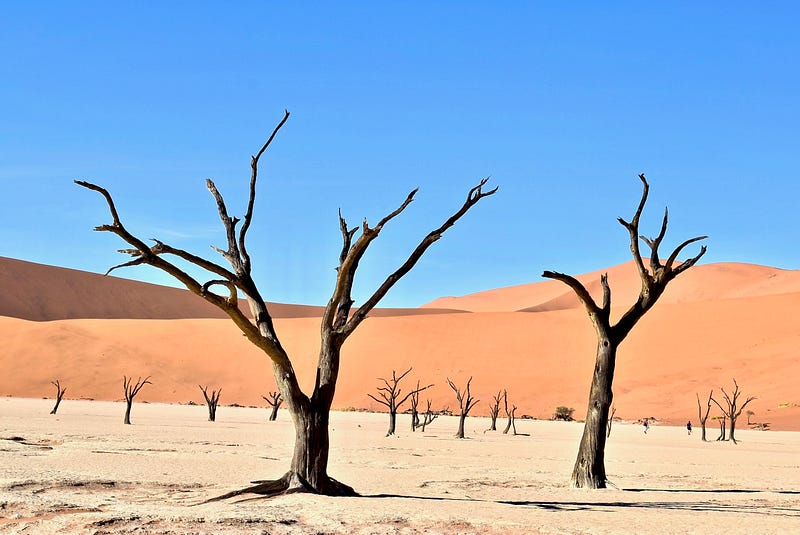
How Phoenix, Arizona might look in 20 years. Photo by Parsing Eye on Unsplash

Today I read an article about how most people with PhDs are the children of privilege, and I nodded my head.

I have friends with PhDs because I used to work at the University. I ended up with two master’s degrees, which is what happens when you work at a university.

These intelligent, well-educated, hard-working people seem to be in deep denial when it comes to one subject, however.

I can hear the rejoinder: maybe PhDs aren’t as smart as you think!

These smart friends live in Tucson, Arizona.

They aren’t fleeing the hot, parched, fiery west —and when one does move, it’s for career, retirement, or cost of living.

I find this to be a giant head-scratcher.

Smart people with PhDs (and smart non-PhDs) don’t lack resources. It’s not like they can’t afford to relocate, so what gives?
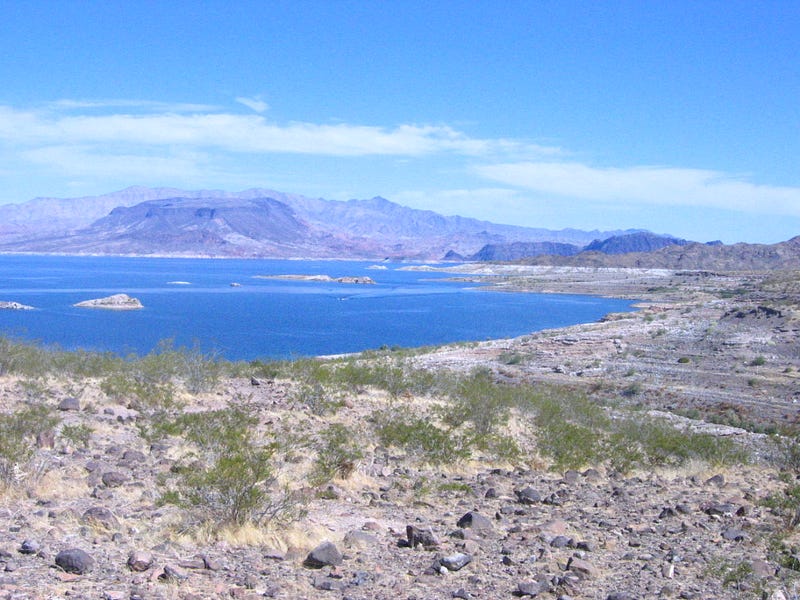
Lake Mead provides power to Las Vegas and water to three western states or 20 million people, and it’s rapidly drying up. Image courtesy Wikimedia Commons.

When I moved to East

Some friends wanted to know why I would move from bustling, progressive Tucson, Arizona to backwoods Hot Springs, Arkansas and I said:

“I miss trees and water.”

If they showed an inkling of interest, I followed up with:

“The heat and drought situation in Tucson will get much worse in my lifetime.”

A rare soul would nod her head or raise his eyebrows, and I might add: “I don’t want to be 70 years old and paying a $600 a month water bill.”

No one cared that central Arkansas is mostly free from natural disasters, or has a reliable watershed or temperate climate. Hot Springs Village hasn’t had a major fire or flood in the last 50 years.

You’d think there would be more interest in optimal climate, under the circumstances.

Then again, I’m a bright yellow canary in a pitch-black coal mine.

I didn’t want to be a refugee, so I (kinda) understand why people aren’t selling their homes in Arizona and joining me here.

Most people in their mid-70s and older are probably better off staying in their townhomes or mansions and remaining indoors under the hellish summer sun — because by most accounts Tucson will still be livable in ten years.

But what I do not understand is educated, informed people under 70 who are hunkering down in the Sonoran desert. Some of my friends are in their 30s and I want to scream:

“Sell your house and move somewhere that isn’t going to turn into hell!”
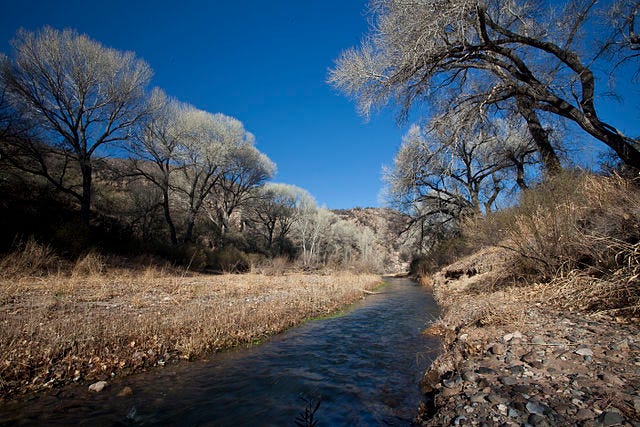
The San Pedro River in southern Arizona. Tucson once had water flowing through town, but the population growth and drought have altered the environment. Image courtesy Wikimedia Commons

How will collapse play out, and when?

In Future Shock (1970), Alvin Toffler theorized that modern people are so overwhelmed by the pace of modern change that they can’t think about the future.

Massive and rapid technological changes make dealing with the future impossible.

Maybe that’s the reason so many otherwise smart people seem to be in denial.

Common sense and basic climate science tell us the Southwestern US is in deep trouble now, and it will only get worse. The primary issue is lack of water, but some argue heat and fire are equally menacing.

Major lakes — Powell, Mead, the Great Salt Lake — are drying up. In the case of the first two, primary water sources for AZ, NV, and CA will vanish with them. In the case of the latter, the dry Salt Lake basin will lead to a massive air quality problem for the city, called an “environmental nuclear bomb” in recent media.

This isn’t going to happen in 50 years, or even 30 years. These things are happening now.

When I last lived in Tucson in 2019, my water bill was about $200 a month. Not bad, right? I lived in a small townhome, rarely watered the yard, and never took baths (only showers), plus I conserved with toilet flushes (“if it’s yellow…”). I even installed a rain catchment system, but ultimately realized I was up against a non-solvable problem.

In Vegas, hydroelectric power will disappear when Mead runs dry.

In several small California towns, the water is gone already and it’s not pretty. Homeowners can’t sell because their property and homes are worthless.
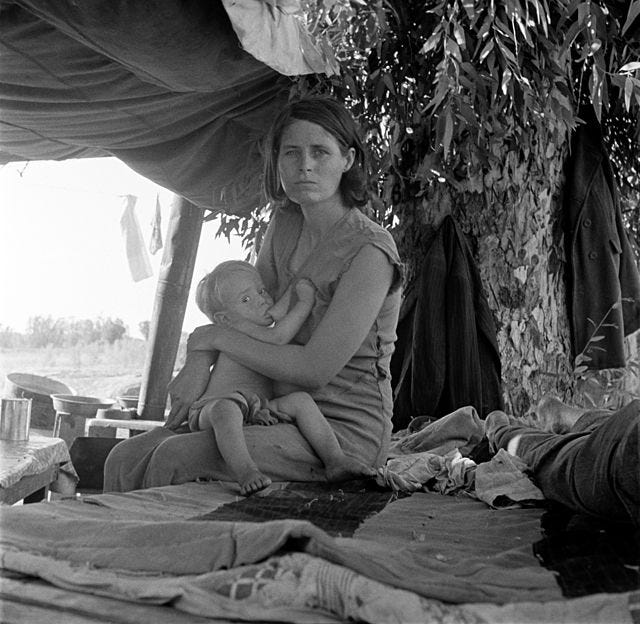
Drought refugees, 1936, fleeing Oklahoma during the Dust Bowl. Image courtesy Wikimedia Commons.

Phoenix and Vegas continue to expand

Not only are my smart friends not leaving the desert, but plenty of sun-worshipping folks are moving to Phoenix and Tucson.

Between 2010 and 2020, growth in Phoenix was 11%.

Phoenix and Las Vegas are still two of the faster-growing cities in the nation, according to US News and World Report.

In Tucson, growth from 2010 to 2020 was 4.3%, according to the US Census Bureau. Tucson has experienced growth of between .3% and .5% in the last year (May 2021 — July 2022) but outlying areas such as Marana and Oro Valley are growing by leaps and bounds.

Vegas is growing by 1.2% annually, ranking 97th among the nation’s fastest-growing cities, and Salt Lake City continues to expand.
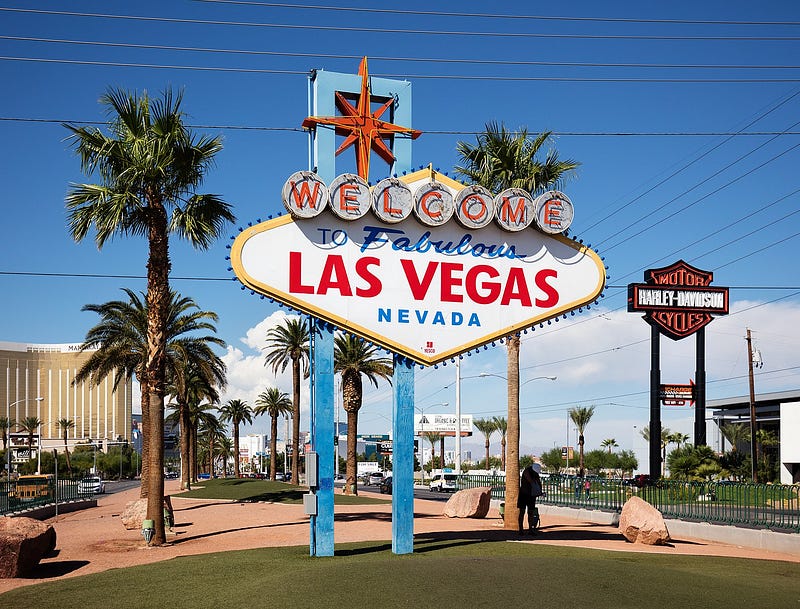
Sin City is doomed, but people keep moving there. Image courtesy Wikimedia Commons.

Heat and quality of life

I lived in Tucson for twenty years, from 1997 to 2018. During that time, summers started earlier each year and lasted longer. The monsoon rains, which bring a welcome relief from the heat and dry air, became less frequent.

In 1997, 100+ degree days started in May and stuck around till early October. When I left twenty years later, the 100+ degree days started in April and did not disappear entirely till mid-October.

That’s not a huge change, but it's only twenty years!

People with money leave town in the summer, as they always have. I know friends who vacate from mid-June thru September. Everyone else — those with jobs or fewer financial resources — endure summer by doing errands early in the day and going out after dark.
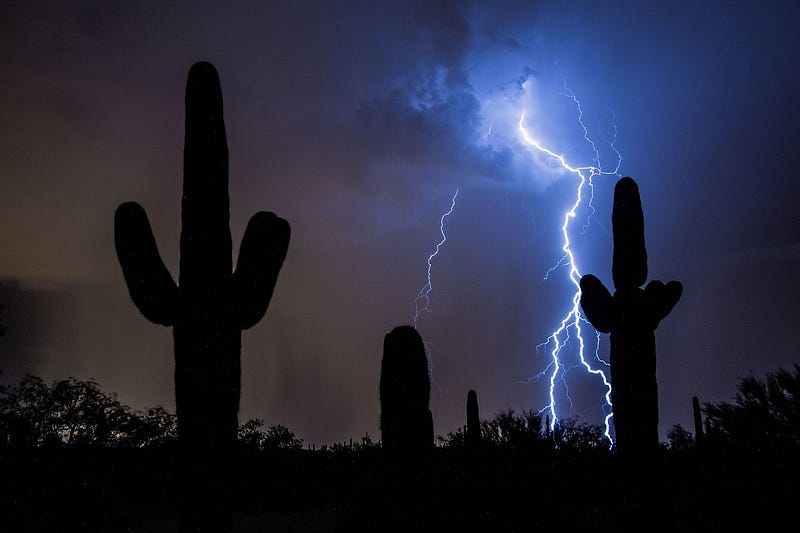
Storm over Tucson, bringing relief from the heat and drought. Monsoons are the major source of water in a region that typically gets 11 inches of rain per year, but they are less frequent and milder now. Image courtesy Wikimedia Commons.

Fires

In the summer of 2003, Tucson’s air quality was horrendous as flames on Mt. Lemmon destroyed over 300 structures, obliterating the town of Summerhaven and my brother-in-law’s cabin.

Since moving, I watched from afar as the Bighorn fire rampaged through the Catalina Mountains in 2020, burning 120,000 acres of the beautiful high desert. That fire began June 5th and wasn’t contained till July 23rd.

Last month, the Kitt Peak Observatory sustained serious damage from the Contreras fire.

The western US is now beset with fires all summer, which means traveling in the region — NM, NV, UT, and CA — often requires dodging smoke, re-routing, or canceling plans.

When you live in the western US, it takes a very long car trip to get out of the western US.
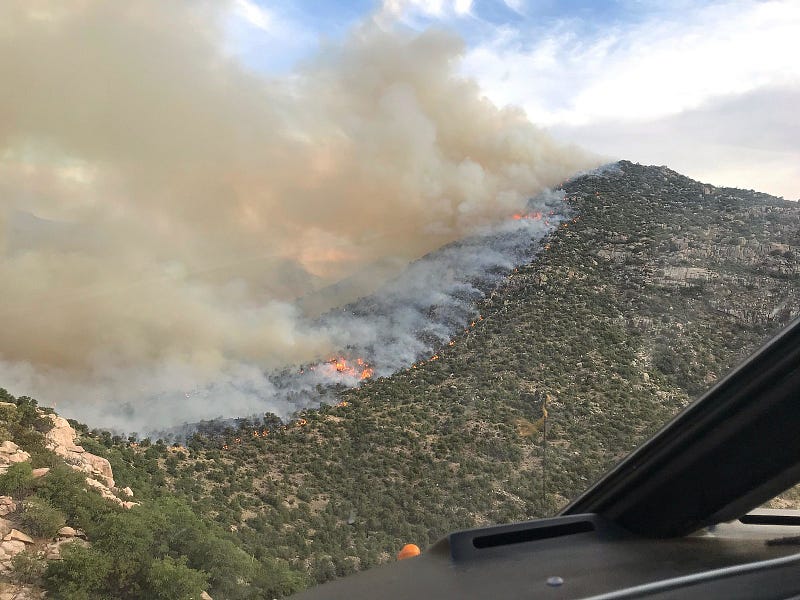
The Bighorn fire burned for seven weeks, consuming 120,000 acres near Tucson. Image courtesy Wikimedia Commons.

The Great Escape

There probably isn’t one answer to the question of why people who can afford to move are staying in the west. We are resistant to change.

Many Californians ARE moving, but they seem to evacuate to — you guessed it — Phoenix or Tucson or Salt Lake City, and their motives seem to be the high Cali cost of living or the crowds.

We get quite a few refugees and downsizers from Cali here in The Village, as well as ex-Texans who are tired of the traffic.

Maybe I am underestimating how many of my friends are die-hard optimists? Perhaps they believe conservation, ingenuity, technology, or luck will turn it all around.

People have careers, family, and a sense of place — otherwise known as “a life” — so moving is a stressor, and expensive to boot. I have 30-ish friends with young kids and family support systems, and they would only move somewhere if they had a grandparent in the mix.

Then again, maybe all my smart Arizona friends are plotting a 5-year plan to escape the endless summers, drought, and fires.

Maybe it needs to get much, much worse?

Want an email heads-up for new articles? Click Me.

Want to join Medium? Click Me.

Jean Campbell recently started her first Substack newsletter to laser focus on getting her book, City of Lies: A Street Hustler’s Omaha Story published.

Environment
Climate Change
Drought
Phoenix
Fire
Recommended from ReadMedium