
Why Apple Needs to Be More like DJI
And why I want EVERYTHING DJI makes
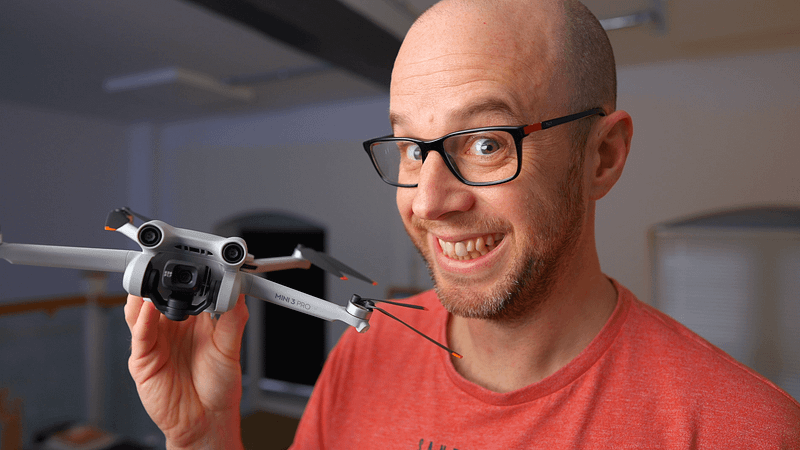
Just before Christmas, I caved. I did that classic thing of convincing myself that I needed something sooner rather than later even though I almost definitely didn’t.
No, actually, my business needed it. It really did. Honestly. In fact, my entire life and self-worth would be better off as a result of this purchase. I knew that, as soon as I hit the ‘checkout’ button.
So, I did it — I bought myself a DJI Mini 3 Pro drone.
And I fell in love, immediately. Again.
This is for many reasons, but it also reminded me of why I want Apple to be more like DJI.
Let me explain.
The problem with DJI
If I had zero self-control, I’d buy everything DJI makes. Literally all of it. Even that bonkers Ronin 4D cinema camera which looks capable of one day becoming self-aware and destroying every living organism on the planet.
I’m not affiliated with Ronin. They’ve never sent me free stuff, and they’ve certainly never sponsored any of my content. I haven’t even spoken to them. I just deeply love their product strategy.
I get the feeling that the DJI top brass sits in product meetings and rarely says no. We see the results of this regularly. For instance, why would a company best known for its drones and gimbals enter the wireless lavalier mic game?
Well, why not? Just go and make it!
They always smash it, too. The aforementioned DJI Mic solution has been widely praised for its utility, sound quality, and reliability — they’ve even managed to beat RØDE at its own game.
I’ve owned and used a number of DJI products and I can confirm that you never feel short-changed. They’re always relatively well priced, but, more importantly, built like tanks and withstand everything that comes with using this kind of gear for commercial purposes.
While browsing the DJI website for this blog post, I discovered its range of industrial solutions. I want everything on that page, too — including the DJI Dock which enables operatives to control £11,000 weatherproof drones remotely in hostile environments. Just look at it! Sure, I’d put it in my back garden and never use it, but… well, look at it!
The problem with Apple
Apple isn’t like DJI. Tim Cook and chums don’t sit in product meetings (sometimes, at all if the reports are to be believed) and wave through every seemingly bonkers idea.
These days, Apple products are spreadsheeted to within an inch of their lives. Everything is profit-focused and minutely assessed for maximum margin and supply chain efficiency.
This is why we end up with products like the iPhone 14 Plus, 10th-generation iPad, M2 iPad Pro, and base model M2 MacBook Air. These products sit within an already established bunch of high performers but reveal the gaps in Apple’s armour. They’re either flawed (in the case of the base model M2 MacBook Air), entirely misjudged (hello, iPhone 14 Plus), or downright nonsensical (enter the 10th-generation iPad).
As a result, I don’t have the same inclination to own everything Apple makes. I’m not being facetious regarding the allure of DJI, either — I would literally buy everything on their website if I had the money to do so. It all looks immeasurably cool, fun to use, and designed to make you as creative as possible.
By contrast, there are a number of Apple products I own simply because they needed reviewing. And, because I rarely return the products I invest in for review purposes, they stay with me, often reluctantly. How did it come to this, Tim?
I know what you’re thinking, though. Which is the more successful company?
How can Tim solve this?
I don’t think he can.
In 2021, DJI achieved estimated sales of $3.83 billion. That ain’t too shabby, but during the same year, Apple reported sales of $365.82 billion.
Those sales numbers for Apple continue to grow, too — along with the lofty expectations of its shareholders. DJI, on the other hand, remains mainly privately owned and has only shown marginal interest in filing an IPO.
These are two very different businesses with entirely different sales, market, and customer strategies. They also serve vastly different audiences; DJI has a fanbase that’s just as loyal as Apple’s, but it is, arguably, rather more niche.
Apple has to serve a wide customer base. It needs to satisfy shareholders, keep its competitors on its toes, and maintain products and services which directly impact the health and well-being of users. The same can’t be said for a three-axis camera gimbal.
Does Tim need to solve this? Not really. This is an entirely selfish request on my part; I don’t expect Apple to turn into a DJI-like “screw it let’s do it” company — it would be far too risky (regardless of the rewards such an approach would offer reviewers like myself).
However, it does illustrate why we’re yet to see a foldable iPhone, a unique take on the world of VR (thus far), or anything remotely resembling an Apple automobile.
I noted before Christmas that Apple needs the next big thing, and soon. This is what I’m getting at today; DJI’s ability to seemingly throw caution to the wind with some of its products should inspire Apple to do the same occasionally. The Apple Watch Ultra comes close, but it’s not a brand-new product for Apple and it isn’t testing a new market or challenging the status quo.
Maybe we’ll see something that does exactly that this year.
Maybe we won’t.
In the meantime, I’m going to spend the rest of this week attempting not to buy more DJI stuff which I categorically do not need. Wish me luck.
Before you go
Join my Substack newsletter for tips on becoming a profitable, happy online creator!
If you enjoy my writing, it’s only a snippet of what’s on Medium. I’m a paying member myself and highly recommend joining. Click here to join (a portion of your membership fee will be sent my way and therefore directly support my work!).
Originally published at https://markellisreviews.com on January 3, 2023.