
Why and How To Create Your Own Language Textbook
How to make the best textbook you’ll ever own
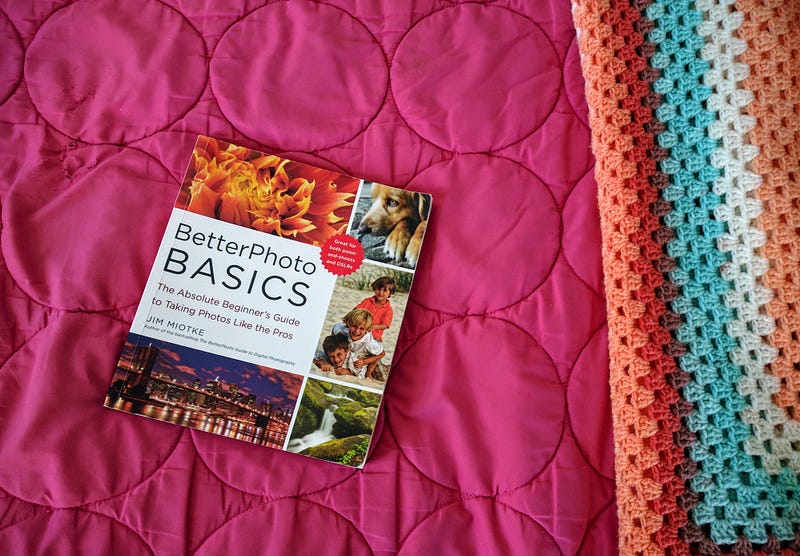
Picture a world without textbooks.
How do you learn maths? How do you understand slight nuances between words? How do you make sense of conjugation?
You’d have to ask an expert directly. Can you be sure you’d be able to do that for every subject you’ve learned so far? I doubt it.
Why create your own?
Textbooks are useful. Whether you “like” them or not, you cannot deny the amount of knowledge packed into a few hundred pages. Just waiting to be put to use.
Yet, most people consider textbooks the most boring part of a language-learning journey. The reason? Textbooks are for everybody. They don’t care what you want to learn first, what you struggle with, what type of knowledge you need. How you need it presented.
You can thus either use it “the normal way” and feel frustrated at times, or create your own. A textbook with all the answers you need.
How to create it?
Creating a textbook for yourself only might seem complicated. But you can do so in a few steps.
Get resources ready
Since you are creating a textbook of something you are learning, you don’t know all the answers yet. You’re going to need resources to pull information from.
Get a bunch of existing textbooks on the topic. If you already know more than one language, you can even gather material in various languages. The explanations and examples can be very different from one language to another.
Burmese uses particles to indicate what the previous word represents in the sentence. က means that what is in front of it is the subject of the sentence. Japanese has a similar rule. For this reason, the French explanations go more into detail for basic explanations. But the Japanese textbook distinguishes the nuances of use between the two languages.
On top of this, you should also gather a bunch of websites with examples and explanations. They could help when textbooks run out of clear answers.
Finally, go get “real-life” information! Go find information from friends who already studied the language or from natives! You will get insights on what to be careful of when you study.
Who knows? There could be a grammar pattern that seems straight forward but, in reality, can only be used in certain situations.
Preparation — Skim it all
From there on, you have all the information you need. It’s a whole lot to handle though, so you need to get ready.
First, make a note of what you want to learn. If you know what particularly interests you, you will have more fun and be able to stay consistent. Do you want to focus on daily conversations? Then spend a week or two being mindful of your conversations. Find words, grammar patterns, and conjugations that keep coming back. And list them on a piece of paper.
Then, look at the summary in all the textbooks you got. Find common aspects. Understand the order of patterns explained. Could there be a reason? This might come in handy later on, as an indication this is used a lot in the language.
Finally, find places where you can get feedback. Is there a place where you can write in the language and get feedback from natives? I tend to rely on Lang-8, italki, and HiNative. But there could be more for some languages.
If you can have access to natives in real life, all the better! Ask them to be ready to help you when you’ll need them.
Make it stylish
Textbooks are often pretty dry. I like that, but you may not. Your textbook is yours so forget the rules. Make it pleasant for you!
- If you like drawing, go ahead and add drawings all around.
- Prefer tables? Put everything in different types of tables.
- Examples are your thing? Write 4 times as many examples as a normal textbook would. As much as possible, make those relatable to you. Who cares about “my aunt’s quill”?
- Need to hear the language? Ask someone on RhinoSpike to record it for you for free. Save everything on your computer or even turn it into a cd if need be.
- Use colors as much as you want. If you want red to indicate what is correct, do it! It’s not because classes made you believe it indicates mistakes that you have to follow this.
Be flexible
Textbooks have rules and need to follow a specific organization. If the creators (or publisher) decided to explain in a certain way the language, they have to do so until the end.
You don’t have to. If you decide you want more drawings, fewer tables, fewer colors, or anything, go ahead! Adapt as you go. Change the set-up midway.
If it helps you, then it’ll still be the best textbook you own.
Finally, remember one important thing. Rules don’t apply to your textbook. Even what you’ve just read isn’t “God’s word”. Those are only pieces of advice, learned from experience.
If you want to make a textbook in another way, help yourself! And let me know how you did, too. I’d love to hear about more potential ways to create your own textbook.
Still curious about language learning? Sign up for my newsletter and get my ebook for free!


