
Who will make the “Jump?” Part 1
A guide to which young NBA players will most likely become future All-Stars and which ones will hamstring their franchises with a horrendous contract.
From the fan perspective, basketball is all about dreams of future glory, but most of them are fool’s gold, hallucinations, or errors of drunken excess.
Superstars who fall short of leading their team to the promised land are cursed by their fan base. Star players are taken for granted, as fans play with the NBA Trade Machine night and day, hoping for a big upgrade. Role players are attacked for the ridiculously expensive contracts they don’t deserve. And end-of-the-bench reserves — enormous, dedicated professional athletes with elite skills — are viewed by the drunks at your local bar as someone they might score on in their neighborhood pickup game.
There is only one group of players that fans fawn over like Little League parents — under-25 players with less than four seasons in the league.
Hope may be the most powerful emotion for NBA fans, as we pray our favorite NBA caterpillar transforms into a majestic Monarch butterfly. Fan endlessly dissect player stats as if they were tea leaves. And with the Lakers’ current run of horrible seasons, I think I’ve gotten pretty good at sifting through those tea leaves. It’s too bad Magic Johnson didn’t read this article.
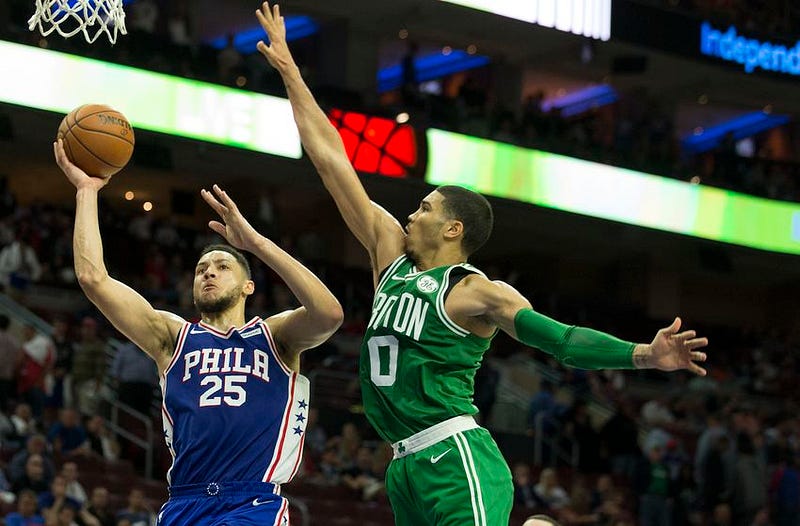
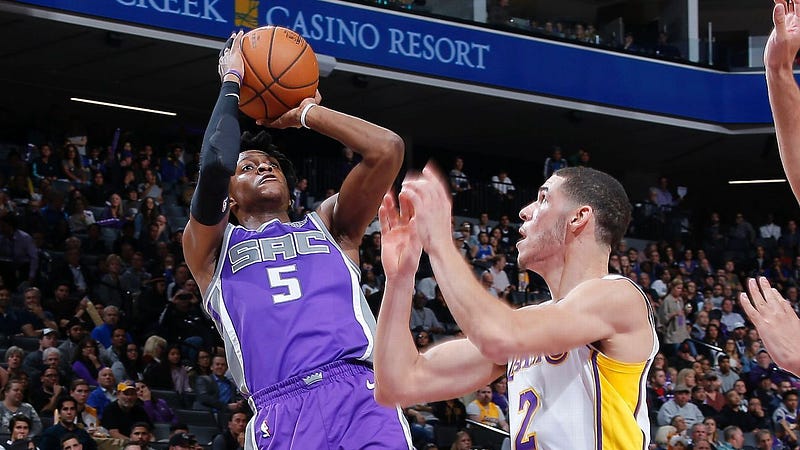
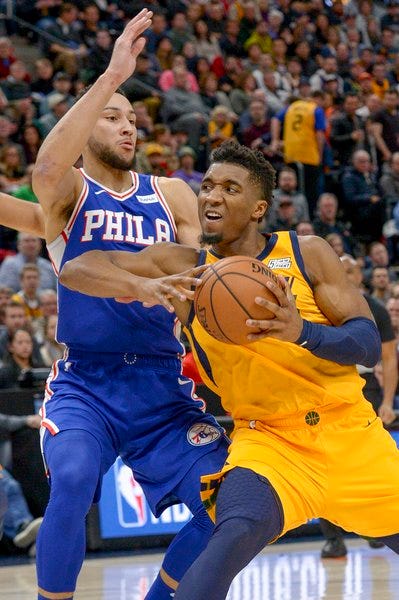
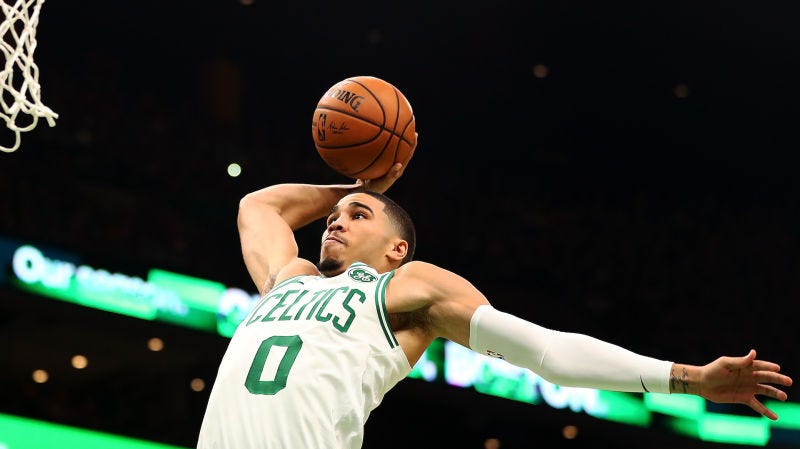
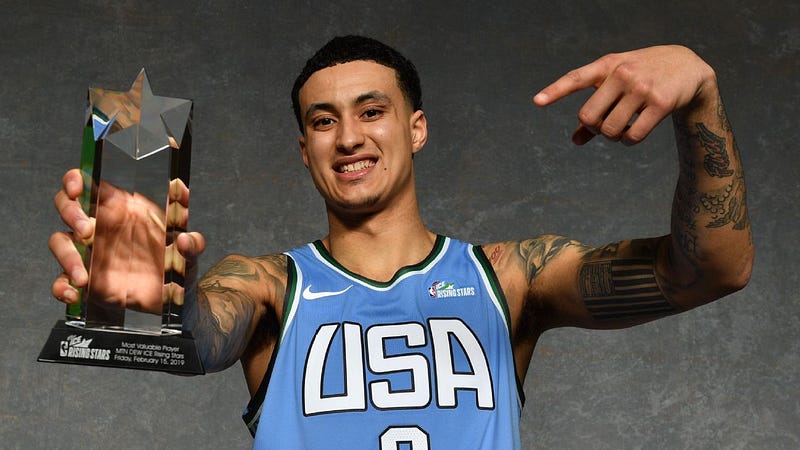
But don’t worry, NBA fans, this is not a Laker-centric story (aside from making some jokes at my team’s expense). This analysis will focus on the NBA sophomores, with Simmons, Tatum, Fox, Mitchell, Collins at the head of the list. And it will feature puns that only my dad and Gutbloom could love. Now, on to the business at hand.
What are the best ways to identify a future star?
The first place to look is at the top of the NBA draft.
Over the last 35 years (1980–2015), here are the percentages that a top 8 overall pick in the NBA Draft will become an All-Star or better:
№ 1 picks: 27 out of 35 (77%) № 2 picks: 12 out of 35 (34%) № 3 picks: 17 out of 35 (49%) № 4 picks: 10 out of 35 (29%) № 5 picks: 11 out of 35 (31%) № 6 picks: 7 out of 35 (20%) № 7 picks: 7 out of 35 (20%) № 8 picks: 4 out of 35 (11%)
It’s clear that after the #1 overall pick, the odds of predicting which top draft pick will become an All-Star are worse than a crap shoot.
From the franchise perspective, teams can survive bad draft picks and bone head trades, but bad long-term and max contracts can kill a franchise for years to come.
With superstar players, a franchise will generate enough ticket sales that they aren’t concerned if the last couple years represent a huge over payment for an aging player at the end of his career.
The Lakers gave Kobe Bryant a ridiculous contract before they even knew he could recover from a ruptured Achilles tendon. It was irrelevant to the Lakers if he stunk or the team stunk, because they still filled the area and made money.
But then there are contracts where the team signs a second or third tier player to an albatross of a deal that weighs down a franchise for years, without gaining any benefits on the court or at the gate. I had tremendous “Mozgov-ings” when the Lakers signed a couple of immobile, unskilled centers — in the age of 3-point shooting bigs who can space the floor — during the final years of Mitch Kupchak and Jimmy Buss. They had the distinction of signing two of the worst four contracts in the NBA at the time.¹
Roy Hibbert inspired my first Lakers parody song, and the terrible Timofey train wreck forced the new front office to sacrifice a #2 overall pick to get rid of his contract.
The damage done by signing non-superstar players to terrible contracts is so bad we should have new verbs and adjectives to describe what happened to your favorite team, like my “Denged-up” Lakers. Are your Wizards hopelessly “Walled” in for the next four years? Worst of all, which young player is going to “Wiggins” his team?
The future of each team rests in how well it decide which of their young players is worth that big second contract to keep them with the team during their prime years.
Let’s take a look at the 2011 NBA Draft² to see if having a top 8 overall draft pick predicts future success (draft position in parentheses), because enough time has gone by that we already know each player’s career trajectory.
Tier 1 (Superstar, top-5 NBA Player): Kawhi Leonard (#15)
Tier 2 (All-NBA, multiple All-Star, top 15 NBA-Player): Kyrie Irving (#1), Klay Thompson (#11), Jimmy Butler (#30)
Tier 3 (All-Star, top 30 NBA Player): Kemba Walker (#9), Nikola Vucevic (#16), Tobias Harris (#19)
Tier 4 (NBA starter/key role player): Tristan Thompson (#4), Jonas Valanciunas (#5), Marcus Morris (#14), Markieff Morris (#13), Iman Shumpert (#17), Kenneth Faried (#22), Nikola Mirotic (#23), Reggie Jackson (#24)
Tier 5 (bench guy, but not good enough to play in post-season crunch time): Enes Kanter (#3), Bismack Biyombo (#7), Brandon Knight (#8), Alec Burks (#12), Norris Cole (#28), Cory Joseph (#29)
Tier 6 (end of bench/G-League/plays outside of the U.S.): Jan Veselý (#6), Derrick Williams (#2), Jimmer Fredette (#10), JaJuan Johnson (#15), Nolan Smith (#21), Jordan Hamilton (#26), Donatas Motiejūnas (#20), Marshon Brooks (#25), Chris Singleton (#18)
As we can see above, only one of the top 8 overall draft picks became an All-Star, and two of the top 10. Only one other top 10 draft pick, Tristan Thompson, even reached the level of NBA starter.
I think we can cross “top 8 overall draft pick” off the list of indicators for future NBA success.
Was there any future indication of stardom from the All-Rookie Team selections of that year? (All-Stars are bolded)
First Team: Irving, Rubio (drafted in 2009, but played in Europe until 2011), Faried, Klay Thompson, Leonard, Shumpert, Knight
Second Team: Isaiah Thomas (the last pick in the draft), MarShon Brooks, Chandler Parsons (#38), Tristan Thompson, Derrick Willliams.
Even if we look at the All-Rookie Team players, finding a Tier 6 player may be about as likely to happen as finding a star. Only 4 of these 12 players appeared in an All-Star game. That’s only a 33% chance of stumbling on an All-Star player.
Even worse are the serviceable players who end up earning a big long term contract that hamstrings their team: Parsons, Tristan Thompson, Knight, and Faried.
How about Rookie of the Year?
Now it gets a little more interesting. For the 20 years between 1980 and 1999, 12 of them are Hall of Fame players, and only 3 of these players failed to make at least one All-Star game. That’s an 85% success rate.
But from 2000 to 2018, 7 of the 18 ROY winners have not been in an All-Star game (although that should change quickly for Ben Simmons). For now, it looks like there’s only a 67% chance of success. That’s better than a coin flip, but I hope we can do better than that.
Perhaps the effects of the one-and-done rule is that younger players no longer have the same time to improve their fundamentals, so there’s a wider variance in their future development. Also, will we see the “jump” begin to happen much later in players’ careers?
How about a variation on the 10,000 hour rule?
This is only anecdotal, but one basketball analyst said he waits until a player reaches 300 games to have a good idea of how good they can become. For a player averaging 33 minutes per game, that works out to 10,000 minutes of playing time.
Doing a quick review of player totals, it’s interesting to see that players like LeBron, Giannis and Durant started to set career highs in their third year.
Here’s the NBA All-Rookie team from 2016, and now finishing their fourth season:
Tier 2: Karl Anthony Towns
Tier 3: Nikola Jokic, Devin Booker³
Tier 4: Kristaps Porzingis, D’Angelo Russell⁴, Justice Winslow, Myles Turner, Willie Cauley-Stein
Tier 5 (or lower): Emmanuel Mudiay, Jahlil Okafor
There are only three questions about this draft year:
- Can Towns (already a career 22–11 player, but averaging 28.5 ppg, 13.9 rpg, 3.9 apg, and 1.2 blocks since the All-Star break) eventually become a Tier 1 player?
- Can Porzingis stay healthy enough to fulfill his unicorn potential and go up a level or two?
- Will Brooklyn or some other team be stupid enough to give D’Angelo Russell a max contract?
What kind of metrics could help us decide if a player is going to continue to progress?
One of the biggest mistakes Celtics fans made about this season was their assumption that progress is linear. In a Bill Simmons podcast, Haralabos Voulgaris (now the Dallas Mavericks director of analytics), came up with the following stat: In 2018, Jayson Tatum made the highest percentage of corner 3-pointers in the history of the NBA.
There was absolutely no way he was going to improve upon, let alone match his rookie season. And the same thing applied to Jaylen Brown and Terry Rozier, who suffered big drops after enjoying career highs in their three point shooting percentage last year.
Of course, the thing that was so obvious with regard to the Celtics, I failed to see when I made predictions for the Lakers, as Ingram, Kuzma, Hart and KCP all shot worse this season than last. (Ironically, the worst shooters on those teams, Marcus Smart, Lonzo Ball, Rajon Rondo and Lance Stephenson, were the only players to improve their three point shooting percentage since last year.)
If we can’t assume linear progression for developing players, what other kinds of metrics could we use?
Part 2 will analyze the NBA’s second and third year players through the perspective of a number of other statistics. We’ll look at the best way to compare and evaluate current players, evaluate their year over year progress, and see which indicators might help improve the odds of predicting who will make the jump.
¹To my delight, and Brandon’s misfortune, Andrew Wiggins’ monstrous contract has made people forget about Jimmy Buss and Mitch Kupchak. But I fear it won’t be long before Maginka take back the dubious award of worst front office in the NBA.
²I wanted to use the 2011 draft because of the hidden gem the Spurs found in Kawhi Leonard. However, the percentages for finding an All-Star level player from the top eight overall picks are still well below 50% in almost every year: 2000 (12.5%), 2001 (25%), 2002 (12.5%), 2003 (50%), 2004 (37.5%), 2005 (37.5%), 2006 (25%), 2007 (25%), 2008 (37.5%), 2009 (37.5%), 2010 (25%), 2012 (37.5%), 2013 (12.5%).
³This season, Booker joins only 11 other players in NBA history to average 26.9 ppg, 4.3 rpg, 6.9 apg, but is playing for the second worst team in the league. He gets to the foul line over seven times per game, so his true shooting percentage is over 58%, with an elite 1.38 points per shot. If he just improves his three-point shooting to his career average of .354 Booker will be averaging almost 28 points a game. For context, West, Havlicek, Bird, Jordan and Wade only had one season with those numbers.
⁴Russell did make an All-Star game as an injury replacement, but a few twitter highlights do not mean he is a better player or more deserving than Malcolm Brogdon, or Eric Bledsoe was this year. At the time of his selection, he was statistically the worst non-Eastern conference center to ever play in the game.
Russell was a real surprise, because he made a big jump in the first half of fourth season, hitting over 37% of his three point shots. Since the All-Star break, he is jacking up a whopping 9.2 three pointers per game (only Harden, Curry, and George shoot more per game) and shooting only 34.7%, on an inefficient 1.11 pps, and ugly TS% of .518 . Maybe Russell will be deserving of Tier 3 status in the future, but there’s no way I can put him there now.
NOTE: Of this 2016 class, only Russell made the “jump” in his fourth season. It should be noted, he was one of the rare players to be traded during his rookie contract. The fresh start with a new coach who has been praised for his player development capabilities, and then being given the keys to the offense gave Russell the confidence and unlimited opportunities to finally start hitting some big shots in crunch time. On a team with LeBron, Kuzma and Ingram, coached by the vet-friendly Walton, he would probably have spent time on the bench with Lonzo as they watched Rondo destroy the team’s minimal chance to make the playoffs this year.
More NBA stuff:


%22%3E)