
Who Were the Real Philistines That the Bible Talks About?
Archaeology and genetics shed light on the origins of the sworn enemies of the Israelites
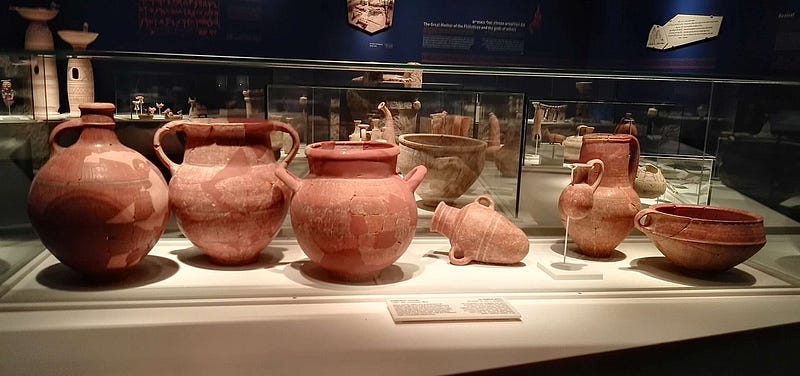
Gaza must have appeared at least once in your newsfeed recently. Ashkelon is another city that may have shown up in the headlines during the current conflict between Israel and Palestine, though it may not have received as much attention.
These cities are no strangers to violence.
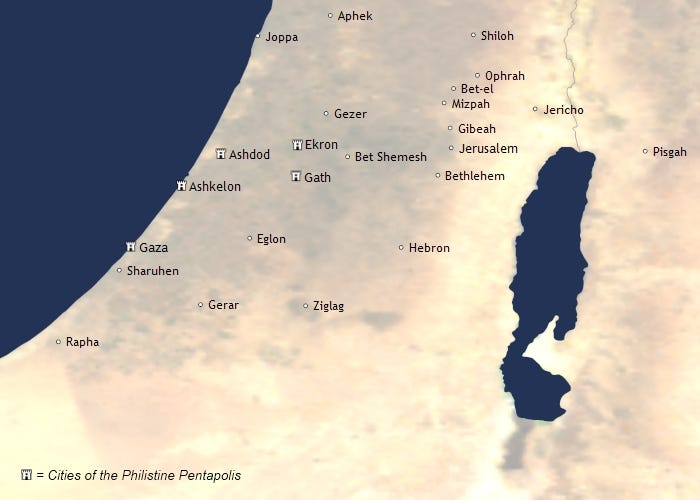
A group of five cities — Gaza, Ashkelon, Gad, Ashdod, and Ekron — once made up Philistia, the ancient home of the Philistines. The Philistines are the archrivals of the Israelites in the Bible.
“Philistine” is a derogatory term for a crude and uncultured individual. Recent archaeological finds cast a new light on them. They weren’t a boorish and unsophisticated bunch. They had well-developed towns, an organized military, a prosperous society, and engaged in long-distance trade. Philistines built a civilization that lasted half a millennium.
Who were these enigmatic people?
Where did they come from?
Did the Philistines and Israelites really fight each other?
Let’s find out!
We’ll kick off our search for the origins of the Philistines in Luxor, Egypt.
Philistines: One of the Sea Peoples?
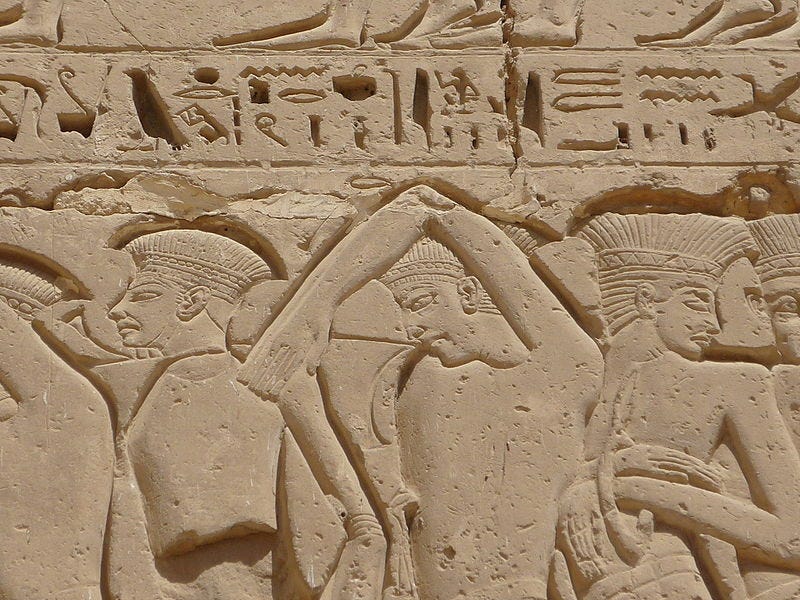
On the West Bank of the River Nile, opposite the city of Luxor, lies the Medinet Habu archaeological site. The mortuary temple of Pharaoh Ramses III is one of the site’s most well-known remnants.
Ramses III ( ruled from 1186 BC to 1155 BC) is famous for his clash with the Sea Peoples. The Sea Peoples were a confederation of tribes hailing from different lands blamed for the Bronze Age Collapse.
If you want to learn more about the Sea Peoples and why they attacked cities during the Late Bronze Age, check out my earlier write-up.
If you’d rather skip the story and get the gist, here’s what you need to know:
- The Late Bronze Age saw the collapse and destruction of many of the great Near Eastern civilizations, including the Mycenaeans, the Minoans, the city-states of the Levant, and the Hittites. We call this catastrophic sequence of events the Bronze Age Collapse (1200 BC to 1150 BC).
- The Sea Peoples, a band of seafaring marauders, were held responsible for the wanton damage. Later analysis reveals that many of them were citizens of the declining powers, and not all of them came from the sea.
- Weakened polities were an easy target for the Sea Peoples. An all-around system collapse because of drought, food shortage, internal rebellions, and interrupted trade networks incapacitated once mighty Bronze Age powers. The Sea Peoples took advantage of the chaos and dealt a fatal blow to the crumbling civilizations.
- Egypt survived the Bronze Age Collapse thanks to Ramses III’s victory against the Sea Peoples at the Battle of the Delta in 1175 BC. The Egyptians took them as prisoners and re-settled them all over the empire.
The Pharaoh was glowing with victory and left us an extensive record. Here’s what he had to say about the Sea Peoples:
The foreign countries (i.e. Sea Peoples) made a conspiracy in their islands. All at once the lands were removed and scattered in the fray. No land could stand before their arms: from Hatti, Qode, Carchemish, Arzawa and Alashiya on, being cut off (i.e. destroyed) at one time. A camp was set up in Amurru. They desolated its people, and its land was like that which has never come into being. They were coming forward toward Egypt, while the flame was prepared before them. Their confederation was the Peleset, Tjeker, Shekelesh, Denyen and Weshesh, lands united. They laid their hands upon the land as far as the circuit of the earth, their hearts confident and trusting: ‘Our plans will succeed’.
You’re probably thinking, wait, this was a conversation about the Philistines. What does this have to do with the Sea People? If you check Ramses’ inscription, one group is important to us.
The Peleset.
You’re on the right track if the name reminds you of “Palestine” or “Philistine.” The Peleset were the ancestors of the Philistines. After defeating them, Ramses III moved them to southern Canaan, in present-day Israel and Palestine, and tasked them with defending Egypt’s borders.
For the Egyptians, Canaan was strategically important. Canaanite immigrants to Egypt, known as the Hyksos, overthrew the native Pharaohs and ruled the country for a century (from 1650 BC to 1550 BC). After deposing the Hyksos, the militaristic New Kingdom made it a top priority to treat Canaan as an Egyptian client state.
Gaza and Ashkelon were Egyptian garrison towns long before they became part of Philistia.
You might wonder: isn’t it a bit of a stretch to conclude that the Peleset were Philistines just because they sound similar? Is there any archaeological evidence to back up this theory?
Brace yourselves for a story of pots and pigs. But first, let’s explore the origins of the Peleset.
Pots, pigs, and a boat from the Aegean
According to the Bible, the Philistines came from “Caphtor.” Scholars have linked Caphtor to the Aegean Sea island of Crete.
There is strong archaeological evidence connecting the inhabitants of Crete during the 12th century BC with the Philistines, who showed up in the Levant during this period. Scholars believe the Peleset were based out of Crete before attacking Egypt.

Crete was home to the Minoans and, later, the Mycenaean Greeks. The distinct Mycenaean IIIC pottery found all over Crete was also discovered in Levant. The only difference between the Greek and the Levantine pottery is the local clay used. The new pottery introduced by the Aegean migrants is called Philistine Bichrome ware.
According to archaeologists, we didn’t find evidence of Philistine Bichrome pottery in the southern Levant until the arrival of new settlers from Crete.
Scholars disagree with whether the Philistines came directly from Crete or were resettled there by the Egyptians.
Maybe there were two immigration routes into Philistia?
Another intriguing piece of evidence suggesting a strong relationship with Crete is the enormous quantity of pig bones recovered in Philistine archaeological sites. Among all the bones unearthed, Ashdod had 15% pig bones, whereas Gath contained 13–16% pig bones.
The Canaanites didn’t eat pigs in the Southern Levant. It was a staple in the diet of the people of the Aegean. As the Philistines moved into the area, pork consumption increased.
The pigs were not from the area. The genetic study of the pig bones revealed they were related to European pigs. This means the migrating group of Philistines brought the pigs with them from the Aegean.
From the Egyptian records and archaeological evidence, we can conclude the Peleset were the ancestors of the Philistines.
Still not convinced?
Let’s look at genetics for further proof.
A story told by genes
Few scholars have questioned the European origins of the Philistines. According to one opposing idea, they arrived in southern Canaan from Anatolia via Syria.
Though archaeological evidence points to an Aegean origin for the Philistines, genetics may help settle the debate.
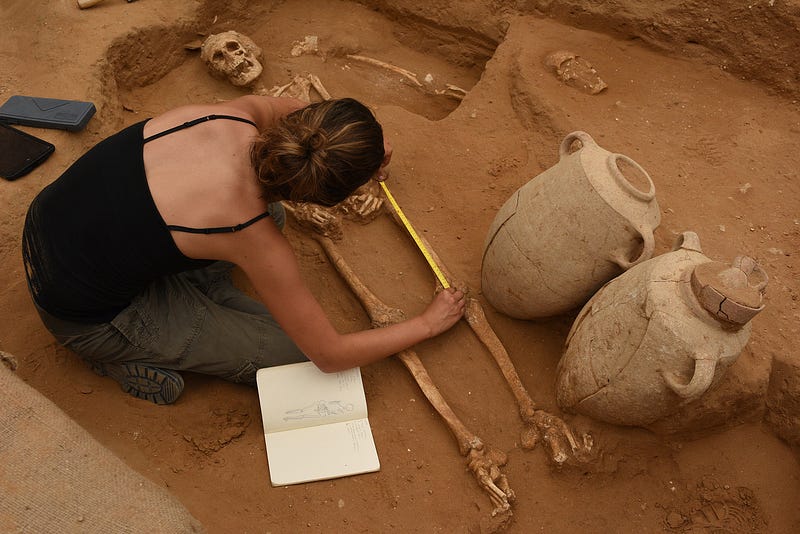
The grave of a boy buried in a small pit in the home of a Philistine family holds the secret of the true origins of his people. Scientists examined the DNA of the child, as well as three other infants and six adults from a Philistine cemetery discovered in Ashkelon in 2013.
The children were buried in the 12th or 11th century BC, shortly after the Philistines arrived in the region. DNA tests revealed the genetic signatures of the infants matched with children from Greece, Sardinia, and Spain. The children also possessed local DNA. This shows the early Philistines intermarried with the indigenous Canaanites.
The European genetic signatures faded in later burials. The Philistines had intermingled and were virtually indistinguishable from the Canaanites.
European genetic influence found in the early graves of the Philistines further strengthens the Aegean origin theory and complements what we know from Egyptian records and archaeology.
We now know who the Philistines were. Before we conclude, let’s find out how true were their legendary clashes with the Israelites.
Did the Philistines and Israelites fight with each other?
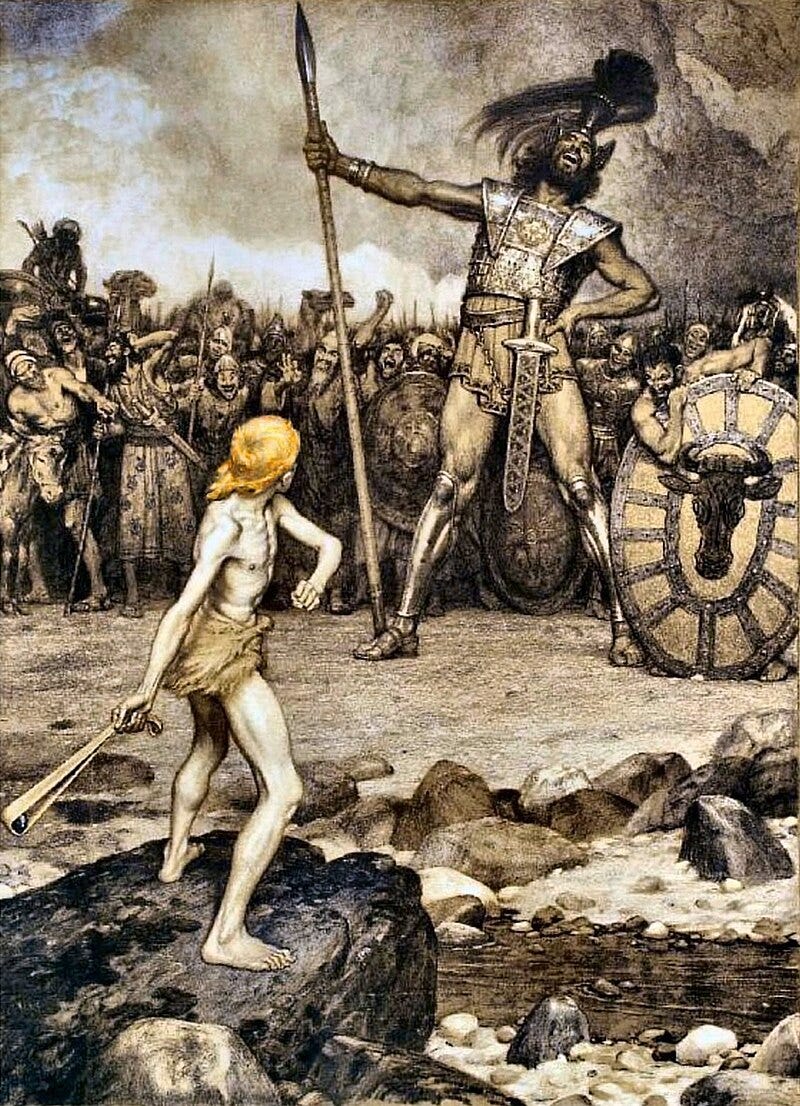
The Bible describes a continual struggle between the Philistines and the Israelites. Does archaeology back up these claims? Many scholars argue the events reported in the Bible don’t represent memories of early Iron Age Philistia.
Gath’s inhabitants may have engaged in trade with nearby places, according to scholar Dan Pioske. Goliath, the Philistine champion mentioned in the Book of Samuel, was from Gath. The researcher found no evidence of conflict between Gath and its neighbor, Judah, for over three centuries.
Pioske says:
But it is nevertheless striking that for a period of around three centuries we find no clear evidence that forces from Gath ever attacked or destroyed a single location within the neighboring regions of Israel or Judah or, conversely, that it was attacked by individuals from these areas during this time.
In fact, the evidence that is available suggests nearly the opposite. Two features of the material record on this point stand out. First, the city of Gath grows and reaches its apogee — in terms of size, population, and prosperity18 — during the same general timeframe (Iron IIA; c. 970 BCE– 830 BCE) in which the nascent Iron Age polities of Israel and Judah also begin to establish themselves in the highlands.
Gath did not appear to leverage its strategic location and considerable resources, in other words, to inhibit or destroy the emerging polities that were adjacent to it on its eastern border during this time.
The other major difference between archaeological evidence and the biblical texts is how the religious practices of the Philistines are described.
An inscription discovered in Ekron found a reference to a female goddess worshipped in Philistia. Some scholars connect the deity to the Mycenaean goddess Potnia, as the goddess in the inscription is named PYTN. A female figurine, nicknamed “Ashdoda” was found in Ashdod. It shows a seated woman whose body merges with the throne. Archaeologists have also found similar figurines in Greece. It could represent a deity.
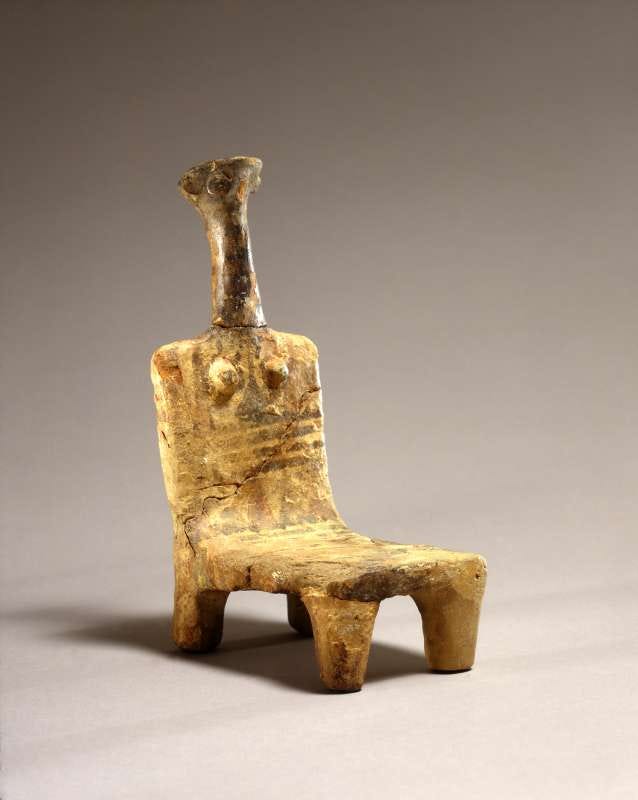
In contrast, the Bible talks about Dagon, a male god, as the chief deity of the Philistines. But we have no extra-biblical sources confirming this. There is an obvious difference in the religious practices of the Philistines in the Bible and what we’ve found in their cities.
But this doesn’t mean the Bible isn’t a useful guide to know more about the Philistines. The Bible talks about the destruction of Gath by Hazael, the ruler of Damascus. Archaeological evidence suggests during the 9th century there was a city-wide destruction of Gath as it was engulfed in flames.
There are anachronisms in the Bible, but it remains a useful guide for archaeologists and historians to extract clues and paint a correct picture of the Philistines.
What do you think about the origins of the Philistines? If you’d like me to cover the origins of other ancient peoples, let me know in the comments.
The Philistines arrived in the Levant during turbulent times. Human civilization had taken a backward step. If you’d like to know more about the Late Bronze Age Collapse check out the story below.
If you liked this story and made it this far, make sure to clap, highlight, and leave your feedback in the comments. Subscribe to my posts and never miss an update.
References
- Dickinson, Oliver (2007). The Aegean from Bronze Age to Iron Age: Continuity and Change Between the Twelfth and Eighth Centuries BCE. Routledge.
- Cline, Eric H. (2014). 1177 B.C.: The Year Civilization Collapsed. Princeton, New Jersey: Princeton University Press.
- D’Amato R., Salimbeti A. (2015). The Sea Peoples of the Mediterranean Bronze Age 1450–1100 BC. London: Osprey.
- Pioske, Dan (2018). Material Culture and Making Visible: On the Portrayal of Philistine Gath in the Book of Samuel. Journal for the Study of the Old Testament.
- Feldman et al (2019). Ancient DNA sheds light on the genetic origins of early Iron Age Philistines. Science Advances.


.JPG)


