
Who The Hell Was The Grand Old Duke Of York?
Did he have 10,000 men and more importantly was he up? Down? Or neither up nor down?!
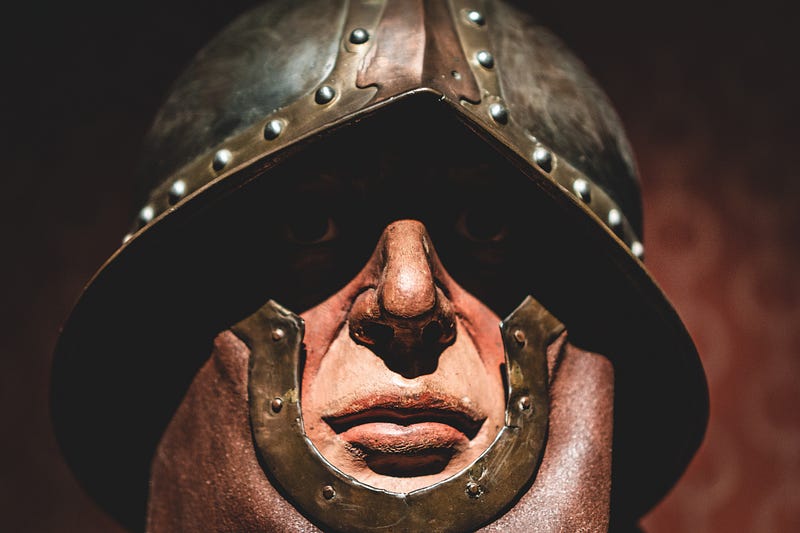
The current Duke of York isn’t exactly popular and arguably that’s often been the case across history. The Duke of York is an honorary title given to the ‘spare’ second son. With zero comparative responsibilities but all of the wealth and privilege, they merrily pootle off to have their own adventures. Whether that’s leading 10,000 men up and down a hill or consorting with a paedophile billionaire is usually a matter of choice.
If you’ve been a drama teacher or ever worked with kids, you’ll know the ‘Grand Old Duke of York’ as a good song for children to engage with. It goes like this.
Oh the Grand Old Duke of York
He had 10,000 men.
He marched them up to the top of the hill
And he marched them down again
And when they were up, they were up
And when they were down they were down
And when they were only half way up…
… they were neither up nor down!
Aside from being a banal description of indecisive military manoeuvres the game evokes huge joy in children. This is because when you say ‘up’ the children stand up. When you say ‘down’ they sit down and when you say ‘half way’ they crouch.
Then you sing it again a little faster. And then again. And then again.
The combination of physical activity, wordplay, rhythmic singing and repetition melts their tiny brains. It fires up their little hypothalami and they get hooked on the game like little crack addicts. If you join in as well, you’ll have friends for life.
It helps them learn to predict and coordinate, it facilitates group bonding, and it’s good up until about the age of six. Find yourself outnumbered by tiny people at a party, this is a very simple go-to.
But have you ever wondered where it’s from? No? Well… I did, and it’s my bloody article so buckle up.
Where did the song come from?
The song itself heralds from the Tudor era and was believed to be coined by a man called Richard Tarlton. The Neil Patrick Harris of his day. He was a dancer, musician, songwriter and clown. He was the first person who studied simpletons and ‘natural fools’ to aid him as a performer…. paving the way for Chaplin, Keaton, Robin Williams and annoyingly, Jim Carrey.
He was a master fencer, quick-witted and would take down hecklers with ferocious short poems. These were named after him and were briefly known as ‘Tarltons’. By the time he died in 1588, he was a court favourite with Queen Elizabeth and likely the real-life basis for the Yorick character in Hamlet.
He’s believed to be buried underneath an old Manor House (now high school) I can see from my bedroom window. Finding this fact out was pretty cool and the whole reason for this short diversion into nursery rhyme history.
We know this because he likely wrote the following catchy little number:
The King of France with forty thousand men, Came up a hill and so came downe againe
Featured in the 1844 classic Tarlton’s Jests: And News Out of Purgatory by J. Orchard Halliwell-Phillips and Henry Chettle. A must-read for anyone who is anyone in the world of doggerel and Tudor banter.
And the song has been adapted to suit the military fuckaboutery of a whole host of people since that point. This included the King of France, Napoleon and the “Grand Old Duke Of York’.
It’s the latter that stuck and featured in the 1913 Mother Goose illustrated by Arthur Rackham. This leads us to the point of this article. Who the heck is the Grand Old Duke of York?
We’re looking for the comorbidity of military fecklessness and being second (or somewhere) in line to the throne, but British history is replete with skill-free posh boys marching armies around.
Three people duly throw themselves into the limelight. I’ll deal with them in the order in which they arrived and died.
Richard, Duke of York (1411–1460)
He’s now mostly known for being a rainbow mnemonic. Yes, he’s that one. ‘Richard of York Gave Battle In Vain’ was the 3rd Duke of York. He could’ve been the original Duke of York the song was about. So who was he?
We were in the middle of the ‘Wars of the Roses’ between two great families, York and Lancaster. My grandmother is still offended to be considered ‘from Yorkshire’ when she is actually from ‘Lancashire’, so the after-effects of that particular war are still raging a mere 600 years later.
For Richard, 2nd Duke of York, it’d end on a hill near Wakefield. Heavily outnumbered by Lancastrian forces and awaiting reinforcements at Sandal Castle, he attempted a final hurrah. It failed. His forces were chased up the hill, came down the other side and, presumably, some of them tried to get back up the hill once they got there.
And that’s his pitch for being ‘The Grand Old Duke of York’. Don’t feel too bad for him though, his sons Edward and Richard would take the throne eventually as Edward IV and Richard III respectively, before the latter was killed and thrown into a car park near Leicester by Elizabeth I’s grandad.
British history. Hilarious.
James II (1633–1701)
He was still relatively young when his father was beheaded after losing the civil war. James and his elder brother Charles went to France for a bit of a sulk, returning in 1660 for something we like to call ‘The Restoration’.
His brother Charles had about a billion children, however, none of them happened to be with his wife. Catherine of Braganza is credited with popularising tea drinking in the UK and can be forgiven for tripping over a dog and having a miscarriage. She’s also the Queen for whom ‘Queens’ in New York is named.
Niche interest Stuart Queen for you all to enjoy.
Nevertheless, when Charles died in February 1685 it was James, Duke of York who took over and became King James II. He was deeply Catholic and more importantly didn’t pretend he wasn’t, considered a faux pas in English top posh circles ever since Guy Fawkes tried to blow up James’ Grandad.
Within three years, the nobles eventually got bored of his incessant praying, rosary beads and other frippery and sent for a new King. They asked James II’s son in law William of Orange to come over from Holland.
James marched his troops to Salisbury plain and waited for a fight. When William and Mary showed up looking far more dangerous than he expected, he quickly marched his troops away again.
In 1688, the Glorious Revolution began with most of the battles happening in Ireland — where Orangemen still march and where Catholics and Protestants now get on like two tomcats trapped in a sack.
No Jacobite (from the line of James) has claimed the throne for about two hundred years, so we’re long overdue.
Prince Frederick (1763–1827)
He was the second son of George III (the mad one who talked to trees) and he was destined to become an army officer. Destined in the way that many of our younger royals are…. thick as pigshit, failed all their academic exams, took ‘History of Art’ by checking the family basement. Army for you, m’lad.
Unfortunately, Prince Frederick wasn’t very good at being in the army.
That sort of thing can be easily overridden by good old fashioned nepotism and in 1793 he was made a General and sent to Flanders to help overturn the French revolution with a selection of other posh boys from around Europe.
The peasants are revolting. Oh yah, they are… No I mean, really revolting…. so do I, totes gross….. No, revolting as in got guns and executing the King….Bloody hell, we ought to do something!
The Flanders campaign was an unmitigated failure, the Dutch Republic fell and the British army was evacuated. The Duke of York was held responsible and upon arrival at home in the UK was immediately promoted.
He became a Field Marshall in 1795 and then Commander-in-Chief in 1798. When appointed to Commander he said… “that no officer should ever be subject to the same disadvantages under which he had laboured” in the Flanders campaign. The disadvantages are presumably a lack of listening to his training, an inability to strategise and very few hills to run up.
In 1799 he had another go. The Anglo-Russian invasion of Holland went about as well as can be expected for a man who likely couldn’t find his arse with both hands. The supplies ran out, the Dutch were there, he didn’t know what he was doing and he was in charge.
The same year he signed a peace treaty called the Convention of Alkmaar and fucked off home in disgrace.
As you can imagine he wasn’t particularly popular, his defeat at the town of Cassel — pretty much the only bit of the Netherlands above sea level — is thought to be the hill referenced.
Most of the rest of his life was spent drinking, gambling, getting into debt, having scandalous affairs and following the death of his niece Princess Charlotte — he came perilously close to getting his chubby claws on the throne.
Lucky for us, he died of dropsy in 1826 and we got his much nicer brother William IV instead. I say nicer… but if you check the final Hanoverian family photo album — you’ll discover such a shit show of epic unmitigated incompetent evil they’ll need their own article to explain how excruciatingly bad they were.
Given how the Victorians liked to write things down, the arrival of universal primary schooling and the sheer unpopularity of Prince Frederick — it is likely that he is ‘The Grand Old Duke of York’.
This was a fun historical journey via nursery rhyme. Hope you enjoyed it. Stay tuned for more Penguin on History!
What’s that? You didn’t read the last one?


