
The Worst English King Led To The Best Of Human Rights
Yeah, it’s the snivelling lion one from Disney’s Robin Hood. Ooh-da-lallie.
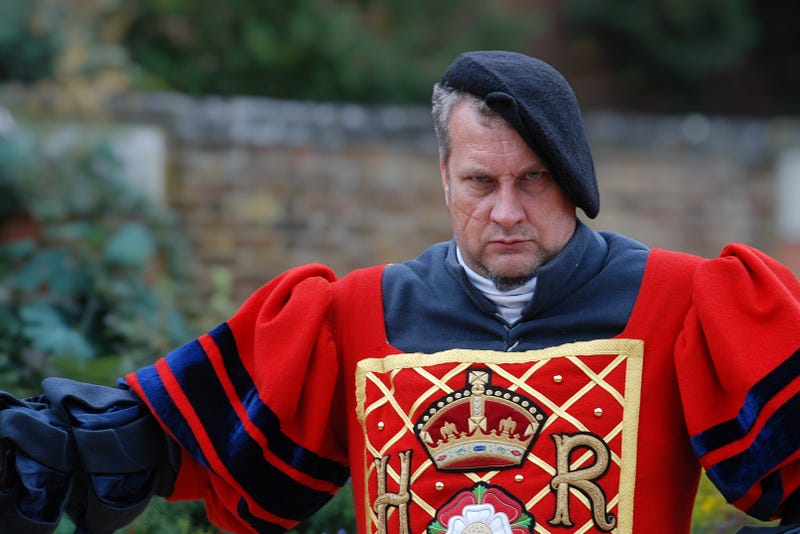
Imagine being so bad at being a King that all your people hate you, all your feudal barons hate you, the Pope thinks you’re a prick, you’re forced into a muddy field to sign away your power and then shit yourself to death a year later. That’s pretty much how democracy started and we can lay it all at the feet of one incompetent white man called John.
Welcome to British legal history. Penguin style.
Let me get you up to speed
In order to understand how and why peasants got rights and thus why Americans got to arm bears or whatever they do, we’ve got to go back and explain some things. Back in the heady days of the Normans, the monarchy was, for want of a better word, a shitshow.
Battle of Hastings, 1066. William the Conqueror… Bosh. Normans everywhere, can’t move for Normans. Saxons dead. The Normans, somewhat controversially were from Normandy in France. The Kings of England were also the Kings of the top of France but they wouldn’t see it as two different places. It was one country with perilous water crossing bisecting it.
William the Conqueror does his best to stay alive, but death comes for us all in the end and it came for him in Rouen in 1087. He was miles away from England so his death turned into a running bun-fight to see who could make it back and get crowned first.
William Rufus wins.
Bit of infighting between the sons of William the Conqueror — the sort of thing you’d see on Ye Olde Doctor Phillip. William Rufus gets assassinated for being gay, chubby and ginger — leaving younger Robert and Henry to fight it out. Henry wins and becomes Henry I —then his only son William dies in a boating accident.
Read Pillars of Earth by Ken Follett if you haven’t. The boating accident is the inciting incident of that book.
He hands the title of England over his daughter Mathilda but (because she has a vagina) a cousin called Steve shows up and declares himself King. Hilarity ensues and we have ‘The Anarchy’ — a civil war lasting 18 years.
Stephen and Mathilda call the family feud quits in 1153 and agree Mathilda’s son Henry can take over the throne when Stephen dies. True to form, Steve does his duty and pops his clogs the next year and young Henry becomes Henry II of England.
So far so good. Deep breath.
Henry II inherited a realm torn apart by civil war so did his best to reinstate the grandeur of his grandfather’s rule. He couldn’t solve all the legal disputes himself, so he set about creating law courts where fights over who stole whose cutlery during The Anarchy could be resolved.
Royal legislation, referred to as assizes, were issued at Clarendon in 1166 and then Northampton in 1176 in an bid to clamp down on serious offenders.
Inquiry shall be made throughout every county and every hundred, through twelve of the more lawful men of the hundred and through four of the more lawful men of each village upon oath … whether there be … any man accused or notoriously suspect of being a robber or murderer or thief.
If the jury of twelve sounds familiar, that’s because you’ve been watching Law and Order, Boston Legal or Ally McBeal. Twelve is the industry standard even today. Finally, there was a system of legal redress and a system of trial.
Admittedly the trial was by water and punishments were mostly having a limb chopped off. Olde England had a hint of Taliban about it. But, room for improvement and far better than the standard amount of justice available at the time, ie none at all.
Hey Penguin, I thought this was about King John? It is! It is! I’m getting there I promise.
Henry relied heavily on the courts and was a firm believer in justice. It’s the legal system Henry II set up that became the backbone of the British legal system for years to come. Not that Henry cared, he was of the ‘stabby-stabby-sexy-sex’ genre of kings and spent most of his time at war gaining new lands for his Franglais kingdom from the French King and his Dolphin.
The sexy-sex style of monarchy ensured Henry dropped a lot of regal crotchfruit; William, Henry, Matilda, Richard, Geoffrey, Eleanor, Joan and then last and almost certainly least, John. By the time Henry died in 1189 only Richard and John were left and Richard was set to inherit.
Richard was of the stabby-stabby-sexy-sex broody and off at the crusades, John was more of your stay at home with mummy type
Richard and John
John is so far down the pecking order that he isn’t even given a royal name… he’s ‘just John’ or ‘oh, and John’. Once all the fiefdoms and duchies had been distributed amongst his brothers and all his sisters were married off, John was left with precisely fuck all.
As a result, his first nickname was John Lackland. That’s an early Medieval burn if ever I’ve heard one… Lackland… because he’s got NO land. Not even Swindon.
Fortunately for Big-Jay, his brothers went rogue. Wills died at the age of three as was the tradition, Henry, Big Geoff and Dick decided to try and seize power from their father — and there were machinations aplenty that went pretty much nowhere.
By the time Henry II died the only son he really liked was John, but only because John was feckless and didn’t try to usurp him.
After Henry died it was Richard who ultimately took power. He’s a good guy and you can tell because in our history textbooks, he’s called Richard The Lionheart. He was big, strong, blonde, never bothered to learn English and smashed his way around the middle east hitting brown people with a sword.
That’s pretty much the definition of a good British monarch right there.
It was when he was attempting to overthrow the mostly unarmed castle of Châlus-Chabrol in Northern France — a young boy hit him with a crossbow bolt. Richard got gangrene and died of blood poisoning soon after, but not before giving the young boy who shot him 100 shillings.
Sadly the boy was likely hanged and flayed by other mercenaries for that pile of cash — but it’s the thought that counts. With all his siblings dead or having the wrong type of genitals, it was time for John to step up and do his royal duty.
He’d got no land, no military skill and was about as likeable as hepatitis, the next few years were going to be tough
What John did wrong
The first thing John did was to lose an absolute fucktonne of land. This was because he had all the strategic nous of a dead cat in a bag. Between 1199 and 1203 he managed to lose almost all the lands his father had conquered with large swathes of it going back to the French king and some of it to his nephew Arthur (Geoff’s lad).
John had Arthur murdered pretty soon after which was considered a bit over the top at the time and he lost a lot of support from his nobles. It’s one thing to murder peasants, but killing relatives. Bit much. By 1203 and even with Arthur dead he’d been beaten back over the channel and was in England licking his wounds.
Pro, he lost the nickname Lackland. Con, his new nickname was John Softsword. Upgrade nickname, double entendre… penis and military joke.
Having the King hanging around England was cramping the style of the Barons who hated him. John became akin to an unwanted teenager who won’t leave the family home. Rather than playing X-box in the basement, he set about reforming the perfectly functional tax and legal systems — what a noob.
He vacillated between the courts system set up by his father and the ‘do exactly what I say because I’m the fucking King and God’s appointed representative on earth bitches’ favoured by his brother Richard. Any time he was low on cash he’d fine people.
He was very fond of raising money directly from his Barons through something called scutage.
This was a feudal tax set up by Henry I, one that allowed Knights and Barons to avoid fighting in wars. They’d buy their way out — like Donald Trump with the ankle thing. Between Henry I, Stephen, Henry II and Richard I there were eleven instances of scutage in England. Eleven in around a century.
John did eleven on-the-spot taxes during his seventeen-year reign.
So he wasn’t popular militarily or financially, but I bet he was a great laugh though? Apparently not. His favourite hobby was sleeping with the wives of nobles in his court. His first wife Isabella of Angouleme was nine.
Even given the historical context of marrying young this marriage was considered a bit nonce-y by most of the court. She’s how old?!?!?! Nine!!! Not twelve? No… NINE!!!! That’s very young…. John Lackland Softsword the Nonce.
John then created a court within a court. He’d invite mercenary soldiers and lesser barons over to England and then have them hosted at the expense of his wealthier barons. Like the teenage kid who won’t leave then invites his friends over and expects you to cook at the drop of a hat.
At least he was religious though? In favour with the church? Pious?
No. Got himself excommunicated in 1209 after he refused to allow Pope Innocent III to appoint a progressive Archbishop of Canterbury…so progressive he sounds like he’s from a Dan Brown novella — Archbishop Stephen Langton.
Unpopular fiscally, militarily, personally and now managed to piss off God’s singular representative on earth — let’s hope he doesn’t do anything stupid that will make him more unpopular. If he just sits still and doesn’t try to do anything at all, he might become just a ‘dull’ king.
In 1214, John decides it would be an excellent time to invade Normandy. Win back some of Great-Grandaddy’s lands.
The final two years
Twenty-five minutes later and John had been comprehensively spanked at The Battle of Bouvines and forced back to England. There he was met with outright rebellion from a duke called Robert FitzWalter and the ‘Army of God’. This was mostly Barons from the North of England who were bored of losing good men in the killing fields of France.
They marched down and took London in 1215 and this led to even more people leaving John’s team and going into bat against him. Well done John you noncy prick, you’ve blown your chance at being ‘dull’.
Knowing he was likely to lose everything, John instructed Steve Langton to organise a truce. A ‘Great Charter’ was presented to John on the 15th of June 1215 at Runnymeade. It was a long list of everything the Barons wanted to change, the rights of free men, an end to scutage and protection from illegal imprisonment. John would agree to a council of twenty-five Barons to watch over him and in return he’d get London back to play with.
Possibly with someone watching the kids.
In case you’re wondering why Runnymeade, it’s a big boggy area that’s nice and flat with good sight-lines. You’ve got nowhere to hide your armies for a double-cross and all your horses would sink in the mud.
They took away John’s Sleevies. A military term for where you hide your armies. These Barons weren’t stupid.
The peace treaty didn’t hold, John phoned the Pope ten seconds later and told tales, everyone was in big trouble with the beardy cloud lord and told to behave. They didn’t and England had the first Baron’s war. A French prince (Louis — they’re all called Louis) arrived and claimed the throne and got himself excommunicated.
At the height of the fighting, John did the best thing he could do under the circumstances. He shat himself to death. He died of dysentery on the 18th or 19th October 1216 and everyone was very relieved.
Power was now in the hands of his nine-year-old son Henry III. Whose reign is so dull that not even the BBC will touch it.
The lasting effects of the Magna Carta
I’m not sure that John was aware that the slightly soggy paperwork he signed under duress in a field in 1215 would still be discussed 800 years later. Social media posts during the early stages of Covid suggested that Magna Carta could be used to overturn lockdown.
Grab thy spear, we’re all taking electric scooters up Buckingham palace to slap people about with article 61 of the Magna Carta, no masks! No lockdown!
Alas, article 61 allowed twenty-five noble Barons to “assail” the monarch and “seek redress”. It didn’t grant Darren from Chorley the right to go and ask the Queen to be let out of his two-bed semi so he could go to the pub.
And it was written out. The Magna Carta was reissued in 1225 so Henry III could sign it. This is the version that forms common law in England.
Only three sections are still relevant. Clause 1 protects the English Church. Clause 2 protects the City of London… which has a lot of its own rules and regulations that the banking sector make good use of… and Clause 39/40
No free man is to be arrested, or imprisoned, or disseized, or outlawed, or exiled, or in any other way ruined, nor will we go or send against him, except by the legal judgment of his peers or by the law of the land. To no one will we sell, to no one will we deny or delay, right or justice
These are the rights of habeas corpus, created at the Assize of Clarendon and then brought into public consciousness by Magna Carta.
“Nullus balivus ponat aliquem ad legem, simplici sua loquela, sine testibus fidelibus ad hoc aductis” — No legal officer shall start proceedings against anyone on his own mere say-so, without reliable witnesses having been brought for the purpose.
This became the thing that stops you being in prison just because the government decides they don’t like your face. When the US decided to go it alone without a royal family they carried habeas corpus across and wrote it into the Constitution.
“The privilege of the writ of habeas corpus shall not be suspended, unless when in cases of rebellion or invasion the public safety may require it” — Article 1, section 9(2).
It was suspended in the Civil War by Lincoln and in World War II by Roosevelt. George W Bush attempted to suspend habeas corpus appeals for prisoners in Guantanamo bay — but the Supreme Court went against him. They didn’t make him go to a soggy field in the middle of nowhere — but maybe they should’ve done.
From soggy damp and rainy England via our worst King to the restrictions placed upon the most powerful man or woman on the planet through 800 years of interpreting law. This has been a fun journey — and I’ve enjoyed it. Thanks for sticking with me to the end!
Let me know if there are any other bits of obscure British history you’d like to know about and I’ll get my research skills on. Penguin out.
Want some more obscure British history?


