
Who Stole My Success?
A parable of writing success on Medium or any platform, based on the book, Who Moved My Cheese? By Spencer Johnson, M.D.
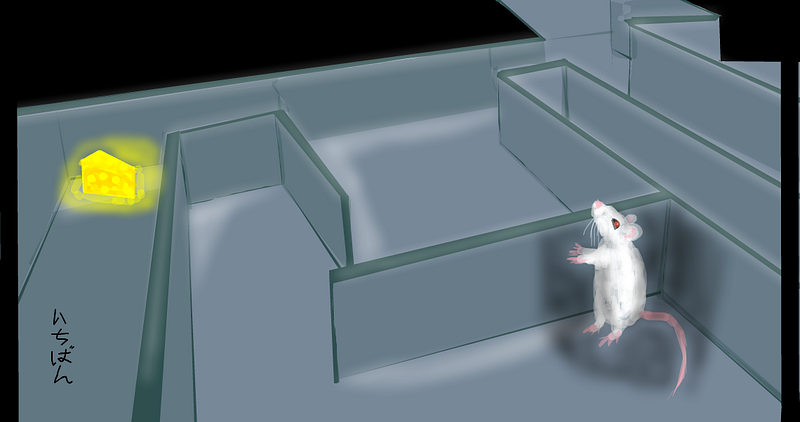
Once quite recently really, there lived four writers, who ran after success on Medium to nourish their writing soul, fill their bank accounts and make them happy. Two were named Seek and Scamper and the other two were named Fudge and Mudge. Everyday, the four writers wrote and published seeking success.
Seek and Scamper, being hard working and possessing good instincts searched for the hard to find information about succeeding on Medium. Fudge and Mudge went about searching for success with a capital S which they believed would be all it took to make them happy writers.
Although the two pairs of writer’s were quite different, they had some things in common. Every morning, they’d get up, open their laptops and begin searching for successful writers, took their ways of doing things to heart and then furiously typed on their keyboards all day.
Medium was a labyrinth of publishing options, some offering the chance to gain a following, get curated, be featured in publications, receive support in the currency of claps and possibly earnings. But there were also blind corners and dead ends which led nowhere for the writers. However, for those who found their way, the labyrinth held secrets, leading to success which helped writers enjoy a better life.
Seek and Scamper used trial and error to establish which routes were the best to locate success. They’d publish on a certain topic, using a specific approach and see which yielded success. Sometimes they got lost, went in the wrong direction or bumped into walls. But they persisted and eventually found their way, even if it wasn’t each time they hit publish. They’d keep track of which routes resulted in the outcomes they were seeking and which led to blind alleys.
Fudge and Mudge tried to use more sophisticated ways of finding success. They made files of successful Medium stories and imitated them closely. Sometimes they did well, but other times their beliefs and emotions muddied the way they saw things leading to their writing becoming muddled. They didn’t realize it but this was because they were trying to imitate work that was generated in the creative process of other writers. This process was very individual and so they weren’t able to convincingly reproduce it simply altering it enough so as not to be plagiarism. This made things more complex and challenging for them.
But all four writers in their own way found what they were initially looking for. At the end of the first week, they all achieved their own kind of success, having arrived at Success Station S. Every morning after that, the four writers got up, opened their computers and wrote in a similar vein as they had during that first week to arrive at Success Station S.
Seek and Scamper would work each day on new material, taking breaks to read other articles and support other writers. They’d gather other ideas in a document they kept open on their computer ready to work and kept the Medium platform open in a different window to be able to quickly go back and read. They studied up on the platform and read Medium help articles. Fudge and Mudge started out the same way. And by the end of the first month all four had published several new articles and arrived back at Success Station S.
But over time different habits began to form for Fudge and Mudge. Each week they’d get up a little later, and start a little slower. After all they didn’t need as much time to do what they already knew how to do. They knew where Success Station S was and how to get there by imitating other writers. While not all of their articles were successful, they felt that over time they’d get better at their ability to imitate. When they got to the Success Station every Wednesday they patted themselves on the back, settled in and relaxed.
“This is great,” Fudge said to Mudge. “There’s enough success here to last a lifetime.” Fudge and Mudge felt happy and successful and believed they were now secure. Although they copied the way that the top Medium writers did things, they began to see the success they’d found as their success. Following what the top writers said had happened for them, Fudge and Mudge assumed that the amount they’d earned and the fans they’d acquired would double each month. They gave up other streams of income and publishing opportunities and put all their focus into writing articles the same way each time.
Fudge and Mudge would sometimes show their friends their stats, which they believed indicated their success, and pointing to these numbers, say, “Pretty great success, huh?” They even hung up signs that celebrated their success for example, this one:

After several more months of similar success, Fudge and Mudge became arrogant.
“We deserve this success,” Mudge said. “We worked long and hard getting here.”
Every day Seek and Scamper would continue their routine. They’d look over their statistics and the comments on their stories to see if there was any change in how their writing was being received. They started noticing the more similar their stories were to other stories and the more similar their voice was to the voice of other writers, the less successful they were. They began learning which stories they wrote were unique and received the best response. They started developing their own voices.
A few more months passed and one day Seek and Scamper followed the same path they had been traveling to that point but when they arrived at Success Station S they found there was no success. They weren’t surprised. They’d seen their Success decreasing over the previous months and began making plans to act on what they’d learned about improving their writing. Off they went.
The same day, Fudge and Mudge arrived at Success Station S. They had not been paying attention to the small changes that had been taking place taking it for granted their success would always be there. So they weren’t prepared for what they’d found.
“What? No Success?” Fudge yelled.
“No Success? No Success?” Mudge yelled.
“Who stole my Success?” Fudge yelled.
Mudge put his hands on his hips, his face turned red and he shouted, “It’s not fair! It’s not fair!”
Achieving what was their idea of success was Fudge and Mudge’s only way of getting what they believed they needed to make them happy.
Before they went home discouraged. Fudge hung up a new sign:

During the next month, Fudge and Mudge, kept doing just what they had before. And at the end of the month, they again arrived at Success Station S expecting to find success only to be disappointed again. They analyzed the situation and found more successful articles written by other writers which they imitated for the next month. Once more they arrived at Success Station S only to find no success.
“Why is Medium doing this to us?” Mudge asked.
“And how have Seek and Scamper managed to do so much better than we have?” asked Fudge. “What do they know that we don’t know and how can we do the same things they are? Maybe we need to change our approach and try to do things differently.”
“Why should we do things differently?” Mudge asked. “We’re special writers. We deserve success. We’re entitled to it.”
“Maybe we should just find a new way to find success,” Fudge said.
“No way,” Mudge replied. “We just need to get to the bottom of this.”
They started writing to Medium demanding answers and to have their success restored. They went to Facebook groups and in strongly worded questions, asked how it could be they weren’t seeing the success they should be.
While they were doing all this, Seek and Scamper were experimenting with different writing styles, content and voices. Many did not receive the response they’d hoped for but a few did and these they learned from. They built on this knowledge. At the end of the month they arrived at Success Station S and found a little bit of success. They continued to change things and act on what they learned from their stats and the responses to their stories. Each week they saw a little more success until at the end of one month they arrived at Success Station S to find more success than they ever thought possible.
Finally, one day, Fudge, wanting to see the same success as Seek and Scamper, said to Mudge, “Let’s go to find a new way to achieve success.”
“No,” Mudge said. “I like doing it this way. It’s familiar.”
But as they continued to fail to find the success they were looking for, their impostor syndrome returned and they began losing hope of ever finding success again. Still they kept doing things the same way and each month failed to see any increase in success.
Fudge realized what his self doubt was doing to him. He opened his laptop. “How do we figure out what our statistics mean again?” he asked Mudge.
“You’re not going to do all that extra work when we can just do what other successful writer’s have done are you?” Mudge replied. “Why don’t you just wait until Medium returns our success?”
“Because I’ve realized that Medium is never going to restore our success. It’s time to find a new way to find success,” Fudge said.
Before he departed to find new success, Fudge wrote a new saying on the wall.
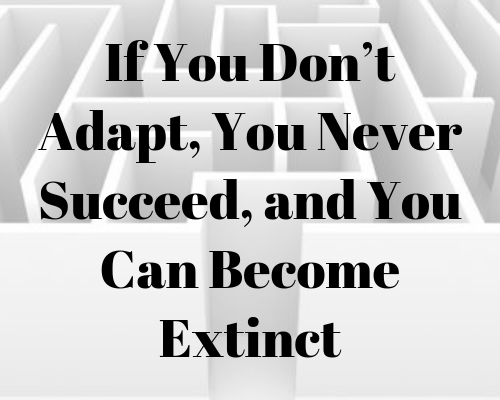
At first, Fudge became nervous, feeling like he had to start over. He worried he’d waited too long and was despondent over his lack of success. But then he finished his first story that he’d written without using anyone else’s work as a model. It took a long time but when he finished it, he felt exhilarated.
Fudge realized, that his success hadn’t evaporated in one day. There had been small changes and warning signs along the way and he was determined to stay more alert. He wrote something new on the wall:

Fudge began working at a faster pace than he had before, looking to others not to imitate, but to learn from. He started focusing on what changes to make in his writing to find the success he was seeking. He also realized that perhaps his definition of success, popularity for the sake of popularity and lots of money, might not be an accurate definition for his dreams. While he did want his writing recognized and he did want to earn for his work, he also now understood that it was the writing process and how it made him feel were really the main rewards. It was the pride and satisfaction from what he accomplished in his own mind, using his own creativity and effort.
Although he hadn’t realized it yet he had found the secret to that which nourished his soul. For now though, he couldn’t account for why he felt so happy. He had no idea where he was going and had achieved little success. Then more insight surfaced and he wrote it on the wall.

Fudge kept working and began noticing small increases in his fans and story engagement. He saw glimpses of a new Success Station. He decided to go back and see if Mudge was ready to try a new strategy. He offered Mudge small bits of advice to help him change in ways that would let him discover his own path to success. Mudge turned him down.
Fudge returned to his work, feeling more energy and enthusiasm for his writing with each day. He hoped that one day Mudge would read the writing on the wall and find his own way to success. In the meantime, Fudge’s continued hard work and constant awareness of how his work was being received helped him achieve greater success than he had ever thought possible. One day he turned a corner and saw Seek and Scamper who welcomed him to the new Success Station he had found.
He realized that it had been his fear of being seen as an impostor, his fear that he was, in fact, an impostor that had kept him from experimenting and truly searching to find his own way to the success he dreamed of. His focus on imitating those who had achieved the level of success he dreamed of had been a reflection of the fact he didn’t believe in his own abilities, his own talent. He came to recognize a new truth that he wrote on the wall for Mudge and others to follow if they ever chose to search.
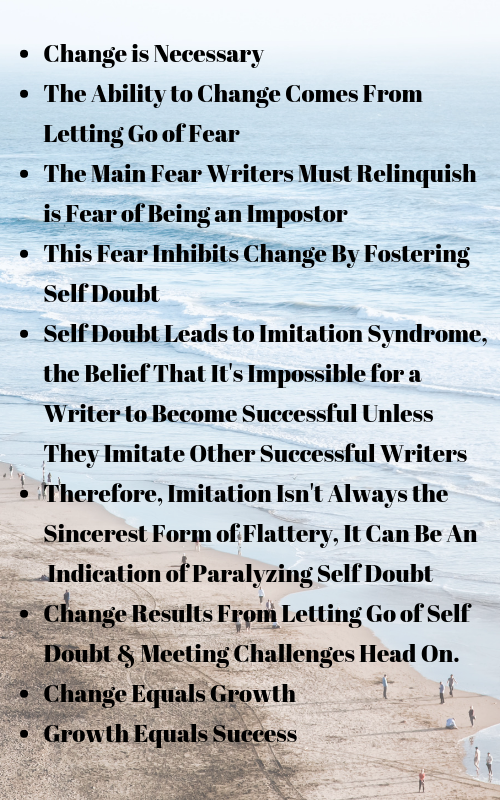
but most importantly:
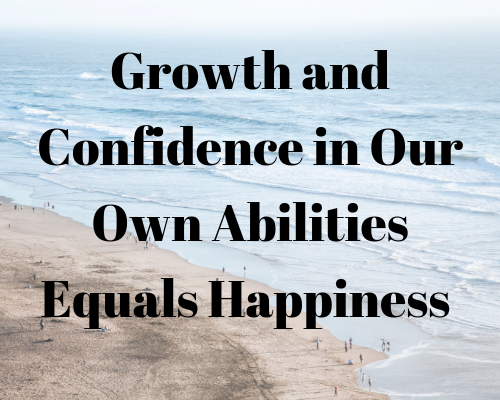
and ultimately:

Fudge hoped that other writers would read the writing on the wall and learn to find their own pathway to success. As for him, he continued to work, change and grow as a writer and as he did his happiness and sense of success grew also.
Natalie Frank (Taye Carrol) has had work featured in Haunted Waters Press, Weirdbook Magazine, Siren’s Call Publications, Lycan Valley Press and Zero Fiction among others. Her poetry has been featured a several anthologies. She is the Managing Editor for Novellas and Serials at LVP Publications.

If you enjoyed this story, you might also enjoy reading the following:
You can find links to my other work on Medium and follow me here. Thanks for reading!