
Does Everyone Get a Muse and Who Do I Talk to About Finding One?
The process of applying for a muse is one of the most unfamiliar areas in the writing world, especially for new and unpublished writers. Here are tips for applying and choosing an appropriate Muse to inspire and motivate you.
I was reading Elle Fredine’s article discussing her muse, entitled, My Muse Is an Old, Fat, Bald Guy, and it brought back memories of when I applied for my own muse through the Bureau of Muses and Inspiration. For those of us who did not major in creative writing in college or complete a MFA and don’t have a writing mentor, being assigned a muse can be a daunting process. Even learning that muses are real and not just something that’s talked about metaphorically can be overwhelming.
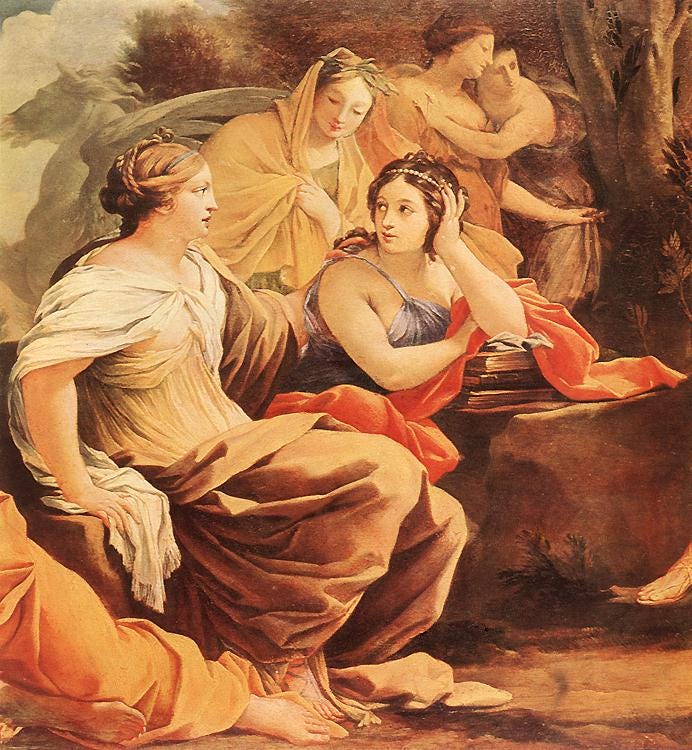
When I decided to take on writing full time, I was one of those who believed muses weren’t real. I was aware of the nine muses, the daughters of Zeus, who served as inspiration in different areas. Like the rest of the gods and goddesses in Greek mythology, I thought that whole Olympus thing was just a bunch of stories. Don’t get me wrong, I loved reading about them. But in my mind they weren’t anything to take seriously.
I learned differently about the incredibly powerful, beautiful, strong, courageous, just, heroic, inspirational muses (just stick with me a minute — I don’t want to completely piss them off, or Zeus since he tends to throw lightning bolts at you when you piss him off. Plus, I live on Lake Michigan and his brother Poseidon has a habit of drowning people who insult his family and word has it, he adores his nieces).
Once I discovered that there are in fact muses, real muses, from some fellow students in a writing class I was taking, I set out to determine how to obtain one. I learned of the Bureau of Muses and Inspiration, the world wide organization that assigns muses and filled out an application. As part of the process, you’re required to attend an interview to try to determine the best match possible.
Of course, although they have tons of potential muses, like everyone, I wanted one of the famed nine. I admit, I leaned towards Calliope as she was the superior of all the muses but I was also fine with Terpsichore, given my background in ballet. If those two didn’t have any openings I was okay with any of the remaining seven.
When I said this during my interview however, there was dead silence. After a moment I quickly repeated, “But of course, I’d be happy with any of the nine,” which elicited an indignant huff from the interviewer.
“Surely, you read all of the accompanying material with the application?” The interviewer asked.
Now to be fair there was about 75 pages of dense type and that was before the list of possible muses and related information which took up another 500 pages. So I hadn’t read it all, figuring it was a lot of legalese and privacy notices or some such nonsense.
“Yes, certainly,” I replied, doing my best to sell it.
There was another huff and a hummff as well. “Then I’m confused as to how a novice writer believes she will be assigned one of the nine original muses. Besides the fact that they’re booked solid for the next 100 years, the people they’re assigned to are those who are talented, well established and successful. Stephen King, George R.R. Martin, James Patterson, John Grisham? They were all turned down.”
I swallowed hard, realizing that perhaps reading over the material might have been of some benefit.
“I guess I must have skimmed over some of it,” I mumbled.
“I’d say so,” came the reply, “Perhaps, you’d best go back and read over what you were sent then reschedule for when you have a realistic list of possible muses.”
It took some time, but I ended up with an excellent muse. Her name is Awder and she was once a Welsh Princess. I’d like it if she were around more, but she is a touch flighty. I think though, that’s the way of muses.
I wanted to save other new writers the embarrassment that I experienced and provide some basic tips on applying for a muse. They can be invaluable in your writing but only if you end up with the right one. The Bureau is exceptionally busy these days with everyone deciding they want to be writers, so the more you know, the better the chance you have of receiving a good match.
Don’t Even Think About It
The first thing I’ll mention is that while you might be tempted to apply for a well known muse, I’ll discourage you from doing so. It is a waste of time. Anyone you’ve heard of won’t be assigned to a new writer.
As implied above, you can forget about the nine traditional muses as there’s no way anyone short of the second coming of Hemingway has a chance with one of them, and even he might be a long shot.
Likewise, as I’m sure I don’t have to point out, the major gods and goddesses are also out. This includes those from every major culture, including Egyptian, Greek, Roman, Celtic, Japanese, and Chinese among others. They don’t help many mortals but you’re better off without them. They have a habit of infighting and they often use us mortals to punish each other.
Gods also tend to be an amorous lot and this can result in more unrest which will filter down into your life. You might get a great book out of it but you’re more likely to be turned into a tree, made into a star or constellation or otherwise dispatched in a way that would make writing impossible.
Norse deities were once available but they too became over booked when Neil Gaiman published his book on Norse Mythology. For a while it was possible to ask for a Mayan or Babylonian minor deity but that was done away with because they required a human sacrifice before they’d help you. It might be possible to get a Native American deity, but only if you share a common background and qualify as having at least one eighth Native American ancestry.
Possible But Not Recommended
Demigods were once all the rage for writing muses but they have fallen out of favor. While they are currently available and are fairly easy to have assigned there is a reason for this. Being half god and half mortal they are notoriously unstable and most have identity crises on the job. Additionally, as their parents are not together, there are terrible family issues with their parents often putting them in the middle. The bottom line with Demigods is they just aren’t worth the trouble.
If you have published or your writing is popular on the internet you might be able to request one of the heroes but I’d advise against that as well. I know a few people who were assigned a Hero and they haven’t found them incredibly useful. Sure, heroes have great skills, strength, ingenuity, intelligence and charisma, but they also know it. They are more likely to be off doing their own interviews and gaining publicity so they can land a starring role in a Netflix series, than to help you out.
Similarly, if you already have a following, you might be able to request a Valkyrie. These maidens are extremely organized and bright, and they don’t take anything off of anyone. These qualities make them good muses for those who need a firm hand. However, as they serve the chief Norse god Odin, they can be called away at any time to transport the souls of those who die valiantly in battle to Valhalla.
Some Examples of Current Possibilities for the Rest of Us
While it may seem like it’s impossible for new writers or those without a strong following to get assigned a muse, there are literally thousands of more common, everyday muses who are available to help inspire you. I have included a few examples taken from the current Bureau of Muses and Inspiration Selection Manual, which will give you some idea of the types of options that may be available to you.
Examples of Current Ordinary Muses
- Bertha — a stout German woman, strict on writing schedules and output, also good in grammar. Good for literary fiction
- Jack — An american male, lighthearted, happy, fun and highly inspirational, at least when he isn’t drinking which is most of the time. Good for experimental fiction.
- Bob — An older Jewish Canadian male, who lacks in energy and can be a bit neurotic. Good for memoir and inspiring ironic humor.
- Frank — A British male with a military history which makes him highly regimented in terms of schedule, and a stickler on rules including grammar. Excellent for historical fiction.
- Phoebe — A somewhat shy young Greek woman, phenomenal and easy to work with when she is on task but is easily distracted by young male muses. Great for romantic fiction.
- Anatoly — Once a member of the Russian mob, great inspiration for any type of crime fiction but he is very controlling and it can be dangerous not to follow his “advice” or fulfill his expectations.
- Alina — Heavy built Romanian woman, much of her past unknown but she is well versed in the history of Romania especially the area of the Carpathian mountains. Good with paranormal stories, especially vampires though she draws the line at zombies.
When All Else Fails
Even if you can’t get matched with a muse through the Bureau, don’t lose hope. There is also an Inspirational Muse Clearinghouse that you can apply for a muse through. Although many of the muses listed there are those which did not receive especially high ratings in their previous positions, this is not always the case. Some may be muses who don’t want to work with the number of clients required by the Bureau or who are new and haven’t had a client yet, so have no evaluations on file.
The Clearinghouse brochure says some of these muses have gone on to become among the most popular in the business, so don’t feel down if you need to use this route to find a muse. You may just end up with one of the most inspirational ones available and go on to publish the next blockbuster novel, poetry volume or other form of writing.
Thanks to Elle Fredine for inspiring this post.
Natalie Frank (Taye Carrol) has had short stories published in Haunted Waters Press, Weirdbook Magazine, Siren’s Call Publications, Lycan Valley Press and Zero Fiction among others. Her poetry has been featured a several anthologies. She is the Managing Editor for novellas and serials at LVP Publications.
If you enjoyed this story, you might also like reading this:
You can find links to my other work on Medium and follow me here. Thanks for reading!


