
From Who Lets the Dogs Out, To Bring Your Pet to the Office Day, Everyday
Corporate America has a tough decision: To allow pets in the office or lose their employees who are first-time pet owners.
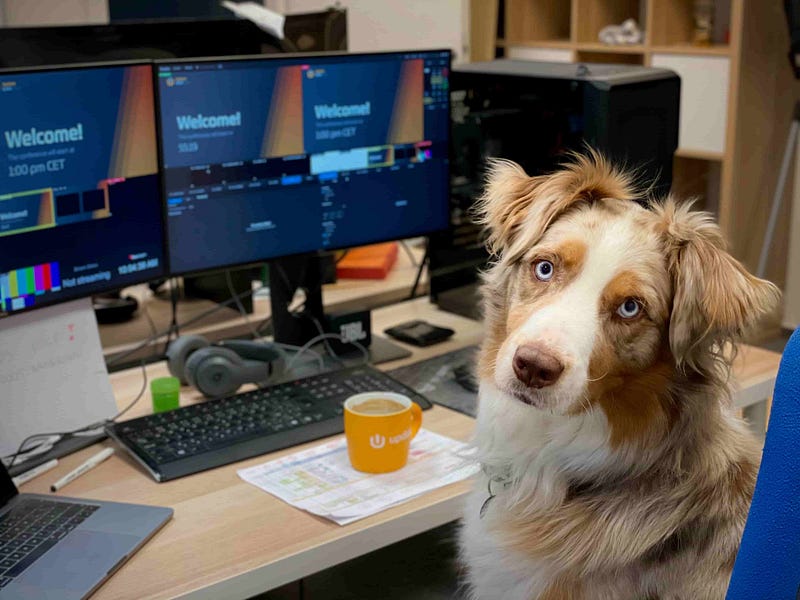
Who let the dogs out?
If you started humming the lyrics, then you must have been around when the song “Who let the dogs out?” peaked at number two in music charts around the world in the year 2000.
It’s been months since I have become a “plant parent,” it helps with my mental health, and so are the millions around the world who cared for plants during and after the pandemic.
Others chose to be “fur parents” or people who decided to have a pet to help them cope during the months of being isolated from the world.
Some have dogs, cats, fish, and I even have a friend who has a turtle.
Corporate America wants you to RETURN.
An event that could have been considered a super-spreader event only a few months ago.
Everything appears to be heading back to what it was before. Broadway is opening, and offices are sending emails to their employees to report back to work, which means to be back in their offices.
Except in a survey done by Banfield Pet Hospital, nearly half of Gen Zers, ages 18 to 24, and a third of millennials, 25 to 40, said they would rather quit their jobs than be forced to leave their pets at home alone full time.
You can read the full story by TIME — Some Workers Are Choosing Their Pets Over Their Jobs as Offices Reopen, But Will Animal-Friendly Workplaces Catch On?
What is more important?
The lesson from the pandemic, at least to me, was to value what is more important in life.
The reason for our being alive goes beyond our jobs. Money is meaningless beyond what it can pay for our basic needs. And family matters.
For Corporate America, they have to adjust to the new normal — People are not going back to work only to enslave themselves for a 9 to 5 job.
In the TIME article — Gus Azusenis, a 24-year-old financial analyst, who only became a fur parent because of the pandemic, has to make some tough decisions. But, like many who looked for comfort in their pets, he can’t see a life without Finley by his side.
“I felt like throughout this last year, I was wandering through a field in the dead of night, in pitch black,” he says. “She kept me focused on the light.” — Gus Azusenis
Finley, his year-old Newfoundland, has no clue as to what is happening, and every time she swished her tail, it only makes it more painful for Gus.
Gus hasn’t decided either to quit or stay in his job, as others have done. Instead, they would rather find an employer who will take steps to accommodate pet owners and has a pet-friendly work environment, including remote work accommodation.
The good thing for new fur parents is that many employees want to retain remote work.
And it has become a race for employers to keep their best talent as more people are likely to move jobs if they see an opportunity for work from home.
Mental Health concerns.
Many of us struggled during the pandemic, and we don’t want another pandemic of mental health issues that can result from separation anxiety for both people and pets.
Now that America and the world are slowly getting back on their feet, we can't fail the people and, more so, the pets who had become our personal heroes.
Our pets saved countries of millions if not billions of dollars on therapy by being our companions at a time when we can’t make sense of what was happening not only in our lives but in the world.
For young people like Gus, a lesson that came early that our generation and the generation before us failed to see when we were at their age, that there is more to life than work.
Final Thoughts.
Like millions worldwide, I lost a loved one, not from the virus, but I lost my Mom in 2021.
I will forever miss her, and I will forever associate the pandemic with an immeasurable loss.
Today, I still grieve, but I find comfort in my plants.
I am a proud plant parent. I can relate to the millions of people who have become first-time pet owners or, as, pet parents. We don’t ditch the people, the pets, or even the plants who helped us navigate our darkest moments.
Money isn’t everything, something Corporate America has to learn and learn quickly if they want to keep their employees and their employees’s pets happy.
I would love to hear your comments, and if you are a pet owner, what does it mean to have a pet during the pandemic, and will you choose your pet or job if you have to make a decision.
Thank you, Xin Xin.


