
Who is Winning the War on International Arms Sales?
How has Russia’s War on Ukraine impacted Russia’s Military exports
In the Fall of 2022, I went to Goa, India to have a long weekend getaway after a work trip to Delhi and Bangalore. During a day of scuba diving near a small island off of Goa, I had an hour on the boat before we returned to shore.
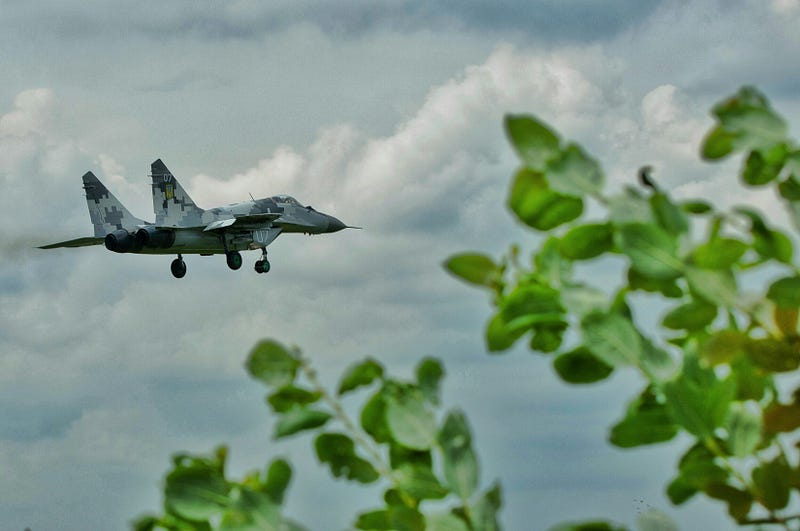
All of a sudden, in the blink of an eye, I saw a Russian MIG take off from that small island and disappear into the blue sky. It happened so fast I didn’t even have the time to grab my camera and take a photo. I knew it was a Russian MIG only because I have seen so many “Top Gun” like films that I couldn’t miss one in the sky even though this was the first I had ever seen in person.
I knew India and Russia had strong military and diplomatic ties going back to the days of the Congress Party’s domination over India and the Communist Party over the Soviet Union. However, I wasn’t sure how much future military equipment India and other military customers would continue to buy from Russia after 2022.
So how has the invasion of Ukraine impacted Russia’s military sales abroad?
An article from the Wall Street Journal from last week on the subject caught my eye as an interesting read and made me turn to the source, the Stockholm International Peace and Research Institute (SIPRI).
Let’s take a look at the numbers before 2022 and more recently for some insights.
According to (SIPRI) Trends in International Arms Transfers, the percentage of global military exports has fluctuated greatly in favor of the United States and France over the Russian Federation. The SIPRI tracks these sales in five-year increments because customer nations tend to purchase multi-year defense contracts and the order-to-delivery process can be a multi-year affair.
Between 2014–2018, the United States was the greatest exporter of major military weapons with a 34% market share. The Russian Federation was second at 21% and France was third at 7.2%.
From the 2018–2022 period, the United States’ exports as a share of the global market increased by 6% to 40% of the market. The Russian Federation remained in second while losing 5% of global market share bringing them down to 16% while France stayed in third place to 11%.
From the 2019–2023 period, just one year later, The United States’ share of the global military armaments increased an additional 2% points to 42%. France stayed steady at 11% while taking over second place. The Russian Federation dropped to third place losing another 5% to slightly below France at 11%.
So what could be driving Russia’s reduction in military exports in recent years?
Again, according to SIPRI, in the 20 years before 2020, Russia’s military arms export volumes remained relatively steady year over year. It has only been since 2020 that the volumes began to drop. The most recent reductions could certainly be explained by the need to arm itself after the invasion of Ukraine. However, that doesn’t explain the drop in volumes between 2020–2021. SIPRI notes that in 2019, Russia exported to 31 countries but by 2022, it had dropped to 14 countries and down to 12 by 2023.
Could the Russian Federation’s military equipment also no longer be fashionable for some countries?
Again, according to SIPRI, almost two-thirds of Russia’s military exports from 2019-2023 went to only three countries, India (34%), China (21%), and Egypt (7.5%). Both India and China’s percentages of Russia’s exports, however, were lower in 2014-2018 with India at 27% while China was only 14%. This suggests both countries increased their purchases from Russia. However, by looking at the import numbers, some interesting trends emerge.
In the timeframe I analyzed between 2014–2023, India and Saudi Arabia exchanged hands as the #1 and #2 military arms and equipment importers. China remained in the top 10 but nowhere near the top of the list. Most of Saudi Arabia’s military imports come from the United States so not relevant for an analysis of Russian exports.
In 2014-2018, 58% of India’s military imports came from Russia. However, in the 2019–2023, it had reduced to 36%. In the same period of 2014–2018, Russia comprised 70% of China’s military imports. By 2019–2023, it had increased to 77%.
One leader of military arms and equipment imports, India, does seem to be diversifying its military imports, and the winners seem to be France and the United States, who both increased their sales to India over the same period.
We have seen the lackluster results of many of the Russian Federation’s arms and military equipment in this new war potentially impeding its brand as a reliable source. Could this be a factor in its customers’ choice to reduce purchases?
It may take a few more years of data to unpack and understand reliably the drivers of this trend and whether it remains a trend at all. In the meantime, we certainly know from an export sales perspective who are the immediate winners — The United States and France helped by India’s import diversification.
Suppose India continues its trend of reducing its share of military imports from Russia and continues to import more from France and the United States, the next time I am out scuba diving in India, I may find MIGs an extinct bird of prey in the skies.
References:
Trends in International Arms Transfers, 2023 (sipri.org)
U.S. Dominates Foreign Weapons Market as Russian Exports Plummet — WSJ