
THE DISTRIBUTION OF POWER IN RUSSIA
Who are the Russian Oligarchs?
Not a bloc. Not in charge.
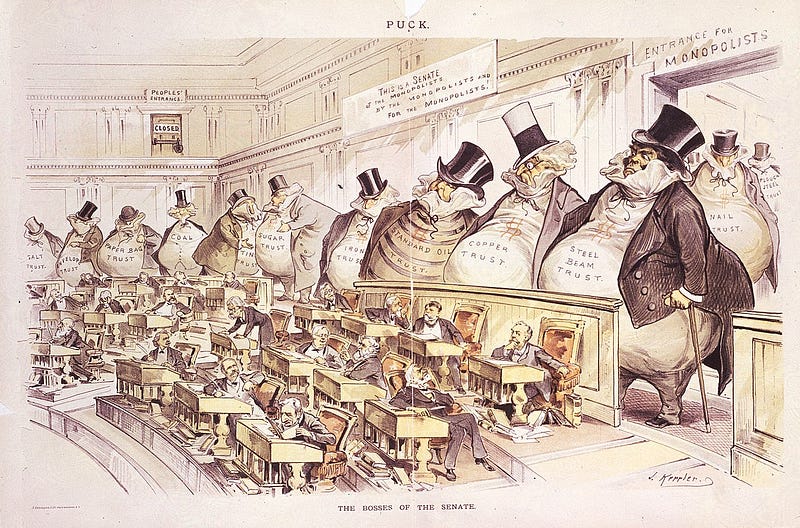
Aristotle was a genius polymath. So much so that many of his insights became dogma and slowed progress in the hard sciences and psychology, contrary to his general method of observing the world and revising his ideas appropriately. Many of the concepts in his “practical philosophy,” which covered rhetoric, politics, economics, and ethics, are still relevant today. One of these ideas is his typology of political communities. Within that typology, one of his categories is oligarchy.
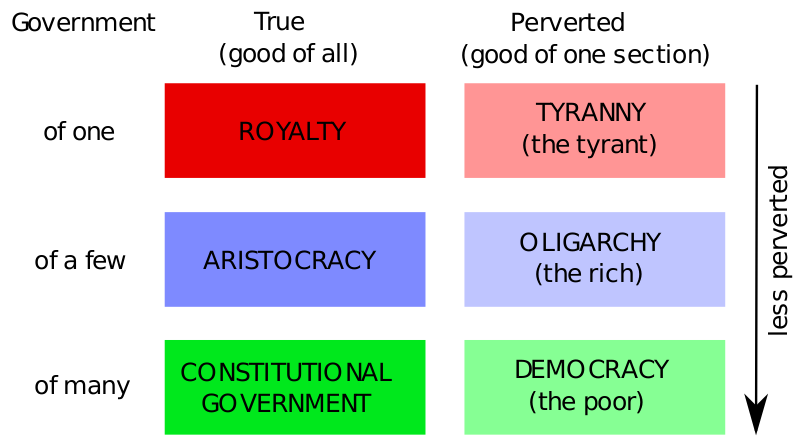
The concept of oligarchy has evolved. Initially, it was the rule of the rich, related to the idea of plutocracy. By the early 20th century, the idea had expanded. The “iron law of oligarchy” argued that the division of labor in any large group — political, economic, or civic—would necessitate the development of a leadership class. These elites would come to see their interests as the interests of the whole. This trend can be resisted— by revolutions, elections, popular movements, and sortition— but the act of organizing to resist creates a leadership class of its own. Oligarchs can be replaced or temporarily brought to heel, but oligarchy is the natural order of complex organizations.
The late Soviet Union was an oligarchy. The Communist Party dominated the government. The Central Committee dominated the Communist Party. The Politburo dominated the Central Committee. Sometimes, a strong leader — the tyrant — can dominate the oligarchy. Stalin did this. When he died (from natural causes), the elite’s resolve to never again be terrorized played a significant role in his succession. President Xi of China is in the process of building a neo-Stalinist system today. President Trump dreamed of this but failed.
What is the role of the oligarchy in the Russian Federation today? Does Putin lie awake at night worrying that the Russian oligarchs will decide that his foolish invasion of Ukraine is costing them too much money, and replace him? Or is Putin such a secure tyrant (ratified by rigged elections) that they lie awake at night, worried that they will be impoverished, arrested, or executed by him?
The Evolution of the Russian Oligarchy: the First Generation
The Communist nomenklatura (literally, the “list of names” of senior officials under communism) helped to sanction and enable the first generation of the Russian uber-rich. Under Gorbachev’s perestroika (restructuring), they turned a blind eye to some businessmen who imported “prohibited” goods like computers and blue jeans, which those businessmen sold at a substantial profit. Many of these businessmen were members of the nomenklatura themselves.
When Boris Yeltsin became president of an independent and democratic Russia in 1991, economists Yegor Gaidar and Anatoly Chubais became two of the “Young Reformers” who pushed for a system of private ownership with minimal government regulations. Gaidar was the acting Prime Minister of Russia in 1992. Following the lead of Reaganomics and neoliberal economics around the world, these reformers pushed for “shock therapy” which they believed would lead to a functioning liberal market economy.
The results were disastrous for most Russians. The mortality rate rose. Life expectancy dropped. Inequality, corruption, and poverty soared. Inflation made the ruble next to worthless. Ruble notes (the nearest equivalent to U.S. dollars) were used as toilet paper. One of my Russian students found himself stranded in the U.S. with his promised student aid put on hold. By the time he got it, he took the money allocated to his college tuition and housing, exchanged it for dollars, and spent it. He bought a sausage.

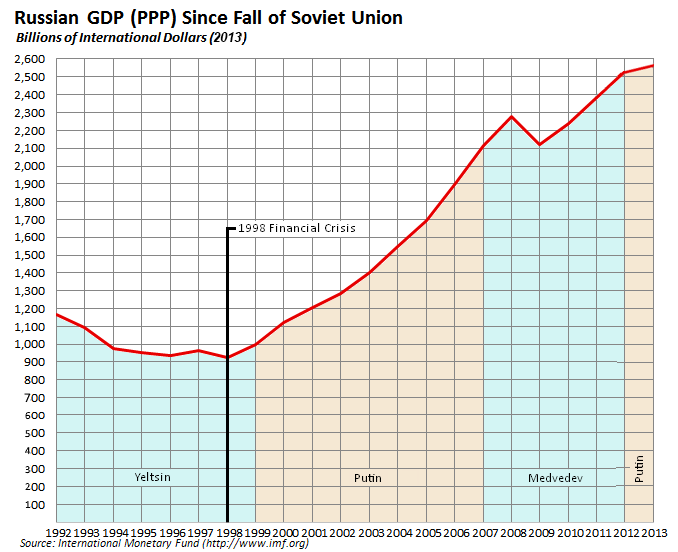
By 1995, fifty percent of the population of Russia was living below the poverty line (approximately $4 a day).
A small number of people with connections bought government assets for kopeks on the ruble (pennies on the dollar). A few, collectively known as the “seven-banker outfit,” came to control fifty to seventy percent of the finances of Russia. Needless to say, they influenced Yeltsin and his government.
Then the 1998 financial crisis hit the banks. Russia had purchased imports from the former Soviet republics. In part, this was to keep them in the Russian sphere of influence. But it meant hard currency was flying out of the country for shoddy goods. Under Russia’s version of “supply-side economics,” it was assumed the newly wealthy class would invest in the economy, create jobs, and replace obsolete equipment.
In reality, they put most of their gains into foreign investments and bank accounts. In their stead, foreign loans financed domestic investments. Those loans came due, and Russia didn’t have the hard currency to pay them back. The informal exchange rate for the ruble reflected this reality. While the IMF tried to help Russia stabilize its economy, the problem was too large (and the Duma and the oligarchs were too uncooperative) to fix it.
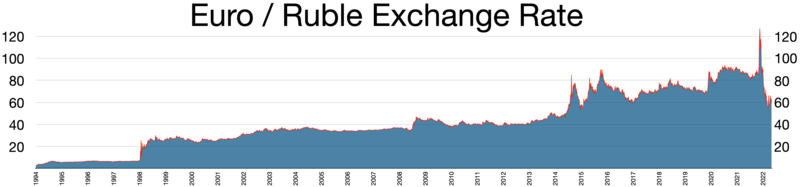
In 1998, the Russian government and the Central Bank of Russia defaulted on the debt and devalued the ruble. The oligarchs discovered that money that had not already been converted to foreign currencies had lost much of its value. The ruble, which had been kept stable by fiat, collapsed.
The first war in Chechnya had already placed stress on the economy. So had the Asian financial crisis of 1997. But in the final analysis, Russia ruined itself.
The private banking system and the “seven-banker outfit” collapsed. Yeltsin and the first generation of oligarchs were blamed for the disaster by the Russian public. Russian politics became fragmented. Many people were looking for a strong leader who could restore order. Liberal democracy and a “free” market that left almost everyone worse off than they were under communism were not priorities. The Russian security services were prepared to back such a man. He was a dull paper pusher named Vladimir Putin.
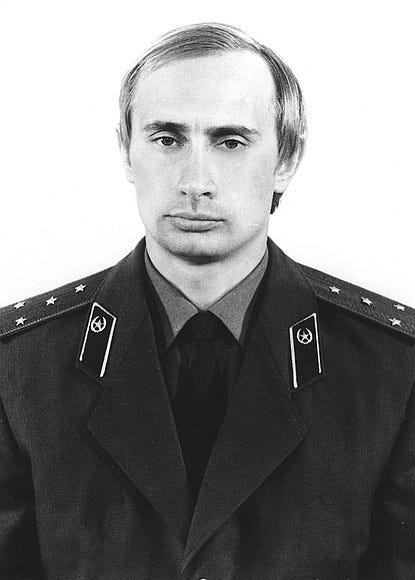
Putin was an organization man. His loyalty to the KGB as an institution was absolute. He plodded through his job, where he recruited agents for the Soviet Union with the complete support of the East German secret police (Stasi). His most notable moment of courage was during the fall of East Germany when he put himself between a crowd looking to sack the Stasi headquarters and the building itself. He was willing to kill to protect the Stasi files. Although he didn’t care about people, he was willing to kill to protect the paper.
This dull bureaucrat was seen as a perfect frontman. If only they could raise his recognition and reputation among the people, he’d serve the needs of the security services.
Putin Comes to Power: the Old Oligarchy Dies
In 1999, when Yeltsin’s power was in decline, Putin was appointed as director of the Federal Security Service (FSB). Once in place, he conducted a thorough reorganization and dismissal of personnel. In August of that year, he was appointed Prime Minister. His image was managed by the security services to emphasize his decisiveness and cruelty in defense of Russia.
He led the second war in Chechnya, and his role in counterterrorism was emphasized in the prosecution of “terrorists” blamed for apartment bombings in September 1999, a “9/11” that killed 300 people and injured hundreds more. There is strong evidence the bombs were planted by the FSB. Nevertheless, they were used to mobilize Russians against Chechens.
It was an old trick. Stalin used the excuse of terrorism to justify his purges in the 1930s. Nevertheless, as one Russian observed at the time, "after the first shock passed, it turned out were living in an entirely different country.” Soon after, Yeltsin resigned, making Putin Russia's acting president. Four months later, he was elected to make the position official.
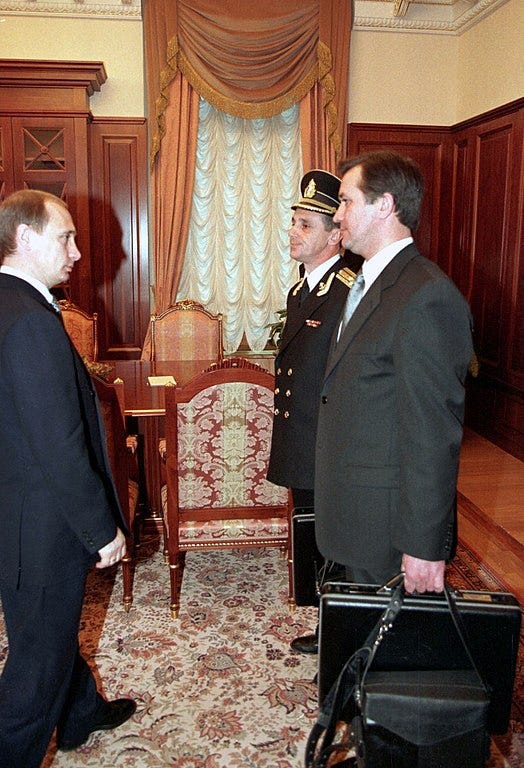
Putin pushed through reforms to reward his supporters. He was also very lucky: a 500 percent increase in the price of oil and gas meant that the Russian economy grew by an average of seven percent a year during his first term in office.
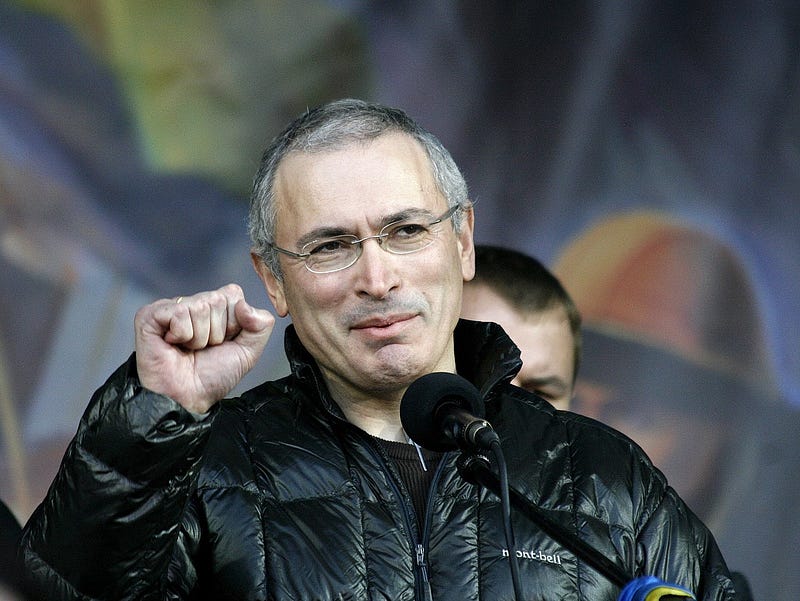
The Yeltsin oligarchs did not fare so well. Many were accused of tax evasion. Mikhail Khodorkovsky of Yukos Oil was arrested in October 2003 and sentenced to 9 years, which was subsequently extended to fourteen.
Vladimir Vinogradov and Boris Berezovsky died under suspicious circumstances (Vinogradov of a stroke, Berezovsky of hanging). Both had been critical of Putin’s ascension to power. Vladimir Gusinsky and Boris Berezovsky had both fled Russia to avoid prosecution. Overall, between 2014 and 2017, thirty-eight wealthy and powerful Russians died.
Putin Consolidates Power: the New Oligarchs Rise
Putin crushed his enemies and rewarded his friends.
By 2000, as Putin consolidated his presidency, the government—still run in part by and for the oligarchs—remained extremely dysfunctional. Putin went to work centralizing his authority and, as we have seen, moving the old Yeltsin oligarchs out of politics.
Seeing the writing on the wall, many of them fled the country. Some acquired foreign citizenship and, like mobsters, tried to go “legit.” All transferred what they could out of Russia, investing their wealth around the world. London became a haven for exiled Russian billionaires. Eugene Shvidler, Alexander Knaster, Konstantin Kagalovsky, David Wilkowske, and Abram Reznikov, are expatriates, who have taken up permanent residency in London. Roman Abramovich bought 16 Kensington Palace Gardens in London, a 15-bedroom mansion, for £90 million in 2009. Mikhail Fridman restored Athlone House in London as a primary residence in 2016, taking the precaution of adding a “KGB-proof” safe room.
Those who remained behind, like Khodorkovsky, were exiled, imprisoned, and had their property seized. Those who remained largely did so by agreeing to stay out of politics, transfer their property, and leave both to Putin.
The seized assets were transferred to Putin’s friends and allies. Most of it is probably under Putin’s indirect control. He may be, once one traces informal lines of control, the single wealthiest man in the world.
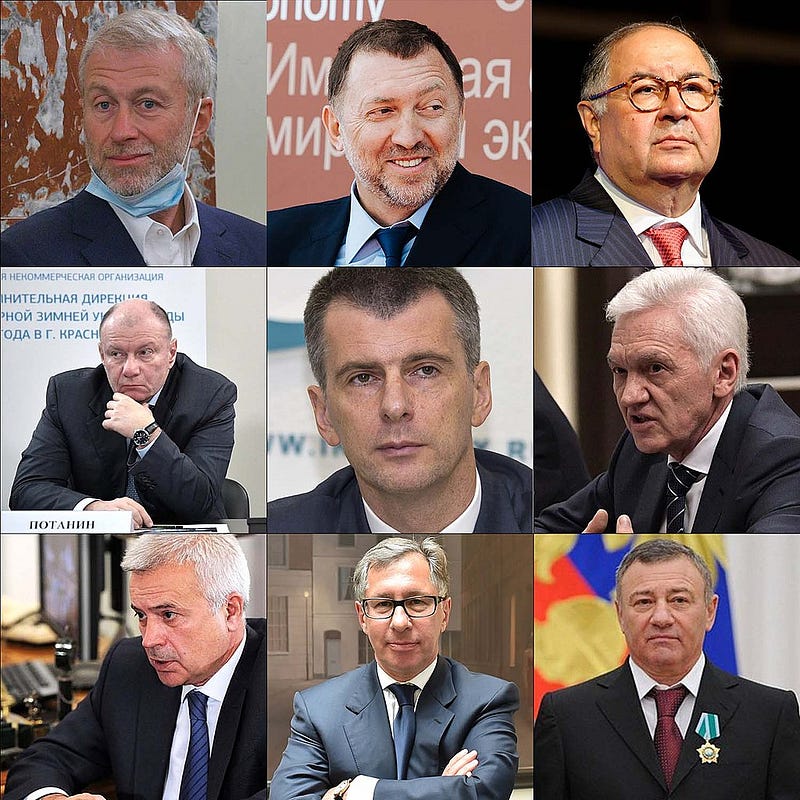
Much of it is in the hands of the siloviki (literally, “strongmen” associated with the force-using security organizations) and old friends of the president. For example:
*Petr Aven: head of Alfa Group, a commercial bank subject to US sanctions that helped him amass an estimated $5.5bn fortune. A collector of classical Russian paintings, he also spent millions transforming an 8.5-acre plot in England into a “KGB-proof” mansion, complete with a bomb-proof panic room.
Aven, sanctioned by the EU, is described as “one of Vladimir Putin’s closest oligarchs” and one of “approximately 50 wealthy Russian businessmen who regularly meet with Vladimir Putin in the Kremlin."
*Sergey Chemezov: former KGB, who befriended Vladimir Putin in the 1980s while they lived in the same apartment building. Chemezov rose through Russia’s public and private sectors in Putin’s wake. In 2007, he was appointed CEO of Russia’s state-owned defense giant, Rostec, a position he holds today. The US sanctioned Rostec in 2014 following its role as a supplier for Russia’s invasion of Crimea. After the most recent invasion, he was targeted again, as well as his family.
*Mikhail Fridman: Petr Aven’s business partner, Ukrainian-born Mikhail Fridman is Alfa Group’s founder. Fridman has made substantial investments in the United States, including properties along the Atlantic coast. He has also sank $200 million into Uber, and caused a stir in 2018 when he spoke alongside Aven at a closed-door dinner hosted by the Atlantic Council, in what critics called an unofficial Kremlin mission to protest US sanctions.
More recently, Fridman became one of the first oligarchs to speak out against the invasion of Ukraine, calling it a “tragedy” and writing that “war can never be the answer.”
*Sergei Borisovich Ivanov: served alongside Putin in the KGB and later became a permanent member of the Security Council of the Russian Federation. Ivanov also served as Putin’s chief of staff, a deputy prime minister, and a special envoy for environment and transport.
*Sergei Sergeevich Ivanov: the son of Putin’s friend, was appointed CEO of the Russian state-owned diamond mining company Alrosa and a board member of Gazprombank, the third-largest bank in Russia.
*Sergei Lavrov: the current Foreign Minister runs an investment fund with assets exceeding $6 billion.
*Leonid Mikhelson: Russia’s richest man in 2016, he is the founder and chairman of natural gas producer Novatek, a close friend of Putin’s, and a business partner of Gennady Timchenko, a billionaire who has been under US sanctions since 2014.
*Alexei Mordashov: Officially, Russia’s richest man. He owns a third of Tui, Europe’s biggest tourism firm, and gained billions as the chief executive of Russia’s largest steel and mining firm, Severstal. He is also a large shareholder of the Bank of Rossiya, a bank that has opened up branches across Russian-occupied Ukrainian territory.
*Nikolai Platonovich Patrushev: also served in the KGB with Putin, and was promoted to head the Federal Security Service (FSB), the main successor agency to the KGB. Patrushev is also secretary of the Russian Federation Security Council, and was implicated in the assassination of Alexander Livchenko by fatal radiation poisoning after Livchenko defected to the West.
*Andrey Patrushev: son of Nikolai Platonovich Patrushev, was appointed to a senior position at Gazprom Neft, the third-largest oil producer in Russia.
*Alisher Usmanov: one of Vladimir Putin’s “favorite” oligarchs. The country’s richest man until 2015. Usmanov owns a majority stake in Russia’s second-largest phone network and a large stake in iron and steel giant Metalloinvest.
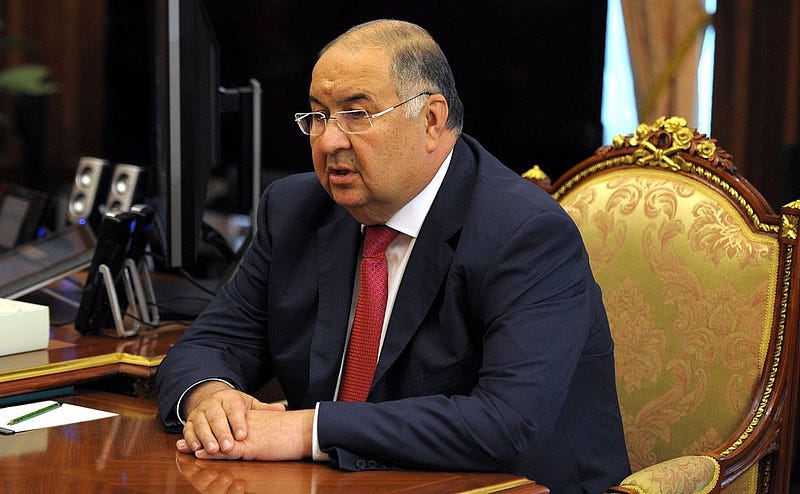
Usmanov also helped give us Facebook. When Zuckerberg was having trouble finding funding, Usmanov bought as much as ten percent of the company. He sold his stake in 2014, netting billions. He was also a major investor in Apple, Twitter, LinkedIn, Groupon, and Zynga.
*Arkady and Boris Rotenberg: two of Russia’s wealthiest tycoons. They were teenage Vladimir Putin’s judo training buddies, which is a role they continued into adulthood. After Putin became president, he rewarded the brothers with the control of large state-owned enterprises and lucrative contracts, netting them a massive fortune.
The Rotenbergs built a huge family empire of international investments through a web of shell companies, which made Arkady’s son Igor a billionaire in his own right. Even after the imposition of sanctions, Rotenberg-linked shell companies continued making transactions in the US financial system worth over $91 million.
*Andrey Patrushev: son of Nikolai Platonovich Patrushev, was appointed to a senior position at Gazprom Neft, the third-largest oil producer in Russia.
*Igor Ivanovich Sechin: served as deputy prime minister of the Russian Federation from 2008 until 2012. A former Soviet military interpreter, Sechin helped secure a $16 billion deal with British Petroleum, which gave the Russian oil company Rosneft a 5 percent stake in BP. Currently, he is the CEO, chairman of the management board, and deputy chairman of the board of directors of Rosneft.
*Vladimir Potanin: mining tycoon and former deputy prime minister Vladimir Potanin was among a small circle of oligarchs who met with Putin last week as the invasion of Ukraine began.
*Evgeniy Prigozhin: unlike other oligarchs, Prigozhin began in the Russian underworld. Rumor holds he began his rise to power selling hot dogs, shortly after being released from prison. Within years, he had opened made “arrangements” with Russian authorities and opened high-end restaurants, where he earned the nickname “Putin’s chef” while catapulting into the inner circles of the elite.
Of all the members of the oligarchy, Prigozhin is the most likely to murder Putin. He has the means. He has the motive. As Putin’s reputation has declined after the disaster in Ukraine, he may have the opportunity. If he has the opportunity, nothing in his record suggests he will hesitate.
With Putin’s backing, Prigozhin funded the Internet Research Agency, which employed a troll army that began by supporting Russia’s 2014 invasion of Crimea, before doing its best to influence the 2016 US presidential election in favor of Donald Trump. Prigozhin and the Internet Research Agency were indicted by a US grand jury in 2018 for election interference, and he was added to the FBI’s wanted list in 2021. He’s now on both the US and EU sanctions lists for running disinformation campaigns to support the Russian invasion of Ukraine.
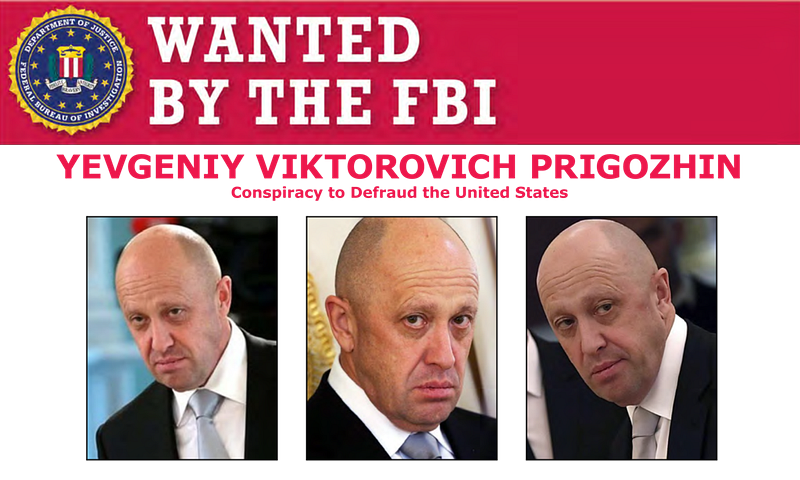
More recently, Prigozhin has organized the Wagner Group, a mercenary company operating around the world. Wagner has proven to be one of the most vicious, dangerous, and effective elements of the Russian invasion of Ukraine. Its success has brought Prigozhin into direct conflict with the Ministry of Defense.
Putin appears confident that he can weaken Mr. Prigozhin, who has clashed with the military’s general staff. However, the effect could be the opposite, with more people seeing Mr. Prigozhin as the most probable successor to Putin.
Putin used Prigozhin and his troll factory to undermine potential rivals in the military. However, Prigozhin’s grabbing of the reins in social media and the military makes him a popular and dangerous man. Prigozhin has surpassed all of Mr. Putin’s other “friends” in power, feared almost as much as Putin. To fill his mercenary army with prisoners, he had to take on several key security ministries. “If Mr. Prigozhin can free any prisoner, his powers are unlimited.”
Of all the members of the oligarchy, Prigozhin is the most likely to murder Putin. He has the means. He has the motive. As Putin’s reputation has declined after the disaster in Ukraine, he may have the opportunity. If he has the opportunity, nothing in his record suggests he will hesitate.
*Andrey Sergeyevich Puchkov: a high-ranking executive at VTB Bank, Russia’s second-largest financial institution. Previously chairman of the FC Dynamo Moscow football club, and several other companies, he has had multiple real estate holding companies.
*Yuriy Alekseyevich Soloviev: also a VTB Bank executive, with experience at Lehman Brothers and Deutsch Bank. He is also the chairman of the board of directors of FC Dynamo Moscow football club.
*Igor Shuvalov: deputy prime minister from 2008 to 2018, he is now the chairman of VEB, the Russian development bank.
*Nikolai Tokarev: a former KGB officer who served alongside Putin and Chemezov, Nikolai Tokarev took over former Soviet state assets as Putin built his political power and, in 2007, became the head of the state-controlled oil giant Transneft. He has used his position at Transneft to build a business and real estate empire.
*Alexander Aleksandrovich Vedyakhin: serves as the first deputy chairman of the executive board of Sberbank, Russia’s largest financial institution.
The Fourth Generation: “Sudden Russian Death Syndrome”
The oligarchs, as a class, had nothing to do with the decision to invade Ukraine. Few men, most of whom were trusted advisors from the FSB and SVR who had already endorsed his “genius,” were aware of Putin’s plans for the most recent assault on Ukraine. In the words of one confidant, Putin “decided that his own thinking would be enough.”
Mr. Zatulin, a leading Russian expert on Ukraine and a senior Putin ally in the Duma, has said he got his first inkling that the president was serious about an invasion in mid-February. Zatulin has said he was scheduled to give an address to the Russian Parliament on behalf of Mr. Putin’s United Russia party on Feb. 15 that was supposed to signal the opposite—that there would be no invasion unless Mr. Zelenskyy himself went on the offensive. But only five minutes before the session was scheduled to start, Mr. Zatulin says, he got a message from an aide: The party’s leadership had canceled his speech.
“I was not ready for this turn of events,” Mr. Zatulin has reported. “Everything connected to this decision turned out to be a surprise, not just for me but also for a great many of the people in power.” Putin’s spokesman insists that he found out about the invasion only once it had begun. Likewise, Anton Vaino, Mr. Putin’s chief of staff, and Aleksei Gromov, Mr. Putin’s powerful media adviser, also say they did not know about it in advance.
And the oligarchs? They were completely out of the loop. Russia’s main industrial association had been expecting to meet with Mr. Putin in February. On the agenda, among other things, was the regulation of cryptocurrencies. But the meeting kept getting rescheduled. Finally, on Feb. 22 or Feb. 23, the Kremlin notified participants of the date: Feb. 24, the day Mr. Putin invaded Ukraine.
Andrey Melnichenko, a coal and fertilizer billionaire, has described how he woke up that day to the “madness” in Ukraine. But the meeting with Mr. Putin was still on, so a few hours later, he was at the Kremlin, as scheduled. In an anteroom, stunned tycoons were munching on sandwiches while awaiting the results of their coronavirus swabs to clear them to share Mr. Putin’s air.
When Putin finally appeared, the television cameras were rolling. He told the assembled billionaires that he had no choice but to invade.
Another billionaire realized—too late—that Mr. Putin was parading them in front of the television cameras, for all the world to see, for a carefully planned purpose. The point was “specifically to tar everyone there” and “to get everyone sanctioned.”
The decision to attack was a surprise to the so-called “oligarchs.” Putin, who had entered power as an unassuming bureaucrat-turned-president, was seen by most of Yeltsin’s inner circle as a proficient manager who could bring stability without threatening the ruling elite.
(Most, but not all. Anatoly Chubais, the economist responsible for neoliberal “shock therapy,” saw Putin for what he was and opposed him. But Chubais was blamed for the pain of his therapy. He had no hope of organizing a credible opposition movement or party.)
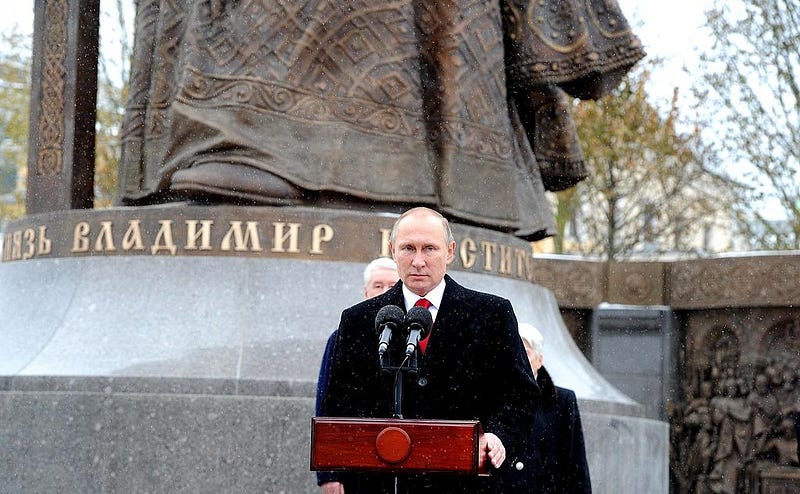
In his third decade in power, people who have known him say Putin has transformed. He now considers himself the pivotal figure of the next millennium. When he unveiled a statue of Vladimir the Great, the Kyiv prince of the Middle Ages, outside the Kremlin walls in 2016, he alluded to this. Vladimir Putin considers himself to be the next Vladimir the Great, the tyrant who will restore the Russian empire to its former glory and move beyond its old borders to conquer Europe.
Putin’s plan to force the “oligarchs” to commit to his plans worked. Dozens of business tycoons were hit with heavy sanctions from western nations. In the weeks and months that followed, Russian oligarchs had their assets frozen and were banned from traveling to some countries. The Ruble went into freefall.
Some of Russia’s wealthiest have since pleaded with the West, offering Ukrainian money in exchange for being excluded from the heavy sanctions. They claim they have had neither the access nor the influence to affect Putin’s plans. The billionaire Mikhail Fridman and several other Russian businessmen have reached out to Ukraine to make this offer but to no effect.
Putin’s war has increasingly become a point of pride for the Russian president, and those who disagree with him (as well as their families) have increasingly been found to be dying of more delo, or “wet work.” Of course, some suicides are, in fact, suicides. Sanctions are having an impact, which may lead some people to depression or even suicide. But the numbers don’t add up, and the means of death are suggestive of assassination. The Atlantic has started to refer to the phenomenon as “Sudden Russian Death Syndrome.”
Pavel Antov, a wealthy executive and a man who had expressed a dangerous lack of enthusiasm for Vladimir Putin’s war against Ukraine, was found dead at a hotel in India just two days after one of his Russian travel companions had died at the same hotel. Antov is reported to have fallen to his death from a hotel window. Others have died of suspected poisonings, suspicious heart attacks, and supposed suicides. A remarkable number have fallen out of windows.
Gas-industry leaders Leonid Shulman and Alexander Tyulakov were found with suicide notes at the beginning of 2022. Then, in one month, three more Russian executives were found dead with their wives and children, in apparent murder-suicides. In May, Russian authorities found the body of a resort owner at the bottom of a cliff. A week later, the manager of a Russian gas company died in a home belonging to a Moscow shaman, allegedly poisoned with the venom of a toad. In July, an energy executive was found floating in his suburban St. Petersburg swimming pool with a bullet wound in his head.
A Latvian-born Putin critic fell from the window of his Washington, D.C., apartment, a mile from the White House—right before Ravil Maganov, the chairman of a Russian oil company, fell six stories from a window in Moscow. IT-company director Grigory Kochenov toppled off a balcony. On the French Riviera, a Russian real estate tycoon took a fatal tumble down a flight of stairs.
Perhaps some of these are bizarre coincidences. But all of them? In one year? That strains the bounds of credulity. Moreover, there is a long tradition of Russian security services removing players from the game. The tradition is to leave just enough evidence to sign their work without making it obvious enough to prosecute.
The collection of suspicious deaths in 2022, which continue to this day, are so brazen in their number and methods as to suggest a lack of concern about deniability. They are Putin’s way of warning Russia’s elites that he is too deadly to annoy. The point of eliminating critics, after all, isn’t merely to eliminate criticism. It is to remind the critics who remain what the price of voicing their criticism can be.
All this demonstrates, in a way nothing else can, that the “oligarchs” are not the secret rulers of Russia. They live at Putin’s whim, and he goes out of his way to remind them of that fact. They are not united. Many are directly controlled by him.
To go back to Aristotle’s categories: Russia was an oligarchy thirty years ago, but no more. Russia is a tyranny, and Putin is a Tyrant.
Thanks for reading! If you don’t want to miss a post, subscribe to always get my stories in your inbox. And make sure you can read every story on Medium by signing up for a membership that supports me and other writers.


