
More Democratic than Democracy
The Case for Sortition
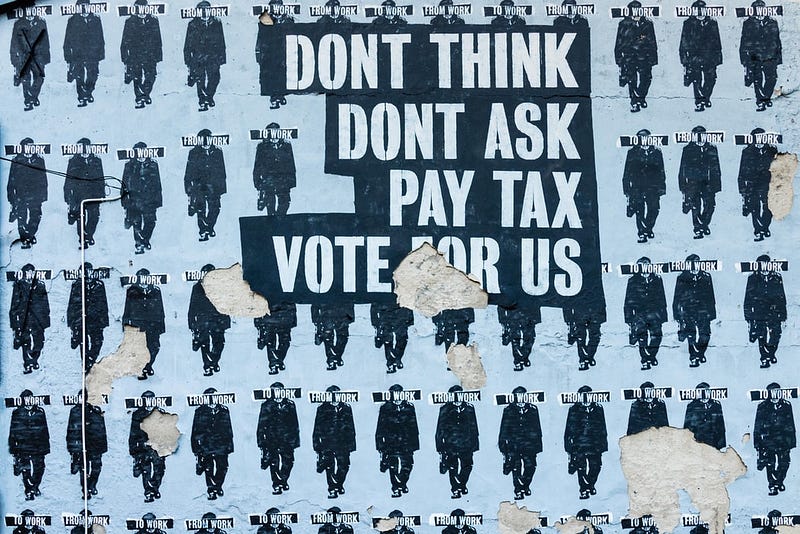
What is democracy? What is it for? Why should we care? Abraham Lincoln provided a summary better than any political scientist:
Fourscore and seven years ago our fathers brought forth on this continent, a new nation, conceived in Liberty, and dedicated to the proposition that all men are created equal…
…that government of the people, by the people, for the people shall not perish from the earth.
— Abraham Lincoln, Gettysburg Address (1863)
Government “of the people, by the people, for the people.” So how’s that going for you? For a government “of the people,” the ruling class has little in common with the people they claim to represent. The Congress is a millionaires club. While only 1 percent of Americans are millionaires, 66 percent of Senators are, as are 41 percent of the House of Representatives. In the Great Recession, the average American’s median household net worth dropped 39 percent from 2007 to 2010 while the median estimated wealth of members of the current Congress rose 5 percent, and the wealthiest one-third of Congress gained 14 percent.
“By the people” has been replaced by professional politicians and a class of technocratic civil servants. More than half of U.S. Senators have previously served in the House. And while actors, comedians, talk-show hosts, journalists, and various types of doctors have entered Congress, nearly a fifth of the 435 House members and 100 Senators previously worked in education and two-fifths were lawyers and business owners.
“For the people”? That’s debatable. The primary mission of a professional politician is to keep his job. How can it be otherwise? Even if he entered Congress with the best of intentions, he has to do what it takes to win and retain his post. This requires money, and that requires access and loyalty to Party and Political Action Committees (what, you think Mitch McConnell can line up all those obstructionist votes because his caucus likes him?) The Party caucus is where the decisions on issues and committee assignments are made, and to get along means going along. In the meantime, one must always keep the donors happy. In the words of one Congressman who refused to provide his name for the record:
This town’s a sinkhole of leeches. Everyone is trying to manipulate the political system to his own special advantage, often to the detriment of the country,
How ironic that we’ve become a bunch of out-of-touch insiders. Everyone bitches but most of us are easily reelected because the polarized public’s scared to death of the other party.
Much of this, of course, is related to the ignorance of the electorate. As Winston Churchill once observed, “The best argument against democracy is a five-minute conversation with the average voter.” But he also observed that democracy is ”the worst form of government — except all the others that have been tried.”
Ignorance is curable, at least to the extent one wants to make the effort. There’s no reason why the vast majority of voters can’t have at least a working knowledge of how laws are made. Details of issues, however, require specialization. Within Congress, members are divided into issue-oriented committees and within each area, they work to gain a reputation as a relative expert on a few items. This makes that Congressperson a voice that others will listen to and follow. But there isn’t much reason for any particular voter to learn more than the identity of his favorite party and the methods by which he can vote. After all, his is one vote out of millions. Even in his Congressional district, he is at best one vote out of tens of thousands. Anything beyond the minimum is probably not worth his effort.
So let’s teach the basics of civics education, and teach the basics of critical thinking. If we can manage that, we‘re probably getting all we can from the electorate. The structure of rewards makes anything more very unlikely.
But can we do better? Can we alter the prospective payoff for citizens digging into issues? Can we improve the prospective payoff for citizens putting in the effort to learn how government works and how to evaluate arguments? Can we give our representatives more time to think and negotiate, free from the constraints of fund-raising and fighting for their next term?
Probably not, if we are to count on our elected officials to make the necessary changes. However, with enough pressure — and a willingness to think radically — there is a way to better deliver a representative democracy by, of, and for the people. We can build a democracy better than any we have ever seen.
The first step is to eliminate elections — at least in the way we have been doing them up to now.
Sortition is one of the earliest forms of democracy. It goes back to Athens, where every citizen was expected to be an active participant in the important issues of the day, and sortition was the primary method for appointing public officials. Traces of it remain in the methods we use to select jurors. In operation, there is nothing as democratic as a jury, but jurors are not elected. They are selected at random from the large pool.
Nobody resolves to make a career of being a juror. For many, jury duty is an obligation we’d rather avoid. But in practice juries bring a healthy dose of common sense to the implementation of the law and a perspective that reflects the community as a whole in a way no other role in criminal justice can claim. The contrast to our professional legislature is stark.
What if we selected our legislators by sortition? There would be individual campaigns (although political advertising might be allowed as a tool to influence the attitudes of the population as a whole) and no dirty campaigning against a particular candidate. No requirement for citizens to register to vote, or to jump through whatever hoops might be set to reduce participation. Each legislator would be selected at random from the population represented, with selection constrained only by the required characteristics (age, citizenship, etc.) for the position.
Like juries, a legislature selected this way would have both the strengths and the limitations of the population as a whole. Politicians contend now that they try to construct a government “the reflects America” but it never happens. With sortition it's unavoidable. To be sure, the legislature would have both fools and geniuses, as well as a lot of average people. It would have both the courage and the cowardice you find in the population as a whole. It would have people who are driven by a sense of social responsibility, and people who are only there to collect a paycheck. It would have criminals and conmen, heroes, and exceptional role models. It would have alcoholics and sex addicts and religious zealots and ideologues.
In other words, it would have everything we find in Congress today. It would not have professional politicians, and that would shift the proportions of criminals and saints more in the direction of the saints. As the old joke goes, there’s something about someone who wants to be a Senator, who has that “fire in the belly” to campaign and compromise and do whatever it takes to get the job, that makes such a person uniquely unqualified to hold the position. (And who in their right mind would want to be president? But I’ll get to that later.)
Of course, none of this is possible with the Constitution we now have. But for the fun of it, let’s let our minds run free with a blank sheet of paper. What does selection by sortition do to our democracy? This is just one set of suggestions.
Selection would be by lottery, from a list of all citizens believed to be qualified to hold office. Imagine “election night.” It would be less like the tedium we now have, with late polls and hanging chads and allegations of fraud. To be sure, we wouldn’t have the excitement of waiting up all night to see if our favored candidate had won his razor-thin margin. It would be like a national PowerBall, and the ratings would be spectacular as everyone watched to see if someone they knew — or themself — had been selected for Congress. The press wouldn’t be waiting around for concession speeches. They would be researching, locating, tracking down, and setting up cameras at the front doors of sites across the county: townhomes, farms, apartments, hospitals, homeless shelters — they could be anywhere (except a prison). People with shocked expressions would fill our television screens. Social media stars would emerge overnight.
Just like with jury selection, some people won’t be physically capable of doing the job or have other obligations that make it impossible to do or won’t actually meet the legal standards for the position. A few might turn it down because it would mean a loss of income. But the base salary of a member of the Senate or the House of Representatives is $174,000 per year, minus taxes and Social Security. Positions of higher responsibility are selected by the Congress from among themselves, and they are paid accordingly: $223,500 for the Speaker of the House, $193,400 for the president pro tempore of the Senate. In addition, each member receives a package of benefits including an annual office allowance, travel allowance, healthcare, pension, free parking, and payment to his family equal to one year’s salary in the event of his untimely death. So for most people, this would be considerable, if temporary, increase in pay. Anyone who turns down the job claiming financial hardship is probably someone we don’t want, anyway. As reports come in of people who aren’t going to go to Congress, new lottery selections would be made to fill those seats.
There would be no Congressional districts. Instead, selection would be from anywhere in the country, entirely by chance. Random selection means members would be distributed across the country. Public forums, for discussion of national issues and local concerns, would be arranged by each Congressperson at locations close to their homes. No districts mean no Gerrymandering of any kind. We might want to select Senators two to a state, at random, but it would be better to have Senators selected by members of the House from among their number, once they’ve had enough time to determine who is and is not capable of handling the responsibility. There would be elections of 500 members of the House every two years, and after the first year has passed one-third of the seats in the Senate will be open to being filled by the House. There will be no opportunities for reelection in either body, and the odds of someone being randomly selected in the lottery twice are so low that everyone can ignore the possibility. There might be employment opportunities in D.C. after a term is completed for someone who has served with distinction, but since the turnover between Congresses would be total and no contributions could be allocated to politicians to help with their reelection, any lobbying would be more a matter of distributing information than buying favors. And arranging corruption takes time: a completely new House every two years would be more honest than this country has ever seen.
Political parties might develop, but without the partisanship the present system selects for. More likely there would be regional and issue-oriented coalitions, always subject to renegotiation and changing alliances. Research indicates that randomly selected legislators improve both the general efficiency of the body and the social welfare it produces.
Government by sortition would produce a legislature that better reflects the conditions and interests of the population as a whole. Biases in race and gender would be reduced or eliminated. There would be greater fairness, more empowerment of average people, and better decisions. Greater cognitive diversity means that more perspectives will be considered, and less ego means more cooperation will emerge. A set of randomly selected persons tends to perform better than the sum of the best individual problem solvers. In other words, “diversity trumps ability” and collective accuracy equals average accuracy plus diversity.
So what of the president? Should he be selected at random from among the population as a whole? That runs the risk of catastrophic failure, although it would also make disasters like the Trump administration much more unlikely. Here, we may be able to adapt a Constitutional idea that has otherwise outlived its usefulness. The House plus the Senate could serve as an “Electoral College” to select the president from among the members of the Senate. In fact, to do this would push ambitious Senators to do their best work, for the president would logically be most likely selected from Senators in the latter years of their term of office. The president would be someone selected by a joint session of the House and Senate on the basis of personal experience by people who know the potential candidates best. Here, there would be a variety of campaigning, but it would be of a very select and informed audience, and the selection could be exciting and surprising. We should expect multiple ballots and shifting coalitions similar to what we used to see in old-style presidential nominating conventions.
While Socrates and Edmund Burke opposed sortition on the grounds that it would not select the best persons for a job, nothing produces philosopher-kings. Democracy tends to lead to improved outcomes, and Aristotle, Plato, and Herodotus all considered sortition to be the highest form of democracy. Lombardy used it in conjunction with elections from the 12th to 18th century. Florence applied it during the republican periods. Switzerland used it to prevent corruption in the selection of some mayors. Variations of sortition are supported today by some libertarians, Marxists, anarcho-capitalists, and political scientists around the world.
It’s a good time to finally create a democracy “of the people. by the people, and for the people.” The first step is to eliminate elections.