
White Women’s Weaponised Tears?
Is it the height of privilege to define something as “triggering” and does that mean it must NOT be heard?
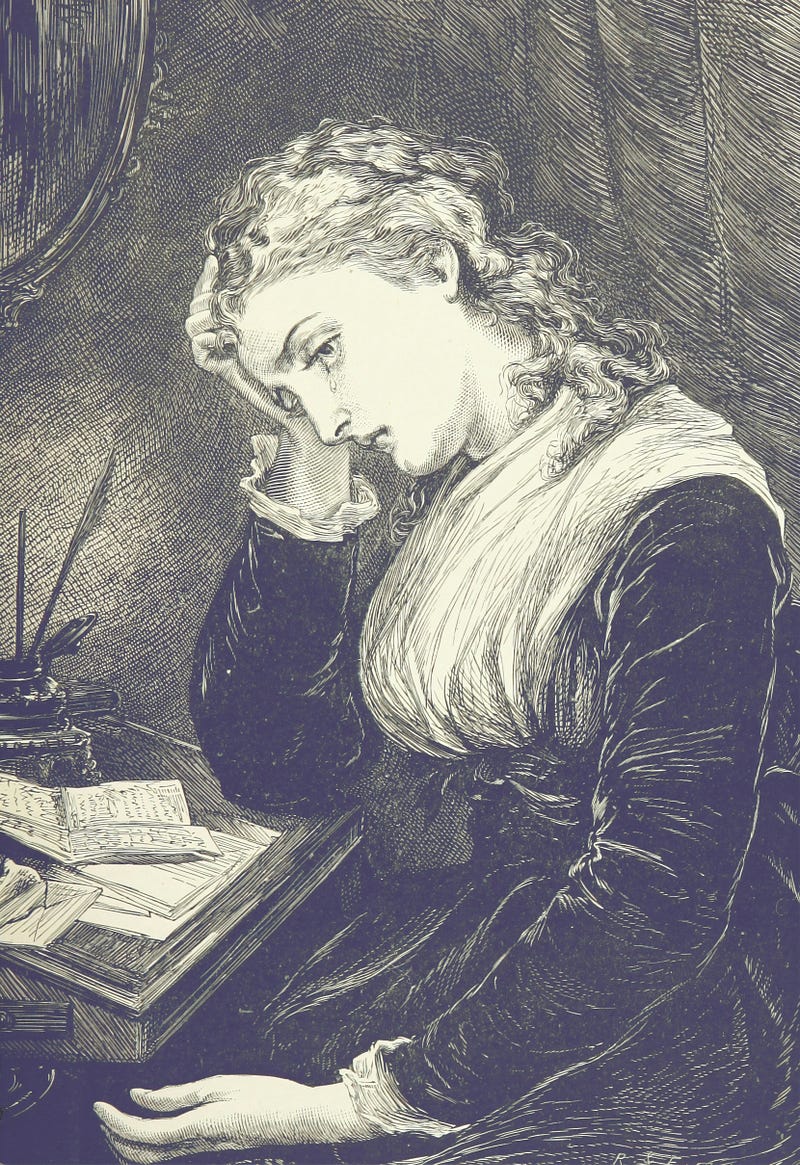
A Short Dialogue Articulating the Unspoken at a Creative Writing Event
What I (as a White woman) choose to give my attention to, and when I do so, must be at MY convenience, when I decide I feel strong enough, and when I WANT to hear about XY or Z… then and only then, are you allowed to mention that which is triggering for me.
You say you are a democracy, with the Mother of all Parliaments, so listen to me, when I tell you what is being done in your name, with your taxes in Palest…
That may be so, but still, I will decide when I am ready, and you -BROWN/BLACK/MAJORITY WORLD woman, have no right to speak, until I am ready to hear you.
But…
How dare you try to tell me something that I don’t want to hear! It’s triggering. Didn’t you hear the tutors saying, don’t mention what is triggering or at least give us a warning so we can choose to leave the room because it can be too painful?
But, there are those living the horror, the pain, the suffering , the realities which…
Listen, it is my right to choose what I allow in my world. It’s my right to protect my mental health…
OK… so their oil and their olives that are in your world… their succulent Jaffa oranges and …
It’s my right, to only allow what I can manage…
What you can manage, at your convenience? So it’s not your moral responsablity to see under what conditions you are enabled to lead your comfortable life, full of conveniences brought to your doorstep from afar. The Yemini are getting bombed again… so you can have your exotic fruits in the middle of winter, and your Amazon deliveries from China… Yet under U.K. law, if you receive stolen goods, goods taken by force, I believe you become party to a crime.
Excuse me, I pay for everything I buy…
Maybe what you buy wasn’t even up for sale, or at least not on the terms that were imposed, at the point of guns. What if the land that your Jaffa oranges come from, was stolen at the point of guns and grenades, the soil was rendered red with the flow of the owners’ blood?
I don’t want to hear this… you think that makes me a bad person?
Well… irresponsible, yes… and
I don’t care.
Then middle-aged white woman bursts into tears, gets up and rushes out of the room. The white woman tutor, younger than she, quickly gets up and follows her out to comfort her.
++++++++++++++++++++++++++++++++++++++++++++++++++++++++++++++
The above is an imaginary conversation, folks. The conversation itself didn’t happen. But yes, a woman did leave a creative writing group in tears. And one of the tutors did follow her out.
They had to get away from me! I was the fifth in line to read out something I wanted to share. I explained why I love Sinead O’Conner — her voice and her activism and her version of on song whose melody had been playing in my mind in recent weeks. And I then read out my poem/satire titled, “Don’t Cry For Us Ashkenazis.”
It was at a small gathering of people interested in creative writing. The day had been very pleasant, but by the end of the last session, in which we were sharing anything we’d written before or during the course, I was the only Brown person there; everyone else was native British, and white. I think that is kind of relevant, to a degree.
It was the first time I read the poem aloud to a group of people, and my voice was definitely shaky.
The two tutors responded briefly. Suzy, the silver-haired woman to my left said some positive things, but then the middle-aged woman opposite me, frowned. She said it bothered her a lot and she’d rather I had not read it… The poem was “triggering.” With that she burst into tears and dashed out of the room.
I looked at her receding behind in dismay as the sound of a chair being scraped back came from my right and then the young female tutor, Sarah, came into my line of vision as she rushed past to go and comfort the “triggered” middle-aged white woman. Let’s call her Dierdre.
After a few moments I got up and followed them out. I felt kind of responsible, I suppose. As I joined the two women in the corridor, for a moment, I felt at a loss about what to say…
“Can I give you a hug?” I asked.
I stepped forward and gave Dierdre a hug and she sort of allowed it, but she also sort of stepped back, turned away, and rushed into the toilets behind her.
I turned towards the tutor, Sarah, with her long straight, glossy blonde hair…
She must brush it a lot to get it looking so sleek, I absentmindedly thought… meanwhile I never seemed to have time to comb my long hair and would hide it under a hat.
Sarah cleared her throat assertively.
“See, this is why we said yesterday, you know, to mention first if something might be triggering, then people can decide to stay in the room or not.”
Was I being berated, in that cool, even-toned way that middle-class white women have?
“Well, I obviously um… I think maybe it’s needed, you know, to share thoughts and emotion about what is happening in Gaza, rather than feeling isolated…”
Akwardly, I retreated back to the classroom where the rest of the group were continuing their discussion of another text.
Sarah and Dierdre joined a few minutes later. I noticed the curly-haired woman next to Dierdre avoided my eyes and a few minutes later, she reached over and wrote something in Dierdre’s open notepad. Dierdre then responded and jotted something down in reply.
Was I being treated as the baddie? Excluded, and now feeling a bit ostracised?
www - writes while walks articulates how this attitude of controlling what we allow ourselves to experience can actually be damaging for our well-being in the long run. She explains how this growing trend has taken root in colleges and universities and mental health services:
Today, I want to discuss the trend we’ve become accustomed to in recent years, both online and in homes, shops, bars, or hotel decorations: the Only Good Vibes! We’ve all seen the “only good vibes” slogan that has become very famous in recent years. This is an “ideology” that has gained popularity, promoting positivity and avoiding anything that could bring us down.
Here is the full article which is well worth a read.
Meanwhile, let’s return to the creative writing group at the university.
Now feeling detached from the group, I thought to myself, I followed Dierdre out and she could have let me give her a proper hug and we could have shed tears together about the horrors being perpetrated in Gaza… it could have been a moment of shared humanity… instead, underneath her tears, she was simply angry that I had shared a poem that was “triggering.” And she rejected me, despite my concern and attempt to console and connect.
I felt really heavy inside… very alone. The pleasantness of the day had evaporated.
I found myself in a cloud of self doubt. Perhaps I should not have read all of the poem, missed out the gruesome part about what’s being done to children by the Israeli Occupation Forces and some ghoulish medics?
I also felt a rising anger as in… why shouldn’t the white citizens of White Empire, know what their taxes a being used for?
I sighed, shifted in my chair, and wondered whether I should leave. But it was easier to just stay there and say nothing further. But isn’t this how White Empire find us acceptable- small and invisible or else saying only what they want to hear — the likes of Suella Braverman, Nicci Haley, Obama and Rishi Sunak. Such are the acceptable presences at the table of White power.
This all happened in the final half hour or so of the day, so thankfully I did not have to sit there for long before the tutors wound up the session.
I gathered up my coat and notebook and things slowly, kind of hoping that Sarah — or the male tutor, would come and have a chat with me — I mean, didn’t my feelings count? But since returning to the classroom and sitting opposite me, she kept her face averted and made no effort to reach out to me, after 5.00pm when the course formally ended and she and the other (male, white, older) tutor started packing up their things, niether of them looked my way let alone came over to check in on how I was feeling after all the drama.
Suzy, the white woman next to me, who’d expressed appreciation for the “triggering” poem, accompanied me to the car park. I was grateful. And it was really good to hear her say some more affirming, appreciative words.
“You should get that poem published,” Suzy smiled encouragingly.
We had already exchanged numbers and so I hope to be in touch with her soon.
Once in my car, I found myself very very tired, but emotionally, kind of numb.
Such a luxury to cry in public, I thought. I’d taught myself not to, long long ago…
For more stories about social justice, follow Fourth Wave. Have you got an essay or poem that focuses on women or other disempowered groups? Submit to the Wave!