avatarHarry Stefanakis

Free AI web copilot to create summaries, insights and extended knowledge, download it at here

1781

Abstract

they were betrayed. He gave the head monk one hour to choose who would be killed. Whom did he choose?</i></p><p id="e261">Most people, especially givers, will say he chose himself. Self-sacrifice is a common trait of givers, especially burned-out givers. When I say this is incorrect, people usually try to get logical and assume that it is either the sick or old monks who are near death anyway. Some, for reasons you can probably guess at, will say the annoying or lazy monk. The answer, however, is that the head monk would NOT choose. His compassion was equal for all <b>including</b> himself. Thus, there was no choice that could be made.</p><p id="7c21">I share this story with clients who need to see that they are just as worthy of care and compassion as others and that compassion for themselves does not diminish their kind and generous spirit but enhances it. Practices in self-compassion help and they can be quite simple. For example, Kristen Neff offers a <a href="https://self-compassion.org/exercise-2-self-compassion-break/">Self-Compassion Break</a> exercise that can be done in minutes.</p><ol><li>You name the experience (e.g., Say: “This is a moment of suffering” I suggest doing this on the in-breath)</li><li>You humanize it (e.g., Say: “Many people have this kind of experience” -on the out-breath)</li><li>Release through Loving-Kindness (e.g., Say: “May I be kind to myself” in-breath and then “I let this go” on the out-breath)</li></ol><p id="2916">I suggest you do this a minimum of five times and repeat as often as you need.</p><p id="f9fb">May you be well. Thank you for reading. Please feel free to comment.</p><p id="7bdc">If you like this, please check out some of my other articles:</p><div id="9145" class="link-block"> <a href="https

Options

://readmedium.com/fierceness-playfulness-loving-kindness-e4f4605abf0f"> <div> <div> <h2>Fierceness, Playfulness, Loving-Kindness</h2> <div><h3>A Triptych Haiku</h3></div> <div><p>medium.com</p></div> </div> <div> <div style="background-image: url(https://miro.readmedium.com/v2/resize:fit:320/1*JwjP23qYeyFNpDqA6iKE6A.jpeg)"></div> </div> </div> </a> </div><div id="2c5b" class="link-block"> <a href="https://readmedium.com/lemonade-fertilizer-and-the-art-of-reframing-170ed681a71d"> <div> <div> <h2>Lemonade, Fertilizer, and the Art of Reframing</h2> <div><h3>The alchemy of perspective</h3></div> <div><p>medium.com</p></div> </div> <div> <div style="background-image: url(https://miro.readmedium.com/v2/resize:fit:320/1*cRmjN9c3T9YKFwnOF-hEUA.jpeg)"></div> </div> </div> </a> </div><div id="25ad" class="link-block"> <a href="https://medium.com/@drharrys/membership"> <div> <div> <h2>Join Medium with my referral link - Harry Stefanakis</h2> <div><h3>As a Medium member, a portion of your membership fee goes to writers you read, and you get full access to every story…</h3></div> <div><p>medium.com</p></div> </div> <div> <div style="background-image: url(https://miro.readmedium.com/v2/resize:fit:320/0*PAxX3WjZxwUEiw4e)"></div> </div> </div> </a> </div></article></body>

Which Monk Should Die?

A Lesson in Self-Compassion
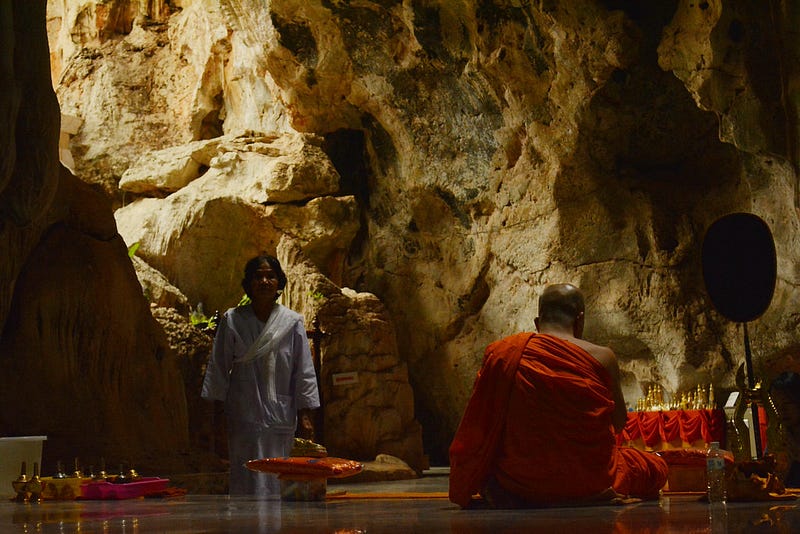
“Monk in cave temple” by theliidude is licensed under CC BY-ND 2.0

Part of any journey into creating healthy boundaries and rebalancing energy involves developing compassion for oneself. Some of my clients can easily show compassion to others but not to themselves. In these cases, I sometimes share this moral dilemma story I heard once about a group of monks.

In this story, the monks decided to head out on a retreat together. There was the head monk, a monk that was his best friend, a very old monk, a very sick monk (who was near death), a lazy monk who didn’t always do his fair share, an annoying monk who disagreed with everyone about everything and a very young monk who had not yet achieved much knowledge or wisdom.

The monks found a cave for their retreat and settled in only to be discovered by a group of bandits who were planning to use that same cave. The leader of the bandits wanted to kill the monks but monks are very good at talking. The head monk convinced the bandits not to kill them on the promise that they would remain silent about the bandits.

The leader of the bandits however indicated that one of the monks needed to be killed to show that the bandits meant business and that there would be consequences if they were betrayed. He gave the head monk one hour to choose who would be killed. Whom did he choose?

Most people, especially givers, will say he chose himself. Self-sacrifice is a common trait of givers, especially burned-out givers. When I say this is incorrect, people usually try to get logical and assume that it is either the sick or old monks who are near death anyway. Some, for reasons you can probably guess at, will say the annoying or lazy monk. The answer, however, is that the head monk would NOT choose. His compassion was equal for all including himself. Thus, there was no choice that could be made.

I share this story with clients who need to see that they are just as worthy of care and compassion as others and that compassion for themselves does not diminish their kind and generous spirit but enhances it. Practices in self-compassion help and they can be quite simple. For example, Kristen Neff offers a Self-Compassion Break exercise that can be done in minutes.

  1. You name the experience (e.g., Say: “This is a moment of suffering” I suggest doing this on the in-breath)
  2. You humanize it (e.g., Say: “Many people have this kind of experience” -on the out-breath)
  3. Release through Loving-Kindness (e.g., Say: “May I be kind to myself” in-breath and then “I let this go” on the out-breath)

I suggest you do this a minimum of five times and repeat as often as you need.

May you be well. Thank you for reading. Please feel free to comment.

If you like this, please check out some of my other articles:

Life Lessons
Compassion
Self Compassion
Psychology
Positive Psychology
Recommended from ReadMedium