
Where the Wild Goose Goes
Life lessons I learned from Nick and Isabel
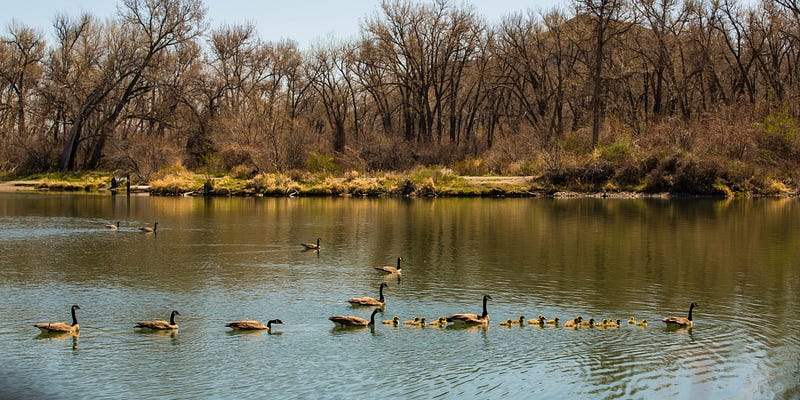
Nick and Isabel came to Bufflehead Pond Farm. My garden watches.
Ever since I was a little kid on a big farm, geese have fascinated me. So regal. So unapproachable and mysterious. Such prolific poop machines. My dog is fascinated with them too, and she perfumes herself daily with their droppings when they’re in town.
That’s the bad news. The good news is they literally mow our grass for us, fertilizing and aerating at the same time. But that’s not why I love and admire them so much.
My dear friend Betsy used to live nearby where Nick and Isabel had presided over the wetlands at the bottom of the slope of her property. One day last year as we were enjoying a little libation on my deck overlooking the pond, two proud Canada geese made a dramatic splashdown, looked around, and decided it was good. Betsy recognized them immediately as the young pair who had once reigned at her old place, Redtail Roost.
Nick and Isabel quickly decided Bufflehead Pond Farm would be suitable for raising a small brood, probably their first, and they stayed.
For several months it became nearly impossible for me to accomplish anything beyond the minimum requirements of remaining alive. Pretending to ignore the humans, Nick and Isabel proceeded to teach us everything a human should know about how to get along in society and to raise good kids.
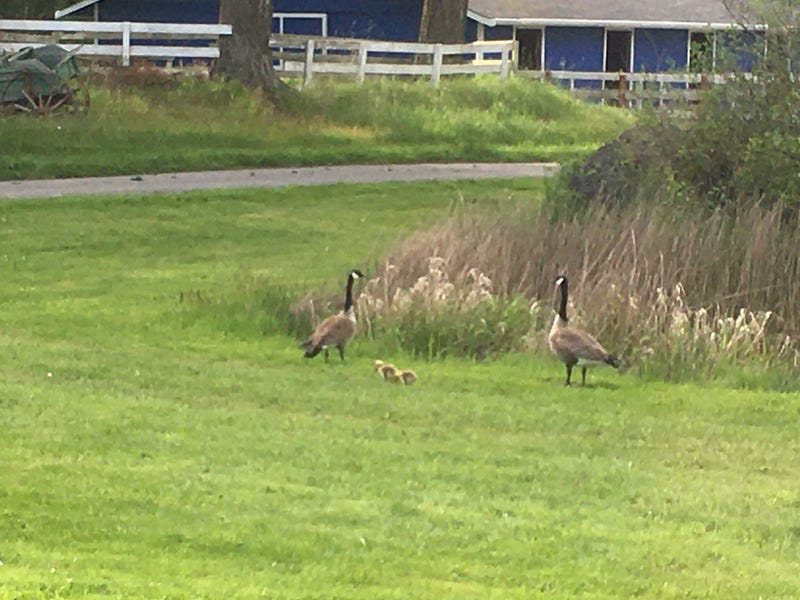
Rule #1: When one goose eats, another goose watches. In a goose family, all but one can feed at the same time, allowing one sentry to keep an eye out for approaching trouble.
Rule #2: Whatever the size of the flock, interlopers are not allowed in. Nick and Isabel were a flock of two, until they were four, having driven off all friendly and unfriendly approaches from dozens of other geese.
I watched as a large flock (maybe 30 birds) took over the pond one day… but not for long. Nick went after their leader, chasing him, neck down and straight out, hissing and honking, until finally the pond was empty again, but for themselves.
No longer Bufflehead Pond, it became Nick and Isabel’s pond. And soon, their little family appeared, Phillip and Elizabeth.
Rule #3: Keep the children between the adults at all times. Coyotes, domestic cats and dogs, eagles, and especially those pesky humans, all are deadly threats.
Rule #4: Be patient. Show the youngsters how to feed themselves. Stand watch while they eat. And eat. And EAT!
Rule #5: Cover the earth with goose manure. And the dock. And the road. And fill the pond with it until it creates a poop-tsunami that smothers the dock and the road, and causes us to shovel a path to our own front door.
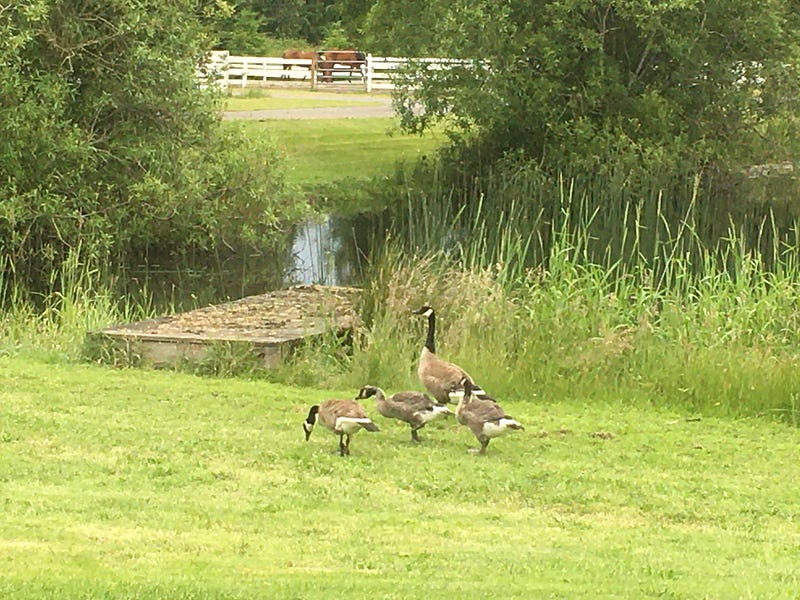
Rule #6: When it’s time to migrate north, break your host’s heart by leaving suddenly without saying goodbye.
Rule #7: Return in January, with the kids, and pretend not to notice your host hiding in her garden sobbing with happiness.
In conclusion, please treat yourself to a video of my little goose family doing their little goose doings, and perhaps you’ll understand why nothing ever gets done around here.
P.S. Nick and Isabel returned this week and they brought their two grown offspring with them! They pretend not to know I’m crying with joy, but I know they know.
And one last thing. As a kid on the farm in the 50’s, I fell in love with Frankie Laine’s music, probably because my dad loved it so much. The following poem is for and about my dear dad and the Laine song he played constantly:
Where the Wild Goose Goes for my father, De Ward Ritchie, 1917–1996
From snow-covered tundra to grassy wetlands from cloud-capped mountains to hot desert sands
To stay in one place to never leave home a decision we face to stay or to roam
Roots we put down reach deeper with time tie us to ground forbid us to climb
Like grass to grasslands like cottonwoods to plains like a turtle to wetlands like a fox to its den
With wings one can soar dive deep into sea punch holes in the sky defy gravity
“How I’ve loved your embrace, so familiar your face. This wandering fool must fly away — cannot linger another day.”
“You’ll see a shadow pass overhead and find a feather beside the bed.”
Adelia Ritchie, PhD, 2021, Inspired by “Cry of the Wild Goose,” Frankie Laine, 1950
Thanks for reading! And if you’re curious about what any of this has to do with woodworking, maybe someone out there will be inspired to build another dock for me. The one I have is buried under a mountain of you know what. :D
And speaking of poop, you might enjoy this one too:


