
SELF
Where Once I Was Afraid of the Dark, We’re Now the Best of Friends
How opening the door to my dark side changed my life
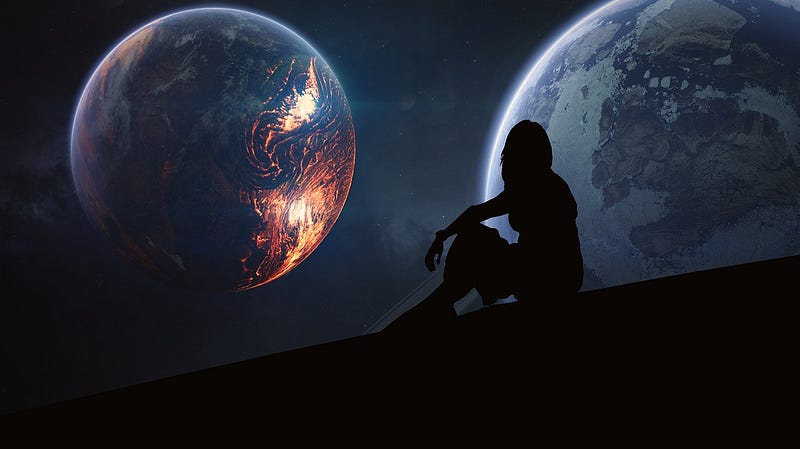
I never knew the door existed until depression hit me in my early 40s.
There I was, thriving for nine years in the corporate realm after my divorce — yet I felt empty.
I was unaware of the storm building.
Nor of the unconscious questions whirling inside:
- Was this what I wanted my life to be?
- Was I playing a part to fit in?
- Why did I feel inadequate despite my success?
- Who am I?
In the world of duality:
- Our personality (what is visible to our ego) displays our conscious beliefs and values.
- Our shadow self (the invisible) is where suppressed pain, anger and fear hide in the unconscious, and treasures yet to discover.
Without integrating these two sides of our psyche, we reach an existential crisis of questioning our role in life.
As I did.
Jung called depression the ‘dark night of the soul’ — a period of absolute dread, hopelessness, and self-loathing.
“Dark night of the soul sounds like a threatening and much to be avoided experience. Yet perhaps a quarter of the seekers on the road to higher consciousness will pass through the dark night. In fact, they may pass through several until they experience the profound joy of their true nature. There is no coming to consciousness without pain. People will do anything, no matter how absurd, to avoid facing their own soul. One becomes enlightened by making the darkness conscious.” — Carl Jung.
I passed through four dark nights over a six-year period.
My therapist was a wonderful woman who helped me discover my true nature. From studying Jung to integrating the positive aspects of my shadow, healing my wounds, and through talk therapy, I became me.
I developed intuition, resilience and creativity, the ability to speak my mind without fear of rejection, no longer lacked self-esteem and — learned to love imperfect me!
The first thing I do on waking is write my thoughts and feelings in my daily journal. This helps me check if I’m going off course and take corrective action. I’ve been free of depression for twenty years!
Let me end with a poem I wrote in 1997, three years before my final dark night.
The Search
remembering is not calling up the past but a delicate step, tentative, curious, into the darkness lifting the blanket of reason peeping between the sheets of conditioning
I let the glowing warmth of origin touch my face fill my heart sing in my bloodstream tickle my feet
digging and scratching to uncover the buried treasure that has always been there
Thank you for being here.
My response to this week’s prompt:


