
Where Have All The Real Men Gone?
A brief history of masculinity reveals how we got here.
I am a woman looking for a strong man. But there are days I no longer know what that means. I am not the only one who is confused. We have never been in a time in history when masculinity is so murky.
Real men were once breadwinners. But before the Industrial Revolution, the concept of “breadwinners” didn’t exist. Products like bread and other essentials came out of a shared division of labor between men and women working in agriculture. Then factories moved farm labor to city labor, and women were relegated to the kitchen. We no longer worked side by side, and when we did, we were not given the same wage.
In the Victorian era of manliness, real men were gentlemen. He gallantly walked on the left side of his lady to protect her from passing carriages and followed strict courtship rituals. And if his principles were questioned, he headed to the dueling field. Real men were honorable men.
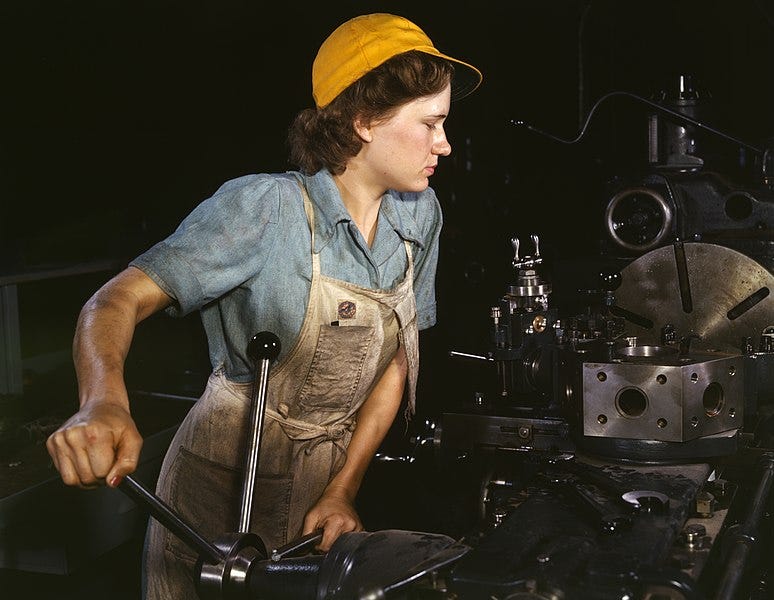
That honor spilled into WWI and WWII. Our boys became soldiers, and women filled the spaces men left behind. Factory doors flung open to women, and Rosie the Riveter flexed her biceps to prove that women could handle men's labor.
But when women moved into the spheres of men, they could argue for the rights of men. We were doing the same work without the same freedoms. The nineteenth amendment was inevitable, and men were forced to make room for women.
The backlash was also inevitable.
The 1950’s response to changing gender norms was the chain-smoking, weather-beaten Marlboro man. He drank his coffee black, rode his horses hard, and smoked his filtered cigarettes. “Where there’s a man…there’s a Marlboro,” read the tagline.
Before the Marlboro man swaggered into mainstream culture, filtered cigarettes were smoked only by women. The entire hyper-masculine campaign had one purpose — to get men smoking more effeminate filtered cigarettes.
And it worked. We took a toxic product (cigarettes) and branded it with manliness. Unfortunately, in that marriage between nicotine and masculinity, men went down hard in the divorce. Once we understood nicotine was killing our cowboys, it was too late. Real men died of lung cancer. Now, the rate of lung cancer in men is still greater than it is for women. Thanks, Phillip Morris.
The Marlboro man damaged men in other ways — real men didn’t care about their health. Self-care became girly. There’s a reason why married men still live longer than single men. Married men have a partner who cares about their health even though they have been told repeatedly that self-care is unmanly.
In the 1960s, second-wave feminism ushered in reproductive rights — the key that unlocked the door to female autonomy. When women had power over their bodies, they were released from the shackles of domesticity. A woman was no longer a baby-making vessel.
Men responded to second-wave feminism with the 1970s version of the real men. Writer Jack Nichols coined the “masculinist mystique” to temper male dominance into more empathic experiences. Men were taught that “no means no” and wage equality in the workforce benefited everyone.
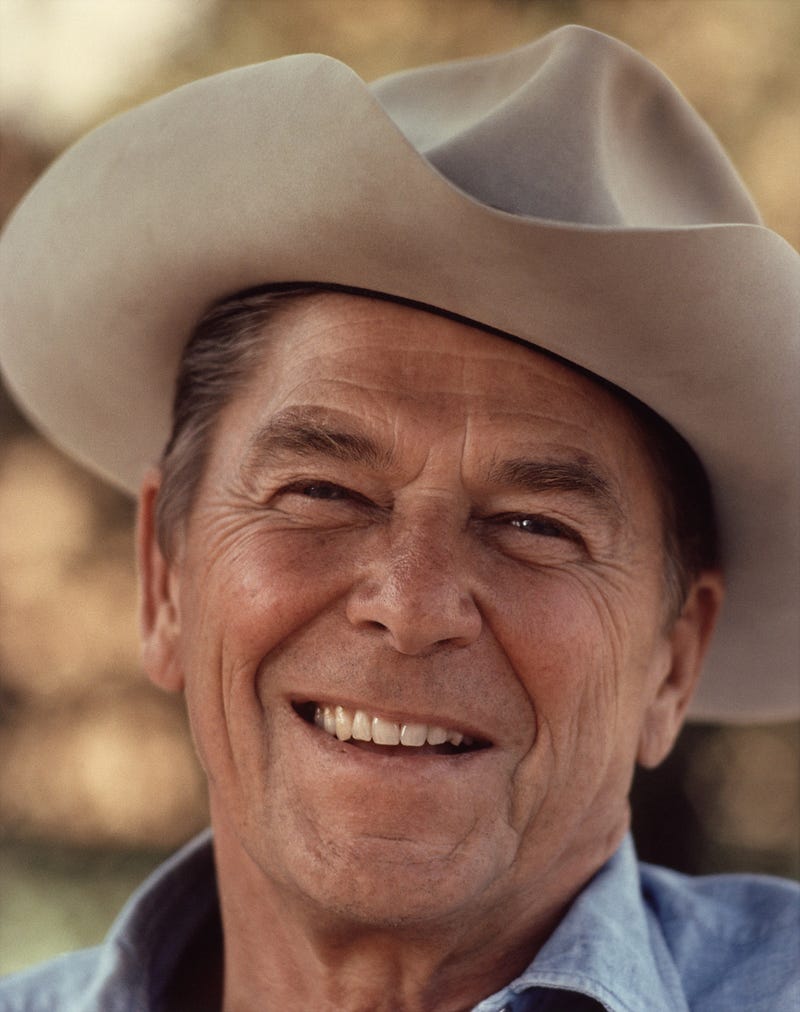
The Reagan years circumvented the new empathic male. A real man was Clint Eastwood with a dash of Hollywood suave. Real men didn’t complain. They seduced.
In the 1990s, Robert Bly published Iron Jon and encouraged men to go off into the woods and reconnect with their masculinity. Bly wrote, “…women began to desire softer men. It seemed like a nice arrangement for a while, but we’ve lived with it long enough now to see that it isn’t working out.” Rambo movies got really popular in the 90s. And as a result, men struggled to reclaim the definition of masculinity they had been spoon-fed by the media.
Science jumped on the pile-on in the 2000s. Or, more precisely, pseudoscience. Want to know the book that hurt feminism more than any other book? — Men Are From Mars. Women Are From Venus. That book argued that there are biological differences between female and male brains.
There’s only one problem —recent research has found that none of it was true. Neuroscientists now know that the only difference between a baby boy's and a girl’s brain is brain volume. But Mars vs. Venus gave a playful wink to machismo. Boys will be boys. It’s just the way their brains work. Good luck uprooting that neurosexism.
Today we know that men’s and women’s brains are not different. Due to neuroplasticity, our environment changes our gray matter. It’s the old nurture vs. nature debate that results in heightened gender differences.
For example, on average, men have stronger spatial intelligence than women. On average, women are better at reading emotions. What is never discussed in these generalizations is how our brains got there. Boy’s toys and play are all geared toward spatial awareness — blocks, legos, gaming. Girl’s toys are geared for emotions — dolls, animals, and crafts. And don’t get me started on how differently parents raise boys vs. girls. I catch myself stereotyping my kids too.
How we use our brain is who we become. What will men become in the coming years?
Real Men Today
Today, the definition of masculinity continues to stir debate. We tell boys to “man up” and “act like a man.” But when we use these commands, we are not telling a boy to be a man. We are telling them to be a certain kind of man — one that does not cry, complain, or show emotion.
When was the last time you heard someone tell a girl to “woman up” when she emotes?
It’s no wonder why some boys never become men. How can you feel like a man if you were never told how to act like a man?
The answer lies in virtue, humility, and kindness. We do have positive role models — Abraham Lincoln, Frederick Douglas, and Bruce Lee are a few of my favorites. These men had the courage to charge into the fray and carve out a new definition of masculinity.
Unfortunately, today’s role models have scorched the earth in their zero-sum beliefs. Young men follow Jordan Peterson — the curmudgeonly grandfather of the meritocracy. He tells men to “clean their room” and “if your life is not what it should be, then it is your fault.” Forget that some men don’t have a room to clean.
Meanwhile, Brené Brown teaches men that it is ok to be vulnerable. Have a good cry, boys, and remember that “staying vulnerable is a risk we have to take if we want to experience connection.”
It’s no wonder why men are confused and even more disconnected.
Unfortunately, not all men are on board the Brené Brown empathy train. You won’t find the manosphere celebrating the beta male. Perhaps because they are not seeing their role models embrace this new definition of masculinity with a side of vulnerability.
Instead, they turn to knuckle draggers like Joe Rogan. There’s a reason why the incel community loves Joe. At the end of the day, incels are just a bunch of scared, lonely, privileged white dudes who feel marginalized by women.
Peterson tells them they have been marginalized because they are lazy and don’t clean their rooms. But Joe tells men that women are to blame.
In one rant, Rogan exclaimed, “Ladies, you make people. You make all the people. And you want to be president, too, you fucking greedy bitches? What else do you want? You want bigger dicks than us?”
No, Joe, we don’t want bigger dicks. But we do want fewer dickheads in the world.
Joe Rogan’s flavor of masculinity is not what I am personally looking for in a man. But in the last four years, masculinity took a hard left turn into meanness. We had a leader who turned masculinity into mocking disabled reporters, gassing peaceful protesters, and inciting violence.
Now, real men burn out their retinas staring at eclipses, and they certainly don’t wear a mask to protect their neighbors from a deadly virus. Real men harm. hurt. harangue.
Remember when the Twittersphere couldn’t stop talking about Trump slipping on a wet, downward incline? Would that have been newsworthy if Obama had slipped? Hell, no. Obama was confident enough in his manhood to order Dijon mustard on his burger and endure the onslaught of the Fox “news” talking heads mocking him for his condiment choice.
Apparently, real men don’t put mustard on their burgers.
Real men also don’t fall. Or fail. Or so they are told. That lack of hubris almost upturned an election.
“Men’s greatest weakness is their facade of strength, and women’s greatest strength is their facade of weakness.” — Warren Farrel
The term “toxic masculinity” is toxic to feminism.
Using terms like “toxic masculinity” doesn’t help this debate. We use the word toxic to describe a behavior that harms others. But when you couple toxic and masculinity, you create a label. And labels attack character, not behavior. People don’t have a desire to change when you attack their character. They have a desire to defend their character.
And before the man-haters castigate me for being too soft on men, no one can accuse me of not calling men out on their shit again and again. I have endured enough abuse from men that I should have hate in my heart. But I don’t. Perhaps it is because my father is a truly exemplary example of masculinity. Or perhaps the baddies make me appreciate the good guys even more.
Or maybe I know hating men won’t make abusers abuse less. It certainly won’t tamp down misogyny. When does the act of hating bring about positive change?
Better yet, answer me this…Why do we have a term for men’s bad behavior, but we don’t have a term for good behavior? Why don’t we see “positive masculinity” in viral memes? Men are fighting the good fight. So why are they not being recognized with a catchy label?
Perhaps that is why we don’t know how to define masculinity. We stopped celebrating it.
“It is in the interests of both sexes to hear the other sex’s experience of powerlessness.” — Warren Farrel
The recent best-selling book I Hate Men is a perfect example of how we have polarized the debate. Hate is a strong word. And strong words have an equally strong response.
Unfortunately, the opposite of love is not hate. It is indifference. And that is exactly the response you will get from men when you tell them you hate them — they will care less about feminism.
It also misses the mark. The deepest misogyny is rooted not in hate but envy. The most threatening misogynistic terrorist group — the incel community — does not hate women. They envy women because women control their access to sex.
My grandma Ella used to say, “envy is the ugliest of emotions.” Grandma Ella was a smart lady. If she were alive today, she would demand to see more debates that don’t spiral into which gender has it worse.
Instead, we should understand each other’s experiences and discuss how to make both genders better.


