avatarPatrícia Williams

Free AI web copilot to create summaries, insights and extended knowledge, download it at here

2659

Abstract

<blockquote id="a092"><p>Terry Levy, in <a href="https://www.evergreenpsychotherapycenter.com/styles-adult-attachment/">Four Styles Of Adult Attachment</a></p></blockquote><ul><li>If you grew up in an environment where conflict was the norm, you believe that being surrounded by conflict is normal;</li><li>If you witnessed abuse, you believe abuse is normal;</li><li>If your parents manipulated you and gaslighted you, you become disconnected from your intuition and perception— and you believe these experiences are normal;</li><li>If your parents punished you every time you stood up for yourself, you eventually stop standing up for yourself — and you replicate this behavior in your adult relationships;</li><li>If you were taught to follow every rule regardless of your feelings and needs, guess what? You stay silent. You stay submissive, because your feelings have never mattered.</li></ul><p id="a995">Looking back now, it’s clear to me why I’d always get myself into incredibly toxic, unstable relationships that would never make me feel truly loved or accepted: because <b>I believed love was supposed to be unstable and unbalanced.</b> Because I couldn’t imagine a relationship that would allow me to feel unconditionally safe and loved.</p><p id="a4f9">I was literally accepting the love I thought I deserved.</p><h1 id="1287">Abuse Feels Safe When It’s All You’ve Ever Known</h1><p id="656c">I have a friend who’s been in an abusive relationship for years. Everybody can see how isolated she has become, and we suspect there’s physical abuse involved too.</p><p id="8b5a">In the beginning, it was very difficult for me to understand why she would let him treat her like this, or why she wouldn’t listen to anyone. It was also very painful to witness her losing her self-esteem in such a short amount of time.</p><p id="52fd">Now I realize she never had self-esteem to begin with.</p><p id="5216">We have both grown up in very rigid and emotionally unavailable environments, in which our parent figures were unable to model boundaries or emotionally regulate. Our feelings and emotional needs didn’t matter to them — all that mattered was that we followed their rules.</p><p id="bda1">We have both learned very early on that we were not allowed to stand up for ourselves, and now I can see how her upbringing has influenced her behavior in intimate relationships.</p><p id="6a37" type="7">She doesn’t believe she has the right to express herself. She doesn’t believe she deserves to be loved and respected — and she’s in a relationship that confirms and reinforces these beliefs.</p><p id="ffb6">Instead, she believes pain, anxiety, and submissio # Options n are part of relationships. She believes that being forced to ignore her own needs and priorities is normal — because that’s how she was raised.</p><p id="5aaa">In <i>How To Do The Work</i>, Dr. Nicole LePera says:</p><blockquote id="f93b"><p>“In instances of frequent boundary crossings, children may internalize a belief that such boundary crossings are part of closeness and maybe even love.”</p></blockquote><p id="14b8">This is why telling someone close to us to “just leave” their dysfunctional or abusive relationship doesn’t work. As ridiculous as it sounds, there’s a part of them who feels safe in the midst of pain.</p><p id="6680">They will only be able to leave once they realize that’s not how love is supposed to feel like.</p><p id="8889">Unhealthy relationships are not something we attract by accident.</p><p id="2ccd">We attract them because we were taught to have certain expectations regarding intimacy and emotional availability. We attract them because we expect people to silence our voice and ignore our emotional needs — just like we were silenced and ignored before.</p><p id="8546">Most importantly, we attract them because, on a subconscious level, we expect love to be unhealthy.</p><h2 id="cf6b">Thank you for reading! If you want to increase your self-awareness, learn how to meet your emotional needs, and finally prioritize your well-being, check out my Self-Healing Workbook! ✧</h2><div id="d980" class="link-block"> <a href="https://readmedium.com/the-hard-truth-about-family-dysfunction-f38d647f8891"> <div> <div> <h2>The Hard Truth About Family Dysfunction</h2> <div><h3>The only thing you can do is work on yourself.</h3></div> <div><p>medium.com</p></div> </div> <div> <div style="background-image: url(https://miro.readmedium.com/v2/resize:fit:320/0*p3st11Anz8KQSDgH)"></div> </div> </div> </a> </div><div id="cb6b" class="link-block"> <a href="https://readmedium.com/5-signs-you-have-a-wounded-inner-child-4d2f43bdcf19"> <div> <div> <h2>5 Signs You Have A Wounded Inner Child</h2> <div><h3>#2 You have a deep fear of abandonment (you have an insecure attachment style).</h3></div> <div><p>medium.com</p></div> </div> <div> <div style="background-image: url(https://miro.readmedium.com/v2/resize:fit:320/0*uaz69MPbw0l83R-f)"></div> </div> </div> </a> </div></article></body>

When You’re Raised In An Abusive Family, Abusive Relationships Feel Like Home

We cling to what we’re familiar with.
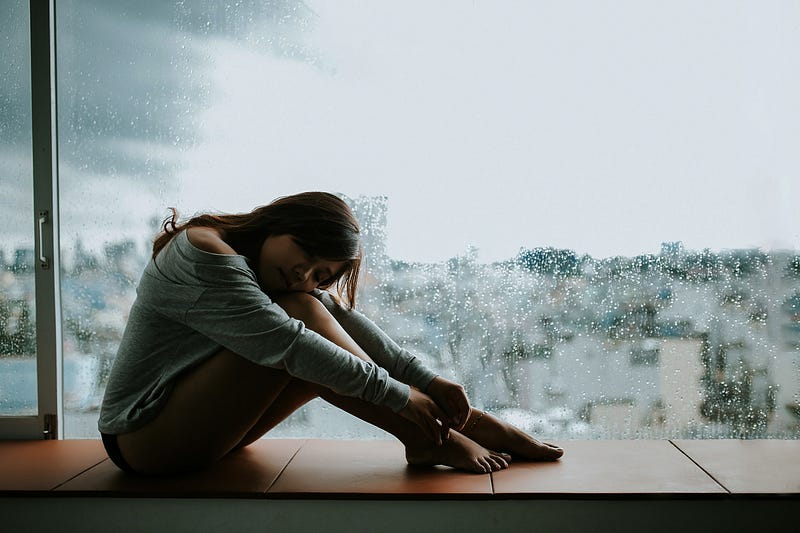
Photo by Anthony Tran on Unsplash

Many of us spend years trying to understand why we keep attracting unhealthy, dysfunctional relationships.

We feel stuck in patterns of conflict and insecurities, and we tell ourselves this is the last time I’m doing this, only to find ourselves in a similar situation that reinforces our feelings of inadequacy and hopelessness.

Sometimes we don’t even realize the relationship we’re in is unhealthy — we accept it as it is, and we believe it is normal.

However, if we’re lucky enough, we do reach a point where it becomes obvious there’s something we need to change. I say lucky because reaching that point is the only way to change our relationship patterns.

When we do reach that point, we need to dig deeper and ask ourselves the hard questions.

I’ve been there, so let me tell you the answers.

We Cling To What We’re Familiar With

Healthy relationships are not something we find by accident. They’re something we learn to find, create, and maintain.

If you’ve never witnessed a healthy relationship, your search for it will be much harder. How could you find something you’ve never experienced? How could you identify it if you have no idea how it looks, or how it feels?

It doesn’t matter if, on a conscious level, you want to build a secure connection with someone. If unresolved issues are preventing you from finding what you want, need, and deserve, you need to address them first.

That’s why it’s so important to understand attachment patterns:

“Attachment patterns are passed down from one generation to the next. Children learn how to connect from parents and caregivers, and they in turn teach the next generation. Your attachment history plays a crucial role in determining how you relate in adult romantic relationships, and how you relate to your children. However, it is not what happened to you as a child that matters most — it is how you deal with it. Many people go from victim to overcomer.”

Terry Levy, in Four Styles Of Adult Attachment

  • If you grew up in an environment where conflict was the norm, you believe that being surrounded by conflict is normal;
  • If you witnessed abuse, you believe abuse is normal;
  • If your parents manipulated you and gaslighted you, you become disconnected from your intuition and perception— and you believe these experiences are normal;
  • If your parents punished you every time you stood up for yourself, you eventually stop standing up for yourself — and you replicate this behavior in your adult relationships;
  • If you were taught to follow every rule regardless of your feelings and needs, guess what? You stay silent. You stay submissive, because your feelings have never mattered.

Looking back now, it’s clear to me why I’d always get myself into incredibly toxic, unstable relationships that would never make me feel truly loved or accepted: because I believed love was supposed to be unstable and unbalanced. Because I couldn’t imagine a relationship that would allow me to feel unconditionally safe and loved.

I was literally accepting the love I thought I deserved.

Abuse Feels Safe When It’s All You’ve Ever Known

I have a friend who’s been in an abusive relationship for years. Everybody can see how isolated she has become, and we suspect there’s physical abuse involved too.

In the beginning, it was very difficult for me to understand why she would let him treat her like this, or why she wouldn’t listen to anyone. It was also very painful to witness her losing her self-esteem in such a short amount of time.

Now I realize she never had self-esteem to begin with.

We have both grown up in very rigid and emotionally unavailable environments, in which our parent figures were unable to model boundaries or emotionally regulate. Our feelings and emotional needs didn’t matter to them — all that mattered was that we followed their rules.

We have both learned very early on that we were not allowed to stand up for ourselves, and now I can see how her upbringing has influenced her behavior in intimate relationships.

She doesn’t believe she has the right to express herself. She doesn’t believe she deserves to be loved and respected — and she’s in a relationship that confirms and reinforces these beliefs.

Instead, she believes pain, anxiety, and submission are part of relationships. She believes that being forced to ignore her own needs and priorities is normal — because that’s how she was raised.

In How To Do The Work, Dr. Nicole LePera says:

“In instances of frequent boundary crossings, children may internalize a belief that such boundary crossings are part of closeness and maybe even love.”

This is why telling someone close to us to “just leave” their dysfunctional or abusive relationship doesn’t work. As ridiculous as it sounds, there’s a part of them who feels safe in the midst of pain.

They will only be able to leave once they realize that’s not how love is supposed to feel like.

Unhealthy relationships are not something we attract by accident.

We attract them because we were taught to have certain expectations regarding intimacy and emotional availability. We attract them because we expect people to silence our voice and ignore our emotional needs — just like we were silenced and ignored before.

Most importantly, we attract them because, on a subconscious level, we expect love to be unhealthy.

Thank you for reading! If you want to increase your self-awareness, learn how to meet your emotional needs, and finally prioritize your well-being, check out my Self-Healing Workbook! ✧

Love
Mental Health
Relationships
Abuse
Psychology
Recommended from ReadMedium