avatarAnne Bonfert

Free AI web copilot to create summaries, insights and extended knowledge, download it at here

3456

Abstract

</a></figcaption></figure><p id="8e70">I reached a popular bird-watching spot. And if I say popular I refer to the 50 people standing behind the barrier with binoculars pointed into the sky looking for more and more cranes to arrive.</p><p id="8ad8">They do sleep in these lakes (the cranes, not the people) and for them to have a peaceful night all walking trails are closed off during their resting phase in October. They stay in this area for a couple of weeks to feed on the harvested fields before heading further south towards southern France and Spain.</p><p id="3e3a">If you look at the image below you can see two small flocks flying just above the horizon in the left part of the image. But there is something else in the photograph.</p><p id="39ff">The swan from above. You can’t see his two younger brothers with the gray plumage. They disappeared into the darkness of the shadows. But the white feathering of this creature is standing out even in this low-light image.</p><figure id="9a66"><img src="https://cdn-images-1.readmedium.com/v2/resize:fit:800/1*6iCvQHDPtzJTXkBGREPIsA.jpeg"><figcaption>Credit: <a href="https://medium.com/@anne.bonfert">Anne Bonfert</a></figcaption></figure><p id="3ec1">I zoomed into the distance to capture a few more arriving cranes. They all returned from their feast. During daytime, they feed on the fields and arrive back at their sleeping ground just around sunset.</p><figure id="6a9d"><img src="https://cdn-images-1.readmedium.com/v2/resize:fit:800/1*R3Podqngc8oRhcSoO9qwKA.jpeg"><figcaption>Credit: <a href="https://medium.com/@anne.bonfert">Anne Bonfert</a></figcaption></figure><p id="0f1e">The massive wall of clouds from the west has now almost reached the lakes and I decide to turn around. Even though I am equipped with a raincoat I do not feel like being out in the rain.</p><p id="8911">I stop once more at the raised hide to see what else I can spot from above.</p><p id="0102">Now, I can no longer distinguish the birds on the water. I can’t say if the plumage is white or black. With the light from behind, I only get to capture its silhouette. But I do capture the bird standing in the water with its reflecting image on the clear lake.</p><p id="8ca3">One other bird is hidden in the shade. It could be another crane or an egret. Two tiny birds are picking small creatures in the water.</p><figure id="1e38"><img src="https://cdn-images-1.readmedium.com/v2/resize:fit:800/1*tbbATf8Ms1yFZCDOsDgF9g.jpeg"><figcaption>Credit: <a href="https://medium.com/@anne.bonfert">Anne Bonfert</a></figcaption></figure><p id="f690">And then I can hear them again. The late ones. Another flock of cranes is flying above the lakes announcing their arrival in a loud cacophony of calls.</p><figure id="f122"><img src="https://cdn-images-1.readmedium.com/v2/resize:fit:800/1*o_HIoIVoYGacESvut-LslA.jpeg"><figcaption>Credit: <a href="https://medium.com/@anne.bonfert">Anne Bonfert</a></figcaption></figure><p id="f769">I get inspired by the reeds at the edge of the lake. Soft seeds are moving gently in the wind. The first clouds are being reflected in the water and the sky has just a little blue left.</p><p id="9f47">With not much light left for photography and the arriving rain, I pack away my camera and get into the car. Only minutes later the first raindrops fall onto the windshield.</p><figure id="05b8"><img src="https://cdn-images-1.readmedium.com/v2/resize:fit:800/1*d9-QDU4-83-LDSz0L-jOwg.jpeg"><

Options

figcaption>Credit: <a href="https://medium.com/@anne.bonfert">Anne Bonfert</a></figcaption></figure><p id="6d45">Yes, it has helped having learned to read the clouds. I can understand the weather much better and do time my adventures in nature according to sun, rain, and wind.</p><p id="2f32"><i>Thank you <a href="undefined">JoAnn Ryan</a> for this inspiring prompt at “In Living Color”. If you also have some monochrome, dark, or noir type of photography, don’t feel shy to share your photo essay in this uprising publication.</i></p><div id="679a" class="link-block"> <a href="https://readmedium.com/october-photography-dark-black-and-white-noir-37ebd105bfcf"> <div> <div> <h2>October Photography: Dark, Black and White, Noir</h2> <div><h3>October prompt and challenge on In Living Color</h3></div> <div><p>medium.com</p></div> </div> <div> <div style="background-image: url(https://miro.readmedium.com/v2/resize:fit:320/1*5WPRn-nd-agi1-ZMNsbzWw.jpeg)"></div> </div> </div> </a> </div><h2 id="38ab">More about black and white photography:</h2><div id="78c2" class="link-block"> <a href="https://readmedium.com/desert-life-without-colors-3f58cc42c895"> <div> <div> <h2>Removing the Colors of the Desert</h2> <div><h3>Black and white photography: life in the desert</h3></div> <div><p>medium.com</p></div> </div> <div> <div style="background-image: url(https://miro.readmedium.com/v2/resize:fit:320/1*1VmZ_dUuGLU8VRykrqFFsw.jpeg)"></div> </div> </div> </a> </div><div id="4977" class="link-block"> <a href="https://readmedium.com/nostalgic-black-and-white-photography-portugal-61c8ada7245a"> <div> <div> <h2>Nostalgic Black and White Photography — Portugal</h2> <div><h3>Traveling back in time</h3></div> <div><p>medium.com</p></div> </div> <div> <div style="background-image: url(https://miro.readmedium.com/v2/resize:fit:320/1*LnPDp7dzCWG4CNANnvElsg.jpeg)"></div> </div> </div> </a> </div><div id="348d" class="link-block"> <a href="https://readmedium.com/black-and-white-photography-of-swedens-wilderness-a1bae3a93659"> <div> <div> <h2>Black and White Photography of Sweden’s Wilderness</h2> <div><h3>Slowing down in life and looking for the contrasts in nature</h3></div> <div><p>medium.com</p></div> </div> <div> <div style="background-image: url(https://miro.readmedium.com/v2/resize:fit:320/1*okGSu-vehf5i700QsTDskA.jpeg)"></div> </div> </div> </a> </div><blockquote id="cb4c"><p>Join my email list <a href="https://mailchi.mp/9dd74c10ac6b/signup-mydreamofafrica">here</a> if you would like to read more photo essays or sign up for the <a href="https://medium.com/@anne.bonfert/membership">Medium membership</a> to receive unlimited access to my and other writers’ stories out here (I will receive a commission fee in return).</p></blockquote></article></body>

WRITING PROMPT RESPONSE

When the Light is Gone

And the birds come to rest
Credit: Anne Bonfert

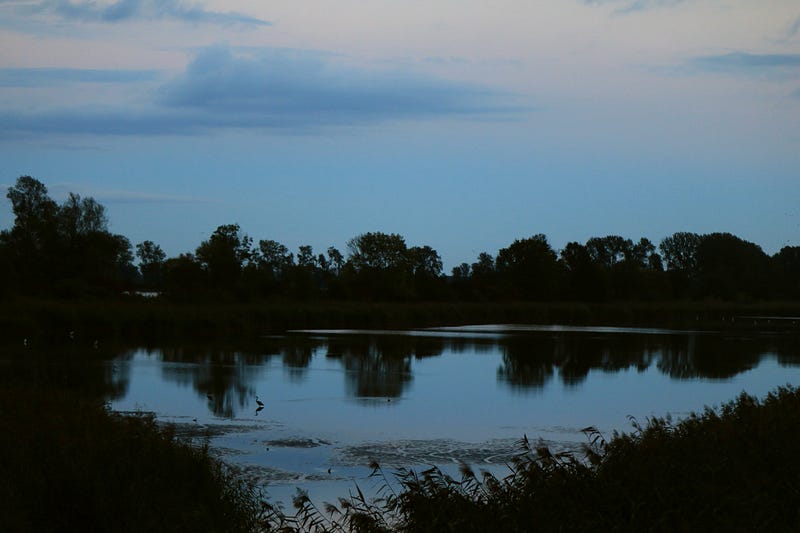
I love this late hour of the day. When the sun has gone yet still a bit of light is to be seen on the horizon. It’s still too bright to take out a flashlight but too dark to clearly see things in the distance.

It is also a time of the day that makes photography challenging. We all know we need light to take clear images. Light or long exposure. And the latter is only possible with a tripod on hand.

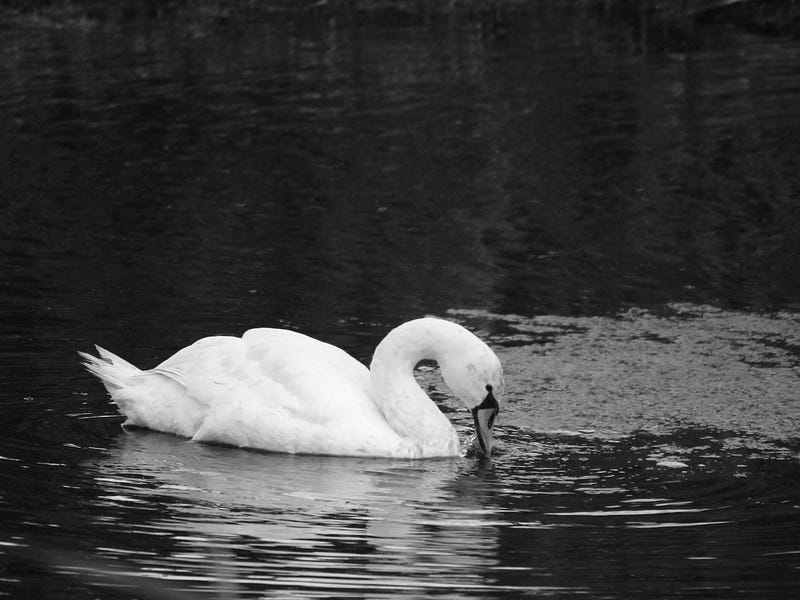
The other day I was out hunting the flocks of cranes with my camera again when I spotted this beautiful swan in one of the canals. The thick reeds were blocking any light from hitting the water and the only shining object was the white plumage of this majestic bird.

It didn't give me much of a result when I took a colored image. So I thought, I might as well capture the scene in black and white.
Credit: Anne Bonfert

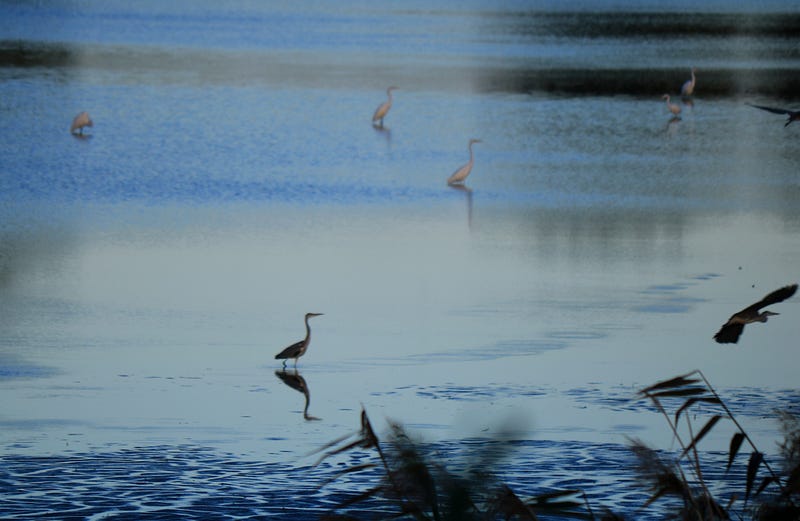
I started out my walk ascending to a raised hide where I could look onto the lake where the cranes soon would gather to sleep. So far I could only see one common crane but several great egrets wading in the water.
Credit: Anne Bonfert

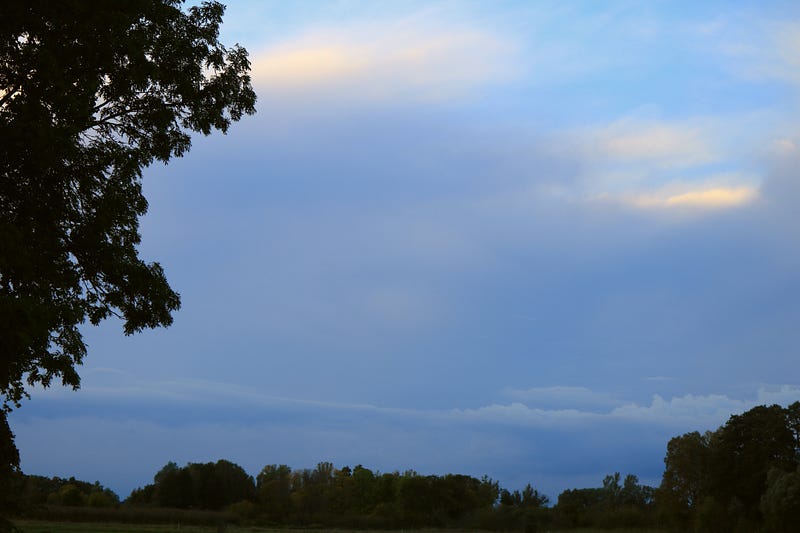
The sun was supposed to be still up but a massive cloud bank was rolling in from the west. That was it for today’s sunlight.
Credit: Anne Bonfert

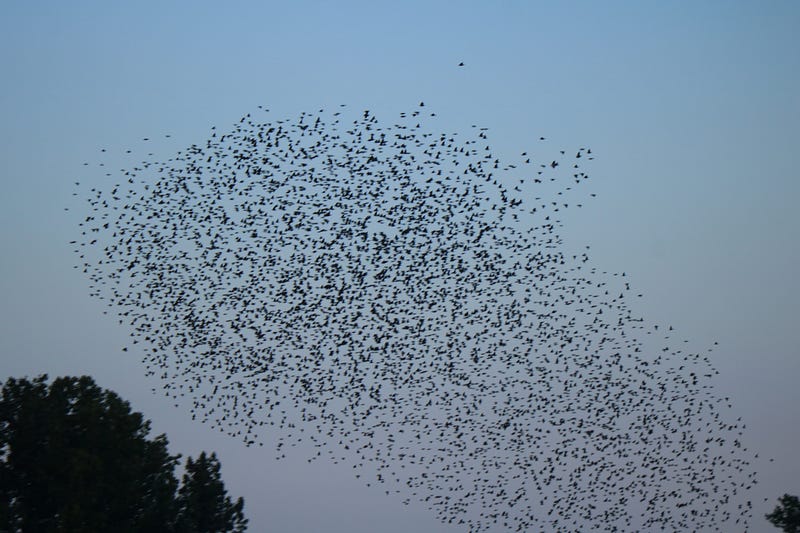
But some images don’t require sunlight. Their contrasting forms between the light blue of the sky and the black of a bird made this swarm of starlings fly through the air.

It was a dancing flock in the sky. They moved so quickly, it was a challenge to get them on camera. The starlings performed a special choreography followed by a choir singing along. The cacophony of their calls was overpowering.

Yes, this was the second huge swarm of starlings I did see this fall. This one was much larger than the first one.
Credit: Anne Bonfert

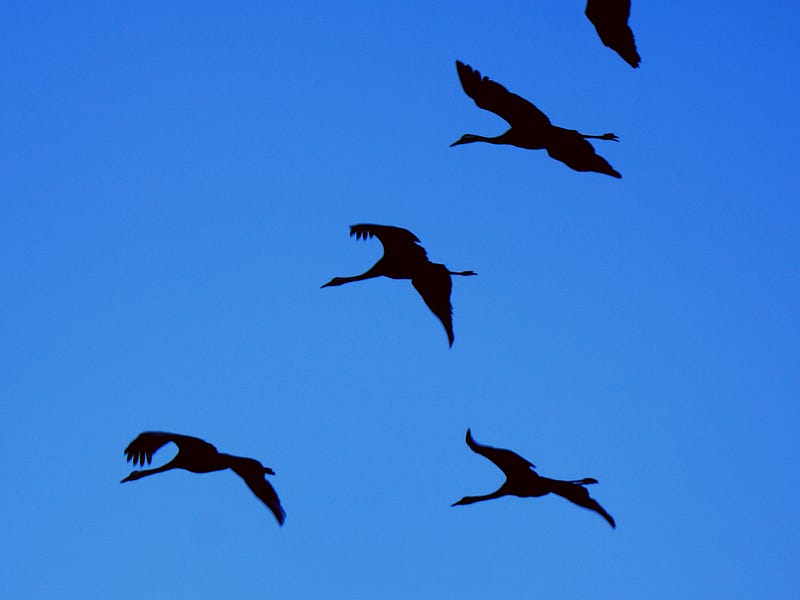
But I was here for the cranes. With not much light left, they were just silhouettes in the sky.
Credit: Anne Bonfert

I reached a popular bird-watching spot. And if I say popular I refer to the 50 people standing behind the barrier with binoculars pointed into the sky looking for more and more cranes to arrive.

They do sleep in these lakes (the cranes, not the people) and for them to have a peaceful night all walking trails are closed off during their resting phase in October. They stay in this area for a couple of weeks to feed on the harvested fields before heading further south towards southern France and Spain.

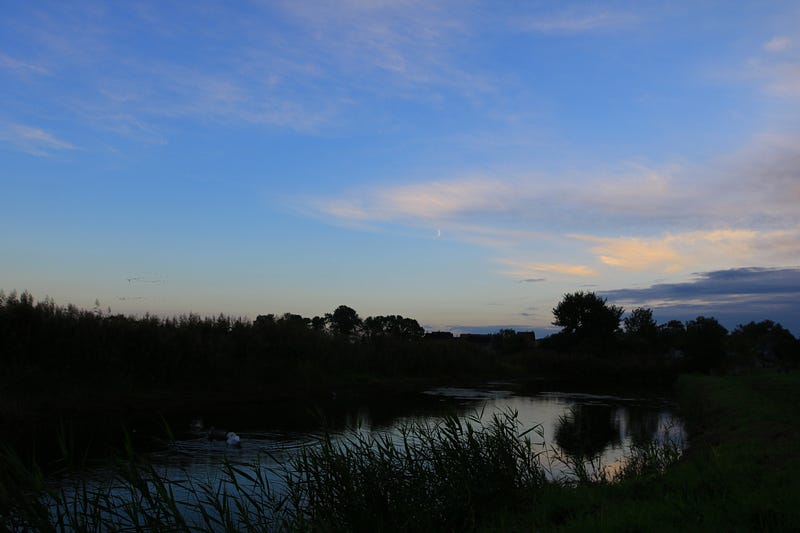
If you look at the image below you can see two small flocks flying just above the horizon in the left part of the image. But there is something else in the photograph.

The swan from above. You can’t see his two younger brothers with the gray plumage. They disappeared into the darkness of the shadows. But the white feathering of this creature is standing out even in this low-light image.
Credit: Anne Bonfert

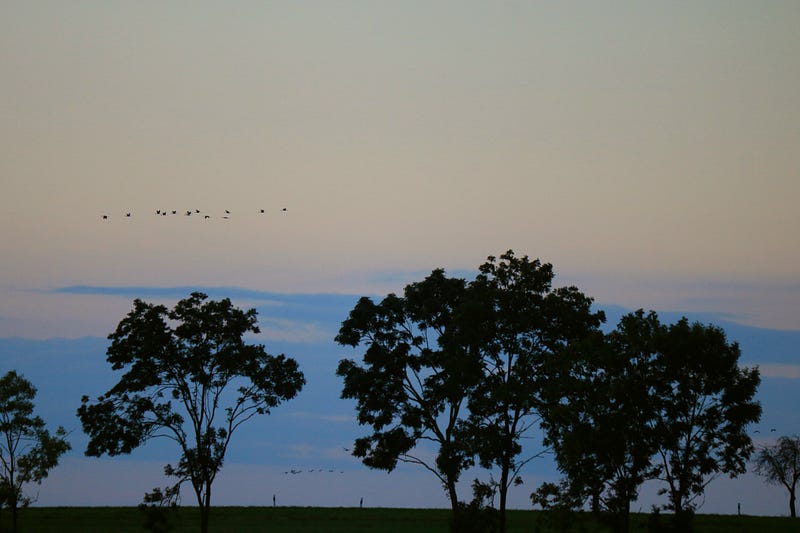
I zoomed into the distance to capture a few more arriving cranes. They all returned from their feast. During daytime, they feed on the fields and arrive back at their sleeping ground just around sunset.
Credit: Anne Bonfert

The massive wall of clouds from the west has now almost reached the lakes and I decide to turn around. Even though I am equipped with a raincoat I do not feel like being out in the rain.

I stop once more at the raised hide to see what else I can spot from above.

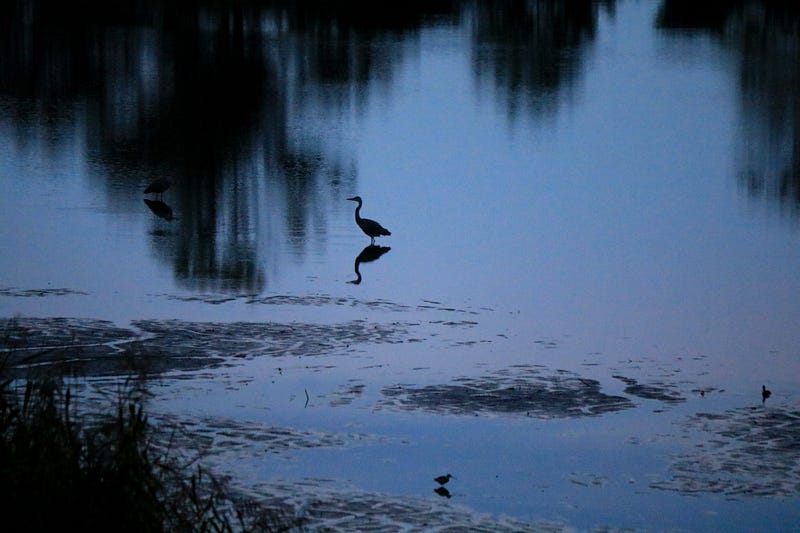
Now, I can no longer distinguish the birds on the water. I can’t say if the plumage is white or black. With the light from behind, I only get to capture its silhouette. But I do capture the bird standing in the water with its reflecting image on the clear lake.

One other bird is hidden in the shade. It could be another crane or an egret. Two tiny birds are picking small creatures in the water.
Credit: Anne Bonfert

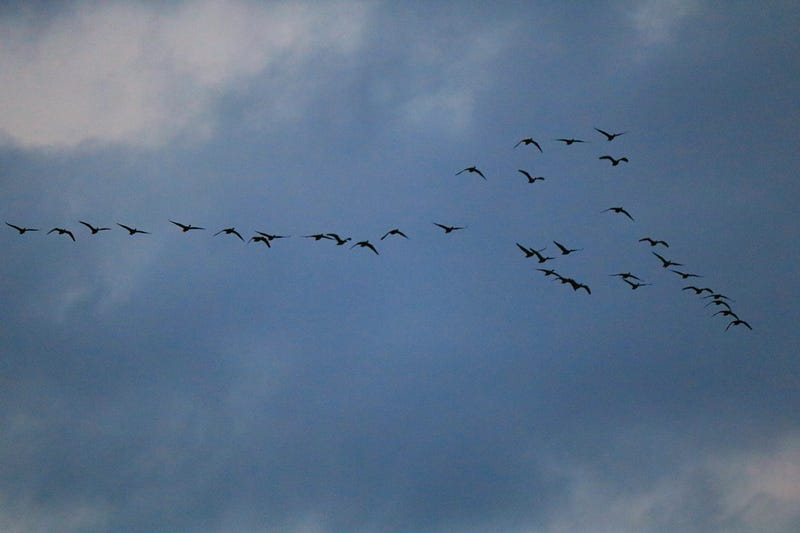
And then I can hear them again. The late ones. Another flock of cranes is flying above the lakes announcing their arrival in a loud cacophony of calls.
Credit: Anne Bonfert

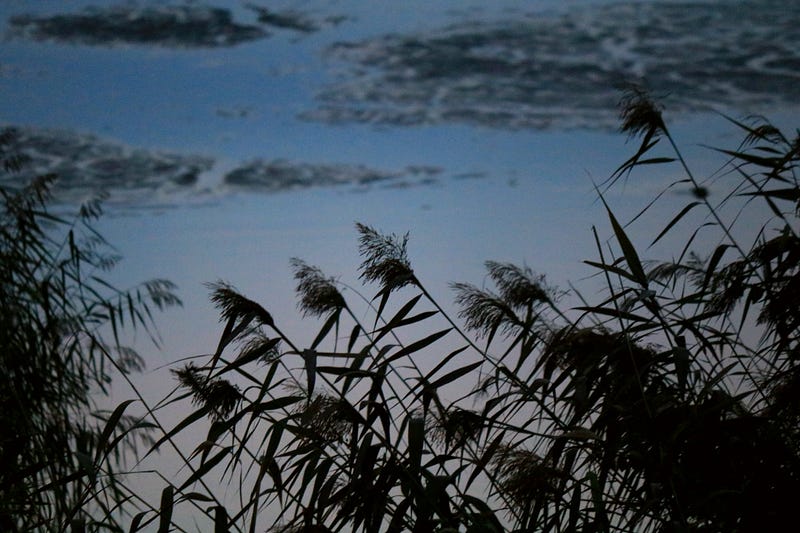
I get inspired by the reeds at the edge of the lake. Soft seeds are moving gently in the wind. The first clouds are being reflected in the water and the sky has just a little blue left.

With not much light left for photography and the arriving rain, I pack away my camera and get into the car. Only minutes later the first raindrops fall onto the windshield.
Credit: Anne Bonfert

Yes, it has helped having learned to read the clouds. I can understand the weather much better and do time my adventures in nature according to sun, rain, and wind.

Thank you JoAnn Ryan for this inspiring prompt at “In Living Color”. If you also have some monochrome, dark, or noir type of photography, don’t feel shy to share your photo essay in this uprising publication.

More about black and white photography:

Join my email list here if you would like to read more photo essays or sign up for the Medium membership to receive unlimited access to my and other writers’ stories out here (I will receive a commission fee in return).

Photography
Nature
Nature Writing
Colors
Creativity
Recommended from ReadMedium