avatarJonathan Poletti

Free AI web copilot to create summaries, insights and extended knowledge, download it at here

4263

Abstract

gger the smaller, the man the woman,” </i>he’d write, then puzzle over what that meant.</p><h1 id="5cb2">Whatever had happened on February 20, 1974 came to function like a salvation narrative.</h1><p id="86b6">He had long understood the world as <a href="https://www.google.com/books/edition/Philip_K_Dick_The_Last_Interview/bp8mCgAAQBAJ?hl=en&amp;gbpv=1&amp;dq=%E2%80%9Ccruel,+wanton,+blind,+insensible,+destructive,+or+evil.%E2%80%9D&amp;pg=PA77&amp;printsec=frontcover">driven by some dark spirit</a>,<i> “cruel, wanton, blind, insensible, destructive, or evil.”</i></p><p id="3981">He associated this cruel spirit with ancient Rome. And he saw it opposed by the God who operates through Christianity.</p><p id="de02">With Thomas’ arrival, he’d write, “the same Holy Spirit which rose against it then” had returned.</p><p id="8eb2">Explaining the February 20, 1974 event the next year to a friend, he narrated the takeover of his mind by this entity or presence:</p><blockquote id="233f"><p><i>“Through its power I suddenly saw the universe as it was; through its power of perception I saw what really existed, and through its power of thought decision, I acted to free myself. It took on in battle, as champion of all human spirits in thrall, every evil, every iron imprisoning thing.”</i></p></blockquote><h1 id="1387">He felt at times that Thomas had been “summoned” to help awaken humanity from “the sleeping dead.”</h1><p id="03ea">Going forward, he saw himself as a spiritual warrior, somehow equipped to take on the malevolence.</p><figure id="1eff"><img src="https://cdn-images-1.readmedium.com/v2/resize:fit:800/0*itjL5gW9Zu8m7unu.jpg"><figcaption><a href="https://totaldickhead.blogspot.com/2008/07/rare-pkd-photo-of-day_14.html">P.K. Dick in 1980 by Tessa Dick (credit: David Gill, Total Dick-Head)</a></figcaption></figure><h1 id="d01a">Dick’s next novels did seem to have a deeper exploration of reality.</h1><p id="d713">From his <i>VALIS</i> trilogy to other works, the ordinary experience of physicality seemed more and more a kind of illusion. He saw this as the effects of Thomas’ guidance.</p><p id="e434">As he worked on novel after novel, he’d take to scribbling in a vast self-commentary he called his <i>Exegesis, </i>a word used for biblical commentary—as if his works, even his life itself, was a biblical text.</p><p id="80e7">What was Thomas? His speculations went on and on. Maybe an alien intelligence, or a government program. Or perhaps a group of “secret Christians, originating in apostolic times,” as had become spirits able to inhabit certain people over time.</p><h1 id="0baa">Unless Thomas was also himself?</h1><p id="9794">Dick’s was sometimes moved to consider Thomas as his own self in a former life—his own incarnation moving through time, now able to communicate with himself.</p><p id="9930">Or were they the same self existing at two points in time? And yet, still, “an intrusion into my psyche, a taking over,” he’d write.</p><p id="efa3">Or were they just stories by a SciFi writer?—himself becoming a stage for surreal narrations like those he wrote in books.</p><figure id="060e"><img src="https://cdn-images-1.readmedium.com/v2/resize:fit:800/1*eSIG-Qm0N9Vfym1UoVemVQ.png"><figcaption><a href="https://www.facebook.com/gdkpublishing/posts/philip-k-dick-and-his-cat-pinky/1218504868330570/">Philip K. Dick and his cat Pinky (undated)</a></figcaption></figure><h1 id="5912">He’d sit for hours working on his “Exegesis.”</h1><p id="4e52">Taking over from writing fiction, he’d sit by the hour working off biblical phrases, like about Creation:</p><blockquote id="1241"><p><i>“What if creation (verb) was accidental? A byproduct of the Godhead’s self- awareness expressed by it uttering the word (perhaps Anokhi — ?). Its self- awareness gave rise to the word; the word in turn gave rise to creation, a splitting, entropic process (oh yes; the word gave rise to the first plurality: the forms).”</i></p></blockquote><h1 id="6a05">To have the spirit of an apostle within him was to give his writings the suggestion of biblical texts.</h1><p id="56cf">In his <i>Exegesis</i> he seemed to be charting the new theology that is created when he is half-himself, half-Thomas—ever trying to figure out how it was working. T

Options

his joint sharing of a body and mind.</p><blockquote id="50a1"><p><i>“Thomas and I are co-inhabitants of my head (i.e., brain or mind, probably brain), existing side by side, somewhat but not entirely partitioned off from each other — I say not entirely because (1) in hypnogogic states I can transliminate him, or he can transliminate; and (2) in 2–3–74 he first broke through — in 2–74 — and in 3–74 he virtually took over — he did take over! And (3) in crisis he can speak to me — I guess when my ego begins to implode, which fits in with (2).”</i></p></blockquote><p id="b4a9">What seemed clear is that Thomas had had in some form around him all his life, and then began to “mastermind” his writings.</p><h1 id="521a">Unless it was all mental illness?</h1><p id="8699">Dick considered that possibility, the “minimum hypothesis,” as he’d put it.</p><p id="9d30">But then he’d be back to mulling the origin of Thomas, the status of this other self he carried, and what it meant to his own cosmic journey through time. In his <a href="https://www.google.com/books/edition/Philip_K_Dick_The_Last_Interview/bp8mCgAAQBAJ?hl=en&amp;gbpv=1&amp;dq=%E2%80%9CThey+say,+%E2%80%98What+do+you+want+to+be+reincarnated+as+next%3F%E2%80%99+and+I+say,+%E2%80%98I+don%E2%80%99t+want+to+be+reincarnated+at+all.%E2%80%99%22&amp;pg=PA107&amp;printsec=frontcover">last interview</a>, he goes on.</p><blockquote id="a02a"><p><i>“They say, ‘What do you want to be reincarnated as next?’ and I say, ‘I don’t want to be reincarnated at all.’ I say, ‘I’ve done my time. I’ve served time long enough here. I want to go to my reward.’ Because I remember back to my life as an early Christian. It was hell. It was no fun at all. I was garroted in a goddamn cave under the goddamn [Roman] amphitheater.”</i></p></blockquote><p id="1736">He’s drawn back to speaking of the ‘Thomas’ event, framing it as part of a process of a previous incarnation being remembered.</p><blockquote id="7226"><p><i>“In 1974, just before my religious experiences, I dreamed my own death in Rome, under the Coliseum in a cave. When they garroted me. And then all my memories started coming back.”</i></p></blockquote><h1 id="48f5">He died on March 2, 1982, after a series of strokes.</h1><p id="d0b0">Had his “pink beam” event in 1974 been a stroke? Fans <a href="https://philipdick.com/literary-criticism/essays/an-afterword-to-philip-k-dicks-valis/">float</a> the possibility. But then Thomas seemed to help Dick recover from earlier mental illness. In later years he had seemed improved from his difficult youth.</p><p id="95fd">His life has seemed to many a religious event. A documentary in 2001 was titled <i>The Gospel According to Philip K. Dick.</i></p><p id="716e">His sensibility is felt in many movies, from <i>The Matrix</i> to <i>Inception</i> and beyond. When reality fragments, when deeper, stranger storylines emerge, we’re in Philip K. Dick territory.</p><p id="787f">I wonder: Could there have been the spirit of an apostle named ‘Thomas’ guiding him? Is Dick’s work “channeled” literature? And is it Christian? 🔶</p><div id="fcfe" class="link-block"> <a href="https://readmedium.com/when-anne-heche-was-jesus-2f0877a59fa9"> <div> <div> <h2>When Anne Heche was Jesus</h2> <div><h3>The actress had an eerie religious journey</h3></div> <div><p>medium.com</p></div> </div> <div> <div style="background-image: url(https://miro.readmedium.com/v2/resize:fit:320/1*XtQJC3hL3VWC7ARgKnx0eA.png)"></div> </div> </div> </a> </div><div id="dd45" class="link-block"> <a href="https://readmedium.com/the-theology-of-ready-player-one-690755467d66"> <div> <div> <h2>The Theology of ‘Ready Player One’</h2> <div><h3>Is Ernest Cline on a search for God?</h3></div> <div><p>medium.com</p></div> </div> <div> <div style="background-image: url(https://miro.readmedium.com/v2/resize:fit:320/1*HcFsYuczZxxr8fzI0zs0ow.png)"></div> </div> </div> </a> </div></article></body>

When Philip K. Dick was an apostle of Jesus

The SciFi novelist saw himself as ‘Thomas’

He is the famously bizarre and ultra-influential Sci-Fi novelist. But Philip K. Dick saw himself as ‘Thomas’, a reincarnated apostle of Jesus.

His memory of an earlier self came back to him, he’d say, on February 20, 1974, when following a dental operation he stood in front of a girl wearing a necklace with a Christian fish, or ichthys symbol, which emanated a beam of pink light—and it entered him.
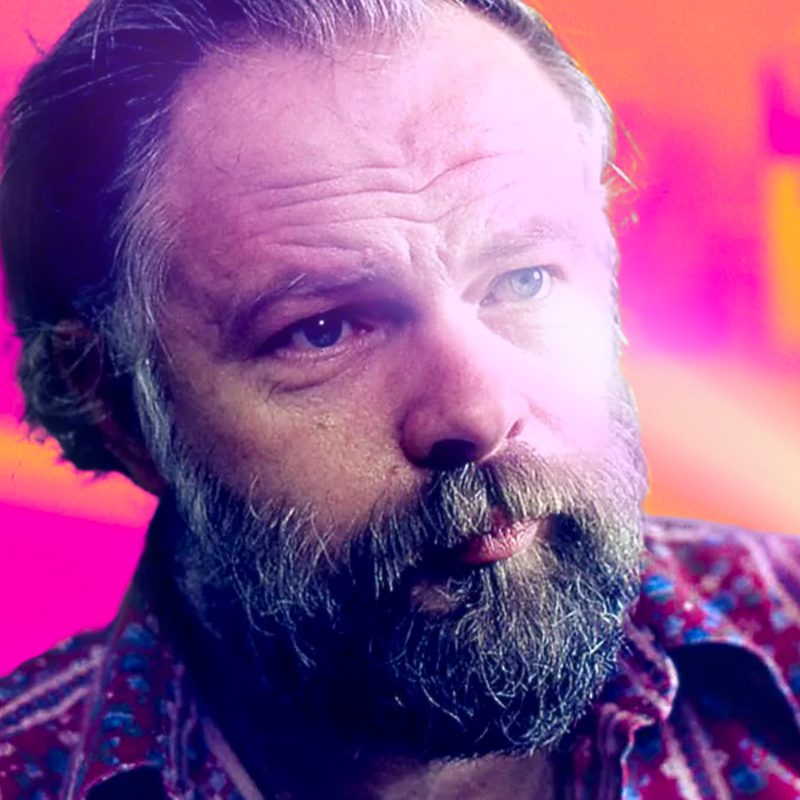
Philip K. Dick (undated c.1975; edied)

Dick would describe the “pink beam” event in different ways.

He referred to it in a September 1974 letter to Ursula Le Guin telling her of “the spirit which filled me starting in March…”

It was a real event. He began to talk about it publicly, as in a 1979 interview: “I experienced an invasion of my mind by a transcendentally rational mind, as if I had been insane all my life and suddenly I had become sane.”

Somehow his consciousness had gained a new layer. He called it ‘Zebra’ for awhile. But over time it defined into a personality he called Thomas, associating it with the year 45 A.D., and bringing with it memories of ancient Rome and of Jesus.

He realized this was, as he’d put it, “a former apostolic secret Christian, a former human and actual disciple of Christ himself.”

Philip K. Dick novels had been very Christian.

He’d refer to his Christian status. “I was raised a Quaker but converted to Episcopalianism very early in my life,” he said in 1978.

He’d go on about his problems with existing Christian practices.

“I believe that the establishment churches have lost the keys to the kingdom. They don’t even know what the Kingdom of God is. It’s like some guy who loses the keys to his car. He knows he had them a second ago but now they’re gone. The churches, however, don’t even know what the car looks like anymore. They can’t even give a description of it to the cop. Organized religion is crooked, dumb, and it’s lost the keys. I mean, it’s OK to be crooked and dumb, we’re all crooked and dumb. But the tragedy is that they’ve lost the keys. They can’t even point us in the right direction much less take us there.”

Dick’s work is clearly deeply inflected with the Bible. Critics studying his novels are apt to reach for a range of biblical references. Yet he is not usually called a ‘Christian novelist’.

Was he really ‘Thomas’ the apostle?

He did often seem to view his personal story as more a kind of evolving myth. Anthony Peake traces the evolving narratives in his 2013 biography A Life of Philip K. Dick. In 1964, he notes, Dick had been on an LSD trip and seemed to start babbling in Latin. Was that the first sign of ‘Thomas’?

Dick would like the idea of talking in Latin as a sign of a reincarnated person from ancient Rome. He’d also taken Latin in high school.

He’d read the newly-discovered ‘Gospel of Thomas’. He was very struck by the strange sayings of Jesus in this text. “The Kingdom will come when the outer is the inner, the bigger the smaller, the man the woman,” he’d write, then puzzle over what that meant.

Whatever had happened on February 20, 1974 came to function like a salvation narrative.

He had long understood the world as driven by some dark spirit, “cruel, wanton, blind, insensible, destructive, or evil.”

He associated this cruel spirit with ancient Rome. And he saw it opposed by the God who operates through Christianity.

With Thomas’ arrival, he’d write, “the same Holy Spirit which rose against it then” had returned.

Explaining the February 20, 1974 event the next year to a friend, he narrated the takeover of his mind by this entity or presence:

“Through its power I suddenly saw the universe as it was; through its power of perception I saw what really existed, and through its power of thought decision, I acted to free myself. It took on in battle, as champion of all human spirits in thrall, every evil, every iron imprisoning thing.”

He felt at times that Thomas had been “summoned” to help awaken humanity from “the sleeping dead.”

Going forward, he saw himself as a spiritual warrior, somehow equipped to take on the malevolence.
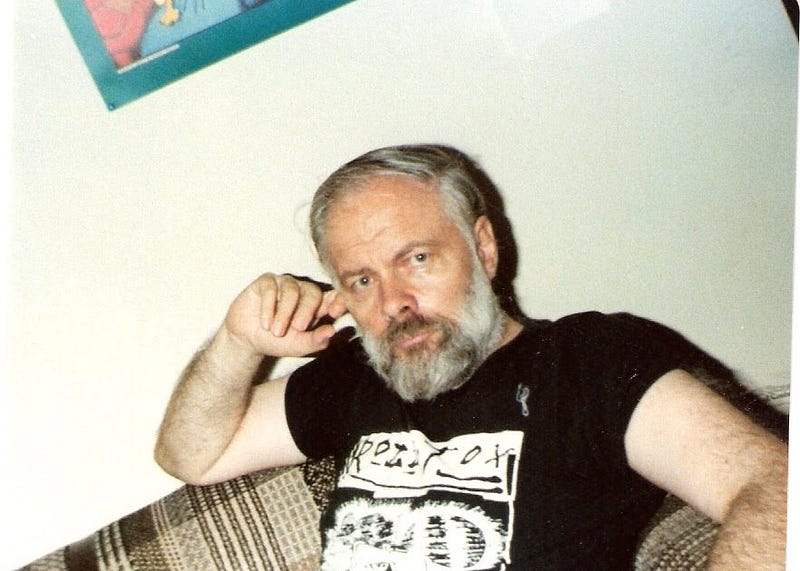
P.K. Dick in 1980 by Tessa Dick (credit: David Gill, Total Dick-Head)

Dick’s next novels did seem to have a deeper exploration of reality.

From his VALIS trilogy to other works, the ordinary experience of physicality seemed more and more a kind of illusion. He saw this as the effects of Thomas’ guidance.

As he worked on novel after novel, he’d take to scribbling in a vast self-commentary he called his Exegesis, a word used for biblical commentary—as if his works, even his life itself, was a biblical text.

What was Thomas? His speculations went on and on. Maybe an alien intelligence, or a government program. Or perhaps a group of “secret Christians, originating in apostolic times,” as had become spirits able to inhabit certain people over time.

Unless Thomas was also himself?

Dick’s was sometimes moved to consider Thomas as his own self in a former life—his own incarnation moving through time, now able to communicate with himself.

Or were they the same self existing at two points in time? And yet, still, “an intrusion into my psyche, a taking over,” he’d write.

Or were they just stories by a SciFi writer?—himself becoming a stage for surreal narrations like those he wrote in books.
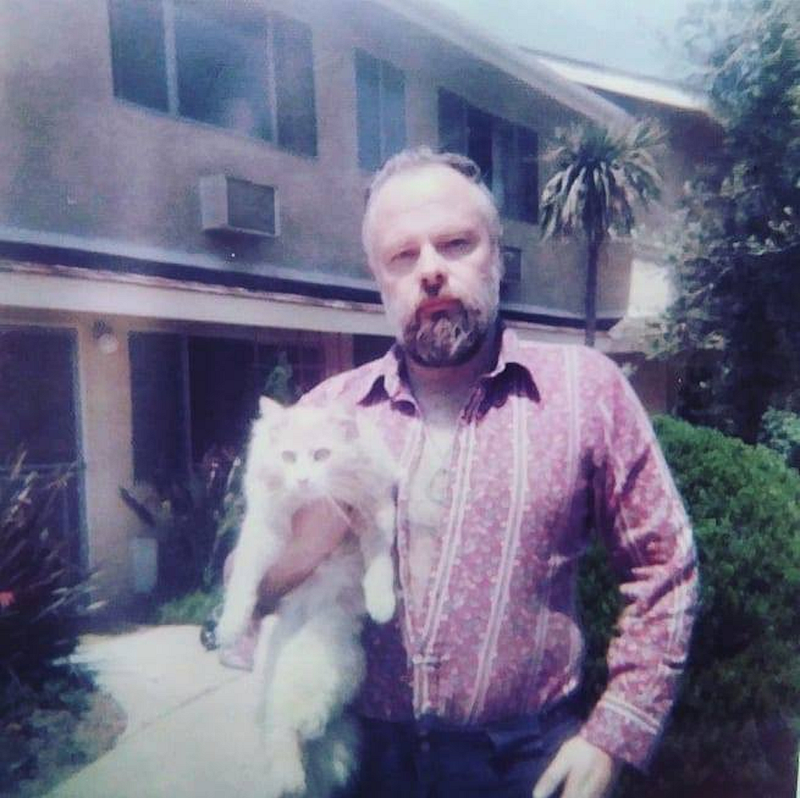
Philip K. Dick and his cat Pinky (undated)

He’d sit for hours working on his “Exegesis.”

Taking over from writing fiction, he’d sit by the hour working off biblical phrases, like about Creation:

“What if creation (verb) was accidental? A byproduct of the Godhead’s self- awareness expressed by it uttering the word (perhaps Anokhi — ?). Its self- awareness gave rise to the word; the word in turn gave rise to creation, a splitting, entropic process (oh yes; the word gave rise to the first plurality: the forms).”

To have the spirit of an apostle within him was to give his writings the suggestion of biblical texts.

In his Exegesis he seemed to be charting the new theology that is created when he is half-himself, half-Thomas—ever trying to figure out how it was working. This joint sharing of a body and mind.

“Thomas and I are co-inhabitants of my head (i.e., brain or mind, probably brain), existing side by side, somewhat but not entirely partitioned off from each other — I say not entirely because (1) in hypnogogic states I can transliminate him, or he can transliminate; and (2) in 2–3–74 he first broke through — in 2–74 — and in 3–74 he virtually took over — he did take over! And (3) in crisis he can speak to me — I guess when my ego begins to implode, which fits in with (2).”

What seemed clear is that Thomas had had in some form around him all his life, and then began to “mastermind” his writings.

Unless it was all mental illness?

Dick considered that possibility, the “minimum hypothesis,” as he’d put it.

But then he’d be back to mulling the origin of Thomas, the status of this other self he carried, and what it meant to his own cosmic journey through time. In his last interview, he goes on.

“They say, ‘What do you want to be reincarnated as next?’ and I say, ‘I don’t want to be reincarnated at all.’ I say, ‘I’ve done my time. I’ve served time long enough here. I want to go to my reward.’ Because I remember back to my life as an early Christian. It was hell. It was no fun at all. I was garroted in a goddamn cave under the goddamn [Roman] amphitheater.”

He’s drawn back to speaking of the ‘Thomas’ event, framing it as part of a process of a previous incarnation being remembered.

“In 1974, just before my religious experiences, I dreamed my own death in Rome, under the Coliseum in a cave. When they garroted me. And then all my memories started coming back.”

He died on March 2, 1982, after a series of strokes.

Had his “pink beam” event in 1974 been a stroke? Fans float the possibility. But then Thomas seemed to help Dick recover from earlier mental illness. In later years he had seemed improved from his difficult youth.

His life has seemed to many a religious event. A documentary in 2001 was titled The Gospel According to Philip K. Dick.

His sensibility is felt in many movies, from The Matrix to Inception and beyond. When reality fragments, when deeper, stranger storylines emerge, we’re in Philip K. Dick territory.

I wonder: Could there have been the spirit of an apostle named ‘Thomas’ guiding him? Is Dick’s work “channeled” literature? And is it Christian? 🔶

Books
Mental Illness
Philip K Dick
Christianity
History
Recommended from ReadMedium