
When did we start cooking? The oldest hearths used by humans have been found in Spain
Near Madrid, scientists have come across the remains of prehistoric hearths. They are as much as 250,000 years old. Next to them were stone tools with traces of food. Could this be the oldest kitchen of the primate people?
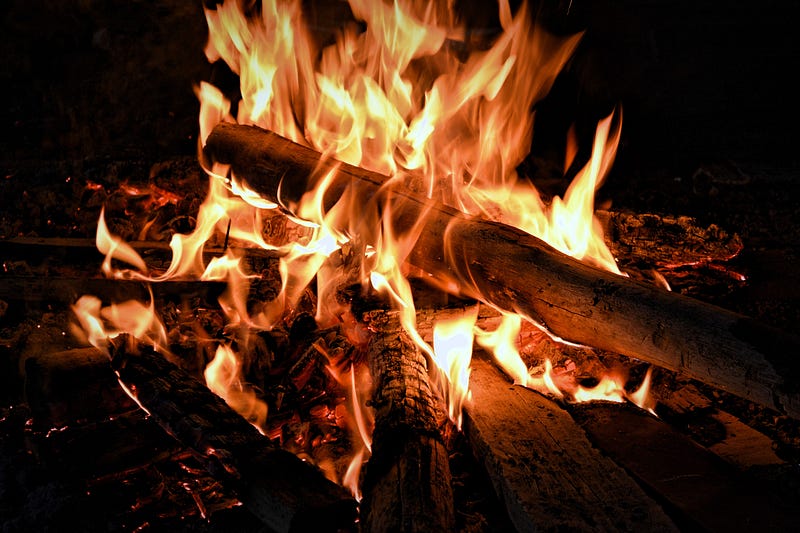
When did people first sit down at a campfire lit specifically to bake something on it? According to the latest research, it happened about 250 thousand years ago. That’s fifty thousand years earlier than previously thought.
This is indicated by studies of hearths found at the Valdocarros II site, east of Madrid. The hearths were many. According to the researchers, the people who sat at them most likely lit fires specifically to prepare meals.
“These are the oldest traces of campfires lit in a controlled manner for cooking and social life,” according to Dr. Clayton Magill. Magill is the lead author of a paper on the discovery, published in the scientific journal Scientific Reports.
First outbreaks
Scientists agree on one thing. The mastery of fire was a landmark event in human history. One can think of it as an extremely important tool or technology, giving man control over the environment in which he lived.
Prehistoric humans had as many as several good reasons to learn to burn fires. Fire protected against unexpected attack by predators, as animals were afraid to approach it. It gave warmth, important for those of our ancient ancestors who migrated north. It lengthened the day — it was possible to gather around it after dark, developing a social life. And finally, it allowed food to be cooked, increasing its availability and caloric content.
According to some, the latter was particularly important. There is a controversial hypothesis — by Professor Richard Wrangham — according to which it was cooking that made us human. Thanks to fire, food became softer, easier to digest and tastier. Moreover, it provided more calories than raw food. Thus, it gave an evolutionary advantage to those who could cook with fire.
Mastering fire
When did the primate master fire? Scientists do not know the exact answer to this question. It could have happened up to a million years ago in Africa. In Europe, fire was used in a controlled way about 400,000 years ago. However, this did not yet mean cooking, which was the most advanced way of using the hearth.
According to Magill, the evidence so far indicated that humans cooked on fire about 200,000 years ago. — ”Now we are pushing that date back 50,000 years,” said Magill as quoted by the Guardian. The finds from Spain suggest that the creators of the hearths there knew well how to light a fire so that food could be cooked on it.
The ideal temperature for cooking
Chemical analysis of the material found in the hearths indicates that the fire was between 280 and 350 degrees Celsius. — “This is the ideal temperature not for scaring off animals or getting warm, but precisely for cooking”, Dr. Magill believes.
Decay products of decayed pine wood and mushrooms were found in the sites of the extinguished campfires. And although pine trees grew in the area, they were not in the immediate vicinity of where the hearths were. This means that their creators specifically transported the wood to cook on it.
“If we look at the indigenous peoples of the Earth living today, they are the ones who look for just rotten wood to burn,” says Magill. — “By burning it, it’s easier to get the ideal temperature for processing food,” he adds.
No traces of it were found in the hearths themselves. However, stone tools were encountered near them. On them were the remains of animal fats and plants. According to the researchers, this is another clue that speaks to the fact that the hearths from Valdocarros II were used for cooking.
Dr. Magill goes even further. — “If we control the fire and cook food on it, it almost certainly means we have a social structure and use language”, he says.
The site also found remains left over from the butchering of large animals. And this, Magill notes, is an activity that requires the cooperation of the entire group.
Cool that you made it to the end of this article. I will be very pleased if you appreciate the effort of creating it and leave some claps here, or maybe even start following me. It would be nice if you also left a tip! Thank you!