avatarDark Energy Articles

Free AI web copilot to create summaries, insights and extended knowledge, download it at here

2992

Abstract

uld strike the Kantō region, potentially killing up to 100,000 people. He also warned that Tokyo, with its densely packed wooden buildings, would quickly be engulfed by fire, with residents having nowhere to take refuge. He advocated for leaving gaps between new buildings and abandoning oil lanterns, which could become sources of fire in times of disaster.</p><p id="0460">Imamura’s warnings were ridiculed by the leading Japanese seismologist of the time, Fusakichi Ōmori. Ōmori was convinced that earthquakes did not occur in stormy and windy weather, and therefore there was no need to worry about winds spreading the fire. This criticism led to Imamura’s predictions not being taken seriously.</p><figure id="e8e8"><img src="https://cdn-images-1.readmedium.com/v2/resize:fit:800/1*HErY3pGXMtvQgeRSpLJcrA.jpeg"><figcaption>Akitsune Imamura — [Photo: 科学知識普及会, Public domain, via <a href="https://commons.wikimedia.org/wiki/File:Akitsune_Imamura3.jpg">Wikimedia Commons</a>]</figcaption></figure><h1 id="ecb7">The Japanese Tragedy Unfolds at Noon</h1><p id="8bc8">The Japanese drama began two minutes before noon on September 1, 1923. At that time, Kantō residents were lighting traditional kamado and shichirin grills to prepare lunch. A powerful tremor knocked many of them over. Half an hour later, 130 fires erupted in Tokyo. The fires ignited in the most densely populated eastern districts of the city.</p><p id="998a">Secondary shocks passed through the region (there were nearly 2,000 in total). The situation in Tokyo quickly spiraled out of control — there were too many fires.</p><figure id="9639"><img src="https://cdn-images-1.readmedium.com/v2/resize:fit:800/1*_et4mJhKRykSGlk6bndjrw.jpeg"><figcaption>Seismometer go off the scale by shock of the Great Kantō earthquake — [Photo: 今村明恒 Akitsune Imamura, Public domain, via <a href="https://commons.wikimedia.org/wiki/File:Seismometer_wave_pattern_of_the_Great_Kant%C5%8D_earthquake_at_Hongo.jpg">Wikimedia Commons</a>]</figcaption></figure><blockquote id="4a9f"><p>“Even under normal circumstances, we wouldn’t have been able to cope with all of them,” noted Charles Scawthorn from the University of California, Berkeley, one of the authors of the article in the Bulletin.</p></blockquote><p id="c7dd">However, hundreds of water main damages rendered the firefighters essentially powerless.</p><p id="1dd7">The fires began to merge. <b>Tokyo residents saw fire tornadoes</b>, columns of fire that moved, destroying everything in their path. On the earthquake-dedicated website greatkantoearthquake.com, there is an account from one of the witnesses of those events who saw a <i>“huge wall of fire — like a tidal wave unleashed from hell.”</i> Reporters from the “Kyūshū nippō” newspaper reported that the capital of Japan had turned into a <i>“sea of fire.”</i> Panic engulfed many people, making it difficult to escape from the chaotic city.</p><figure id="b41f"><img src="https://cdn-images-1.readmedium.com/v2/resize:fit:80

Options

0/1*uyG1l6B1oz_396ykKLnasQ.jpeg"><figcaption>[Image generated by <a href="https://leonardo.ai">AI</a>, Free to use]</figcaption></figure><h1 id="c2ca">After the Fires</h1><p id="930c">According to the latest estimates, the losses caused by the 1923 earthquake exceeded Japan’s annual budget at that time. However, as is often the case, the disaster also led to significant changes. Imamura contributed to this.</p><blockquote id="49ee"><p>“He convinced officials from the Ministry of Education that the Japanese are a ‘nation of earthquakes,’ and therefore they must start teaching children what to do when an earthquake strikes,” says Janet Borland, a historian from the International Christian University in Tokyo.</p></blockquote><p id="d562">According to the authors of the study, the memory of the 1923 disaster is still essential a century later. The danger of fires caused by earthquakes has not disappeared and is not limited to Japan alone. Los Angeles, Seattle, San Francisco, and parts of New Zealand are also at risk. Everywhere, it is essential to maintain and improve fire protection measures.</p><blockquote id="1e54"><p>“Imamura predicted and forewarned: science can warn, but for these warnings to be effective, political and social action is necessary,” reminds Charles Scawthorn.</p></blockquote><div id="aa0c" class="link-block"> <a href="https://readmedium.com/fire-ants-are-already-in-europe-they-are-one-of-the-most-invasive-insects-in-the-world-44b104f1137b"> <div> <div> <h2>Fire ants are already in Europe. They are one of the most invasive insects in the world.</h2> <div><h3>In Sicily, nests of fire ants, one of the fastest-spreading insects, have been found. According to researchers, up to…</h3></div> <div><p>medium.com</p></div> </div> <div> <div style="background-image: url(https://miro.readmedium.com/v2/resize:fit:320/1*EFKQVulu9G6xVOxVMsfeGg.jpeg)"></div> </div> </div> </a> </div><h1 id="90f4">Attention all readers!</h1><p id="65c6"><b><i>As content creators on Medium.com, we face minimal compensation for our hard work. If you find value in my articles, please consider supporting me on my “<a href="https://www.buymeacoffee.com/oconnel">Buy Me a Coffee</a>” page. Your small contributions can make a big difference in fueling my passion for creating quality content. Thank you for your support!</i></b></p><figure id="b834"><img src="https://cdn-images-1.readmedium.com/v2/resize:fit:800/0*nEVDxMNP4tySWzvb.png"><figcaption><a href="https://www.buymeacoffee.com/oconnel">https://www.buymeacoffee.com/oconnel</a></figcaption></figure><figure id="23b9"><img src="https://cdn-images-1.readmedium.com/v2/resize:fit:800/0*GIsLUfHyYZP2FNZA.png"><figcaption><a href="https://www.buymeacoffee.com/oconnel">https://www.buymeacoffee.com/oconnel</a></figcaption></figure></article></body>

When did the fire kill the most people? This happened in 1923, and you probably don’t know where.

Almost exactly a century ago, the Japanese Kantō region was struck by a powerful earthquake. As a result of the tremors, hundreds of fires erupted in Tokyo and its surroundings. They claimed as many lives as the dropping of an atomic bomb on Hiroshima.
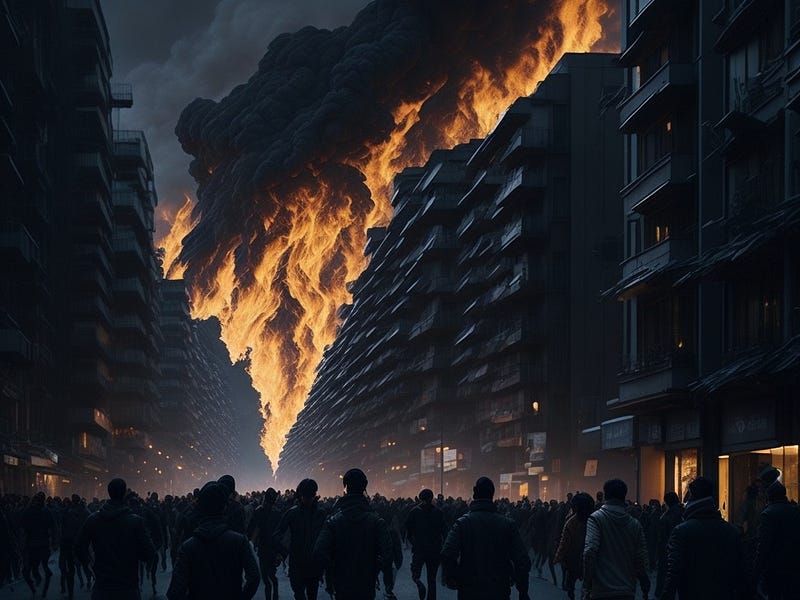
[Image generated by AI, Free to use]

“If this isn’t hell, then where else should we look?” rhetorically asked an anonymous chronicler of the events of September 1, 1923. On that day, the Kantō region experienced an earthquake with a magnitude of 7.9. However, it wasn’t the earthquake itself that proved to be the deadliest. The tremors, which started at an exceptionally unfortunate moment, triggered fires, and it was these fires that truly devastated Tokyo.

In the disaster, 105,000 people lost their lives (a similar number of casualties occurred when the “Little Boy” atomic bomb was dropped on Hiroshima in 1945). The authors of the latest study on the 1923 earthquake (published in the Bulletin of the Seismological Society of America) point out that a staggering 90 percent of the deaths were due to the fires, not the tremors. Consequently, it was one of the largest natural disasters of modern times and the deadliest in terms of the number of victims caused by fires.

The Man Who Predicted the Earthquake

Warnings about the danger to Tokyo had been issued earlier. At the beginning of the 20th century, seismologist Akitsune Imamura from the Imperial University of Tokyo had been predicting an earthquake. Imamura had already formulated a visionary theory in the late 19th century, speculating that the cause of tsunamis could be the movement of the Earth’s crust beneath the ocean. This was groundbreaking because Alfred Wegener described continental drift, or the slow movement of continents, much later in 1912. Wegener’s discovery eventually initiated the tumultuous debates that, after decades, led to the formulation of the modern theory of plate tectonics.
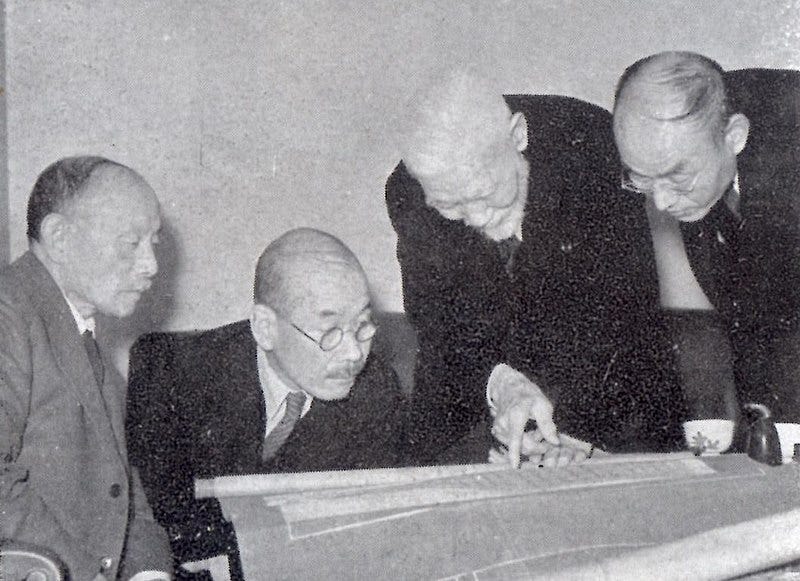
Left to right: Nakamura Seiji, Imamura Akitsune, Tanakadate Aikitsu and Ono Suminosuke — [Photo: 中村清二「田中館愛橘先生」中央公論社(1943年刊), Public domain, via Wikimedia Commons]

In 1905, Imamura published a paper that turned out to be an accurate prediction of the impending disaster. He foresaw that within the next half-century, a powerful earthquake would strike the Kantō region, potentially killing up to 100,000 people. He also warned that Tokyo, with its densely packed wooden buildings, would quickly be engulfed by fire, with residents having nowhere to take refuge. He advocated for leaving gaps between new buildings and abandoning oil lanterns, which could become sources of fire in times of disaster.

Imamura’s warnings were ridiculed by the leading Japanese seismologist of the time, Fusakichi Ōmori. Ōmori was convinced that earthquakes did not occur in stormy and windy weather, and therefore there was no need to worry about winds spreading the fire. This criticism led to Imamura’s predictions not being taken seriously.
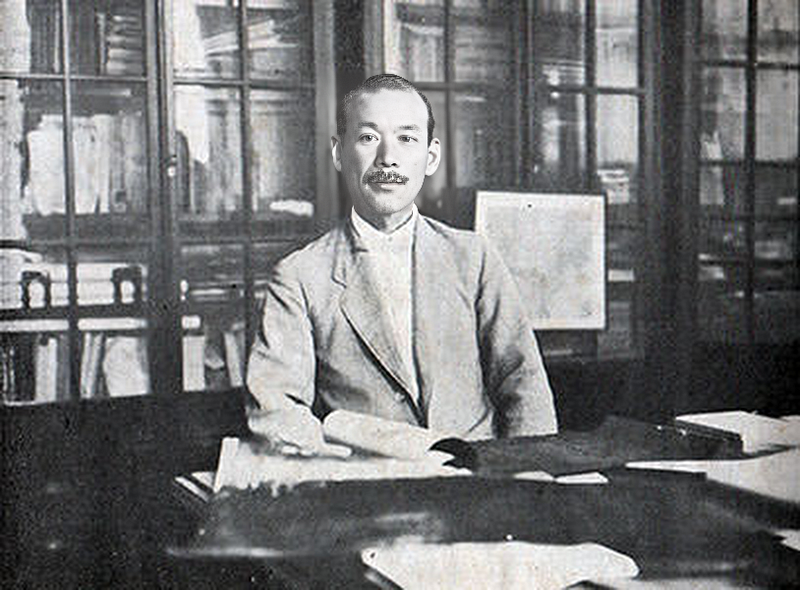
Akitsune Imamura — [Photo: 科学知識普及会, Public domain, via Wikimedia Commons]

The Japanese Tragedy Unfolds at Noon

The Japanese drama began two minutes before noon on September 1, 1923. At that time, Kantō residents were lighting traditional kamado and shichirin grills to prepare lunch. A powerful tremor knocked many of them over. Half an hour later, 130 fires erupted in Tokyo. The fires ignited in the most densely populated eastern districts of the city.

Secondary shocks passed through the region (there were nearly 2,000 in total). The situation in Tokyo quickly spiraled out of control — there were too many fires.
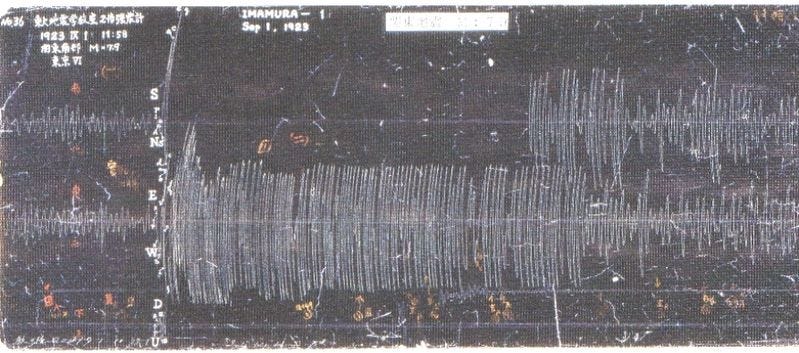
Seismometer go off the scale by shock of the Great Kantō earthquake — [Photo: 今村明恒 Akitsune Imamura, Public domain, via Wikimedia Commons]

“Even under normal circumstances, we wouldn’t have been able to cope with all of them,” noted Charles Scawthorn from the University of California, Berkeley, one of the authors of the article in the Bulletin.

However, hundreds of water main damages rendered the firefighters essentially powerless.

The fires began to merge. Tokyo residents saw fire tornadoes, columns of fire that moved, destroying everything in their path. On the earthquake-dedicated website greatkantoearthquake.com, there is an account from one of the witnesses of those events who saw a “huge wall of fire — like a tidal wave unleashed from hell.” Reporters from the “Kyūshū nippō” newspaper reported that the capital of Japan had turned into a “sea of fire.” Panic engulfed many people, making it difficult to escape from the chaotic city.
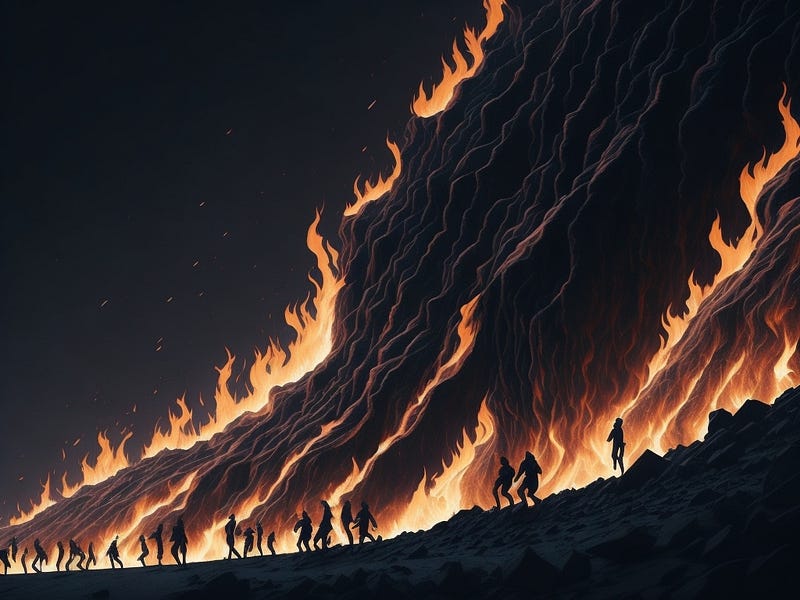
[Image generated by AI, Free to use]

After the Fires

According to the latest estimates, the losses caused by the 1923 earthquake exceeded Japan’s annual budget at that time. However, as is often the case, the disaster also led to significant changes. Imamura contributed to this.

“He convinced officials from the Ministry of Education that the Japanese are a ‘nation of earthquakes,’ and therefore they must start teaching children what to do when an earthquake strikes,” says Janet Borland, a historian from the International Christian University in Tokyo.

According to the authors of the study, the memory of the 1923 disaster is still essential a century later. The danger of fires caused by earthquakes has not disappeared and is not limited to Japan alone. Los Angeles, Seattle, San Francisco, and parts of New Zealand are also at risk. Everywhere, it is essential to maintain and improve fire protection measures.

“Imamura predicted and forewarned: science can warn, but for these warnings to be effective, political and social action is necessary,” reminds Charles Scawthorn.

Attention all readers!

As content creators on Medium.com, we face minimal compensation for our hard work. If you find value in my articles, please consider supporting me on my “Buy Me a Coffee” page. Your small contributions can make a big difference in fueling my passion for creating quality content. Thank you for your support!


https://www.buymeacoffee.com/oconnel
History
Death
Life
Science
Earthquake
Recommended from ReadMedium