avatarDark Energy Articles

Free AI web copilot to create summaries, insights and extended knowledge, download it at here

2754

Abstract

r, they pose a significant threat to native species. They reduce biodiversity by preying on amphibians, reptiles, and even small mammals.</p><figure id="6cec"><img src="https://cdn-images-1.readmedium.com/v2/resize:fit:800/1*lRdo24NHr4jDIzQwkjPnOA.jpeg"><figcaption>[Photo: Magdalena Smyczek, <a href="https://creativecommons.org/licenses/by/4.0">CC BY 4.0</a>, via <a href="https://commons.wikimedia.org/wiki/File:Red_ants_right_next_to_their_house.jpg">Wikimedia Commons</a>]</figcaption></figure><h1 id="1d0c">Invasive Fire Ants Worldwide</h1><blockquote id="718e"><p>“S. invicta is one of the worst invasive species,” says Mattia Menchetti, the lead author of the study in “Current Biology.” “It spreads alarmingly quickly. Finding these ants in Italy was a significant surprise, although we knew this day would come.”</p></blockquote><p id="ff19">Why? In the 21st century, fire ants have appeared in port cities in the Caribbean, China, Taiwan, and Australia. Intensive international trade and maritime transport have favored their spread. Previously, they were occasionally found in imported products in Spain, Finland, and the Netherlands. Now it is certain that they have also settled on the old continent.</p><figure id="be9e"><img src="https://cdn-images-1.readmedium.com/v2/resize:fit:800/1*jJLbBrxsHbqnSHLE9RULtg.jpeg"><figcaption>[Photo: Wing-Chi Poon, <a href="https://creativecommons.org/licenses/by-sa/2.5">CC BY-SA 2.5</a>, via <a href="https://commons.wikimedia.org/wiki/File:A_Texas_Ant_Colony.jpg">Wikimedia Commons</a>]</figcaption></figure><h1 id="e042">Through Sicily, the ants will spread to Europe</h1><p id="c3d4">Scientists found 88 Solenopsis invicta nests near Syracuse in Sicily. The nests were located on less than five hectares, and some of them housed thousands of ants. It turns out that local residents have been experiencing their painful bites for several years, indicating that the ants may be present over a much larger area. <b>Genetic studies showed that the population either originated from the USA or China.</b></p><p id="b29b">Will fire ants spread throughout the entire continent? According to scientists, only <b>7% of Europe is currently suitable for them</b> in the current climate, especially port cities along the Mediterranean Sea. However, urbanized areas present a different picture.</p><p id="342e">Researchers suggest that half of European cities (especially those with large ports like London or Amsterdam) are at risk of invasion by S. invicta. With the ongoing climate warming, fire ants may also spread farther north.</p><figure id="2ed7"><img src="https://cdn-images-1.readmedium.com/v2/resize:fit:800/1*ns-wMSrgX1J06JZqS6rp4g.jpeg"><figcaption>[Photo: Steven Paultanis, <a href="https://creat

Options

ivecommons.org/licenses/by-sa/4.0">CC BY-SA 4.0</a>, via <a href="https://commons.wikimedia.org/wiki/File:Clump_of_Ants.jpg">Wikimedia Commons</a>]</figcaption></figure><h1 id="0ec0">The Best Way to Deal with Fire Ants</h1><p id="d1a8">Can fire ants be stopped? So far, neither the United States nor Australia (where significant sums have been spent on this) have been successful. The Latin name of the insect is significant here. “<i>Invicta</i>” means “<i>unconquered</i>.” New Zealand, on the other hand, has been successful in eradicating the invasive ant species, becoming the only country in the world to do so.</p><p id="e67b">To achieve this, it requires painstaking work with the help of local communities. To get rid of Solenopsis invicta, it is necessary to regularly monitor vulnerable areas and remove any nests that appear.</p><blockquote id="5d6c"><p>“Citizens can play an important role in this,” says Menchetti. “We need to be more aware of the problem because it’s already in Europe,” he adds. “We need coordinated action, and we need it now.”</p></blockquote><div id="0130" class="link-block"> <a href="https://readmedium.com/metallic-spherules-from-beyond-the-solar-system-in-the-pacific-nonsense-or-a-historic-8bda8e931754"> <div> <div> <h2>Metallic spherules from beyond the Solar System in the Pacific: “Nonsense” or a “historic…</h2> <div><h3>Avi Loeb, an astrophysicist from Harvard, along with his team, combed the floor of the Pacific near Papua New Guinea…</h3></div> <div><p>medium.com</p></div> </div> <div> <div style="background-image: url(https://miro.readmedium.com/v2/resize:fit:320/1*YXZy1289gp7oyEhsoNGHIQ.jpeg)"></div> </div> </div> </a> </div><h1 id="e1e4">Attention all readers!</h1><p id="a824"><b><i>As content creators on Medium.com, we face minimal compensation for our hard work. If you find value in my articles, please consider supporting me on my “<a href="https://www.buymeacoffee.com/oconnel">Buy Me a Coffee</a>” page. Your small contributions can make a big difference in fueling my passion for creating quality content. Thank you for your support!</i></b></p><figure id="bc9d"><img src="https://cdn-images-1.readmedium.com/v2/resize:fit:800/0*0NelvEaqosjwP48_.png"><figcaption><a href="https://www.buymeacoffee.com/oconnel">https://www.buymeacoffee.com/oconnel</a></figcaption></figure><figure id="0ac8"><img src="https://cdn-images-1.readmedium.com/v2/resize:fit:800/0*6yTD_DHIRLtfyS0f.png"><figcaption><a href="https://www.buymeacoffee.com/oconnel">https://www.buymeacoffee.com/oconnel</a></figcaption></figure></article></body>

Fire ants are already in Europe. They are one of the most invasive insects in the world.

In Sicily, nests of fire ants, one of the fastest-spreading insects, have been found. According to researchers, up to half of European cities are threatened by an invasion of this species.
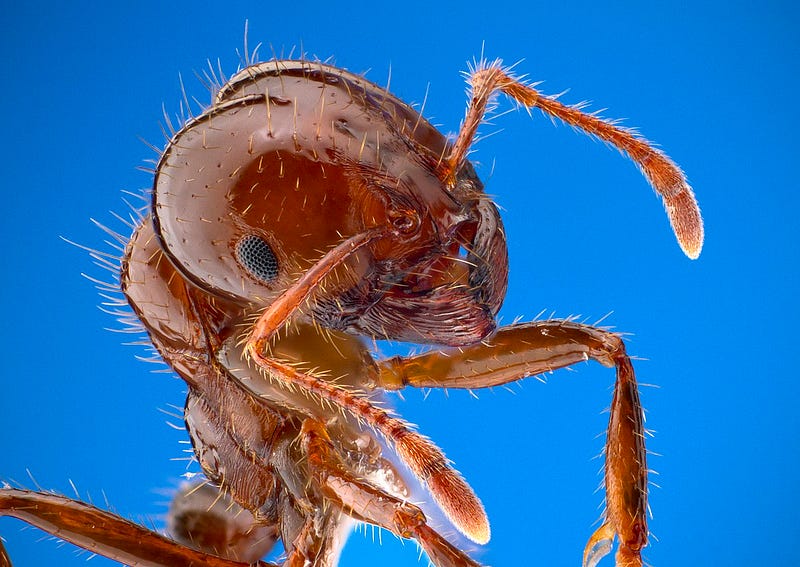
[Photo: Insects Unlocked, CC0, via Wikimedia Commons]

Their bites are very painful. On entomologist Justin Schmidt’s pain scale, fire ants (Solenopsis invicta) scored 1.2. The scale is four-tiered and is known for its poetic descriptions of the suffering experienced after being bitten or stung by various insects. According to Schmidt, encountering a fire ant results in “sharp, sudden, and continuous pain, like touching an electrified object.”

Their bites not only cause pain but can also induce allergic reactions and even lead to anaphylactic shock. Until now, Europeans were not exposed to this kind of danger. However, that has just changed. In an article published today in the scientific journal “Current Biology,” a group of experts announced the discovery of the first Solenopsis invicta nests on the old continent. Fire ants have settled in Sicily, on the outskirts of Syracuse.

The March of Fire Ants from South America

These insects originate from the tropical forests of South America. They are found in the central part of the continent, from southern Brazil to central Argentina. The species was first described in 1916, and just two decades later, the first fire ants were spotted in the United States.

It is believed that their “gateway” to the USA was the port of Mobile in Alabama. Initially, they were rarely seen. However, in the 1950s, a true invasion of Solenopsis invicta began in the USA. By 2004, they were present in thirteen southern states, covering 128 million hectares of land. The U.S. Department of Agriculture estimates that they are spreading westward at a rate of nearly 200 km per year.

How do they do it? They are resilient and can survive both droughts and floods. If they are submerged in water, worker ants can cling together and create a raft with the queen inside, which drifts in search of safe shelter. These ants’ nests have been found in rainforests, deserts, and densely populated cities.

In the latter, they can settle in parks, under sidewalks, or under building foundations. Wherever they appear, they pose a significant threat to native species. They reduce biodiversity by preying on amphibians, reptiles, and even small mammals.
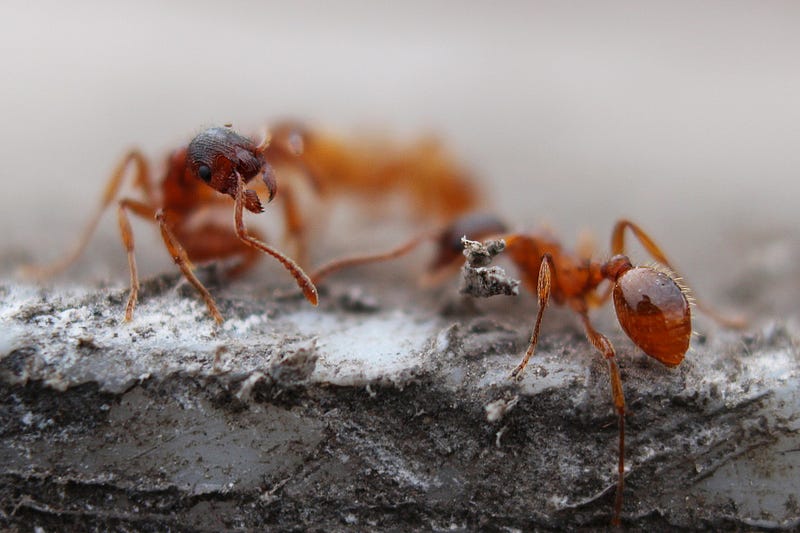
[Photo: Magdalena Smyczek, CC BY 4.0, via Wikimedia Commons]

Invasive Fire Ants Worldwide

“S. invicta is one of the worst invasive species,” says Mattia Menchetti, the lead author of the study in “Current Biology.” “It spreads alarmingly quickly. Finding these ants in Italy was a significant surprise, although we knew this day would come.”

Why? In the 21st century, fire ants have appeared in port cities in the Caribbean, China, Taiwan, and Australia. Intensive international trade and maritime transport have favored their spread. Previously, they were occasionally found in imported products in Spain, Finland, and the Netherlands. Now it is certain that they have also settled on the old continent.
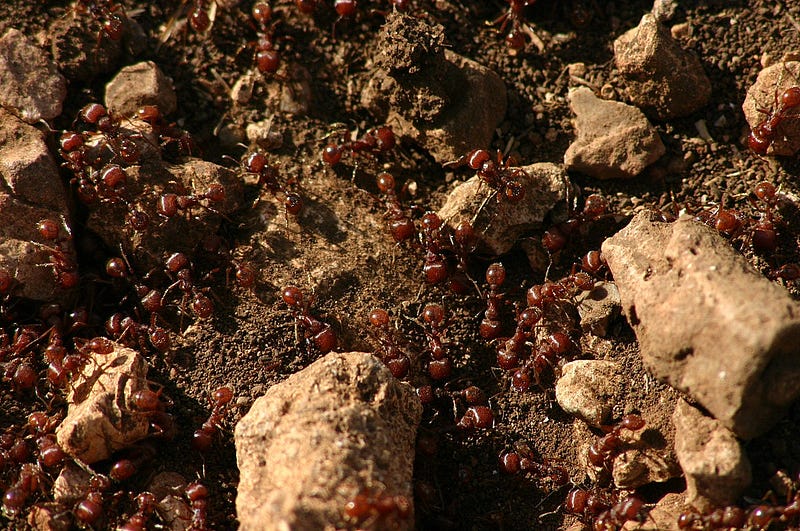
[Photo: Wing-Chi Poon, CC BY-SA 2.5, via Wikimedia Commons]

Through Sicily, the ants will spread to Europe

Scientists found 88 Solenopsis invicta nests near Syracuse in Sicily. The nests were located on less than five hectares, and some of them housed thousands of ants. It turns out that local residents have been experiencing their painful bites for several years, indicating that the ants may be present over a much larger area. Genetic studies showed that the population either originated from the USA or China.

Will fire ants spread throughout the entire continent? According to scientists, only 7% of Europe is currently suitable for them in the current climate, especially port cities along the Mediterranean Sea. However, urbanized areas present a different picture.

Researchers suggest that half of European cities (especially those with large ports like London or Amsterdam) are at risk of invasion by S. invicta. With the ongoing climate warming, fire ants may also spread farther north.
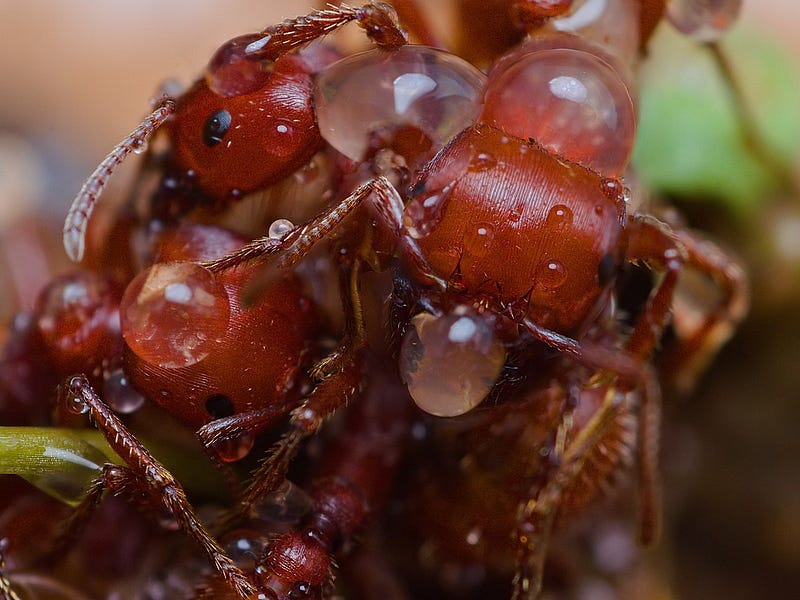
[Photo: Steven Paultanis, CC BY-SA 4.0, via Wikimedia Commons]

The Best Way to Deal with Fire Ants

Can fire ants be stopped? So far, neither the United States nor Australia (where significant sums have been spent on this) have been successful. The Latin name of the insect is significant here. “Invicta” means “unconquered.” New Zealand, on the other hand, has been successful in eradicating the invasive ant species, becoming the only country in the world to do so.

To achieve this, it requires painstaking work with the help of local communities. To get rid of Solenopsis invicta, it is necessary to regularly monitor vulnerable areas and remove any nests that appear.

“Citizens can play an important role in this,” says Menchetti. “We need to be more aware of the problem because it’s already in Europe,” he adds. “We need coordinated action, and we need it now.”

Attention all readers!

As content creators on Medium.com, we face minimal compensation for our hard work. If you find value in my articles, please consider supporting me on my “Buy Me a Coffee” page. Your small contributions can make a big difference in fueling my passion for creating quality content. Thank you for your support!


https://www.buymeacoffee.com/oconnel
Animals
Science
Nature
Life
Europe
Recommended from ReadMedium