
The Right To Be Wrong
When Being Wrong Could Kill Us
Allowing people to have their own opinion in the middle of a world pandemic, racial uprising and the most divisive election of all time
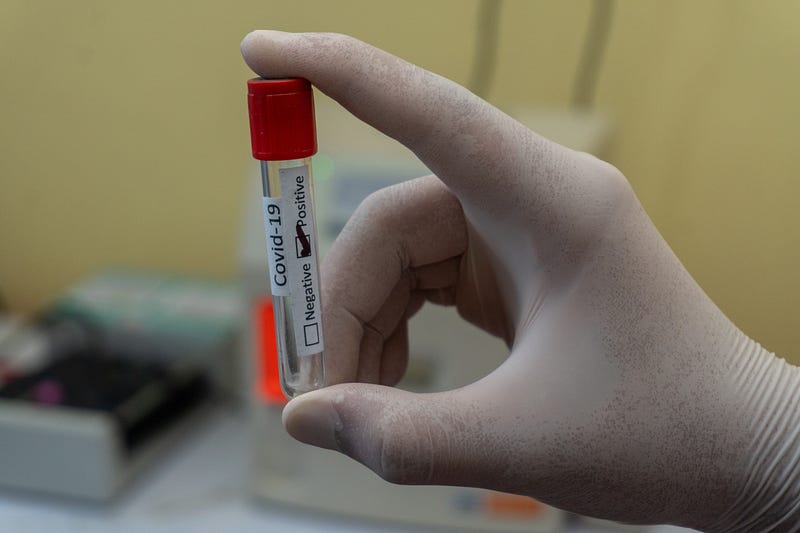
In a world where too many of us being too wrong could kill thousands upon thousands of people and destroy nations, it is nearly impossible to give people the right to be wrong and accept that all we know is nothing.
We are not required to condemn those who choose differently than we do.
If you choose to carry on as normal, in spite of Covid-19, you are not required to vindicate yourself through the condemnation of those who didn’t.
If you chose to take extra precautions in light of Covid-19, you are not required to vindicate yourself through the condemnation of those who didn’t.
If you voted for Biden, you do not have to condemn those who voted for Trump for your choice to be justified.
If you voted for Trump, you do not have to condemn those who voted for Biden for your choice to be justified.
This applies to every choice. Somewhere along the line, we have been convinced that in order for our path to be acceptable, the other path must be unacceptable.
When we ask ourselves the million dollar question though…
“Is it true?”
There is no possible way to know for sure that it is. Even if we think we know, even when it appears obvious, we cannot know — not without a sliver of possibility that we don’t. It may be but a teeny tiny sliver, but it is always there.
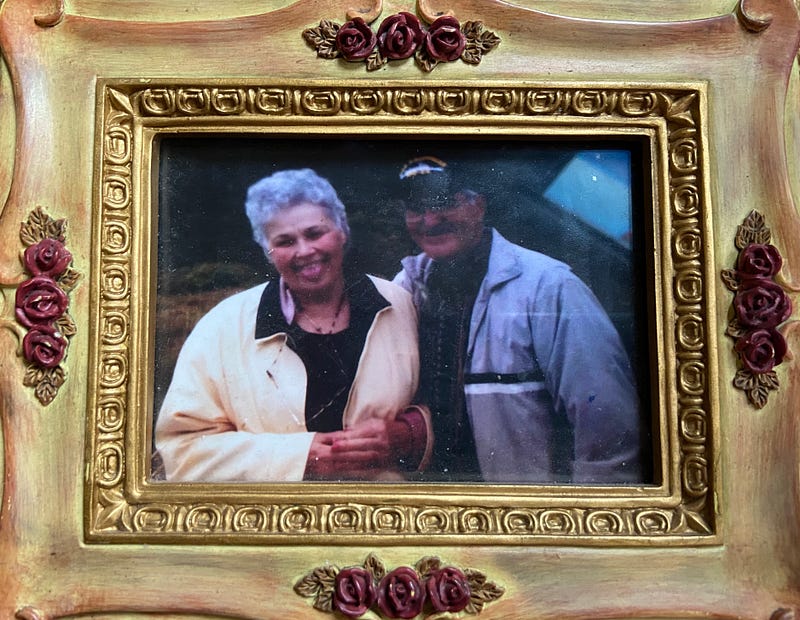
My dear granny understood this age old wisdom.
Growing up I heard her say it over and over.
“I know nothing.” would often be her answer in conversations and to herself she would make the same declaration, out-loud and throughout the day. Back then, I had no idea what she was saying. In those days, I thought it was just granny being granny, and in a sense it was. What I thought was just something silly she liked to say was actually a mantra filled with deep and ancient wisdom. In reality, she understood what all the spiritual leaders and teachers of the world have been trying to tell us for hundreds of years.
Who knew? I sure didn’t. But I didn’t know that I didn’t know.
All I know is that I know nothing.
Or as Socrates maintained, until his last breath —“I know that I know nothing.”
Author and influencer, Genius Turner, explained this paradox beautifully in his recent piece on histories great minds, and how they all reached the same conclusion — the more knowledge you obtain the less you know.
Perhaps it requires ignorance and arrogance to know anything for sure.
— Genius Turner
We will never know what the best path is for another — how they should walk, talk, dress, write or live. We will never know for sure what choices will serve their highest good or what fruit will be born of their pain. We do not know if the juice will be worth the squeeze or what apparent mistake will lead to miracles for themselves and even the world.
Finding our own path is barely attainable for many humans. Maybe that’s due in part to all the energy we focus on the path of others instead of our own.
For anyone suggesting that by not condemning others we are therefore not speaking out or contributing to positive change, I pose these questions:
At what point would my condemnation of others be enough to grant my entry into the land of the righteous?
Of course, there is a time for even the most graceful people to turn over tables. But how many tables must I turn over in order to not be labeled as apathetic, evading responsibility or pseudo-spiritual?
Can I simply be clear, direct and confident in my approach? Or do I need to be vicious?
If I need to be vicious in order to be righteous, how vicious do I need to be?
And who should I be condemning? The people? The people who lied to the people? What about the people who lied to the people who lied to the people? Where does one end and the other begin and which beginning is to blame?
Where is the line between victim and willing participant?
In addition to pouring my heart and my truth into the world, what would you have me do or say — regarding the people who appear to be harming others with their words or actions? Which actions warrant my interference and how do you suggest I interfere?
Answers to these questions will surely reveal that there are no real answers to them, only a bottomless rabbit hole of more questions — more paradoxes.

If we truly want to help people, we have to reach people.
No matter how profound our message is and no matter how much we think it could help the world, it does no good if no-one hears it.
I continue to speak, write and do everything in my conscious power to avoid limiting the number of people I could possibly help or who could potentially hear me.
In my experience, separating others from myself by condemning them does not result in more people hearing my voice, but less.
If I choose not to ostracize those who don’t share my beliefs — even on issues I see as paramount — there is a chance that on some day, at some point — they could hear me.
By condemning those who do not share my beliefs or understand me, I inevitably rob myself of any opportunity to help them with the words I speak or my steady example, ever.
It is just like when we do not want help, but desperately need it. When we have finally reached a point of desperation and are ready to reach out for help, we will not reach out to those who tried to force it on us when we weren’t ready nor will we reach out to those who co-signed our BS and never said a word.
The ones who told us the truth, but loved us no matter how little we listened — those are the people we go to when we’re ready. I believe it is all of our responsibility to make sure that hand is there for everyone, whenever they are ready—always.
In short, sometimes I have to give people my truth in the very best way I can, then give them the right to be wrong — in my eyes. There is always that chance too, no matter how small or how sure I am, that I could be wrong. Always.
If I ask myself, ‘Who does it help?’ and the answer is ‘No-one.’, then what is the point?
‘No-one’ is my answer when it comes to condemning and separating myself from those who do not share my values and beliefs.
For the extremists: (and sometimes I can be one too)
Does this mean that people could do anything and we would still be going out for coffee? No. If my friend started killing babies, I probably wouldn’t want to hang out with them anymore. And me stating that I do not have to condemn those who see things differently than me doesn’t mean I am going out toasting murderers on their recent kill or buying dope for those addicted to heroine.
If someone was just a pool pee-er though, I probably would simply tell them that they shouldn’t pee in the swimming pool and if they didn’t take my suggestion, I wouldn’t go swimming with them or let them pee in my pool. We could totally go out for coffee though, as long as no baby harming was being promoted by said java.
This concept is by no means black and white.
In the end, if you think that my efforts to avoid ostracizing and condemning others mean that I am shirking responsibility for what is happening in the world or living in toxic positivity, we may have to agree to disagree.
In conclusion:
I believe that I have the power to speak out for change and make change without viciousness towards and condemnation of those who do not agree. Even more importantly, I believe that the ostracization of others actually lowers my chances of helping anyone or making any change at all.
I do not need anyone to agree with this for it to be true, but we don’t have to agree on this to be friends.
Written by Holly Kellums
Connect with me on Facebook, Twitter, Instagram and LinkedIn
You may also enjoy these…


