
Why Socrates’ Confession “I Know That I Know Nothing” is the Highest Wisdom
Perhaps it requires ignorance and arrogance to know anything for sure.

I. A Teachable Moment
Last night while riding the subway, I heard a voice in just above a whisper say, “Ahem, excuse me, fellas, can you guys please spare some change?”
My buddy Josh — seated to my left — as if he were the ventriloquist and I the wooden dummy, spoke on my behalf: “Sorry, dude, we don’t carry around change.”
Given that I’ve long heard Karma was moody, I did my best to stay on her good side. “Here ya go,” I said while handing over the crinkly dollar-bill.
Josh hissed. “Now why’d you do that?”
I offered a shoulder shrug.
“I mean,” Josh continued, “if that bum can say ‘excuse me, can I have some change,’ he sure as hell can say: ‘Welcome to McDonald’s . . . can I help you?’ ”
I smirked, feeling no need to partake in a pointless match of verbal fencing with my pal. But he persisted. “Listen, Genius, just like we had to work hard and bust our tails to get paid, that bum can do the same! I mean, he’s got free-will to work just as hard as we do.”
“Josh,” I fired back, “did you choose your birthday?”
He shook his head.
“Will you choose your death-day?”
He scratched his head.
“And so,” I said while rubbing my hands, “if we mortals get to choose neither our birthdays nor death-days, who’s to say we get to choose how we’ll run life’s race between the starting blocks and the finish line?”
Josh heaved a sigh. “Just drop it, will ya! So tell me, are you trying to say there’s no free-will?”
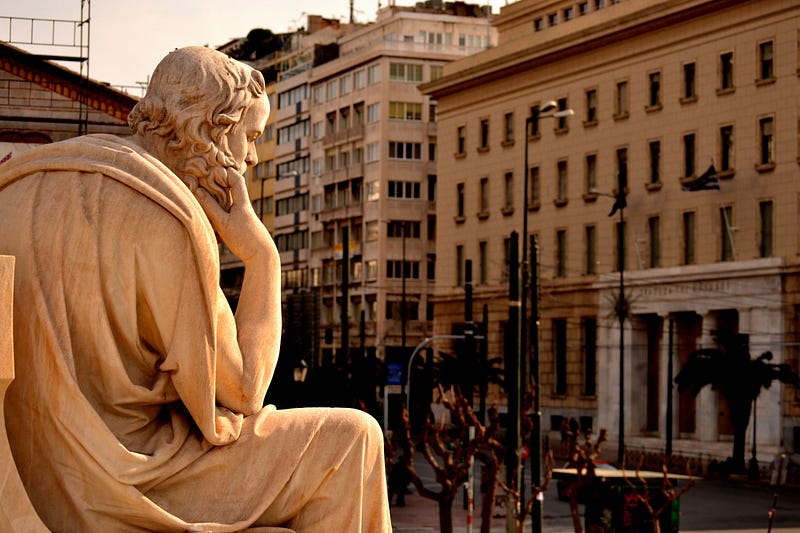
Without blinking I served as Socrates’ mouthpiece:
“My brother, the only thing I’m trying to say is — I know that I know nothing.”
II. The Wisest Man in Athens
According to the Oracle at Delphi, Socrates alone deserved to be crowned “the wisest man in Athens.” After all, it was Socrates who taught Plato . . . Plato taught Aristotle . . . Aristotle taught the world!
Aristotle single-handedly discovered every field from biology to zoology, to say nothing of having discovered logic while teaching Alexander the Great.
In short, Socrates taught the guy who taught that guy! Yet despite all the praise heaped on Socrates for his wisdom, to the very end he maintained, “I know that I know nothing.” But why?
Perhaps Socrates — who championed the view “the unexamined life is not worth living” — penetrated to the very heart of reality and, to his surprise, arrived at the same insight as did the great sage Lao Tzu: “The Tao that can be told is not the eternal Tao.”
Similar to Socrates, Lao Tzu was convinced that those who know don’t talk because those that talk don’t know. After all, for those who can be said to truly be in “the know,” it’s apparent — the more you know, the more it becomes apparent you don’t know.
III. Great Minds Think Alike
Given that great minds think alike for the same reason passengers boarded the same train . . . of thought inevitably end up at the same destination, we should hardly be surprised that histories greatest minds all reached the same conclusion:
What makes the mind so beautiful is its paradoxical nature. After all, the mind uses itself to understand itself. Hence we mortals can never escape The Ouroboros.
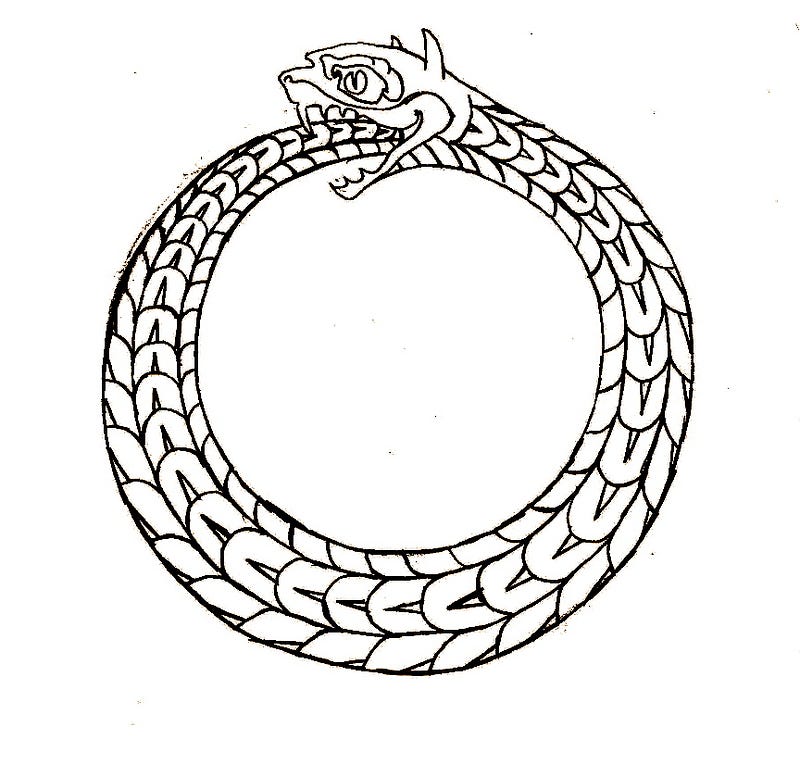
Perhaps the above insight explains why the physicist Emerson Pugh once quipped that “if the human brain were so simple that we could understand it, we would be so simple that we couldn’t.”
Or maybe this explains why certain mysteries in life I’d love to grasp, but my reach can never extend beyond my own arm span.
“Look deep into nature,” said Einstein, “and then you will understand everything better.” Indeed, to stare deeply into life is to find yourself inevitably tumbling down that rabbit hole made of paradoxes.
Even something, say, as seemingly commonplace as minimalism reveals The Ouroboros. After all, “minimalism” merely maximizes the use of space. How’s that for a paradox!
For ages, those initiated into the mysteries had known the very insight to which Socrates gave voice: to know thyself is to inherently know thy knowledge is restricted to thy knowing, hence “I know that I know nothing.”
Bingo!
IV. “I Claim Credit For Nothing”
To truly grasp what I’m groping with here is to understand why Einstein — the very synonym for the word “genius” — fully embraced Socrates’ highest wisdom. Besides, what more is a genius than someone who learns what people Knew yesterday, removes the letter “K,” and then repackages it as new today?
No wonder Einstein, then, in a cover story for the New Yorker, admitted he delighted in reading the ancient Greeks every night before retiring.
When the interviewer expressed surprise regarding a modern scientist’s interest in ancient musings, Einstein wondered aloud: “How can an educated person stay away from the Greeks? I have always been far more interested in them than in science.”
Perhaps Einstein fully understood this: not only was Socrates “the wisest of the wise” but he also gave voice to the highest wisdom of all. Hence when the press attempted to shower Einstein with the title “genius,” he abruptly set them straight:
“I claim credit for nothing! Everything is determined, the beginning as well as the end, by forces over which we have no control. It is determined for the insect as well as for the star. Human beings, vegetables or cosmic dust, we all dance to a mysterious tune, intoned in the distance by an invisible player.”
— Albert Einstein
V. In Conclusion
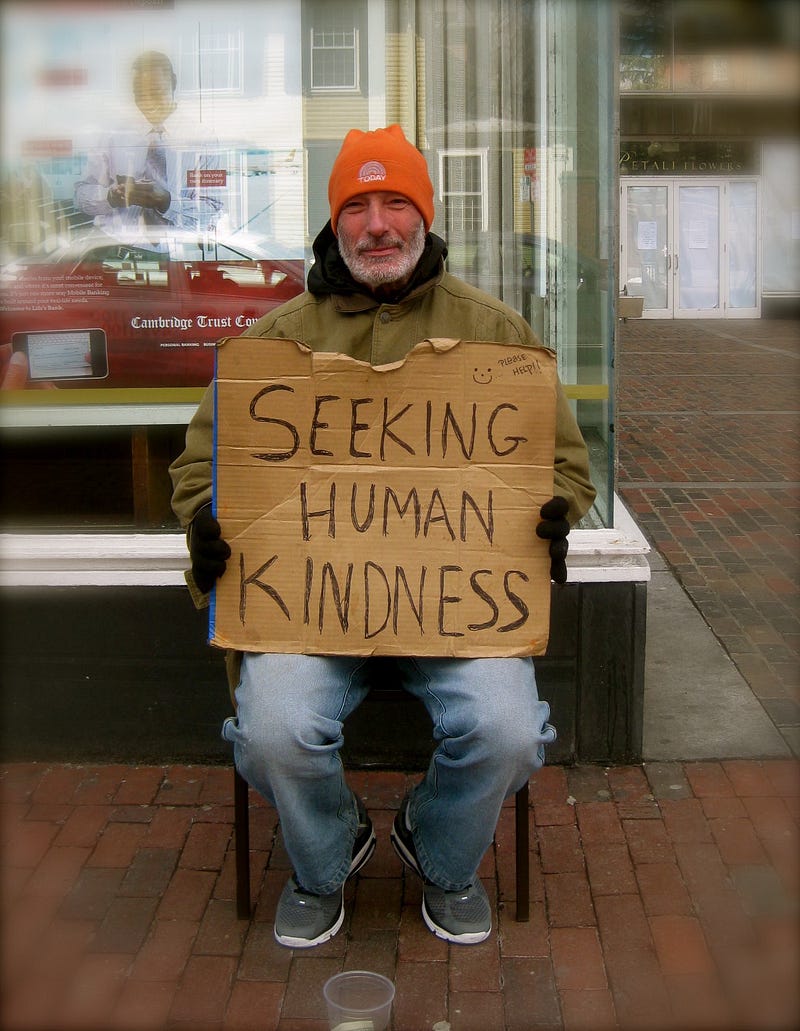

“Be kind,” advised Plato; “everyone you meet is fighting a hard battle.”
Ah, the wise man whispers to himself “this too shall pass” even when life feels good; the unwise, only when life feels bad. But does not the sour always trail the sweet?
Doesn’t Life deal us all cards and leave us with no choice but to play the hands dealt?
Everyone we meet is privately fighting a hard battle. Wisdom, then, dictates I always keep in mind each man is nothing but a variation of myself. I strive therefore to judge no man, woman or child. After all, what do I really know . . . what do I really know?
“For many people, the more you learn, the more you realize how little you actually know,” Dr. Jaffe notes.
Dare I say: the wiser we become, the more we suspect the chief aim of reading isn’t so much to know more as it is to remind ourselves that we don’t know much.
“Be careful of hubris,” warned Socrates, “for the gods have been known to strike mortals down for lesser offenses!” When I found myself confronted by my homeless brethren on the subway, therefore, I dared not to judge him. After all, I sensed the true “change” he sought was for a change of his misery.
Given that ’tis the season, perhaps it’ll serve us well to remember that Santa Claus — the very image of humility and service — is known as a saint (Nick).
Perhaps the highest wisdom boils down to this: show me a guy with a “big-head” and I’ll show you a guy with a “small-mind.” Be humble! Besides, who really knows?
Experience — that hard teacher which gives tests before study guides — if she’s taught me nothing else, she’s taught me this: sometimes you can be dead sure while being dead wrong, too.
Perhaps my old basketball coach — who once barked at me — put it best:
“Turner, it’s one thing to do something stupid, but please don’t boost the stupidity with your arrogance and confidence!”
Perhaps Socrates in his grand quest to know thyself suspected the mind is the world’s greatest problem-solving machine without which there couldn’t exist a single problem!
Perhaps there’s a helluva lot more to knowing than just merely knowing. After all, the mere attempt to “know thyself” always results in posing the question: “But . . . but — who am I?”
Whoever truly embraces the Socratic insight into reality will gradually view life from a higher plane. You’ll begin to notice how some folks talk way too much but say way too little.
In short, the more I live, the more I’ve come to embrace the following philosophy:
Perhaps it requires ignorance and arrogance to know anything for sure.