
The savage sex story of Paul Tillich
A Christian theologian‘s dark side spills out
Since the 1950s, Paul Tillich was a Christian star. A refugee from Nazi Germany, he had helped Protestantism recover from World War II, and update it as a modern religion. His influence was immense.
In 1965, as he was dying, he was busy destroying letters and photos of women. He planned to be remembered as a major theologian — not a sexual athlete and predator, with a taste for sadism.
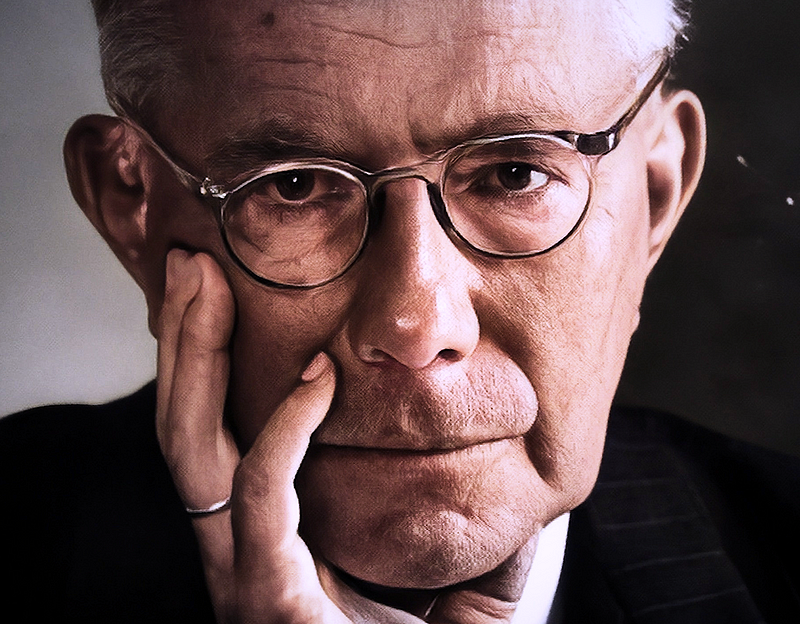
He had written an autobiography for posthumous publication.
On the Boundary, as it was titled, made no reference to his unusual sex life. It was all to be very Christian—which meant scrubbed and staged for popular consumption. He was going to be “godly.”
On October 22, 1965, his last day of life, friends asked to see him in the hospital, and were refused. Was it Hannah, being jealous again? People who knew Tillich and his wife assumed they hadn’t divorced because it would’ve damaged his career.
As he was dying, Tillich asked his wife to destroy any further evidence she might find of his sexual history. He apologized to her. “My poor Hannachen,” he said, “I was very base to you, forgive me.”
Obituaries overflowed with his praises.
I look through the period newspaper coverage, finding Christians moved by the passing of a hero. One wrote:
“Tillich, more than anyone, has saved a generation from despair and restored to it the sense of human dignity and of spiritual destiny.”
Another wrote:
“From his startling work Courage to Be, or from any of his other 25 or so books, modern man was shown the door that connected religion and present day life.”
Martin Luther King, Jr. paused his civil rights activism to say that Tillich “gave us a system of meaning and purpose for our lives in an age when war and doubt seriously threatened all that we had come to hold dear.”
After the devastation of World War II, Paul Tillich had seemed to chart a way forward.
He was open to science, the arts, philosophy. He’d offered new definitions for key terms. Perhaps ‘God’, he suggested, was not an angry deity in the sky, but simply—“the ground of being.”
‘Faith’ might be “the state of being ultimately concerned…”
The ‘demonic’ was not a reference to vile spirits in Hell, perhaps, but the human impulse for ‘destruction’.
His re-definition of ‘sin’ proved most influential.
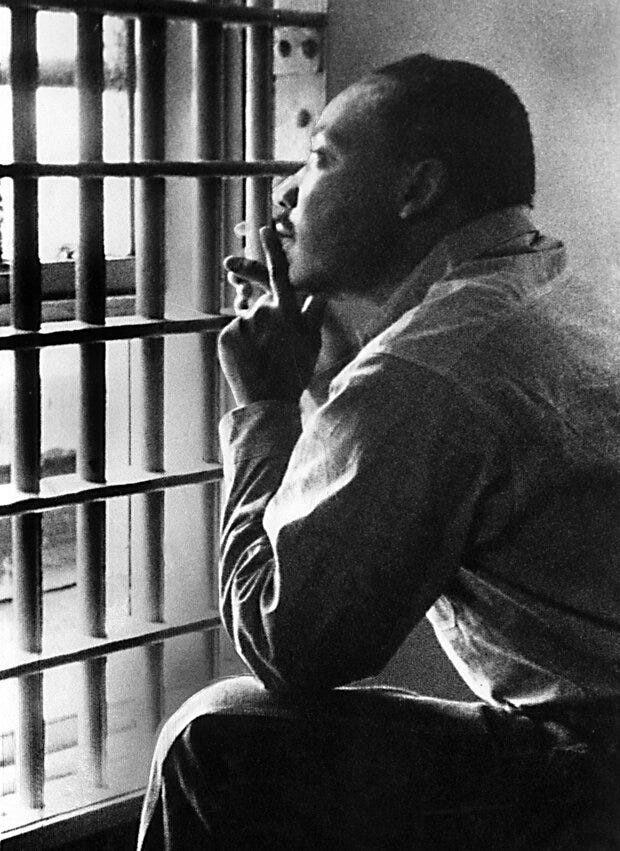
It was noticed by Martin Luther King, Jr., who wrote his Ph.D. thesis on Tillich. As King wrote in his 1963 “Letter from Birmingham Jail”:
“Paul Tillich has said that sin is separation. Is not segregation an existential expression of man’s tragic separation, his awful estrangement, his terrible sinfulness?”
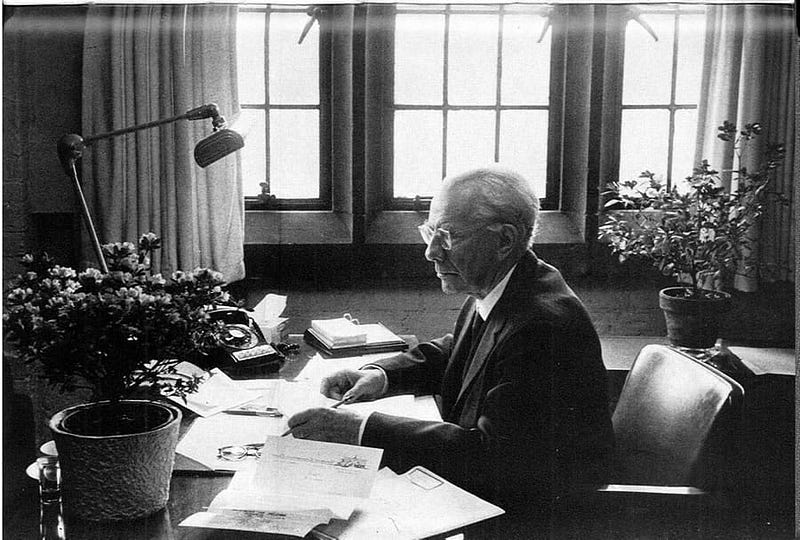
After he died, Hannah Tillich did find more to destroy.
There were love letters, and S&M pornography mixed in with drafts of his Christian writings. She’d recall: “I lit the fireplace and spent two days burning the great man’s past, as he had wished me to do.”
For the next two years, she was reclusive in their East Hampton home. She’d recall in an interview:
“I was alone. I cried. I started writing, first about his death, then about his letters he asked me to destroy and which were a shock for me although I was prepared for what was in them. Then I went back and back and back to my birth. I don’t know — was it a confession? I think it was a way to come to terms with myself.”
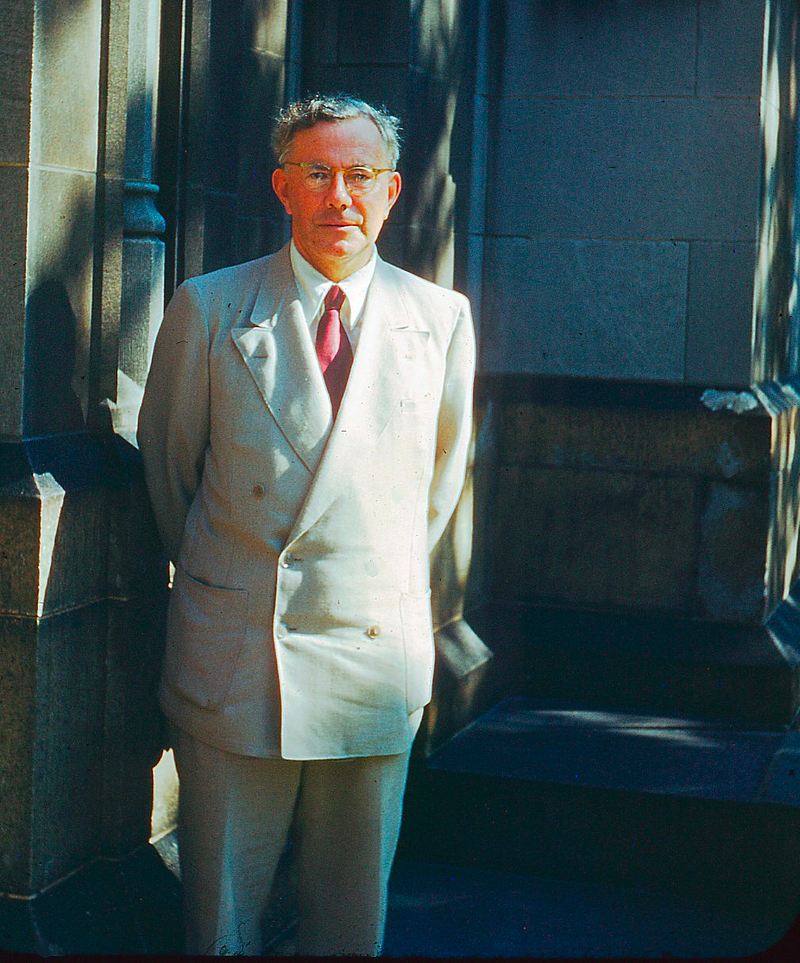
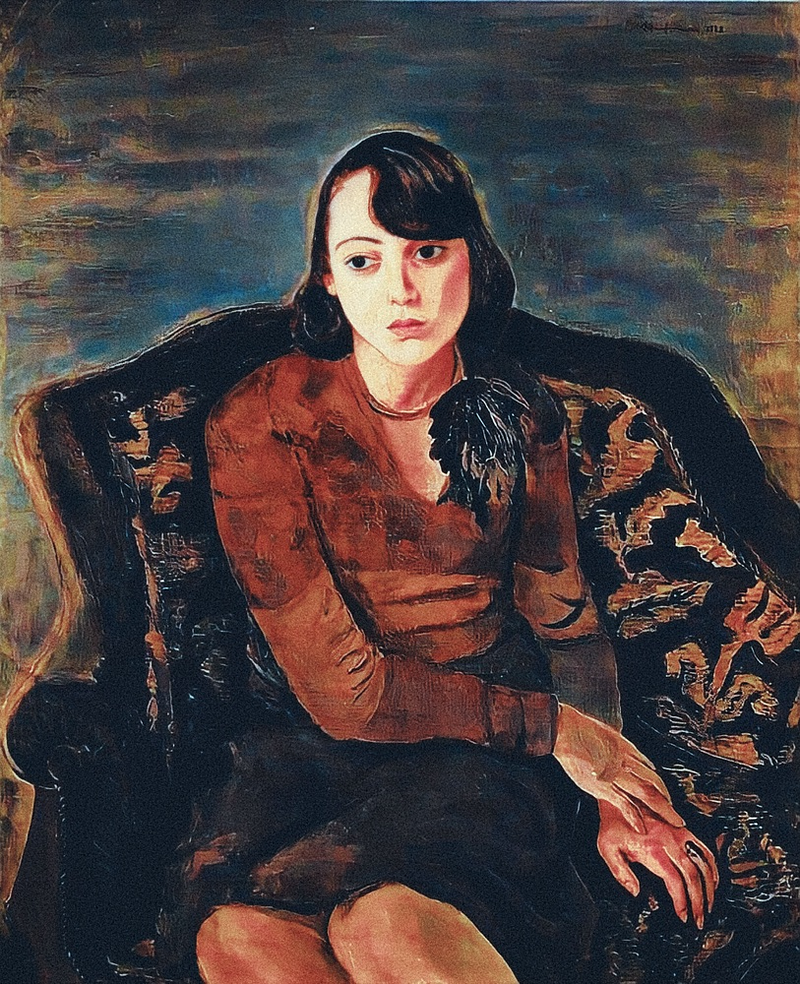
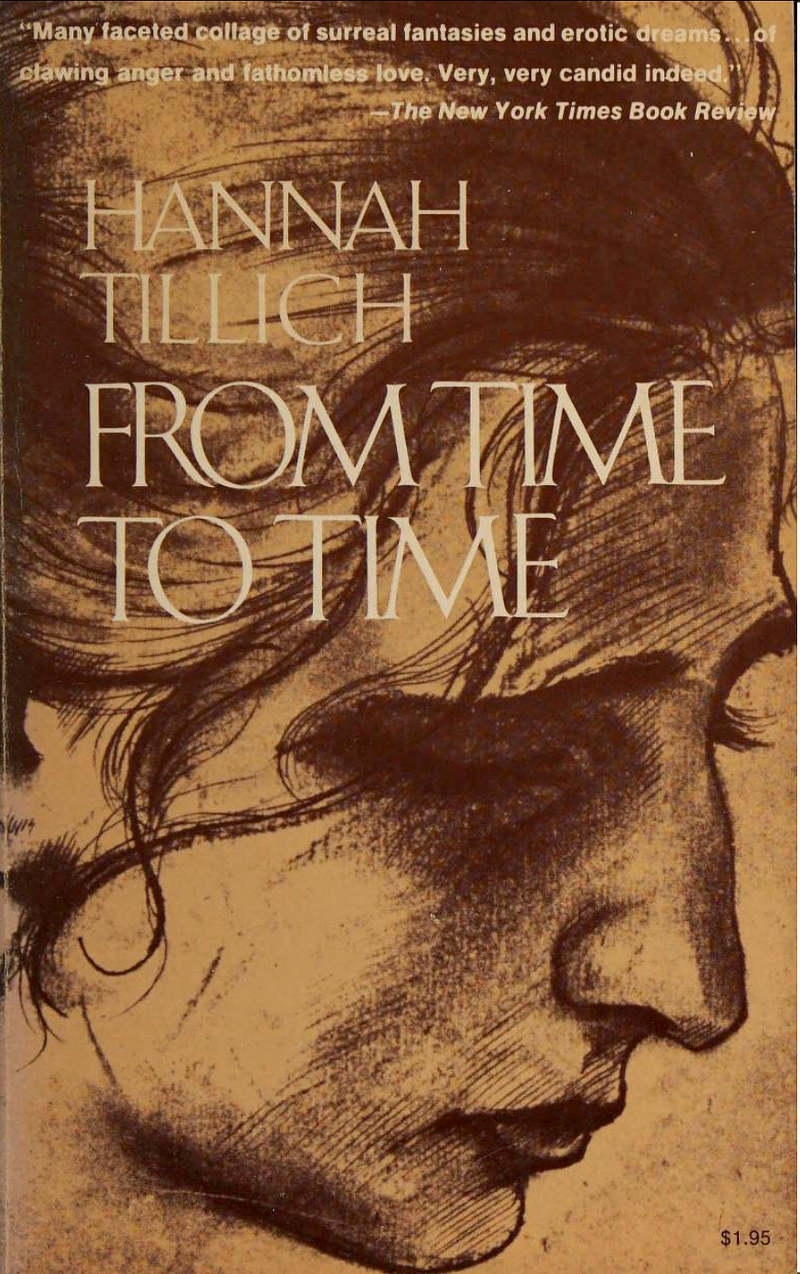
Her memoir was released in October 1973.
From Time to Time was detailed, raw, shocking. Paul Tillich had innumerable girlfriends. She’d had a few of her own. She narrates her own sexual awakening:
“I kissed her, I embraced her. She seemed stunned and I whispered that she should not tell anyone about it.”
She suggests Tillich was bisexual too. Or at least, he “often talked about his latent homosexuality during his student days…”
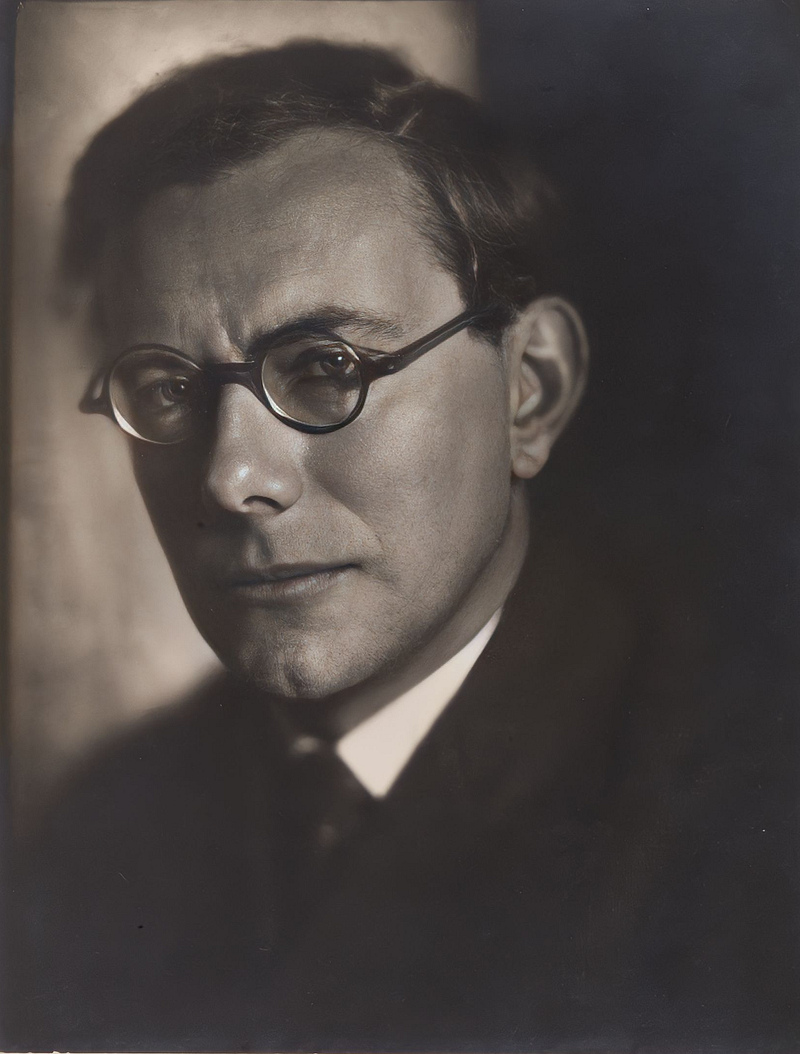
Hannah was a curious woman.
She calls herself a ‘witch’, and said she saw auras, and had mystical experiences. During the period when she and Tillich met, she writes, she looked like a man “in drag.”
He was a decade older. She writes of their first sex scene, when each was with someone else — he married, she betrothed.
“…as he entered me for the first time after many playful sensuous meetings, he was frightened. It meant nothing to me except for his fear at seeing drops of blood. He had conquered me long before.”
Later, after each had divorced, they married. She hoped the lesbianism was behind her. Or was it what he’d liked? She writes: “Paulus had a feminine component that made him vulnerable to masculine women.”
She knew him to see other women — all the time.
He’d had sex with her on their wedding night, then went off to be with another lover. During their marriage he slept with everyone, it seems, except her. He slept with his students. He slept with the maid.
He was working as a professor of Christian theology at the University of Frankfurt. Women he’d slept with and rejected sometimes came to tell Hannah, she notes, “which amused me.”
He kept a separate apartment for girlfriends. She writes:
“Paulus dealt with sex in utmost secrecy. In later years, he would not even let himself know what he was doing.”
She was jealous—and seeing other men.
One seemed to really like her. “He wanted me to leave Paulus, which was impossible for me,” she writes. She and Tillich were somehow together, each sexual adventurers in Weinmar Germany.
The narrative becomes something like a Christian version of Cabaret:
“…a long-legged lesbian aristocrat came sailing into the room on a bicycle, wearing pink leggings, her face painted, flowers in her hair, imitating a circus beauty. The kissing, drinking and flirting were indiscriminate. I was uncomfortable. Paulus was delighted.”
Hannah had more girlfriends, now interested to watch her sexual evolution as she moved from women to men, and back to women.
“Eve was somewhat enamored of me and I was excited by her, without becoming the pursuer, as I had been with my previous ladyloves.”
The rise of Hitler happens in the background.
Paul Tillich was a rare anti-Nazi Christian. “The churches fell to Hitler,” Hannah writes. She remembers visiting a church. “Red Nazi flags with the swastika stood around the altar,” she writes.
He was fired in a purge of non-Nazis and Jews. They went to America—having sex with many people at every step of the way. But in America, everything was different, she felt. “Sex seemed a strange word here,” she writes. “It implied copulation without imagination.”
For Americans, she realized, sex was “a cold bed and satisfying a physiological need only.” Except in Harlem, where they went to African-American nightclubs to see sexy shows. She writes:
“A nude Negress painted gold, having danced with a Negro twice her size, leaned her body against a post and masturbated with violent snakelike movements…”
Tillich’s sexual habits were an open secret.
Eugene Peterson, to become a famous pastor, was in seminary and a big fan. In a 1998 book, The Wisdom of Each Other, Peterson doesn’t refer to Tillich by name, but the details are unmistakable.
This theologian was seemed to be “everything that a theologian should be,” he wrote. “And then I found out that he was a compulsive philanderer and a dabbler in pornography.”
Peterson recalls raging about it: “I’m totally disillusioned!” he told his pastor. His pastor replied: “Good! Who wants to go around stuck with a bunch of illusions! Jesus is not going to disillusion you.”
The Tillichs took to living largely apart.
He had his work, and mistresses. She did drugs and yoga, and had her own friends and lovers. She tried threesomes, and foursomes, writing about a new consciousness of togetherness that came over her:
“It was a break with the whole concept of monogamy, it was a new concept of participation without losing one’s identity, of becoming more and not less in a foursome. One no longer lived inside a picture frame, pressed flat on a single plane, one moved out into thinking not in opposites but as a group.”
Their sex life together had ended, but in old age, a kind of renewal took place in their marriage. She writes: “I could enjoy him again, loving his noble aging face, listening to him on social evenings.”
And then he was gone. And she was writing a book.
His friends heard of her planned book.
In a 1998 paper, the scholar Tracy Fessenden noted that her husband’s friends “begged Hannah not to publish her book.” On seeing that she planned to continue, they came up with a plan.
Rollo May, the Christian psychiatrist, began writing his own book. Paulus was to be presented as memoir by a friend and also a psychiatric evaluation. Its purpose, Fessenden thinks, was “to deflect attention from what he knew Hannah Tillich would say…”
If that had been May’s strategy, it’s amusing to imagine him trying to imagine what Hannah would say, and then trying to paint the most flattering portrait of Paul Tillich that he could.
Because it’s not that flattering.
Yes, there’d been many girlfriends, May admitted. “He had enough eros for all,” as one of them is quoted saying.
Tillich had often complained about the ‘puritanism’ of Christian culture, but hadn’t written much about sex. He’d talk about it in lectures. May writes:
“He believed that, even though partly aggressive, the sexual act in the orgasm is still giving of the persons to each other. It is the tension between the aggressiveness and the giving which produces the ecstasy of sex.”
Tillich had always been secretive about his affairs. He required that.
He loved prostitutes, but just to talk to them.
He liked “good pornography,” as May puts it, adding: “I felt he had a kind of reverent attitude toward the female body and the vagina as well as toward the phallus.”
Tillich was into S&M, but not with every girl.
Rollo May clarified that Tillich’s “sadism” had mostly emerged when he’d been making:
“…a desperate attempt to reach someone deeply, to break the ‘skin barrier’…the mad endeavor somehow to really touch or reach a person’s inner being…”
Otherwise, he thought, Tillich “did not need the paraphernalia of sadism.”
The S&M seemed to center on a scenario in which Tillich played a judge, as the woman was the ‘criminal’ keeping secrets from him. May adds:
“Through torture the guilty person would be made to confess.”
Women loved Tillich, May writes. “I have rarely met a woman who knew him who did not prize and treasure the experience.”
In 1973, Hannah’s book came out.
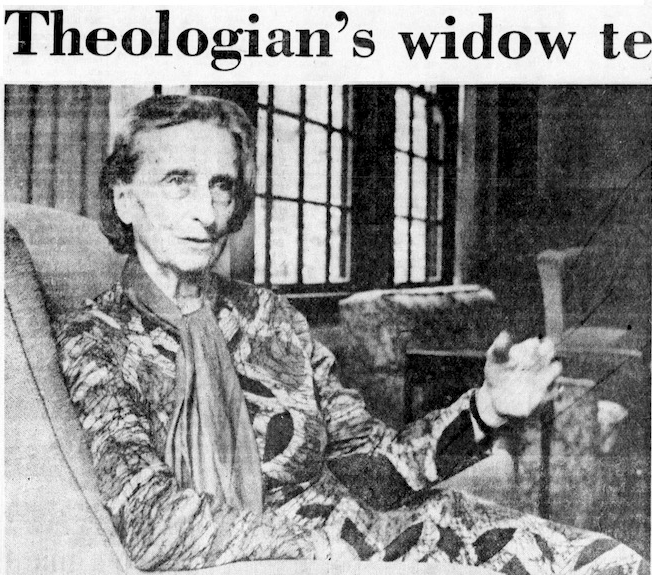
She became a rare Christian widow to appear in the newspaper gossip columns. She had so much to explain. She wasn’t a feminist, she clarified. She was a witch. But she wanted her book to be understood as an act of female liberation.
“He loved so many people that I became invisible to him,” she said. “I decided to make myself visible.”
The San Francisco Examiner ran a feature on her. There is “great anger” among her husband’s fans, she says. “It is because they cannot accept the image of the hero with feet of clay.”
She’d tried to be honest, she says, though she adds:
“The truth is hidden. It is something for me and something else for you. But you can have great honestly. You can be as honest as possible.”
Did she have any regrets? the reporter asked her.
“Not a little bit of regret,” she replied. “Life with Paul Tillich was so tremendous. It was wonderful to share his world. He could talk to me about everything…when the time came.”
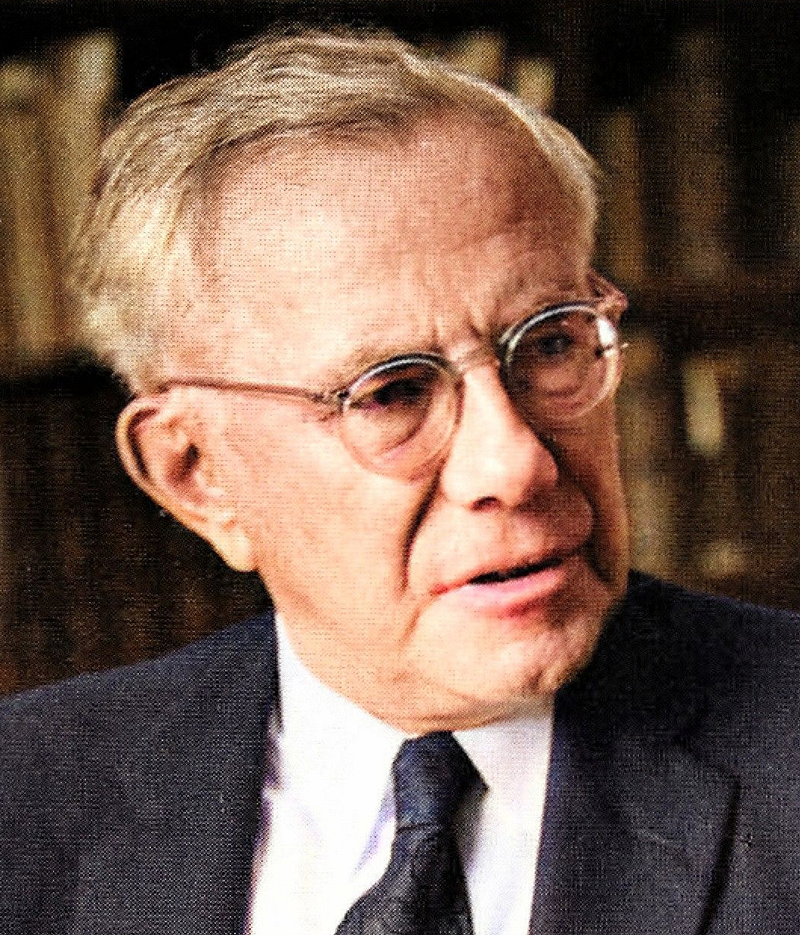
May’s book came out in early 1974.
Tillich fans were quick to proclaim it as much the better of the two. The magazine Christianity Today dismissed Hannah’s book as full of “bitterness and resentment…”
Such dismissals were to become common. As one scholar sympathetic to Tillich said: “no good has come to anyone as a result of Hannah Tillich’s angry book.”
Mostly, though, Christianity didn’t want to deal with either book, and both are now obscure and out-of-print.
Had Hannah been lying?
The suspicion seemed to lurk in Tillich’s fans, and in 1998, they obtained proof. The Tillich son René gave a speech at Harvard University to an audience of his father’s admirers. In “My Father, Paul Tillich,” he recalls his mother as “shrill, harsh, tyrannical, demanding, and critical.”
His quiet, “sweet” father, he said, had seemed scared of her.
She’d make sexual accusations constantly, he says, but “her accusations were groundless.” Maybe that was why his father was rarely home, he sighs, and when he was, he’d been:
“…always sighing and wringing his hands. In front of people, he was transformed, like the surgeon who has the shakes until he walks into surgery. His anxiety was constant unless working or performing.”
René had not known his father very well, he says. He accuses his mother of separating them, and adds: “Sin is separation from God.”
He says that as his father was dying, Hannah kept even the two children away. “She claimed it was because he feared dying and our arrival would scare him,” René says. “She had him alone to herself at the end.”
He suspected his mother was sexually abused.
He’d asked her about it once, he said, and she’d said it was her alcoholic father — a subject not discussed in her book.
“I believe he loved her,” René says of his father. But he adds that his father had spoken of loving twelve women. There’d been affairs, but it wasn’t as many as Hannah had said. He remembers his father throwing up his hands at one of her tirades, saying, “What have I done?”
How had Tillich reconciled Christianity and womanizing? René says he’d asked his father once, and reports: “He said he had never spoken against adultery and that ended the discussion.”
And so Paul and Hannah had lived together: the Christian theologian and a wife who’d declared once, René recalls, that “she did not want to go to Heaven if he were there.”
René writes that it took him years to see past his mother’s narratives and re-conceive himself as his father’s son. He adds:
“I’ve many times been angry at him because he did not protect us from Hannah, and I profoundly regret the years which, partly out of self-preservation, I defined myself in her terms.”
But I’m troubled about René Tillich.
He worked for years in Hawaii as a marriage therapist, specializing, curiously, in helping married couples deal with adultery. On November 1, 1973, I notice, the Honolulu Star-Bulletin ran a feature on him.
At age 38, René was giving a very positive review of his mother’s book. “All my life people have been saying, ‘Oh, you’re the son of Paul Tillich’,” he says. “Now maybe they’ll think, ‘Hey, he’s just like everyone else.’”
His review then? He says:
“People have said the book’s pornography, a put-down of my father. But I’m proud of what my mother’s done. She has blown up the myths that have surrounded him.”
His parents often were at odds, he says, but continues:
“But even at the worst times she admired him. I remember her phrase: ‘He’s deep enough for me.’ Which meant, to me, that he and she had an exchange that was important. They could talk about a wide range of stuff that many people tend not to share with one another.”
Paul Tillich’s star was rapidly falling in the Christian world.
A biography of him was cancelled, supposedly over theological issues. The scholar Charles Marsh adds: “But it’s more likely that Tillich’s extramarital affairs and rumored sexual advances presented an insurmountable challenge.”
More sex details came out over time. A biography of Reinhold Niebuhr that was published in 1985 notes that Tillich had been “exuberantly, compulsively promiscuous,” and relays a scene from back in the 1950s.
Tillich had been teaching with Niebuhr at Union Theological Seminary in New York City. One day a female student went to see him in his office.
“He welcomed her warmly, closed the door, and began fondling her.”
It would be noted…on occasion.
Victoria Gaile Laidler recalls a day in seminary when a professor noted Tillich had sexual contacts with students. Laidler replied, in class, that these “certainly today would be considered sexual harassment at best, abusive at worst.”
The professor, she recalls, replied that “all of us are sinners…”
Tracy Fessenden recalls delivering her paper in 1998. The feedback to her treatment of Tillich’s sexual history, she notes, was that the subject was “outside the scope of theological discussion…”
She recalls a colleague asking her: “What, exactly, is bothering you?”
Not everyone was buying the cover-up. A theologian named Donald MacKinnon wrote in a 1975 essay:
“We have to admit that Tillich emerges as ready to use his unquestioned powers as a teacher, as an intellectual prophet, to attract women into his orbit, whom it would seem that he often seduced.”
He found a pattern of “shameless and heartless sexual promiscuity,” and in Tillich’s theology, “an element of fraud, of hypocrisy…”
Then it became something of a trend to dismiss Tillich’s theology over the sex details.
Diarmaid MacCulloch wonders “how far any of Tillich’s theological work can be taken seriously.” Michael F. Bird dismisses Tillich as “a serial adulterer and sexual predator to his female students.”
But mostly, there was silence about the details. Hannah died in 1988, largely unnoticed. I sit wondering about the strangely truthful woman who told Christianity what it did not want to know. Or rather, she said publicly what they spoke about in private.
I exchange a note with Tracy Fessenden. She adds: “I spoke recently to a contemporary of Tillich’s who said of course it was all true. He didn’t defend or condemn Tillich, he just sort of shrugged.” 🔶


