
A BOOK REVIEW
When a Book About Writing Makes You Cry
Zen in the Art of Writing by Ray Bradbury
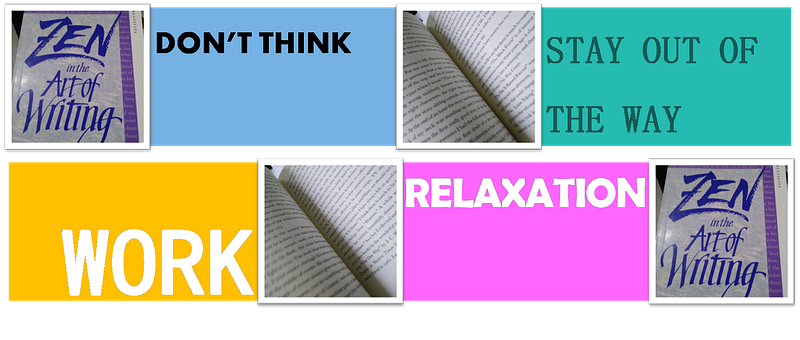
Hello, Dear Reader. This is the first in what I expect will become an endless series: book reviews, by Me, The Reader.
As fate would have it, the first book in this project is no other than Zen in the Art of Writing by Ray Bradbury.
I had been aware of this book for several years, but I just hadn’t gotten myself to read it. This year I decided to correct that and, I have to say, my, oh my…
Have you ever wished you could highlight an entire book? Not only that, you want to, somehow, spend the rest of your life reading this same book, over and over again. At the same time, you need to get to the end.
That’s not all: you want to scream to the world, “Hey! Everybody! You have to read this! You must, must, must read it!”
That’s what reading this book felt like.
It’s not just the fact we are reading words written by a true master.
Above all, this book is about love.
Love love love love love…
The purest kind of love. The love that expects nothing back. The type of love that gives and expects to forever keep on giving, even if it never gets anything in return.
This book is about loving the magic words create when we dare put them on the page.
From the very first pages, we are told this about writing:
“…it reminds us we are alive and that it is a gift and a privilege, not a right. We must earn life once it had been awarded us.”
And there’s a kicker: “Not to write, for many of us, is to die.”
This book could change its name to “A Love Letter to the Art of Writing,” and it would make all the sense in the world.
Why is this love so important?
There are writers whose work I despise…there, I said it: I despise their words. Their writing feels like a lie because I can see the mask over their face. They don’t love writing. The love of words is not the driving force behind their efforts. What is wrong with that kind of writing? I was struggling to put into words precisely what the thing bothering me was. Until I read this:
“…if you are writing without zest, without gusto, without love, without fun, you are only half a writer. It means you are so busy keeping one eye on the commercial market, or one ear peeled for the avant-garde coterie, that you are not being yourself. You don’t even know yourself.”
Damn!
I get it. We all need to make a living. And we are desperate to escape the 9 to 5, so we can rejoice in what we really want to do, but…is it worth it to write all the time with “one eye on the commercial market”? Do you really want to stop feeling the words? Are you ok with no longer enjoying the pleasure of creating a whole world? Of bringing to life a fresh idea where there was only an empty page, a blank screen?
SEO, keywords, ads…they are there to help you promote your writing, not the other way around. When we focus too much on the marketing that surrounds the writing world, we risk forgetting about the creative side of it. It’s ok to worry about it, to do something to make sure our writing will be read. Just don’t let it poison your creative heart. You have to learn to use these tools to make it easier for your tribe to find you, but never forget they are just instruments, they’ll never substitute creativity.
Master Bradbury advises us to focus on what we love and what we hate. To dig deeper into said love, and to find out what’s behind the hatred. Also, he suggests we get the fuck out of the way and let our stories write themselves. So many times, we have an idea, a delicate, fresh, sweet idea. We know it’s good, but then we smother her with a mix of self-doubt, arrogance, and fear. We think too much, and suck all the goodness out of what could have been a great tale.
“Stay out of the way,” he says. And he is right.
As an example, he explains how he kept lists: “THE LAKE. THE NIGHT. THE CRICKETS…” and so on. He would pick one of those nouns, move out of the way, and let the story write itself. His past would come and help him get the thing done. And that would include things he didn’t even know he remembered.
How was that possible? He. Stayed. Out. Of. The. Way. He let the stories be themselves, no prejudices, no excessive thinking. “I was rich and didn’t know it. We are all rich and ignored the buried fact of accumulated wisdom.”
Later on, of course, the editing process would come, but, as many writers have stated before, it is impossible to edit a blank page.
He also talks about building a writing habit:
“By training yourself in writing, by repetitious exercise, imitation, good example, you have made a clean, well-lighted place to keep the Muse. You have given her, him, it, or whatever, room to turn around in. And through training, you have relaxed yourself enough not to stare discourteously when inspiration comes into the room.”
He suggests starting with “one-thousand or two thousand words every day for the next twenty years.”
He is not joking.
As he explains, writing has to become automatic, we need to relax enough, so the stories can take over.
In other words, write every day, even if you end up writing crap. Crap is good. Crap will get you where you need to be by the time gold knocks at your door. Those writing muscles won’t develop themselves.
“Work is done. If good, you learn from it. If bad, you learn even more. Work done and behind you is a lesson to be studied. There is no failure unless one stops.”
Dare to suck. Dare to fail in the most spectacular of ways.
He insists: “for only after, can one nail down, examine, explain. To try to know beforehand is to freeze, and kill. Self-consciousness is the enemy of all art…”
Why did this book make me cry?
As I went through its pages, I was in awe of Master Bradbury’s tenderness. It is impossible to be in the presence of such deep, pure love and feel nothing. Page after page you read the words of a man deeply in love with his craft. It’s not a wonder she gave her back everything he ever needed.
I plan to reread this book every so often. I’m sure I will find something different each time I lose myself in its pages. Because that’s what loves do: it makes us forget the cruelty the outside world has to offer. It provides us with a safe place where we can be our true selves, our better selves.
And that’s writing…as long as you let it be, as long as you stay out of your own way.
Want to stay in touch with me?
_________________________
Gabriela Rosales shares her life with a husband, a son, and 11 dogs. She currently works as a high-school teacher in a Mexican border town by night, and types Medium articles and screenplays by day. Yeap, in that order.