
Books Are Not Sacred
Stop saying they are
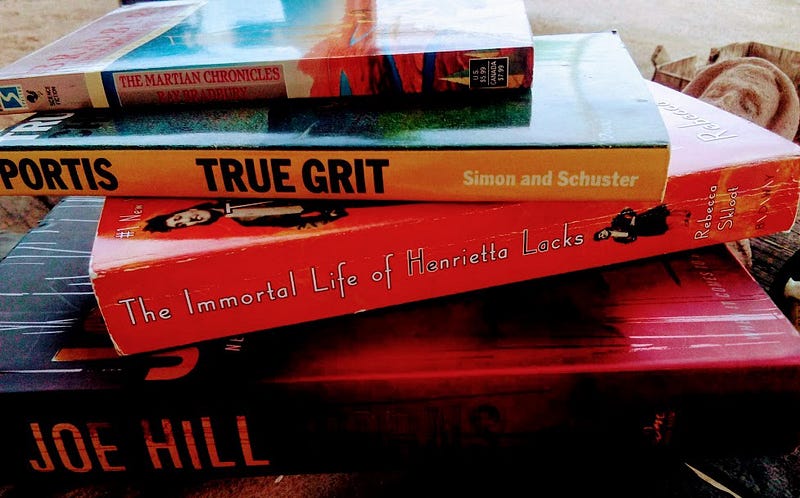
The problem with sacred stuff it’s that we place it above us. All the way up there. Disconnected from us. Somewhere where we can’t reach it. In a different plane, distant from our actual lives.
Books are not sacred. And libraries are not temples. Instead, they should be like cozy homes where we can curl up; places of intimacy, warm friendship, shelters for the introvert, and spaces of discovery for the novice.
There’s a much-romanticized idea of how parents should introduce children to the wonders of reading. It’s a picture that can be found almost anywhere in the world: a child lying in bed, a soft blanket tucked all around. Next to the bed, a loving parent reads from a pristine book. Finally, the child goes to sleep and has the sweetest dreams.
For the record, there’s nothing wrong with that. Please, keep doing it. But that’s not the optimal way to raise new readers. Children need to know, to see, that books belong everywhere. Please, give them a messy home with books in the kitchen, all over the living room, and yes, in the bathroom too. Give them books to stuff in a backpack. Let them see you carry around a worn-out copy of your favorite book, underlined and bent in all the wrong places. Let them notice that books can be taken anywhere, at any time. Let them know there isn’t one ideal reading position, not one ideal reading time, not one ideal author, not one ideal reading corner. Show them the whole world is theirs to read and explore every day of the week, whenever they please.
Do not tell them that reading is a magical experience. Instead, tell them that reading is about being alive. About the astonishing fact that every day we wake up and get another chance to do and discover, share and wonder. Tell them that reading is not an extraordinary thing; instead, it’s the most mundane task in the world because we do it every day. We do it all the time. It’s as ordinary as the breakfast we have every morning, nutritious or not; the cup of tea or coffee (hot cocoa, for the bold) that is the nonessential ritual we just can’t live without. It’s so dull, so typical, just so mundane that, when we don’t have it, our head and heart hurt, and nothing goes right until we fix this tiny yet crushing blunder.
Tell young people to carry books to coffee shops, to their hiking adventures, to summer camp, to the mall, to their dates (ok, I’m getting a little carried away here)… There’s nothing better than, when feeling a bit lonely, opening up your backpack and finding a friend who has all the time in the world for you.
And, please, I’m not talking just about the books with artistic or historical value. One of Gutenberg’s Bibles? Please, don’t even breathe near it. I’m talking about the books that live with us, the ones that end up with all kinds of stains: coffee, blood, mud, sweat, tears, ketchup…. Books that perhaps were forgotten on a bus, lost on a fire, vanished in the Bermuda Triangle of the moving-day boxes… so we bought them again, just to take them from here to there while their pages remind us why we fell in love in the first place (and if the original book reappears? Even better, now we have two of them).
Also, for God’s sake, let kids choose what they want to read. Yes, many of them will read lots of crap that will horrify you. But it will be crap of their own choosing and, for young people, few things are more powerful than being allowed to choose for themselves. Yes, you can make suggestions; yes, they will most likely be ignored for years…until they won’t. That day, perhaps, they will tell themselves “Ok, let’s see what the deal is with this book Mom/Dad/Aunt/Uncle/Teacher/Etc. has been pestering me about”. As you already know, they will fall in love, and nothing will ever be the same for them. But you cannot force love to come before its time so, please, stop trying.
Finally, stop telling them that books will make them smarter. Yes, I know they will. And do not keep insisting on how important being an avid reader is going to be during college. Yeah, I know that too…and so do them. For the person who really doesn’t want to read, details like these don’t matter: They just won’t do it. You cannot force love. You can only show it, model it. Besides, when you keep reciting the intellectual advantages reading brings, you sound like the people who point out the health benefits of chocolate and wine. “Antioxidants! Longevity! Nice skin!” Can’t you just shut up and let your kid watch you enjoy the wine while you eat some chocolate? With a worn-out book by your side, of course.