
The Humour To Be Found In A Cumbrian Name
Local (to the author) place names, accent and dialect for your edification and amusement
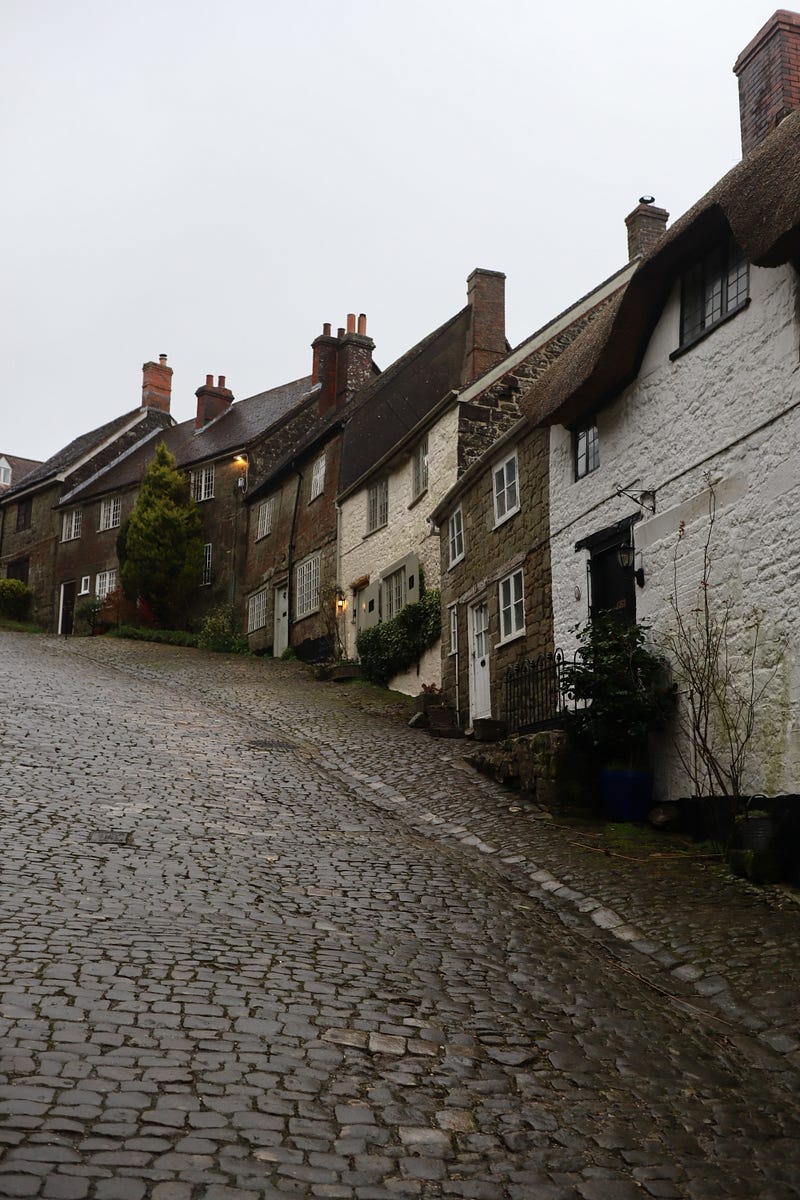
Welcome to Cumbria. This is the true North-West of England, the whole huge area filled with lakes, fells, rivers, sheep…affluent South Lakes tourist traps, impoverished urban areas on the west coast, the travesty which is the nuclear processing plant…and more sheep. There’s rather a lot of sheep, ok? This is the part of England which sits between Manchester/Liverpool (or Preston/Lancaster, depending on how far your knowledge stretches) and the Scottish border.
Some place names in this county are like little history lessons — some of them are also just a bit funny, particularly to those who don’t live round here….
“Despite the modern county being created only in 1974 from the counties of Cumberland, Westmorland and north Lancashire and parts of Yorkshire, Cumbria is an ancient division. Before the arrival of the Romans the area was the home of the Carvetii tribe, which was later assimilated to the larger Brigantes tribe. These people would have spoken Brythonic, which developed into Old Welsh, but around the 5th century AD, when Cumbria was the centre of the kingdom of Rheged, the language spoken in northern England and southern Scotland from Lancashire and Yorkshire to Strathclyde had developed into a dialect of Brythonic known as Cumbric (the scarcity of linguistic evidence, however, means that Cumbric’s distinctness from Old Welsh is more deduced than proven). Remnants of Brythonic and Cumbric are most often seen in place names, in elements such as caer ‘fort’ as in Carlisle, pen ‘hill’ as in Penrith and craig ‘crag, rock’ as in High Crag”. — Cumbrian dialect — Wikipedia
There is also a heavy influence from Old Norse:
‘A far stronger influence on the modern dialect was Old Norse, spoken by Norwegian settlers who probably arrived in Cumbria in the 10th century via Ireland and the Isle of Man. The majority of Cumbrian place names are of Norse origin, including Ulverston from Ulfrs tun (‘Ulfr’s farmstead’), Kendal from Kent dalr (‘valley of the River Kent’) and Elterwater from eltr vatn (‘swan lake’). Many of the traditional dialect words are also remnants of Norse settlement, including beck (bekkr, ‘stream’), laik (leik, ‘to play’), lowp (hlaupa, ‘to jump’)”’ - Cumbrian dialect — Wikipedia
Place names people find funny
I’m going to have to start with Cockermouth…this one is always, but always, greeted with a laugh by practically anyone who isn’t local. Literally translated, Cockermouth means the town which lies at the mouth of the River Cocker — but also provides material for many a snigger accompanied ‘blue’ joke…..
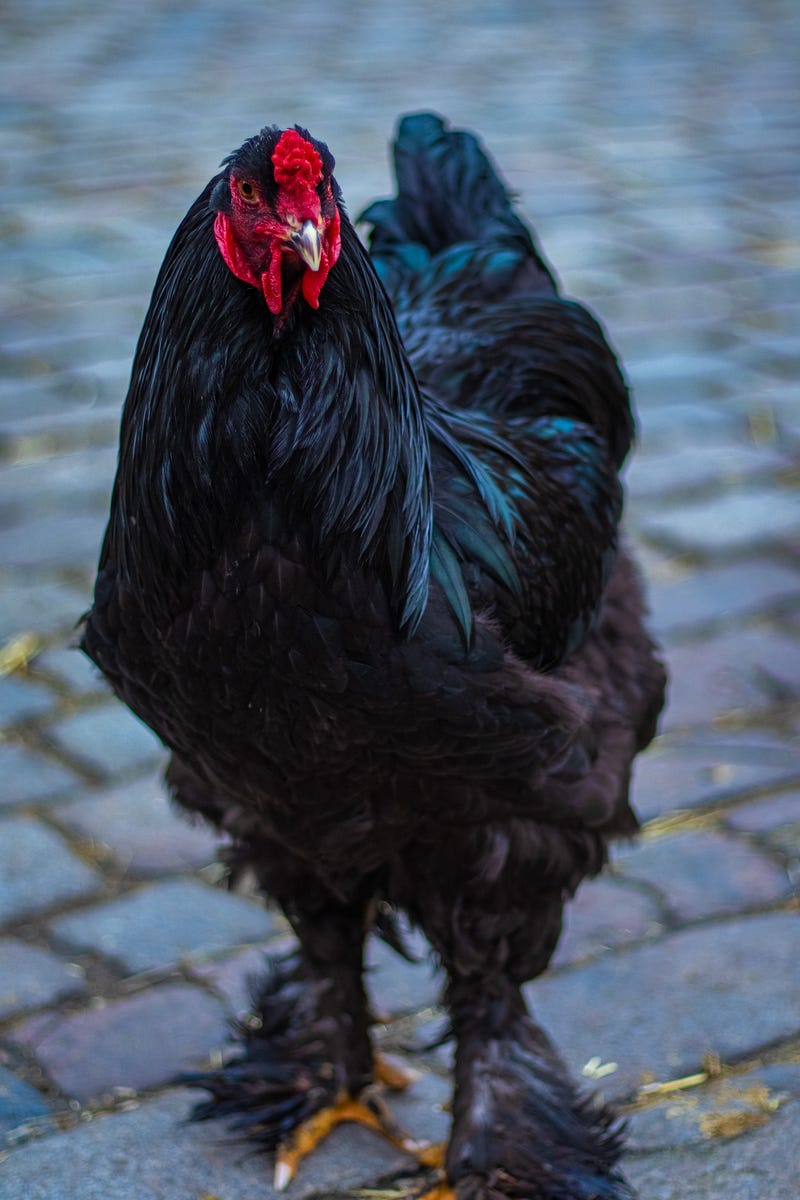
…..as does the name of The Black Cock pub in a nearby village (the pub sign shows a black cockerel(rooster) people — I mean seriously, take your minds out of the gutter!)
Another lovely example of local place names is Torpenhow….which is pronounced HOW? Well actually, in local parlance at least, we say TRE-PEN-NA.
The other interesting thing about this place name is it’s translation. Tor~pen~how actually means Hill~hill~hill. There are even some who claim that as the village of Torpenhow sits upon the slopes of a Hill we could claim a quadruple tautology: HillHillHill Hill.
“Tor, pen, and how can all mean “hill” in different languages…(torr from Old English, penn from Old Welsh and haugr from Old Norse)[2][self-published source] so that a literal translation of “Torpenhow Hill” would be “Hill-hill-hill Hill”, in an extreme example of a multilingual tautological place name.[3] “
Torpenhow Hill — Wikipedia
Honourable mentions also go to the following:
- Bothel — there is no ‘R’!! While not particularly worthy of comment in and of itself, this place is included with a nod to my 20 year old child who (on passing the sign which pronounces we have reached the turn off into Bothel) always cackles and splutters that “there isn’t an R in it!”. Apparently, it’s hilarious because for a long time, A’s mind would insert that extra letter and wonder at such a place name! I’m sure it’s easy enough to work it out yourselves?!
2. Aspatria — or Spat-tree to us (this one’s just included for the Cumbrian pronunciation which amazes and confuses t’incomers)
3. Barff’s Wood, haha — near Greystoke — yes, that Greystoke! Follow the link if you’re not sure what I’m referring to .
4. Blackdyke — I did not say the ‘humour’ was tasteful or inoffensive. I won’t be repeating any of the comments I’ve heard made about this place, which actually earns inclusion because of the amazing equestrian centre you’d find there.
5. Cockhag Tarn — to the west of Kendal — a tarn is a body of water, occasionally even larger than those which earn the name ‘lake’, but most often considerably smaller. Earns inclusion because people find penis euphemisms hilarious apparently — can you see a pattern forming here? As to how the ‘hag’ fits into this equation, your guess is as good as mine.
6. Dick Wood (yep, here we are again…)
7. Flimby (apparently funny, everyone who has ever come to visit me from out of the area and passed Flimby while travelling on the west coast train line, or driving along the parallel ‘main road’ has found this place name to be hilarious. Locals never bat an eye.)
8. Mossy Bottom — last but not least, a bit weak on the humour perhaps (though a damn sight less offensive than some of the things I’ve heard about others), really added in because this was the search which led me to a link for this place: The Francis Frith Collection.
Accent and Dialect
Often the Cumbrian accent and dialect is enough in itself to cause confusion and amusement, whatever we’re saying.
For example:
Second example (this one contains swearing/cursing — it’s thrown in every other word around here):
Thirdly, more dialect mixed in here. (This guy reminds me of my grandad):
Mind blown? Could you follow these?
I’m going to just tag friends from various parts of the world to see how they fare:
Marc Barham (UK, but not the same area)
Arthur Dewson (AN0N) (European)
Jess the Avocado (European in Australia — correcting at reminder from the person in question….this avocado is actually half Australian by birth and has now merely moved from her European home to live in the land of her matriarchal line.)
Will Hull (American in Australia)
Carlos Garbiras (South American in North America)
Remington Write (various parts of the U.S.A.)
Anyone understand those?
The quote at the beginning of this essay came from the web page below, which has some quite useful information on dialect too:
Are You Local?
To finish off, you should know that to Cumbrians, being Local is nearly as important as it is to these characters below — not Cumbrian, but similar attitude to ‘incomers’!!
Nothing quite like British comedy! Isn’t that right Jess?
With thanks to Jess the Avocado for suggesting modifications to my title.
Thank you for taking the time to read this far.
If you want to find out more about where I live — or me, or simply want to read more of my writing — try these:
If you’ve enjoyed what you read, please consider supporting my writing life. You can do this in one of two ways. Either by buying me a coffee or if you aren’t already a member of Medium and are interested in reading some more there, you can sign up for membership through my referral link which will pay me a small percentage of your yearly membership fee.