
What You Should Know About Google March 2024 Core Update
So, your website doesn’t get a penalty.
If you optimize your website to rank in organic search results, you might know that Google continuously updates its ranking algorithms.
SEO specialists have a love-hate relationship with Google because it regularly releases new updates that impact website rankings worldwide.
If you’ve been running a website for years, you’ve probably faced the following challenge:
The core algorithm update happens, impacting organic rankings. When you update content and push your website to the top, Google releases something new.
Again!
You have no other choice than to start optimizing your content over again.
Although I’ve never experienced significant traffic drops on my website, some of my former clients had up to 50% organic traffic drops. Imagine this happening to your website overnight. It must be painful.
This time, Google has released its most complex update involving changes to multiple core systems.
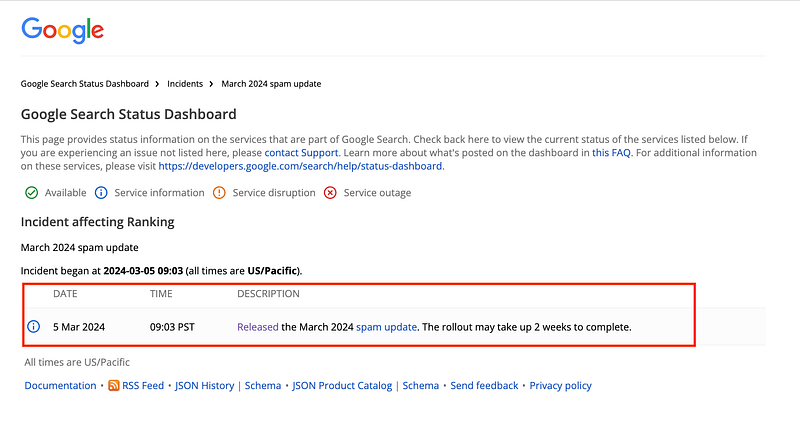
It’s the first algorithm update of 2024, which seems slightly different from all former updates.
According to Google:
We have enhanced our core ranking systems to show more helpful results using a variety of innovative signals and approaches. There’s no longer one signal or system used to do this.
This update also marks an evolution in how we identify the helpfulness of content.
It’s likely there will be more fluctuations in rankings than with a regular core update, as different systems get fully updated and reinforce each other.
You might remember that Google first started addressing AI-generated content in its August 2023 Helpful Content Update.
However, it wasn’t enough.
In my opinion, this core algorithm update is Google’s another attempt to cope with a massive spread of AI-generated content on the web.
As an SEO expert, I’ve experimented with AI-generated content a lot and figured out that it can rank well on Google if the following conditions are met:
- You publish AI-generated content on reputable websites
- Your website meets Google’s E-E-A-T requirements
- You edit content before publication
- You add personal opinions, case studies, or expert quotes to make AI-generated content unique
Here’s how one of my articles generated using Koala Writer AI performs on Google. It was published in January 2024 and reached the top 10 positions in a few weeks.
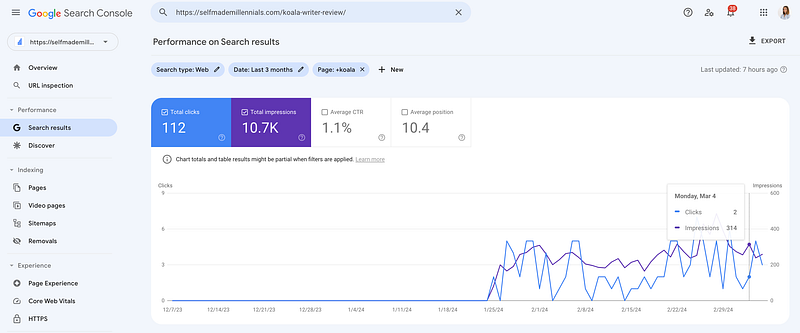
Being honest about my website performance is vital to communicating with my audience. I strive to share and show as much information as possible.
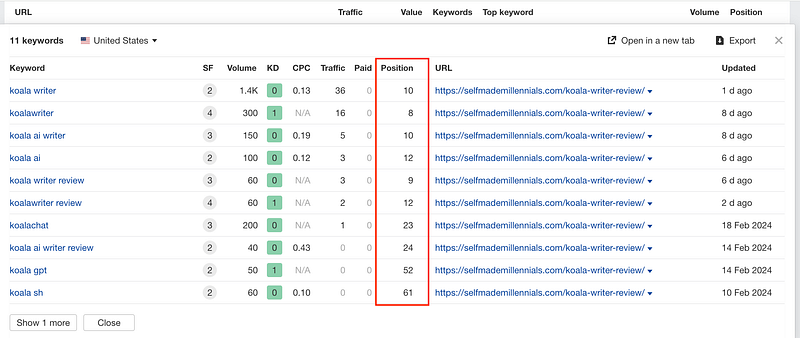
Below, you can see all the keywords my article ranks for in organic search.
That's a pretty good result for an AI-generated article, right? However, it’s not a coincidence. As an SEO expert, I know how to align AI-generated content with Google’s requirements. You can learn more about my optimization strategies in my SEO ebook.
Here’s one more AI-generated article that’s been ranking on the first Google search result page for almost one year!
I generated my Robinize review using Bard (now Gemini). It’s a free AI language model developed by Google.
When I experimented with Bard, I wanted to validate my idea that targeting low-competition keywords can help your content rank on Google. Apparently, it can if you optimize content well and align it with Google requirements.
You can read more about the results of my experiment with Bard here.
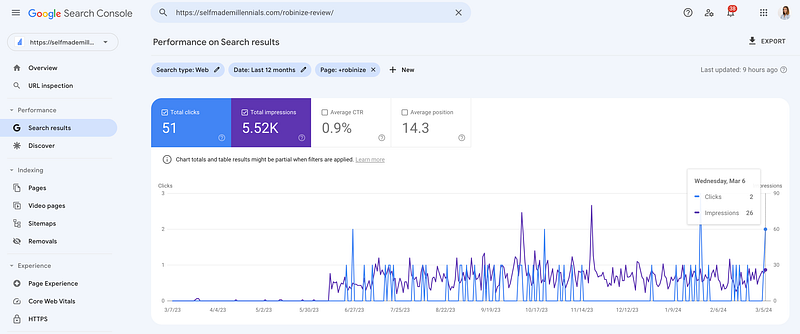
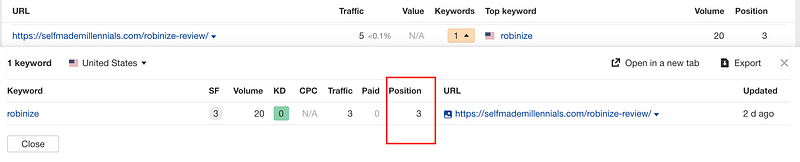
In fact, I have a few more AI-generated articles on my website because AI tools speed up my work. No one helps me grow my website. I do content writing, on-page optimization, technical SEO, and graphic design all alone. That’s why I have always been open to trying new tools.
Content quality is my priority. That’s why my website has never really suffered from Google algorithm updates.
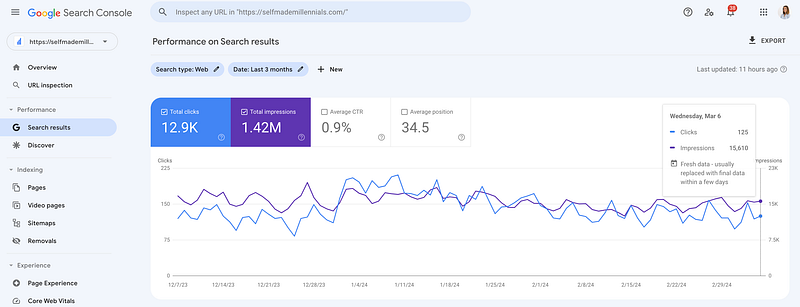
As of the first week of March, I haven’t noticed any changes to my website's organic performance. Impressions and clicks are stable and growing.
However, the absence of any adverse signs doesn’t mean my website won’t be affected in the future.
Google announced the core algorithm update on March 5th. It will take two weeks to implement. If your website is impacted, you’ll know about it by the end of March.
What website owners should know (and do) to avoid Google’s penalty
I’ve been closely following Google updates since 2015.
A lot has changed since then, but some things seem to stay:
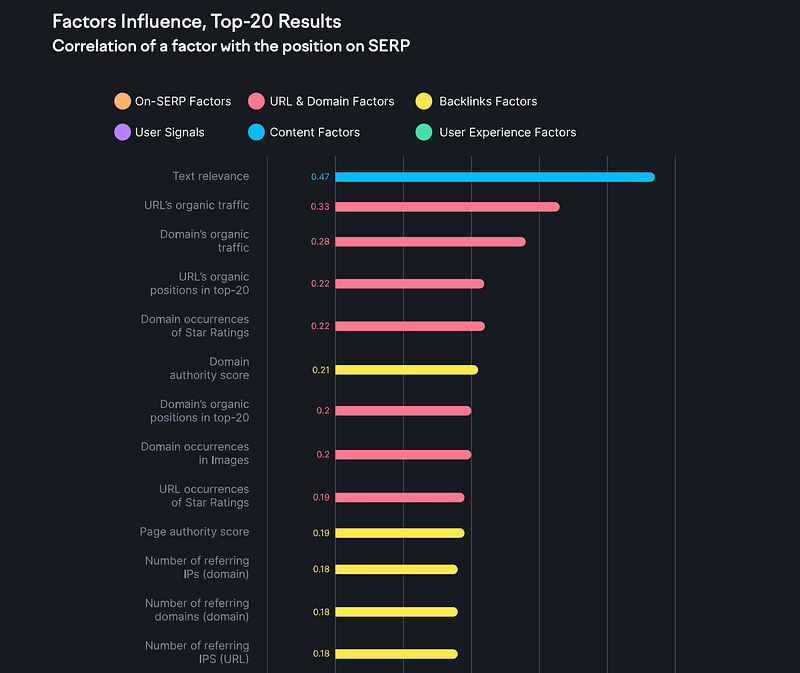
Google will continue favoring unique and helpful content with backlinks.
My assumptions are backed by the Semrush 2024 study on ranking factors.
Content factors play the most significant role in determining Google rankings.
Google wants to show users the most relevant search results at a particular moment in time. Moreover, Google knows about the most common manipulative strategies. Therefore, its existing and upcoming algorithm updates will penalize websites with black-hat SEO strategies and reward websites with positive online user behavior metrics.
This time, Google released three additional spam policies every website owner should know about. If you’ve been using these strategies or planning to implement some, you better reconsider your decision:
- Purchasing expired domains to manipulate rankings is a policy violation.
- Scaling content production using AI to manipulate rankings is a policy violation.
- Using third-party websites’ authority to boost your website’s authority and rankings is a policy violation.
You can read more about the latest Google updates and how Google interprets them in their latest announcement.
You have nothing to worry about if you haven’t implemented any of the above-mentioned spam strategies.
I know many website owners are concerned about the impact of AI-generated content and blame Google for penalizing their websites.
I want to stress once again you have nothing to worry about as long as you edit AI-generated content, including parts of original content, and meet Google’s E-E-A-T requirements.
That’s what I’ve been doing for the past years. My clients with healthy websites follow the same strategies, which seems to work.
In conclusion
If you create content with your readers in mind, you help Google achieve its goal “to organize the world’s information and make it universally accessible and useful.”
Therefore, you should not be worried about any search algorithm updates.
I encourage everyone to think long-term and never use shady practices, such as copying someone else’s content, buying backlinks, etc.
It’s simply not worth it.
Remember, it’s much easier to play the game by its rules than to recover from a Google penalty.
You’ll likely experience slower growth than your rivals, who brag about the power of AI. However, you can rest assured your website won’t be impacted.
📈 Want to grow and monetize your website?
Grab my guide to learn how I create blog posts that hit the Google front page.
Want more marketing tips and tricks? Subscribe to the Better Marketing newsletter The Marketing Memo here.


