
What You May Be Missing When You Go Outdoors — Part 2
How nature awakens the brain and inspires personal growth

More than 10 million people, or ten times the year-round population, flow north to Maine each summer. The vast majority of these people come from cities. That is where 83 percent of Americans live these days.
They come with their bikes, boats, and beach towels. They come with their cameras and hiking boots. They drive up Route 1 and I-95 and fan out along the coast. They stay at camps, campgrounds, inns, and motels. They come for the seafood, the sunrises, and the scenery. Mostly, they come for the woods — and they come for the sea.
If they stay long enough and slow down enough, they come away with serenity. They depart with more perspective about their lives, of ebb and flow, and of purpose. They may feel a little more clear, a little more open, a little more alive. That is, after all, what time in nature can do for us.
[Read, “What You May Be Missing When You Go Outdoors, Part 1”]
Trapped in One Room of the Brain
It’s not all sunshine and rainbows, however. Too often, the mental benefits of leisure time are short-lived. The sad truth is that for two-thirds of Americans, the positive mental health effects of vacations disappear within a few days. That’s hardly a good return on investment. After the positive benefits fall away, where are people left? It’s not a pretty situation. Recent studies show as many as one-third of Americans are depressed. Ironically, the situation is at least as bad in rural states such as Maine.
So nature frees us, but then it doesn’t get us anywhere? What’s the deal? The answer may have to do with the way our brains are wired and the ways our culture teaches us to use them. Lisa Miller Ph.D., the author of The Awakened Brain, sees the mental health crisis in America today as due to a lack of integration between parts of the brain. It’s like getting stuck in one room for weeks at a time.
Miller believes this lack of integration leads to depression. She points out that the cure for depression — and the key to reaching our potential as human beings — involves integrating the analytical and intuitive parts of our brains.
We live in a data-driven, results-oriented culture that values results over process, individual over community, matter over spirit, the analytical over the intuitive. This imbalance, according to Miller, contributes greatly to the incidence of unhappiness, depression, and poor mental health. In our culture, the analytical part of the brain gets all the air time. The intuitive part, not so much.
Miller emphasizes that the analytical part of the brain is good at figuring out how to do stuff. It’s not as good as helping us understand what to do or why. The intuitive part of the brain can help us with these questions, it can help us bring our lives into sync. It can help us experience happiness. But first, we have to wake up, and then we have to listen.
Waking Up & Listening
Thanks to recent books like The Nature Fix, we know that the simple act of going for a walk in the woods relaxes the brain and benefits our mental health. The beneficial effects include decreased heart rate, lowered blood pressure, and reduced cortisol levels. Add to that endocannabinoid release, stimulation of the vagus nerve, and increased alpha wave activity. Top it off with changes in the parietal lobe, the part of the brain associated with spirituality.
At the same time, there is a crucial powering down of the analytical part of the brain. Florence Williams, the author of The Nature Fix, states it simply: “The frontal lobe, the part of our brain that’s hyper-engaged in modern life, deactivates a little when you are outside.”
So there we are. We’ve walked in the woods, slowed our thoughts, and awakened previously silent parts of our brains. The walls come down. We’re no longer living in such a confined space.
Doing this, according to Miller, is a form of mindfulness. The prefrontal cortex is still in charge, but we are on the threshold of a more spiritual consciousness.
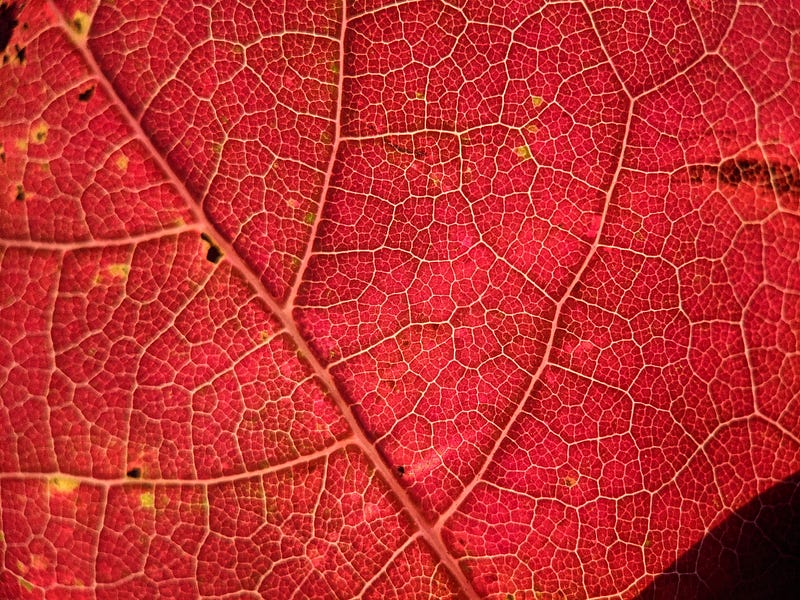
Great Nature has another thing to do
To you and me; so take the lively air,
And, lovely, learn by going where to go.
A Deeper Way of Knowing
The trick is that we are trying to get to a place that the prefrontal cortex can’t take us. It’s like asking the bus driver to pilot an airplane.
The prefrontal cortex has helped quiet the inner chatter. It has willed the senses to focus, but we can’t will ourselves to be absorbed, to feel connected, to experience flow, to be overcome with awe. Intuitions don’t come on demand. These are things that happen spontaneously. We can seek them and open ourselves to opportunities, but we can’t make them happen.
It’s as if we’ve reached the city limits. The bus driver doesn’t have a roadmap for the new landscape. The good news is that nature has a way to help us.
When the poet Theodore Roethke says, “Great Nature has another thing to do / To you and me; so take the lively air, / And, lovely, learn by going where to go,” the last line is not a typo. “Learn by going where to go,” is like something we would hear in a dream — or a poem. It’s not logical — and that is the point. As all those Zen koans suggest, the analytical, logical parts of our minds can’t take us where we need to go.
Is it nature that reaches out? Something in our deep evolutionary nature? Something else? As important as the answer is that there is a reaching out. When we open up our senses and quiet our minds, we are met halfway.
Experiences of absorption, connection, flow, and awe each have a way to overwhelm us, to move us, to shift our thinking. In those moments, the brain processes perceptions, intuitions, and thoughts in a more integrated way. Parts of the brain talk to each other. This, in turn, opens us up to deeper experience and deeper knowing.
The music is familiar, but we are no longer directing the band. Rather, we are part of a greater symphony that is being directed for us.
Lisa Miller describes the shift in perception that occurs as the brain awakens :
. . . Our identification with our physical self becomes more relaxed and our perception of boundaries between ourselves and others becomes more diffuse. We enter into a less bounded and more expanded sense of self. We perceive we are part of a oneness.
Similarly, “The Science of Awe,” a report from UC Berkeley, explains that the experience of awe “often puts people in a self-transcendent state where they focus less on themselves and feel more like a part of a larger whole.”
“Awe” and “flow” are relatively new branches of positive psychology that help us understand what happens when the brain shifts to this deeper knowing. More research is needed to fully understand the changes in brain function that occur during these experiences. Studies of the awe experience report all kinds of positive — and yes, spiritual — benefits including humility, expanded perception of time, increased life satisfaction, increased connectedness, positive mood, feelings of well-being, decreased materialism, increased generosity, and increased spirituality.
Seems like most of us — and our planet — could benefit from a good dose of that stuff.
Starting Points for Growth
We don’t have to wait for that once-a-year vacation. We can cultivate that healthy shift of consciousness on a weekly, if not daily basis.
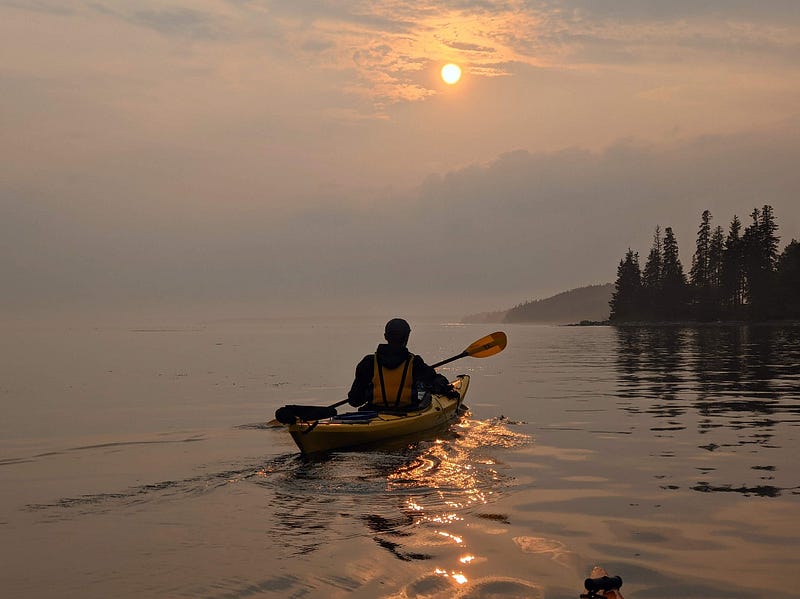
As a guide, I can do more to help people wake up their brains. I can ask clients to consider nature connection questions before and after a tour. I can encourage them to think about the natural beauty they have seen — and whether it prompted any positive emotions. I can offer reminders to open the senses. “Let’s stop here and listen to the sound of the waves on the ledge. Breathe deep and smell the salt air. Notice how the boom of the surf reverberates in your chest.”
Experiences of absorption, connection, flow, and awe have lasting significance if and only if we reflect on them afterward. I can encourage reflection and sharing — which not only solidifies these experiences but also provides a way for others to be inspired by them.
As individuals, we can make it our practice to set aside some of our outdoor time for a deeper experience of nature. This means silencing the phone sometimes when going outdoors. It means not always using time outdoors to plan or reflect. We are out of practice in simply being present. Some of us haven’t done much of that since being a kid, some of us not even then.
Based on my experiences and reading, I’m suggesting a few practices that can open the mind to receive the full benefits of nature.
What many of these practices have in common is openness to spontaneity, playfulness, and discovery. If you find yourself smiling, you are probably on the right path.
Practices for Absorption, Connection, Flow, and Awe
Absorption — these activities begin with attention to sensory details and move toward feelings of immersion in the complexity and beauty of nature.
- Take a unique photo of a landscape, seascape, or organism each time you go outside.
- Sit still in nature. Focus on opening up the senses.
Connection — these activities begin with attention to other living beings and then move toward feelings of empathy and interrelatedness.
- Look and listen for wildlife. This includes looking for tracks and signs.
- Go with another person who is also seeking a mindful experience of nature.
Flow — These activities begin with a focus on your own movement and then shift toward feelings of integration, engrossment, and effortlessness.
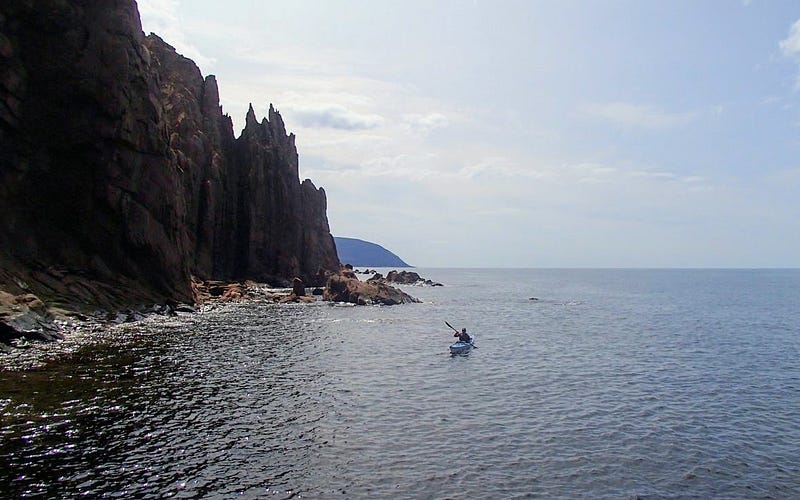
- Pay attention to the kinesthetics of how your body moves and feels as you walk, run, climb, paddle, swim, or ride.
- Participate in outdoor adrenalin sports that demand your full attention.
Awe — These activities begin with a focus on wonder and then shift toward feelings of humility, timelessness, and oneness.
- Seek sunrises, moonrises, sunsets, rainstorms, thunderstorms, snowstorms, wind, surf, and phenomena such as meteor showers and the northern lights.
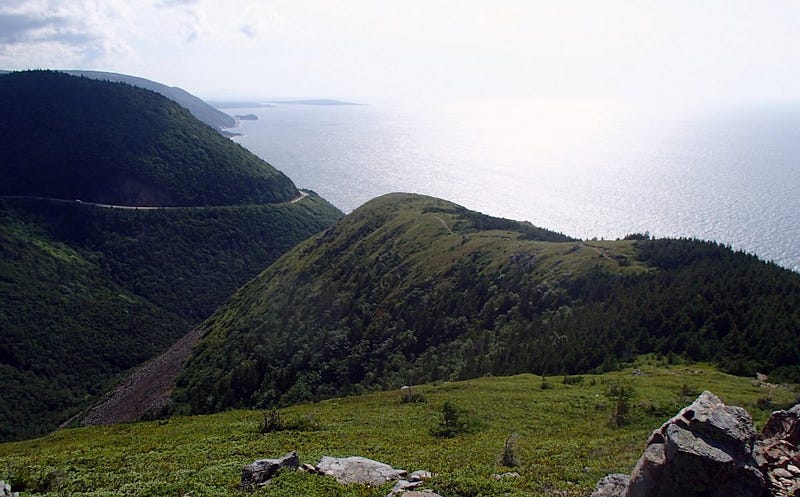
- Go to places of grandeur where you can wonder at the vastness of nature and the smallness of yourself.
So What?
Some might dismiss experiences of deeper knowing as harmless holidays from the analytical mind. If these experiences have a shelf life as brief as the vacation effect described earlier, they are of trivial importance. But these experiences can be much more than that — provided we integrate them into our overall life experience.
If we seek this integration, we will see that these experiences aren’t ends in themselves but stepping stones toward personal growth. In fact, studies have shown that having awe experiences is associated with increased motivation for personal growth.
When we feel greater connectedness, our values change. We become advocates for others and for the environment.
Considering the levels of stress in our society, given the huge challenges people face in terms of physical and mental health, given the political divisions, and given the dire reality of ongoing climate change, it’s clear that — if we are to address these problems — we need a paradigm shift.
In particular, making the changes needed to combat climate change won’t happen unless there is a shift of values, and unless more people care deeply about our environment. And people won’t care deeply about nature unless they have immersive experiences in it.
At this point, it’s hard to see how having more people who are stewards of the environment can be anything but good. Our increased understanding of the brain, of how nature affects the brain, and of the neurological basis of spirituality may be signs that the paradigm shift has already begun. Science is providing crucial new understandings about how nature affects us. Science is also giving us the language to talk about it. Now, it’s up to us to finish the job.
To Recap:
- Many times, we do not get the full benefit of being outdoors.
- Anxiety, distractions, and preoccupation can block us from accessing the full experience.
- Attuning our senses to the natural world can wake up and integrate parts of our brains — and move us forward on the path of personal growth.
- Absorption, connection, flow, and awe are ways that we can be drawn into deeper immersion in the natural world and deeper ways of knowing.
- A big reason we go outdoors is so we can return, sharing what we have seen and felt — and making a difference as we do.
Resources:
Fraser Deans, “What is the Nature Connection & How Can it Help You?”
Kori D. Miller, “The Psychology and Theory Behind Flow”
Lisa Miller, Ph.D., The Awakened Brain
UC Berkeley, “The Science of Awe”
Florence Williams, The Nature Fix


