
What were the main inventions of the Middle Ages that changed the world?
The Middle Ages is often referred to as the “Dark Ages” or the “Age of Ignorance.” This unfair characterization was first used by Renaissance scholars who wanted to discredit their predecessors. However, it was during this period that the first universities were established, along with inventions that shaped the world. The inventions of the Middle Ages turned out to be crucial.
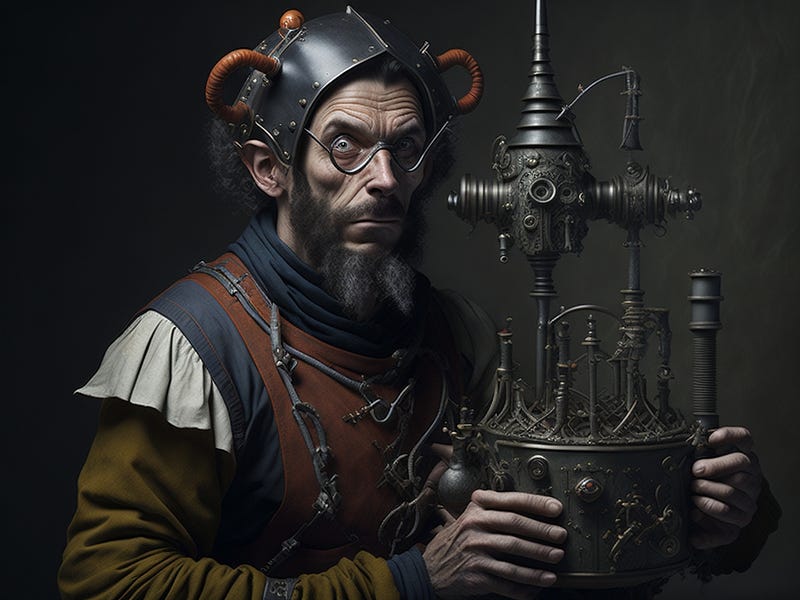
The Middle Ages is one of the longest epochs in European history, occurring directly after antiquity with the fall of the Western Roman Empire. It lasted from the 5th to the 15th century. Although this period is sometimes called the “Dark Ages,” some often forget how much we owe to medieval scientists and scholars. In the 11th century, the first universities were established. Philosophy flourished during the Middle Ages, with notable figures like St. Augustine and St. Thomas Aquinas. At the end of this era, Christopher Columbus discovered America.
Why is the Middle Ages called the “Dark Ages”?
While today we refer to this era as the Middle Ages, for people living at that time, it was simply their present. Furthermore, medieval people did not differentiate periods in the same way we do today. Eras were often distinguished based on the ruling authority, such as the Carolingian era, the Justinian era, or the Richard the Lionheart era.
The term “Middle Ages” was coined by Renaissance scholars as a sarcastic expression, aiming to show that a rebirth was coming, and it was time to bid farewell to the darkness of history. The name itself refers to the transition between antiquity and modernity, a kind of period of passage from light to darkness.
In the first half of the 13th century, Francesco Petrarca (Petrarch) stated that European culture had fallen into stagnation, and he called it the “dark ages.” According to the Italian scholar, this occurred after the fall of Rome in the 5th century, partly due to the loss of many classical Latin texts and the “corruption of language in contemporary discourse.” Much later, Renaissance scholars were fond of referring to Petrarch’s words and believed that they had freed themselves from the “darkness” he described.
However, the term “Middle Ages” first appeared in 1469. The Latin expression “media tempestas” was found in the preface to the works of the Roman writer and philosopher Apuleius. The author of these words was Giovanni Andrea Bussi, an Italian scholar and chief librarian of Pope Paul II. The term “medium aevum” (Middle Ages) was first recorded in 1604.
What was invented during the Middle Ages?
Even today, we use the word “Medieval” to describe something outdated or backward. It is easy to judge the past from the perspective of the present. However, it is essential to remember that the quest for knowledge was likely the same, if not greater, than it is now. The difference lies in the fact that certain discoveries, like electricity, which revolutionized scientific progress in modern times, were not known then. Nevertheless, contrary to appearances, we owe much to this 1000-year period.
During the Middle Ages, the first universities were established, providing people with access to education. Initially, teaching and academic life were primarily conducted in monasteries, and students and masters belonged to the clergy. However, the creation of these institutions initiated the idea of universal education.
The medieval period also had a significant impact on geography. In the 11th century, Vikings were the first to reach America. Marco Polo, a Venetian merchant and traveler, became the first person from the West to reach the Middle Kingdom (China), traveling along the Silk Road with his father and uncle.
The Great Inventions of the Middle Ages
In the 11th century, the population of Europe significantly increased due to technological and agricultural development. Moreover, the changes in climate during the Medieval Warm Period allowed for increased crop yields and facilitated trade. Medieval scholars realized that they needed to face new challenges, especially as political tensions often led to the development of military technology.
During the Middle Ages, many inventions that changed the world were created. These innovations were often the driving force behind societal progress. Some of these inventions, although in modernized forms, are still familiar today. Here are the most significant inventions of the Middle Ages:
Mechanical Clock
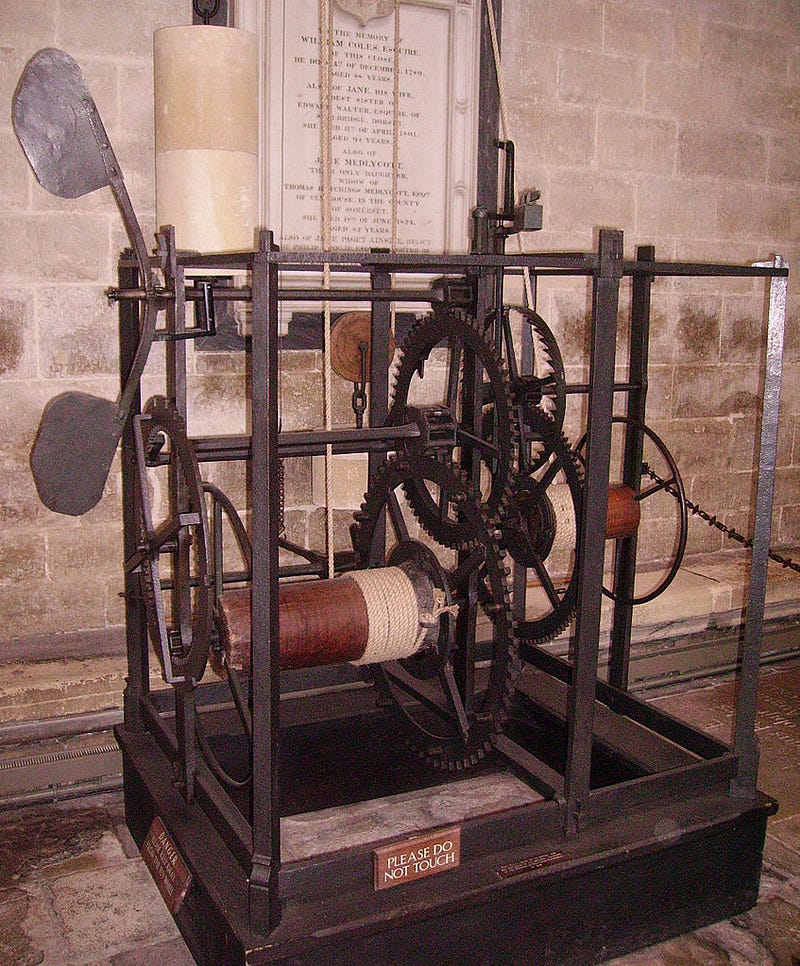
In the past, people had no precise tool to measure time. Ancient sundials and water clocks could only provide rough estimates of the time of day. The invention of the mechanical clock marked a pivotal moment in human history, enabling accurate time measurement, which had a profound impact on life, organization, and work efficiency.
Mechanical clocks were designed as early as the 13th century, but the first properly functioning devices appeared a century later. The mechanical clock relied on a complex system of gears, wheels, and hands, often regulated by a pendulum or balance wheel. The medieval clock is an invention without which today’s incredibly fast-paced lifestyle would be unimaginable.
Eyeglasses
Even in antiquity, people understood that looking through glass improved vision. Numerous accounts suggest that Emperor Nero used to watch gladiator fights through a specially polished emerald. However, it is not precisely known who and when invented eyeglasses in a form similar to what we know today. Legend has it that the idea came from the English philosopher Roger Bacon, who designed this invention in the 13th century.
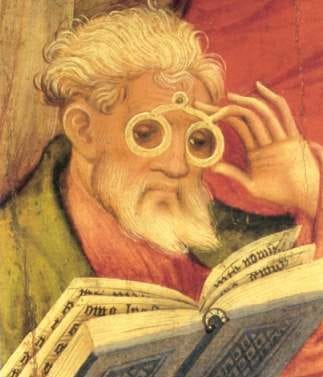
Devices that can be considered as eyeglasses appeared in the 10th century in the Arab world. During the same period, the Chinese were known to experiment with improving vision using various crystals. In Europe, corrective glasses appeared only in the 14th century. However, experts indicate that they were not very accurate until the 16th century when Johannes Kepler made groundbreaking discoveries in optics. The early eyeglasses consisted of a single lens. It was Benjamin Franklin who later invented bifocals.
Printing Press
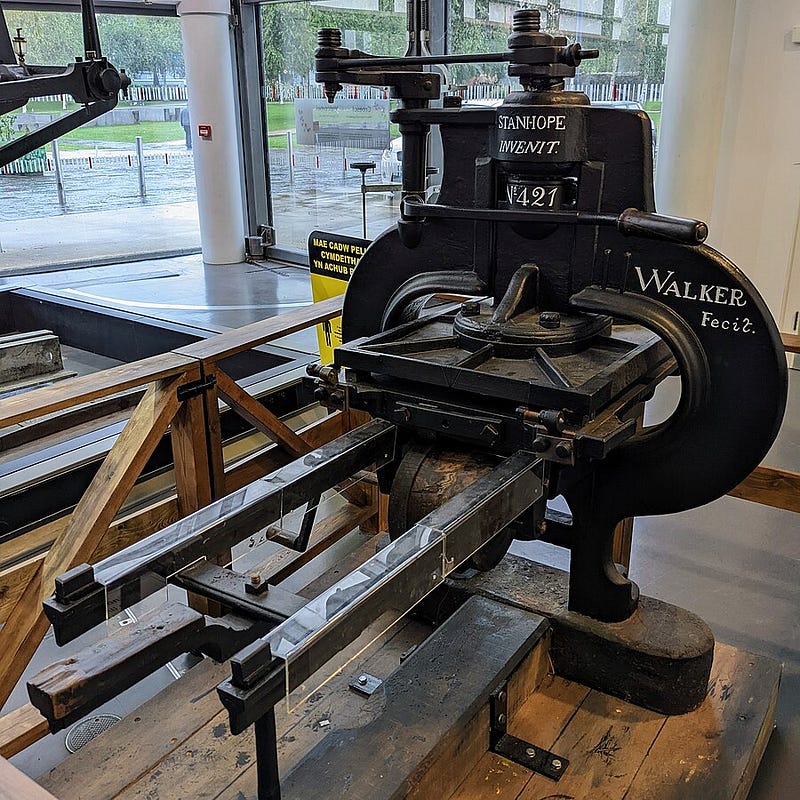
Books in the Middle Ages were incredibly valuable commodities. However, their production was not as straightforward as it is today. The first books were hand-copied, making the process exceedingly time-consuming. The change came with the invention of the printing press, which increased the number of printed books, making knowledge more accessible to people.
The printing press is the fundamental device in the printing industry used for mass production of printed material. The first printing press was the movable type press, invented around 600 CE in China. In Europe, printing appeared around 1450, thanks to Johannes Gutenberg. The German craftsman was the creator of the world’s first industrial printing method. His most famous publication was the 42-line Bible, known as the Gutenberg Bible.
Gunpowder
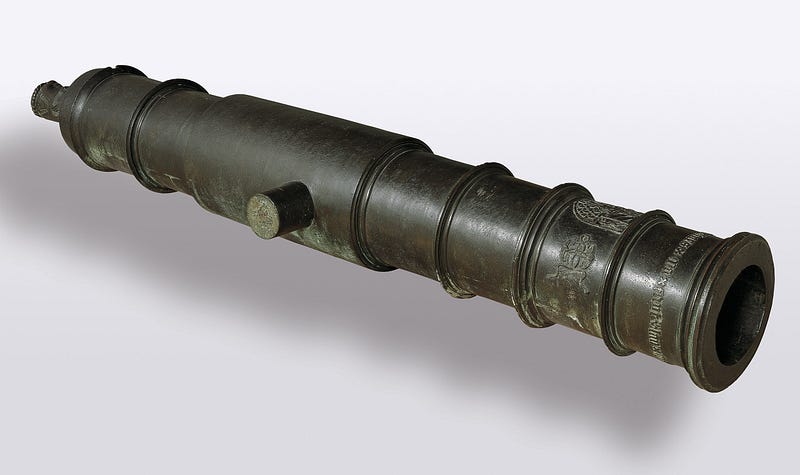
While the Middle Ages are often associated with melee weapons and archery, it was during this period that gunpowder was discovered. It is believed to have been discovered in China in the 9th century and likely reached the Old World in the 14th century. An English scientific treatise from 1326 contains the oldest image of a cannon. Soon, firearms became more common on battlefields, and pistols and muskets were modernized in the early modern period. Black powder was virtually the only known pyrotechnic mixture for propelling projectiles until the mid-19th century.
Thank you for reading! If you enjoyed this content, please consider giving it a clap, leaving a donation, or offering a tip to support my work. Your generosity helps me continue creating valuable content.




.jpg)

